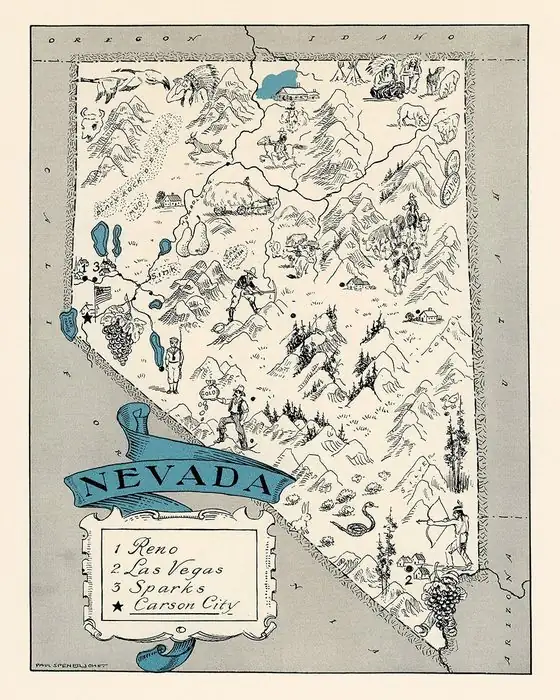
Las Vegas Names: Hoover Dam, Boulder City and Lake Mead
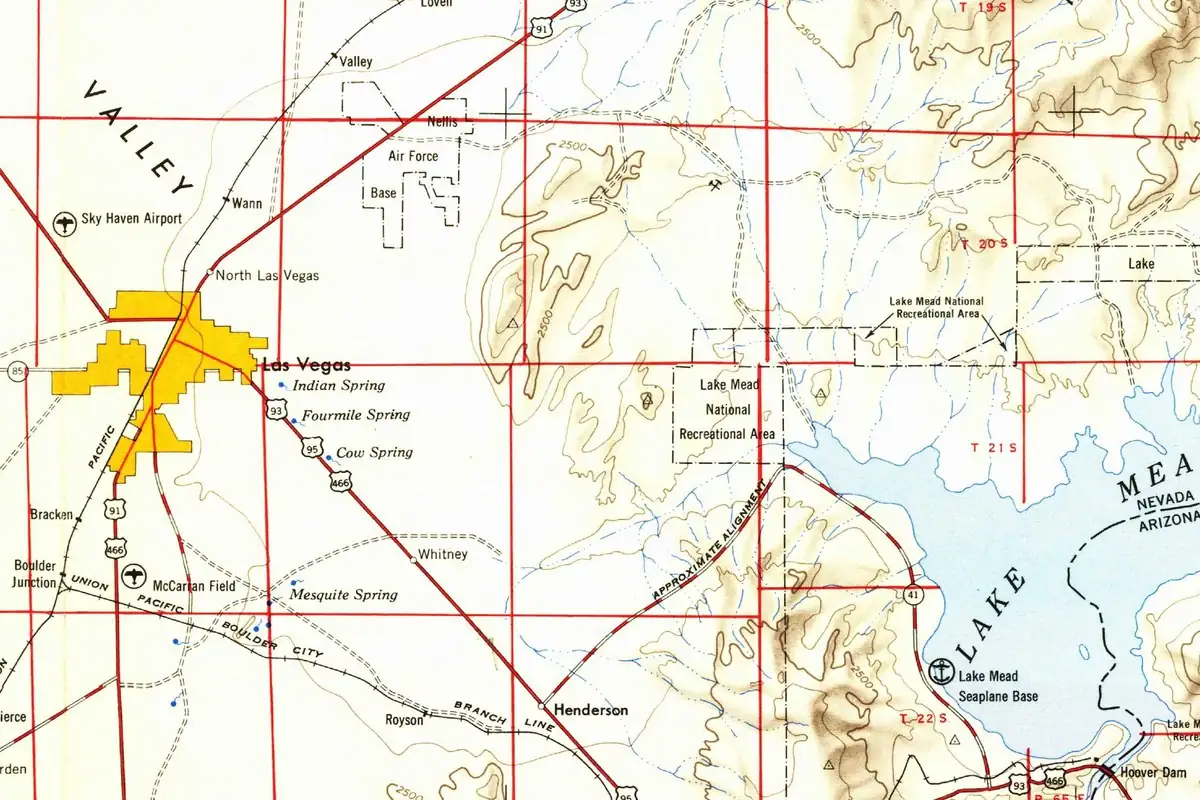
Several big names near Las Vegas, like Hoover Dam, Boulder City and Lake Mead, date from the building of the dam on the Colorado River. The Bureau of Reclamation’s own magazine reported most of them as they happened, so for once we can quote the people who did most of the naming.
Planning a trip? Here’s where the names on your map came from.
Where Las Vegas got its name
“Las Vegas, which being translated from the Spanish means ‘The Meadows,’” C. P. Squires wrote in a 1913 history of Nevada. Who first called the place that is a longer story, and our Las Vegas page tells it.
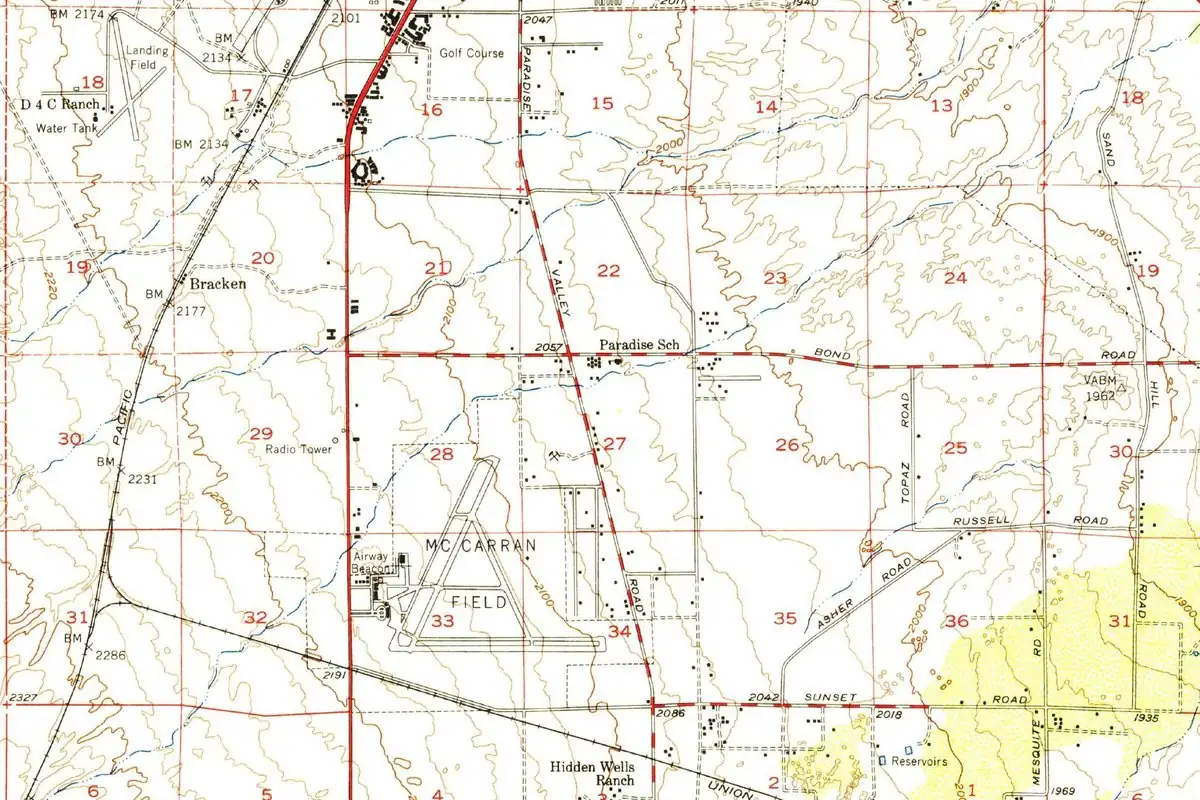
One more thing before you look at the map: most of the Strip isn’t in the city of Las Vegas. It’s in an unincorporated town called Paradise, and our Paradise page covers that name and the story of how the Strip got its own.
Downtown
Fremont Street
Fremont Street was there almost from the start. Squires, who was at the 1905 lot sale, wrote that several early homes, his own among them, were completed “on Freemont street” in the winter and spring of 1906, and that the Opera House block was built in 1907 “on the corner of First and Fremont streets.”
The obvious guess is John C. Frémont, the Army explorer who camped at the Las Vegas springs on May 3, 1844, at what he wrote was “a camping ground called las Vegas.” But Squires doesn’t say who the street is named for, and neither does anything else old we read.
Clark’s Las Vegas Townsite
The lots sold at the big 1905 auction were in what Squires called “Clark’s Las Vegas townsite.” The railroad had bought 1,800 acres of the old Stewart ranch, springs and all, and the sale started on May 15 “under a spreading mesquite tree near the present freight depot.” By the end, he wrote, “1,200 lots were sold for an aggregate of $265,000.”
The long name didn’t last. A 1937 federal report on Clark County says that when the legislature created the county, “the place formerly known as Clark’s Las Vegas Townsite was renamed Las Vegas.” Neither source says which Clark the townsite was named for, so we won’t guess.
McWilliamstown
The railroad’s townsite wasn’t the first one. Squires wrote that early in 1905, months before the auction, “the original townsite of Las Vegas” was subdivided and lots sold “in considerable numbers by J. T. McWilliams.” He calls the place McWilliamstown and says it “was busy and prosperous during the spring of this year,” thanks to freighting to the new Bullfrog mining district, before most of its business section burned soon after the railroad’s townsite opened.
Hoover Dam and the lake
Hoover Dam
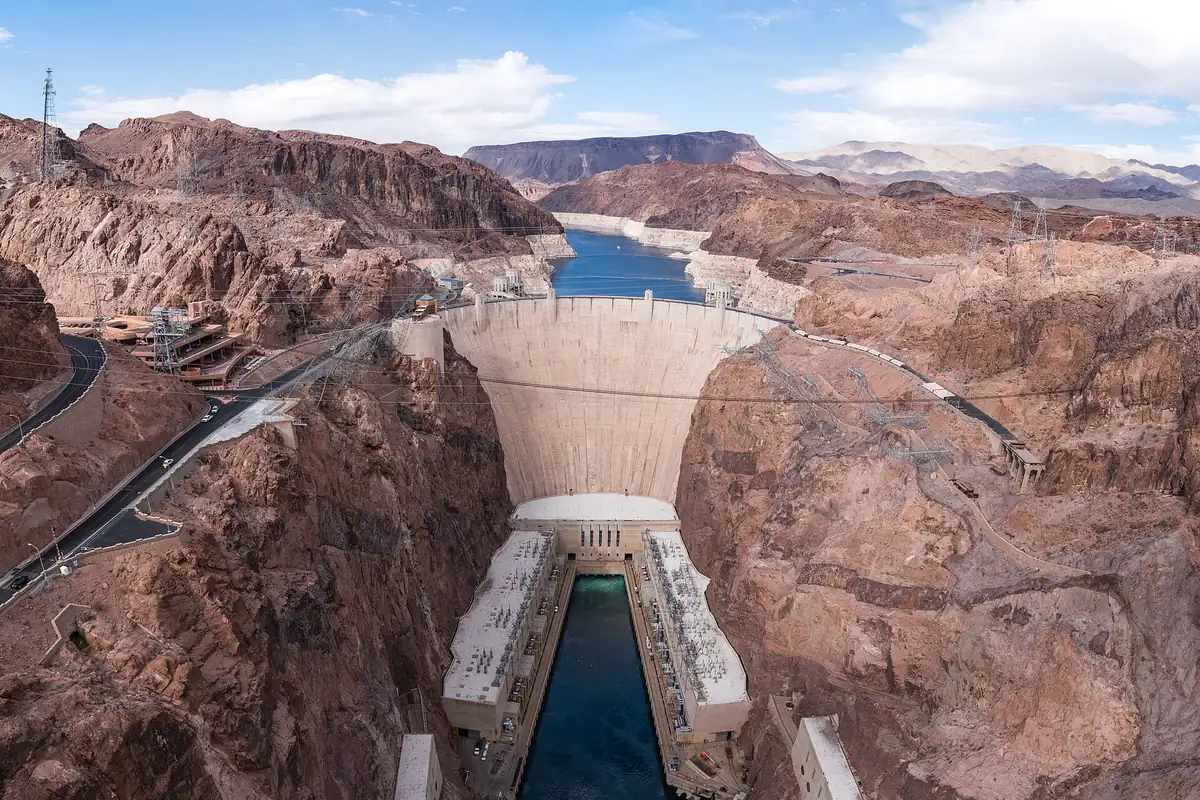
Hoover Dam is named for Herbert Hoover, who was President when the dam got its name in 1930. On September 17 of that year, “about 7 miles south of Las Vegas, Nev., near Bracken,” Interior Secretary Ray Lyman Wilbur drove a spike of Nevada silver into a railroad tie to start construction on the Boulder Canyon project. Then, the New Reclamation Era reported, he named the dam:
“I have the honor to name this dam after a great engineer, who really started this greatest project of all time—the Hoover Dam.”
That’s all the magazine printed of what Wilbur said about the name. A newspaper headline it listed that fall was plainer: the “Power project to be named after President” would “carry designation in recognition of services as Commerce Secretary.”
The name didn’t stick at first. By 1936 the Bureau of Reclamation’s magazine was calling the dam Boulder Dam. Then, in 1947, it reported that when Congress passed House Joint Resolution 140 and President Truman signed it on April 30, “the name of the highest dam in the world was changed from Boulder Dam to Hoover Dam.” It gave two reasons: Hoover had been the U.S. representative on, and chairman of, the Colorado River Compact Commission, “and because he was President at the time the legislation which authorized construction became effective.”
Boulder Canyon and Black Canyon
If you visit, you’ll notice the dam isn’t in Boulder Canyon. It’s in Black Canyon. The New Reclamation Era answered that one in a question-and-answer “primer” in February 1930, while the dam was still called Boulder Dam:
“Q. Why the name Boulder? A. The original site investigated was in Boulder Canyon, about 20 miles up river from Black Canyon. Since the Bureau of Reclamation has constructed a Black Canyon dam in Idaho, the name Boulder Canyon, because of long usage was retained, but shortened to Boulder.”
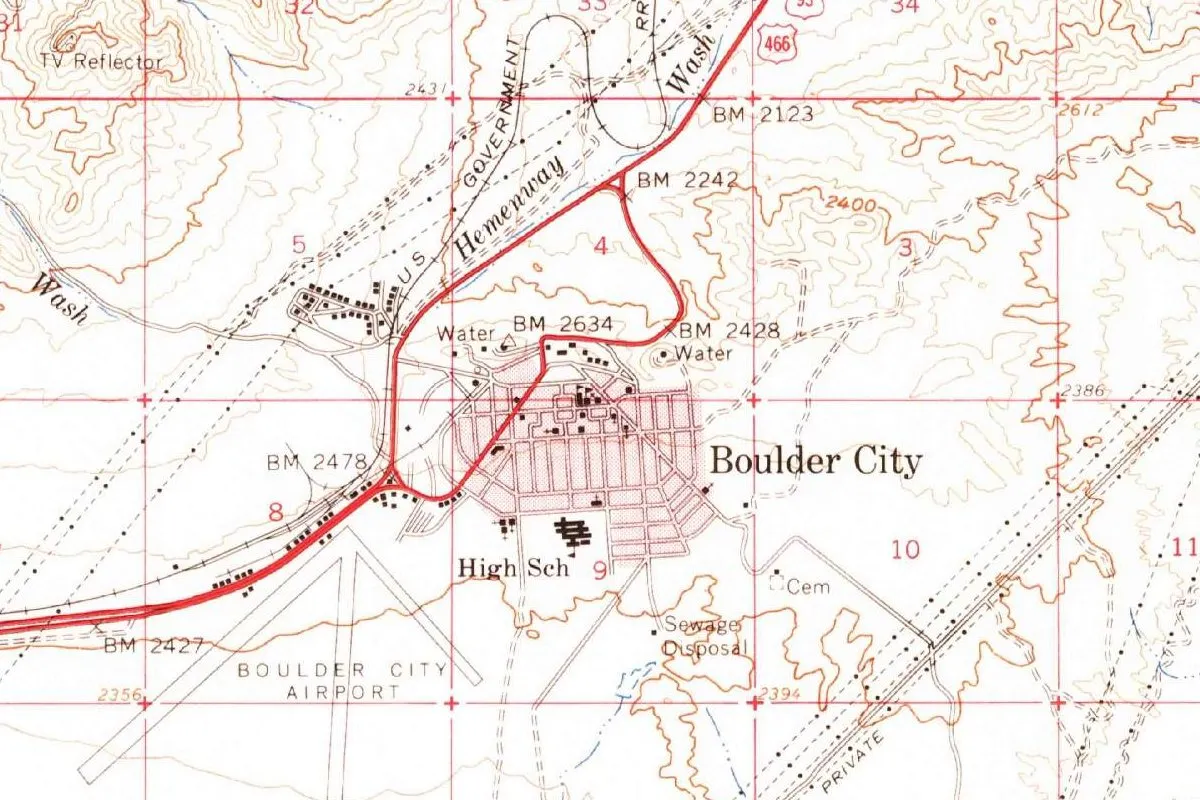
Boulder City
Boulder City started as the government’s town for the dam workers, and at first its name was only a nickname. In October 1930 the New Reclamation Era wrote that the new town site was “now commonly referred to as ‘Boulder City.’ Other names have been suggested, but none has been officially adopted.” A month later the magazine listed a newspaper item headlined “Town for Hoover Dam workers will be named Boulder City.” Neither says why the name was chosen.
Lake Mead
Lake Mead is named for Elwood Mead, the Commissioner of Reclamation who oversaw the dam’s construction. He died in January 1936, and The Reclamation Era reported that on February 6, 1936, the reservoir “was officially named Lake Mead.” Interior Secretary Harold L. Ickes, announcing the action of the Board of Geographic Names, said it was “altogether appropriate that this great, new geographical feature of the West should bear the name of Dr. Mead.” The board’s own entry names the lake “in honor of Dr. Elwood Mead,” “under whose supervision the dam that impounds the lake was built.”
Out of town
Goodsprings
Goodsprings, a mining town in the southwestern corner of Clark County, is named for a prospector called Good. A 1937 Bureau of Mines report says a group of prospectors found lead ore in the area in 1868, and that “A member of this party, named Good, camped at the springs in the vicinity after the others had left, and Goodsprings was named for him.” The report doesn’t give his first name.
Names we’re still checking
You might be wondering about Henderson, North Las Vegas, Summerlin, Red Rock Canyon, Mount Charleston, the Spring Mountains, Sunrise Mountain, Sahara Avenue, Flamingo Road, Tropicana Avenue and Clark County itself. We haven’t yet found an old source we can show you that explains how those names ended up on the map. Until we do, they stay off this page.
Quick answers
Why is it called Hoover Dam?
For Herbert Hoover. Interior Secretary Ray Lyman Wilbur named it on September 17, 1930, calling Hoover “a great engineer, who really started this greatest project of all time.” When Congress restored the name in 1947, the Bureau of Reclamation pointed to his work as chairman of the Colorado River Compact Commission and to his being President when the law authorizing the dam took effect.
Why was Hoover Dam called Boulder Dam?
Because the first site studied was in Boulder Canyon. A 1930 government primer says the name was kept “because of long usage” after the site moved to Black Canyon, about 20 miles downriver, since the Bureau already had a Black Canyon dam in Idaho. The name went back to Hoover Dam on April 30, 1947.
Why is it called Lake Mead?
For Elwood Mead, Commissioner of Reclamation from 1924 to 1936, who oversaw the dam’s construction. The lake was officially named for him on February 6, 1936, less than two weeks after he died.
What does Las Vegas mean?
The meadows. A 1913 history of Nevada says the name, “being translated from the Spanish means ‘The Meadows.’” Who gave it is still argued over; our Las Vegas page has the details.
Key dates
- 1844May 3: John C. Frémont camps at the springs, at "a camping ground called las Vegas."
- 1905May 15: lots in Clark's Las Vegas townsite go up for auction under a mesquite tree, according to a 1913 history.
- 1930September 17: Interior Secretary Ray Lyman Wilbur drives a silver spike near Bracken and names the dam for Herbert Hoover.
- 1936February 6: the reservoir behind the dam is officially named Lake Mead, for Commissioner of Reclamation Elwood Mead.
- 1947April 30: President Truman signs the measure that changes the dam's name from Boulder Dam back to Hoover Dam.
Sponsored
Planning a trip to Las Vegas?
Compare hotels in Las Vegas on Expedia.
See hotels in Las VegasWe may earn a commission if you buy through this link. It never changes what we write. Read our affiliate disclosure
Sponsored
Read up before your trip
Browse digital travel magazines on Magzter.
Browse travel magazinesWe may earn a commission if you buy through this link. It never changes what we write. Read our affiliate disclosure
Historical Sources & References
- New Reclamation Era, vol. 21 (U.S. Bureau of Reclamation, 1930). The Boulder Canyon Project primer, “Why the name Boulder?” (February, p. 27); the silver spike near Bracken and Wilbur’s “I have the honor to name this dam” (October, p. 195); the town site “commonly referred to as ‘Boulder City’” (October, p. 200); the listed headlines on the dam “to be named after President” “in recognition of services as Commerce Secretary” and “Town for Hoover Dam workers will be named Boulder City” (November, p. 218).
- “Boulder Reservoir Officially Named Lake Mead,” The Reclamation Era, vol. 26, February 1936, p. 35. The February 6, 1936, naming, Ickes’s statement and the Board of Geographic Names entry.
- “It’s HOOVER Dam,” The Reclamation Era, vol. 33, June 1947, p. 143. House Joint Resolution 140, Truman’s April 30 signature, and the reasons the name went to Hoover.
- C. P. Squires, “Clark County,” in Sam P. Davis (ed.), The History of Nevada, vol. 2 (1913). “The Meadows” (p. 795); the Stewart ranch, the mesquite tree and Clark’s Las Vegas townsite (p. 796); the 1,200 lots and McWilliams’s “original townsite” (p. 797); McWilliamstown (p. 798); houses “on Freemont street” (p. 799); the Opera House at First and Fremont (p. 800).
- John C. Frémont, Report of the Exploring Expedition to the Rocky Mountains in the Year 1842, and to Oregon and North California in the Years 1843-’44 (1845), p. 266. The May 3, 1844, camp at “a camping ground called las Vegas.”
- William O. Vanderburg, Reconnaissance of Mining Districts in Clark County, Nev. (U.S. Bureau of Mines, 1937). Clark’s Las Vegas Townsite “renamed Las Vegas” (p. 4); Goodsprings “named for” a prospector named Good (p. 37).
- Army Map Service, Las Vegas sheet (1:250,000), 1954, from the USGS Historical Topographic Map Collection. The map at the top of this page.
Sponsored
Want a local to show you around?
Book a private tour of Las Vegas with a local guide on GoWithGuide. Each tour is just for your group, and you can change the plan with your guide before you go.
See private tours in Las VegasWe may earn a commission if you buy through this link. It never changes what we write. Read our affiliate disclosure
Sponsored
Live in the Las Vegas area with kids?
GetOut sells a yearly membership for family attractions around Las Vegas. Check which places are included before you buy, and keep in mind it renews automatically every year unless you turn renewal off in your account.
See GetOut Las VegasWe may earn a commission if you buy through this link. It never changes what we write. Read our affiliate disclosure
Spot something wrong, or know more? Tell us here. You can also email us or use our contact page. Corrections are noted here with their date, never made silently.