Mount St. Helens: Named for a British Diplomat in 1792
Mount St. Helens is named for a British diplomat, Baron St Helens, whom George Vancouver honored in 1792. The baron was Britain’s ambassador in Madrid, and the “Saint” in the name isn’t a saint at all: it’s part of a peer’s title. The people who lived around the mountain had their own name for it, and it describes the smoke.
Who Is Mount St. Helens Named After?
The U.S. Geological Survey says Vancouver, a captain in the Royal Navy, named the peak in 1792 for a fellow Englishman, Alleyne Fitzherbert. Fitzherbert was Baron St Helens, and at the time he was Britain’s ambassador to Spain. Edmond S. Meany, who compiled the origins of Washington’s place names, filled in the timing in 1920. Vancouver’s first look at the mountain came in May 1792, from Puget Sound. That October, sailing off the mouth of the Columbia River, he sighted the peak a second time and gave it its name, “in honor of His Britannic Majesty’s Ambassador at the Court of Madrid,” as he put it.
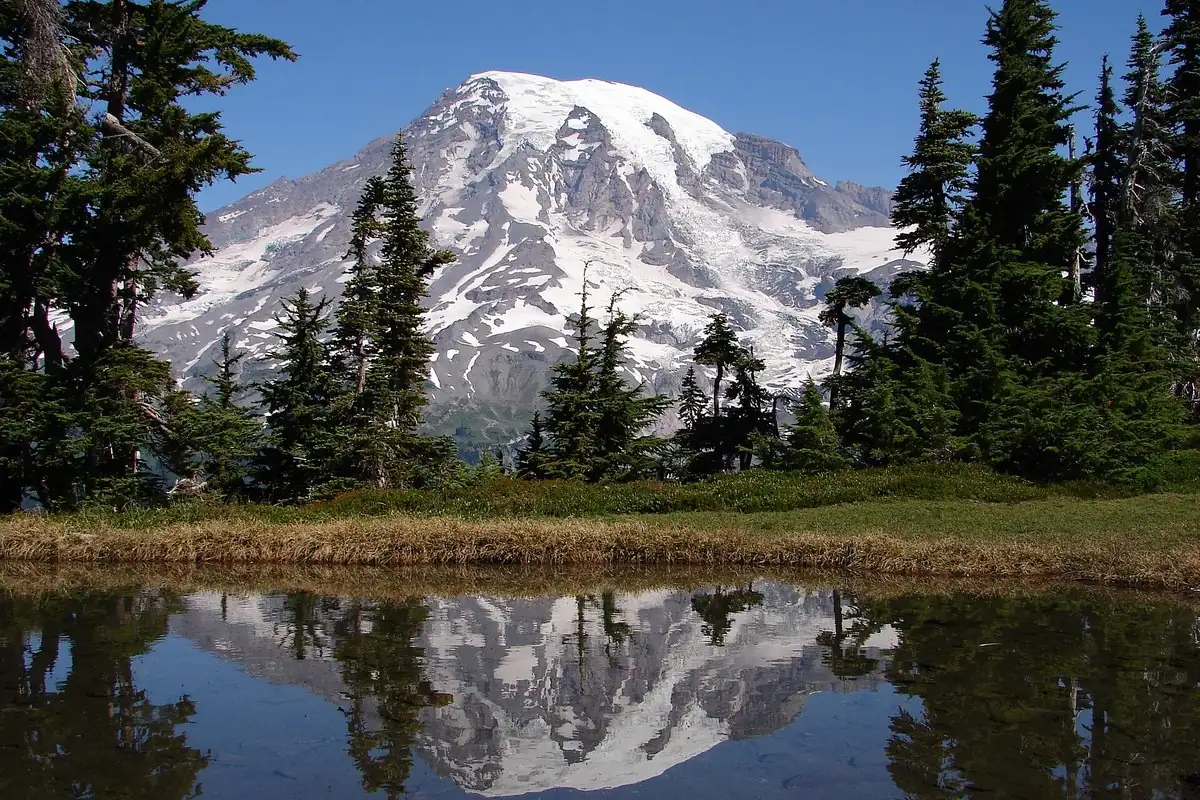
That fits a pattern. The Survey notes that Vancouver also named three other Cascade volcanoes, Mount Baker, Mount Hood and Mount Rainier, after officers of the British navy. Our story on Mount Rainier tells how he put his friend Peter Rainier’s name on that peak in May of the same year, though the admiral never saw it.
Even the spelling needed sorting out. Henry Gannett’s 1902 federal survey of place names, which puts the mountain under “Saint Helens,” says simply that it was named for Lord St. Helens, the British ambassador to Madrid. A decade earlier, the first report of the U.S. Board on Geographic Names had ruled on the spelling for the town, the mountain and the bar in Oregon and Washington: “St. Helens,” not “St. Hellens.” Today the federal names database spells it out in full: Mount Saint Helens.
The Geological Survey says some Native peoples of the Pacific Northwest called the mountain lawilátɬa, “one from whom smoke comes.” Under the spelling Lawetlat’la, the volcano is listed on the National Register of Historic Places as a place of traditional cultural importance to the Cowlitz Indian Tribe and the Confederated Tribes and Bands of the Yakama Nation.
Meany recorded another form in 1920, with a caution built in: the Indian name “is said to have been Louwala-clough,” meaning “smoking mountain,” and he took it from an 1899 article in The Washington Historian. Different spellings, but both versions point to the same thing, a mountain that smoked.
Mount St. Helens History
The mountain nearly had a different English name, too. Meany says that in Hall J. Kelley’s plan to rename the Cascades as a “Presidents’ Range,” Mount St. Helens was to become Mount Washington. The scheme didn’t take, and Meany adds that the peak was for a while confused with Mount Adams, which sits at about the same latitude.
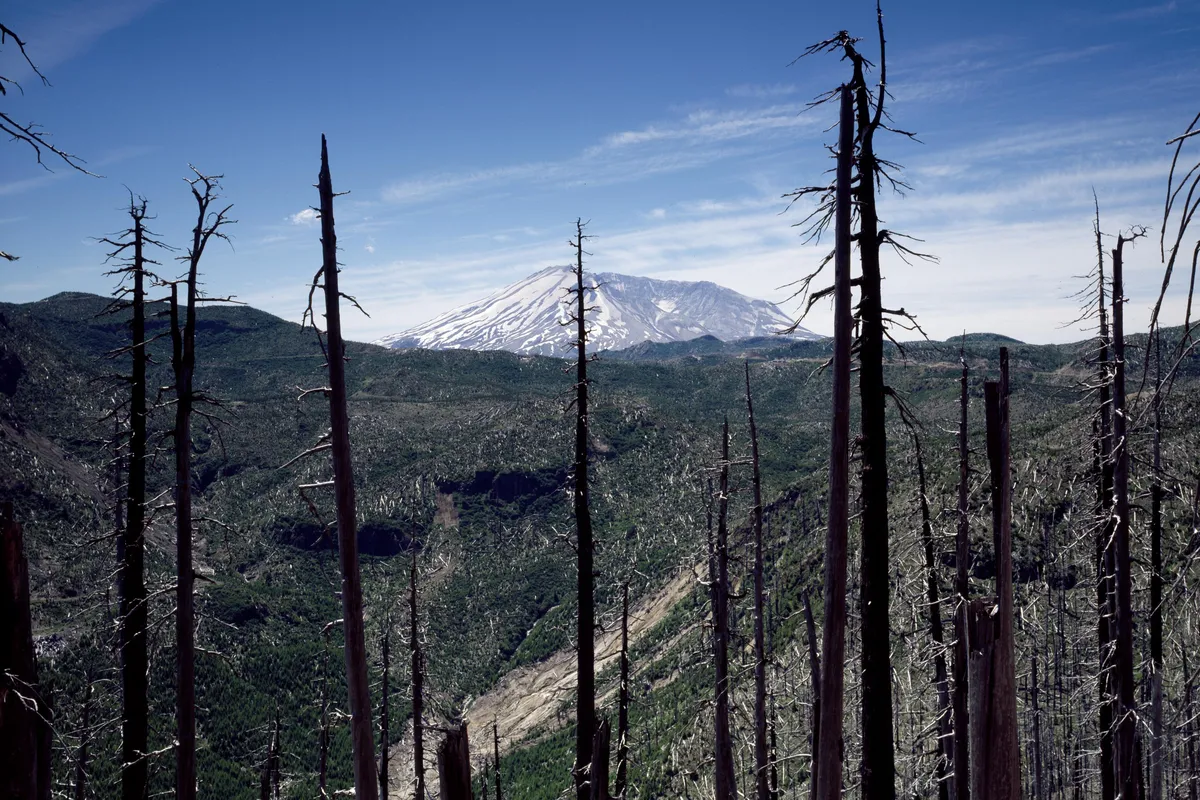
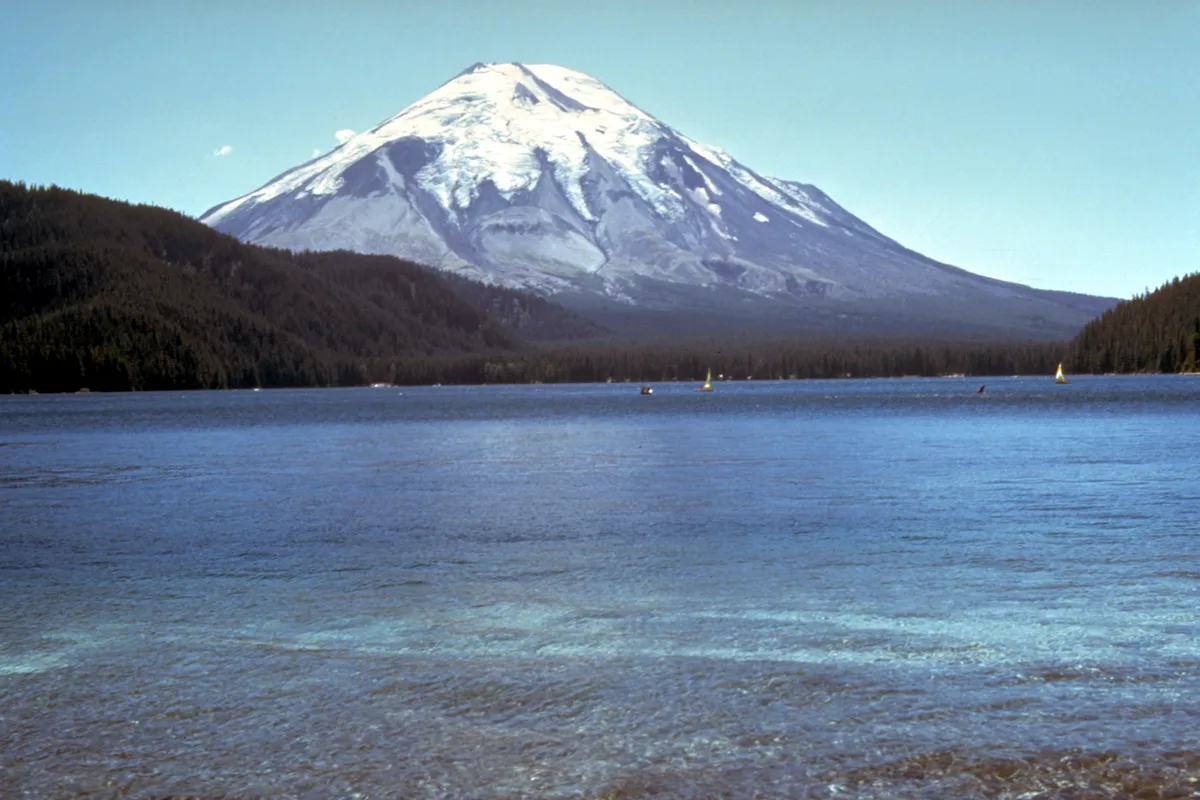
The Survey says that before 1980 the volcano had such a smooth cone that it was sometimes called the Mount Fuji of America. Meany gave its height as 9,671 feet (2,948 m). Then, on May 18, 1980, at 8:32 in the morning, a magnitude 5.1 earthquake set off what the Survey calls “the largest debris avalanche on Earth in recorded history,” and the eruption followed. The upper 1,300 feet (400 m) of the mountain was gone. HistoryLink, Washington’s online encyclopedia, puts the death toll at 57.
If you compare old pictures with new ones, you’ll see how much lower today’s summit is. A lidar survey in 2009, the Geological Survey says, found the highest point at 8,330 feet (2,539 m). The photo at the bottom of this page, from the Forest Service, shows the old cone above Spirit Lake around 1979, about a year before the eruption.
The Forest Service manages Mount St. Helens National Volcanic Monument, 110,000 acres (44,500 ha) set aside by Congress and the President in 1982. The best-known viewpoint, Johnston Ridge Observatory, where State Route 504 ends, has been cut off by a landslide that first closed the highway in May 2023. The Forest Service’s January 2026 update says the observatory may reopen in 2027, depending on the state’s repair work, so check its page before you plan a trip around it.
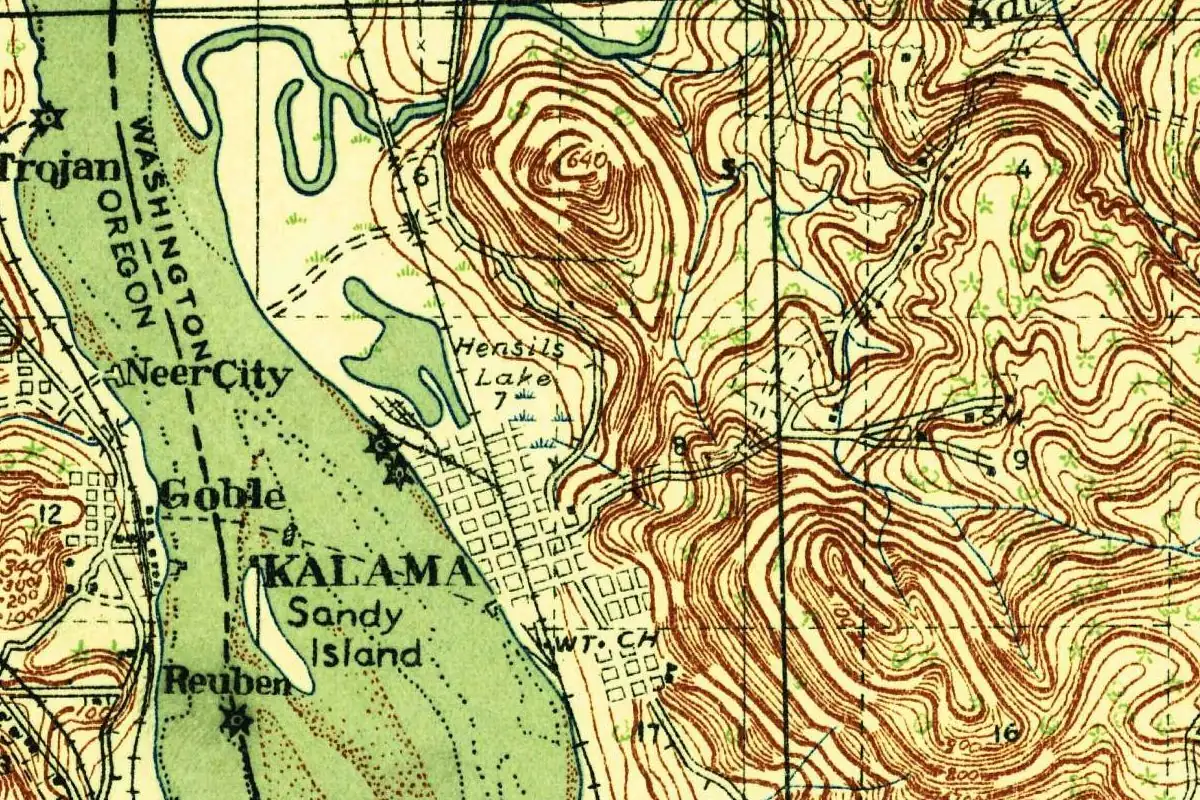
The mountain sits in Skamania County. One of the closest towns we’ve written about is Kalama, on the Columbia River in Cowlitz County, a town that Meany’s place-names study says was named in 1871 by a general of the Northern Pacific.
Quick answers
Who was Mount St. Helens named after?
Alleyne Fitzherbert, Baron St Helens, a British diplomat who was ambassador to Spain when George Vancouver named the mountain in 1792.
Is Mount St. Helens named after a saint?
No. “St Helens” was part of Fitzherbert’s title as a British baron, and Vancouver named the peak for him.
What is the Native American name for Mount St. Helens?
The Geological Survey gives lawilátɬa, “one from whom smoke comes,” listed on the National Register as Lawetlat’la. Edmond Meany recorded a form said to be Louwala-clough, “smoking mountain.”
How tall was Mount St. Helens before 1980?
Edmond Meany gave 9,671 feet in 1920. The 1980 eruption removed about 1,300 feet, and a 2009 survey measured the summit at 8,330 feet.
Key dates
- 1792October: off the Columbia River, George Vancouver names the mountain for Baron St Helens (he had first seen it from Puget Sound in May).
- 1892The first report of the U.S. Board on Geographic Names settles on "St. Helens," not "St. Hellens."
- 1920Edmond Meany's Washington place-name study gives the peak's height as 9,671 feet.
- 1980May 18: at 8:32 a.m. an earthquake sets off a huge landslide and eruption; 57 people die.
- 1982The President and Congress create the 110,000-acre Mount St. Helens National Volcanic Monument.
- 2009A lidar survey puts the highest point at 8,330 feet.
Find it in Google Maps
Opens in a new tab. The pin is a point from the USGS place-name record, so it may not be the middle of the area.
Sponsored
Planning a visit?
Compare hotels in the area on Expedia.
See hotels nearbyWe may earn a commission if you buy through this link. It never changes what we write. Read our affiliate disclosure
Historical Sources & References
- U.S. Geological Survey, “What is the origin of the name ‘Mount St. Helens’?”. lawilátɬa, “one from whom smoke comes,” and the National Register listing as Lawetlat’la; Vancouver’s naming in 1792 for Alleyne Fitzherbert, Baron St Helens, ambassador to Spain; Baker, Hood and Rainier.
- Edmond S. Meany, “Origin of Washington Geographic Names” (Washington Historical Quarterly, 1920). Entry “Mount Saint Helens,” p. 217: May and October 1792, Vancouver’s words from the second edition of his Voyage, Kelley’s “Mount Washington,” the confusion with Mount Adams, “Louwala-clough” with its caveat, and 9,671 feet.
- Henry Gannett, The Origin of Certain Place Names in the United States (1902). “Saint Helens; mountain in Washington, named for Lord St. Helens, British ambassador to Madrid.”
- First Report of the United States Board on Geographic Names, 1890-1891 (1892). “St. Helens, town, mountain, and bar. Oregon and Washington,” with “St. Hellens” as the rejected form.
- U.S. Geological Survey, Cascades Volcano Observatory, “Mount St. Helens”. The “Mount Fuji of America,” the 1,300 feet lost in 1980 and the 2009 lidar height of 8,330 feet.
- U.S. Geological Survey, “1980 Cataclysmic Eruption”. The magnitude 5.1 earthquake at 8:32 a.m. on May 18, 1980, and the debris avalanche.
- HistoryLink.org, “Mount St. Helens erupts on May 18, 1980”. The 57 deaths.
- USDA Forest Service, Mount St. Helens National Volcanic Monument. The 110,000-acre monument created in 1982.
- USDA Forest Service, “Johnston Ridge Observatory”. The landslide on State Route 504 since May 2023 and the January 2026 estimate of a reopening in 2027.
- U.S. Geological Survey, “Mount St. Helens before May 18, 1980 eruption”. The photo of the peak above Spirit Lake at the bottom of this page, by Jim Nieland of the Forest Service; the Survey lists it as public domain.
- GNIS feature 1525360, Mount Saint Helens (U.S. Geological Survey). The official form, Mount Saint Helens, a summit in Skamania County.
Spot something wrong, or know more? Tell us here. You can also email us or use our contact page. Corrections are noted here with their date, never made silently.