Badlands: Why the Lakota and French Called It Bad
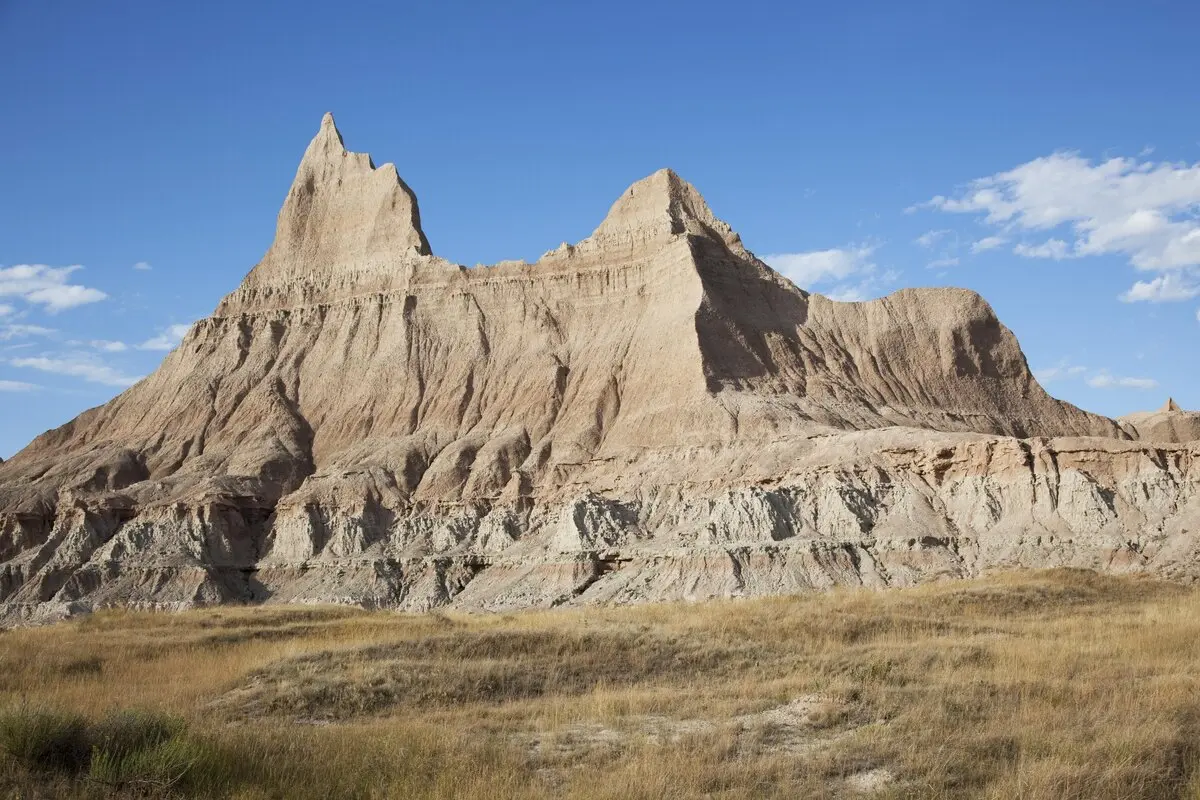
Badlands translates the Lakota mako sica and the French trappers’ mauvaises terres, names for land that is bad to cross. Which name came first is debated. The word was never a judgment on the scenery. It was a warning about how hard the ground was to travel across, and if you’ve ever walked on the clay here after a rain, you’ll understand it.
Why Is It Called Badlands?
The Park Service’s naming article, “Mako Sica: Naming the Badlands,” gives the Lakota name as mako sica and says it literally means “bad lands.” French trappers, it says, called the place “les mauvaises terres a traveser,” which it translates as bad lands to travel across. Ray Mattison and Robert Grom’s 1968 history of the monument breaks the words down, though it calls the name Dakota: mako for land and sica for bad. A 2006 historic resource study for the park adds a variant spelling, maka sica.
What made the land bad? The Park Service lists the reasons a traveler would have felt: rain turns the clay slick and sticky, canyons and buttes break up the ground, winters are cold and summers hot, and what water there is tends to be muddy. Mattison and Grom add that fur traders used “bad lands” loosely, for this spot and also for any stretch of prairie where travel was hard.
Badlands Name Origin: Mako Sica or Mauvaises Terres?
Here the sources part ways. The Park Service says that since French trappers lived and traded among the Lakota, the French name likely came straight from the Lakota one. Cleophas O’Harra, in a 1920 bulletin of the state School of Mines, took the same view a century earlier. On page 19 of The White River Badlands, he calls the English word a literal translation of the French, which in turn borrowed the older Dakota name.
The 2006 historic resource study raises the opposite possibility. Citing Mako Washte, an ethnographic overview that David R. M. White drafted for the Park Service, it says the Lakota name may be nothing more than a translation back from the French. The study also suggests a Lakota name that may fit better, Paha ska, which it renders as White Hills. With the Park Service and O’Harra on one side and White’s caution on the other, it’s fair to say the English name comes from the French and Lakota terms, and that nobody has settled which of those two is older.
Badlands History: From Wonderland to National Park
The name on the map wasn’t settled quickly either. The earliest published picture of these badlands, according to Mattison and Grom, is a sketch titled “Les Mauvaises Terres, Nebraska,” made in 1849 by John Evans, an assistant sent out by the government geologist David Dale Owen. The area was then counted as part of Nebraska.
The first park bills used a different name. Senator Peter Norbeck’s bill of May 2, 1922, would have created Wonderland National Park, and a House bill in December 1923 tried the same name. The Park Service’s naming page calls that a fun fact, and you can see why. In 1928 Norbeck’s new bill proposed Teton National Park instead. Mattison and Grom say a House committee in February 1929 changed that to Badlands National Monument, and Calvin Coolidge signed the act on March 4, 1929, the last day of his presidency. The act set conditions on land and on a road the state had to build, and it took ten more years before Franklin D. Roosevelt proclaimed the monument on January 25, 1939.
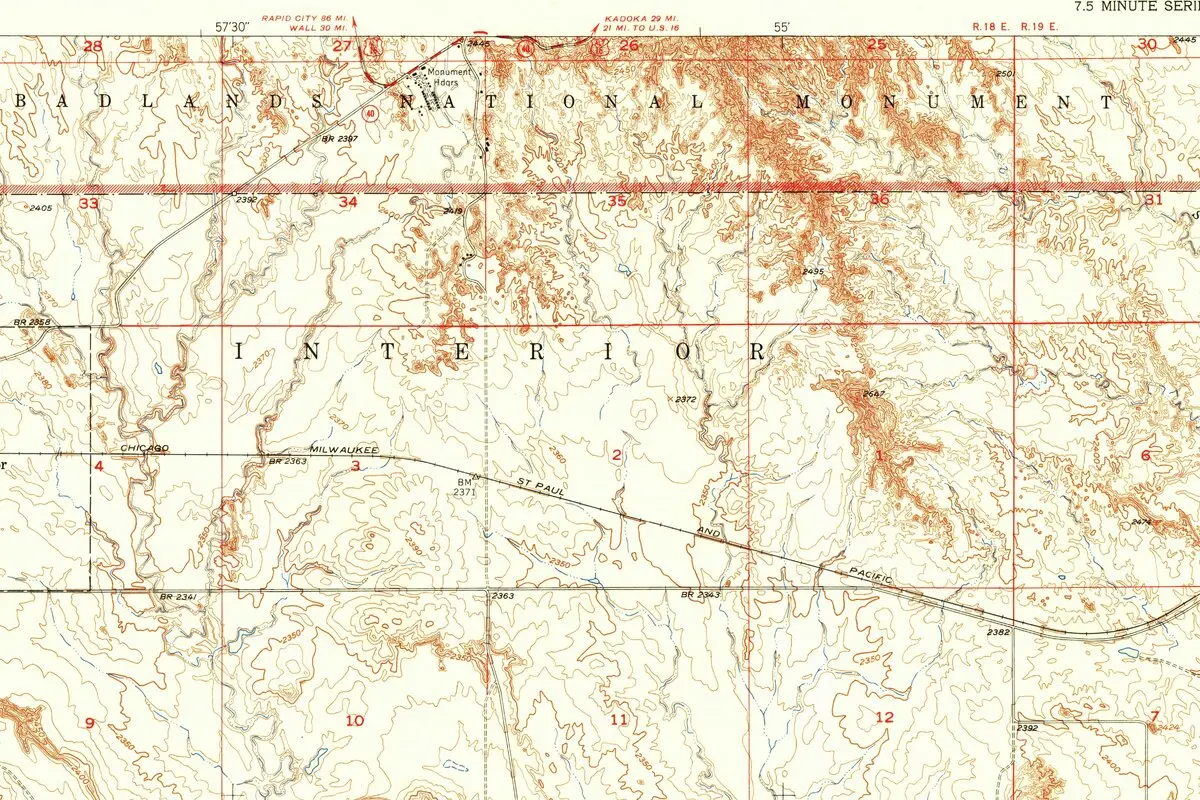
The last change came in 1978. A law of November 10 that year says the monument “shall henceforth be known as the ‘Badlands National Park.’” The 1950 survey map further down shows the monument’s red boundary along the top, the name Interior spaced out in big letters below it, and the railroad heading east from the town of Interior, which lies just west of the area shown.
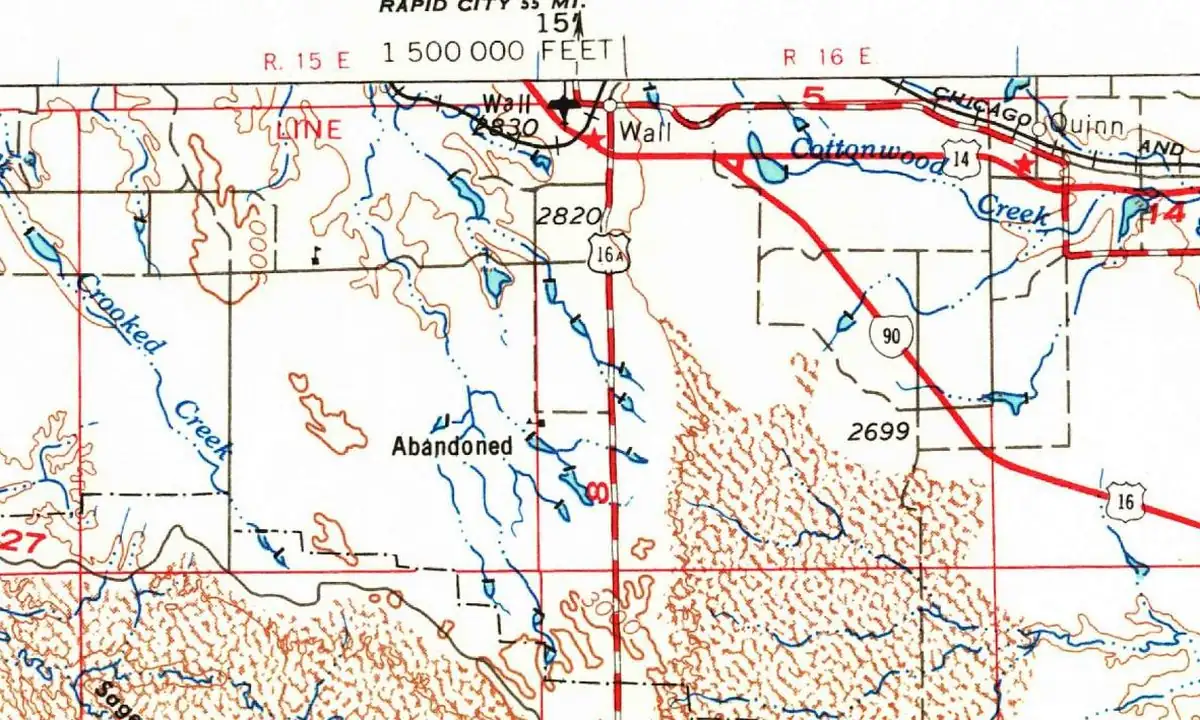
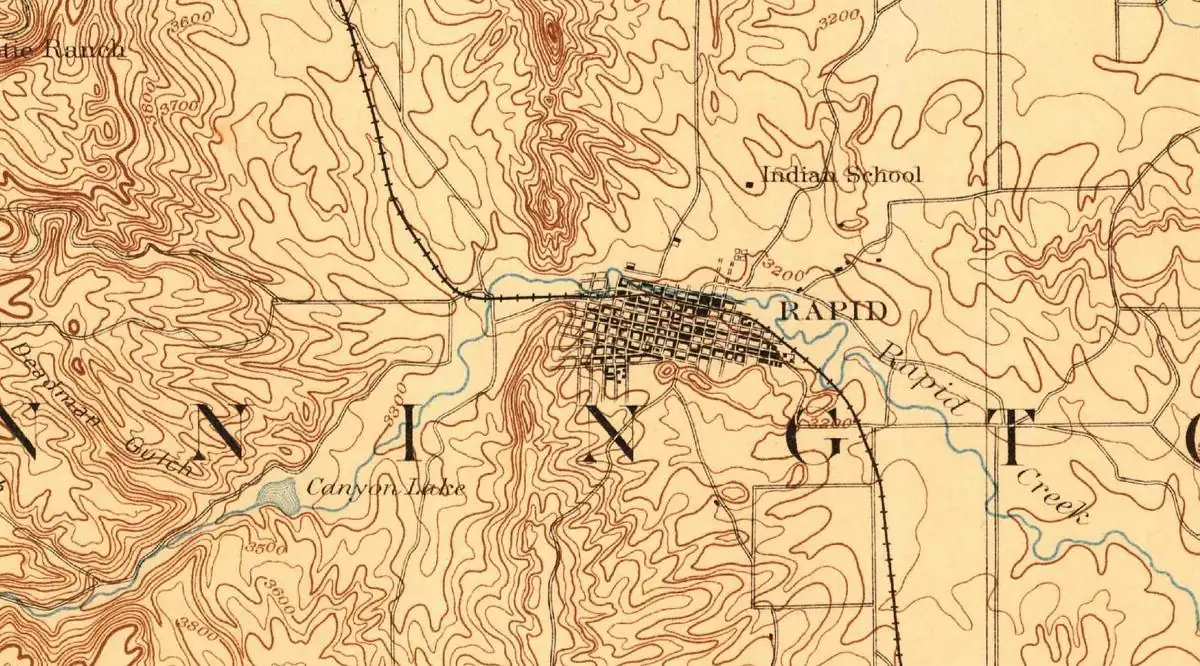
Two towns nearby carry their own pieces of this story. Wall is named for the Badlands’ own rock wall, which a railroad officer’s 1908 book described as a “natural wall” near the town site. And Rapid City is named for Rapid Creek, a name its founders chose in 1876 while also hoping the town would grow fast.
Quick answers
Why Is It Called Badlands National Park?
Because the park is named for land that was hard to cross. The Lakota called it mako sica, land that is bad, and French trappers called it les mauvaises terres à traverser, “bad lands to travel across.” Slick clay after rain, broken canyons and muddy water made travel slow, and the English name translates those older ones.
Is Badlands National Park Named for Mako Sica?
In part: the Park Service says the Lakota mako sica literally translates as “bad lands,” and Mattison and Grom split it into mako, land, and sica, bad. A 2006 Park Service study notes the spelling maka sica too, and mentions Paha ska as a Lakota name that might be more accurate.
What Is the Badlands Name Origin: Lakota or French?
Probably Lakota first, say the Park Service and a 1920 study by Cleophas O’Harra, since French trappers spent time among the Lakota. A 2006 study for the park cites David R. M. White’s ethnographic overview, which warns it could be the other way around, with the Lakota name translated back from the French.
What Was Badlands National Park Called Before?
Badlands National Monument, from 1939 until Congress renamed it a national park in 1978. Before that, boosters tried other names: a 1922 bill proposed Wonderland National Park, and a 1928 bill proposed Teton National Park, until a House committee chose Badlands in 1929.
Key dates
- 1849John Evans, sent by geologist David Dale Owen, sketches "Les Mauvaises Terres," the earliest published view of these badlands.
- 1920Cleophas O'Harra of the state School of Mines writes that the French name took over an older Dakota one, Mako Sica.
- 1922May 2: Senator Peter Norbeck's bill proposes the area as Wonderland National Park.
- 1929March 4: Calvin Coolidge signs the act for Badlands National Monument, renamed from a bill for Teton National Park.
- 1939January 25: Franklin D. Roosevelt proclaims Badlands National Monument.
- 1978November 10: Congress renames the monument Badlands National Park.
Find it in Google Maps
Opens in a new tab. The pin is a point from the USGS place-name record, so it may not be the middle of the area.
Sponsored
Planning a visit?
Compare hotels in the area on Expedia.
See hotels nearbyWe may earn a commission if you buy through this link. It never changes what we write. Read our affiliate disclosure
Historical Sources & References
- National Park Service, “Mako Sica: Naming the Badlands”. Mako sica: it “literally translates to ‘bad lands’”; the French “les mauvaises terres a traveser”; the French name “likely” taken from the Lakota one; slick clay, canyons, weather and muddy water; Wonderland National Park, 1922.
- Discovery and Re-Discovery in the White River Badlands (2006). Chapter 1, page 2: mako and sica, “also Maka sica”; White’s caution that the Lakota name could be a “reverse translation,” citing Mako Washte, page 237; Paha ska.
- Mattison and Grom, History of Badlands National Monument (1968), section 1. The trappers’ name and its meaning; traders’ wider use of “bad lands”; Mako Sica broken into land and bad; Evans’s 1849 sketch.
- Mattison and Grom, section 3. Norbeck’s Wonderland bill of May 2, 1922, and H.R. 2810 of 1923; the Teton National Park bill of 1928; the committee’s change to Badlands National Monument; Public Law 1021, signed March 4, 1929.
- Mattison and Grom, section 4. Roosevelt’s proclamation of January 25, 1939.
- Cleophas C. O’Harra, The White River Badlands (1920). Page 19: the English name translates the trappers’ Mauvaises Terres, which took over the earlier Dakota Mako Sica.
- 16 U.S.C. 441e-1. The 1978 law renaming the monument “Badlands National Park.”
- USGS, Interior, South Dakota, 1:24,000 map, 1950. Shown on this page; public domain as a U.S. government map.
- GNIS feature 1265096, Badlands National Park (USGS). The park’s GNIS record.
Spot something wrong, or know more? Tell us here. You can also email us or use our contact page. Corrections are noted here with their date, never made silently.