Alcatraz: A Seabird Name That May Have Belonged Elsewhere
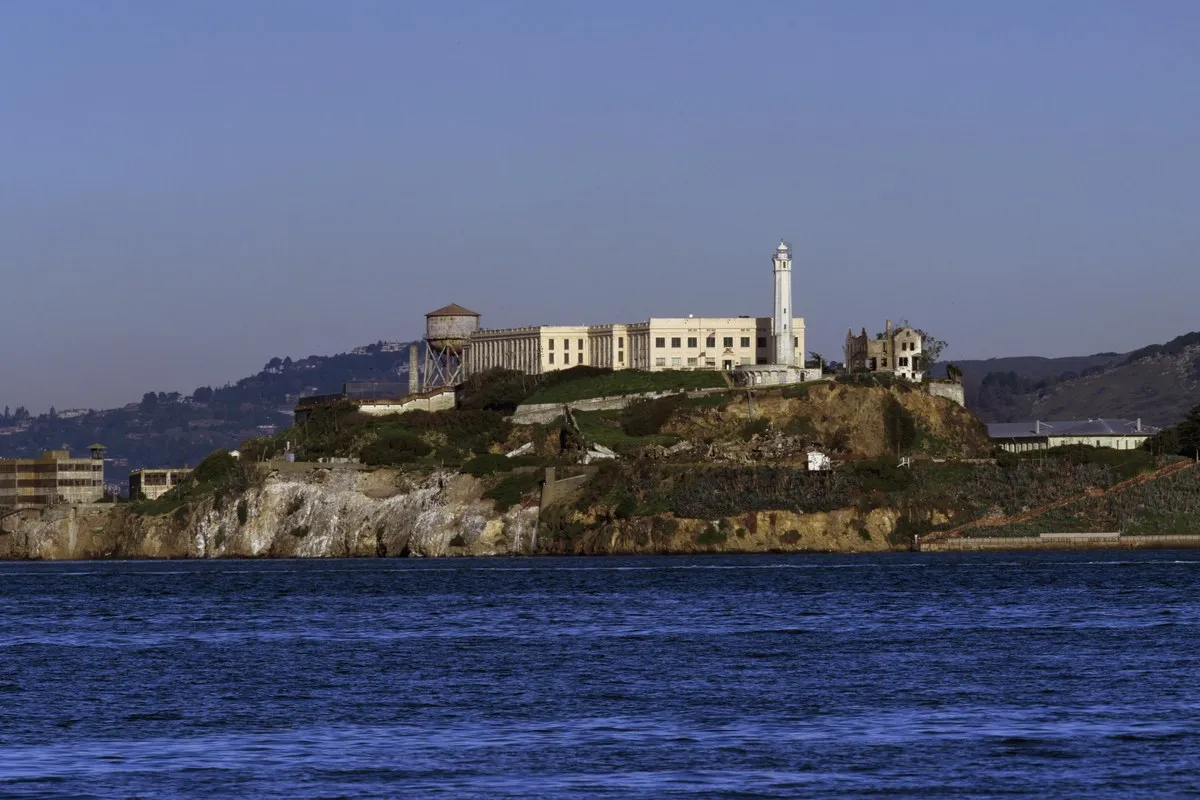
Alcatraz takes its name from the Isla de los Alcatraces, an island of seabirds named in 1775, but the first Spanish chart put that name on another island. It took a British navy surveyor, half a century later, to settle which rock in San Francisco Bay would carry it. And even the birds are up for debate.
Why Is It Called Alcatraz?
In August 1775 Juan Manuel de Ayala sailed the San Carlos into San Francisco Bay, the first ship known to have done it. On August 12 he took a small boat from his anchorage to the big island he called Isla de los Angeles, today’s Angel Island, and then went looking for another one. In the translation that the Park Service historian Erwin Thompson quoted in 1979, Ayala found it “so arid and steep there was not even a boat-harbor there,” and named it “de las Alcatrazes” because the birds were “so plentiful there.”
His chart spelled it Alcatraces. Thompson counted the ways Army officers mangled it later: Alcatras, Alcatrazes, Alcatrose, Alcatrace, Alcatrasas, Alcatrazos, Alcatrazas and, most popular in the 1850s, Alcatrases. By 1851, he says, the Coast Survey was using Alcatraz, and the Army caught up around 1866. The old spelling survives in a quote the Park Service prints from an 1852 Board of Engineers report, which calls the place “Alcatrazes Island.”
What does Alcatraz mean: pelicans or cormorants?
Ayala didn’t say which bird he meant. The Park Service’s history of the island translates the name as “Island of the Pelicans.” A Park Service landscape study of Alcatraz says the traditional translation is pelicans but that newer translations say cormorants. The Bureau of Prisons, which ran the prison, says nobody agrees on the exact meaning and offers “pelican” or “strange bird.”
In her 1914 place-name book, Nellie Van de Grift Sanchez called it pelican and admitted that “the story of its naming can not be run to earth.” She thought it probably had to do with the big seabirds that still flapped over the bay. A few pages later she suggested that a giant pelican statue on the island would tell the story nicely.
Alcatraz Name Origin: The Wrong Island on the Map?
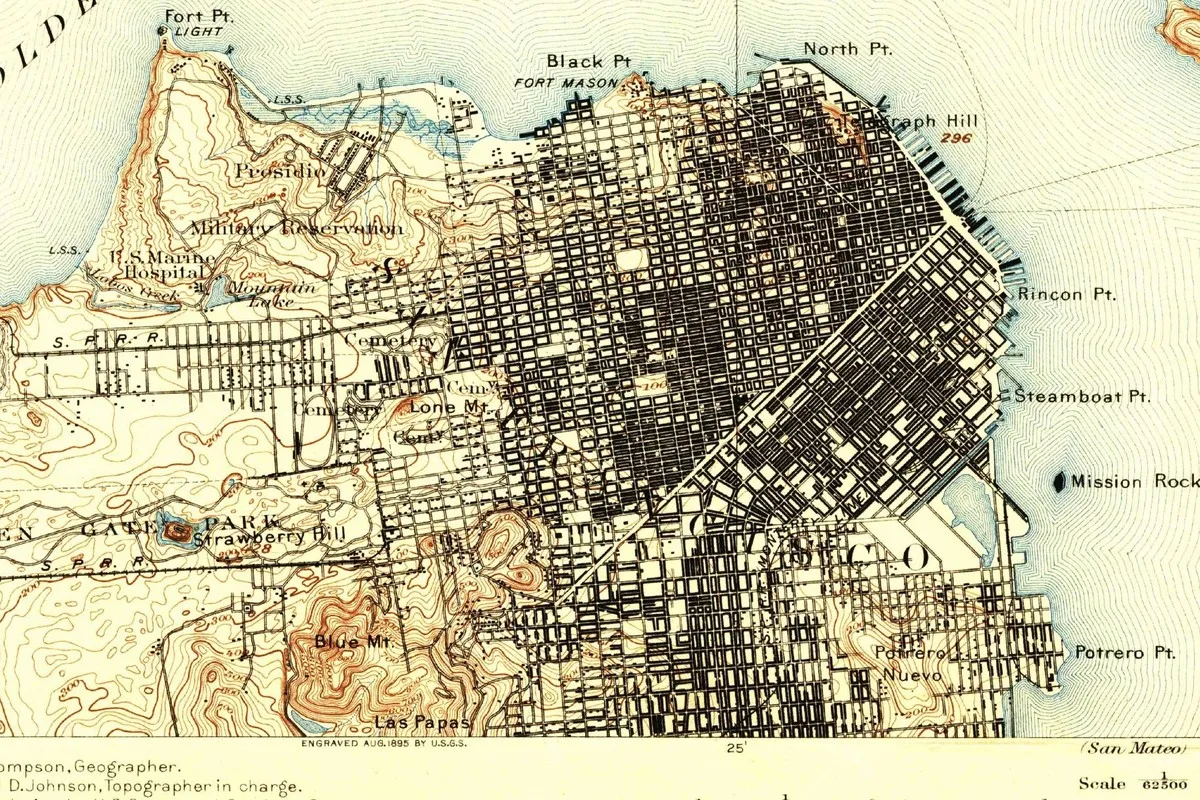
Here’s the twist. Thompson writes that the chart drawn from Ayala’s survey clearly labels today’s Yerba Buena Island, farther east in the bay, as de los Alcatraces. Historians split over it. Frank Stanger and Alan Brown argued that the chart was wrong, that some unskilled hand put the name on the wrong island, and that only today’s Alcatraz fits Ayala’s “arid and steep.” Others take the chart at its word and think the name moved later by accident.
Both sides have a point. Yerba Buena was green enough in the 1870s to feed an Army post with a five-acre garden, Thompson notes, but Ayala’s own pilot, José de Cañizares, called it “rough, steep and with no shelter.” A Mexican map of 1825 still put the name Alcatraz on Yerba Buena and left today’s island unnamed.
Then in 1826 Capt. Frederick Beechey of the Royal Navy got Mexican permission to survey the bay, and he gave each island the name it has kept ever since, Thompson writes. Beechey’s sailing notes, printed in 1831, tell ships crossing the bar to line up “the small white island, Alcatrasses,” with the fort at the entrance.
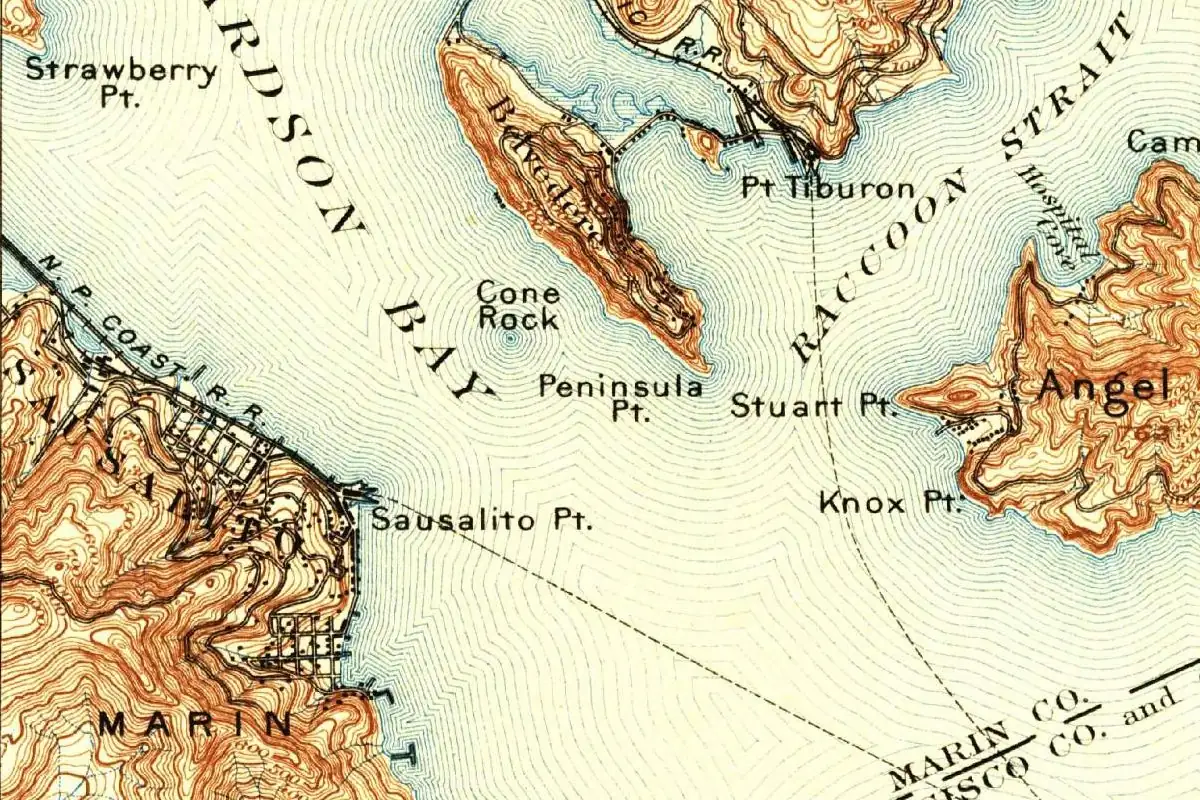
Our guide to San Francisco’s place names adds a wrinkle from the historian Zoeth Eldredge: by 1797, Hubert Howe Bancroft found, the name was already in use in the singular, Isla del Alcatraz. Spelling fights were common around the bay. Across the water in Sausalito, people argued for about 50 years over how to spell the town’s Spanish name, until the Post Office ruled.
Alcatraz History: From Fort to “The Rock”
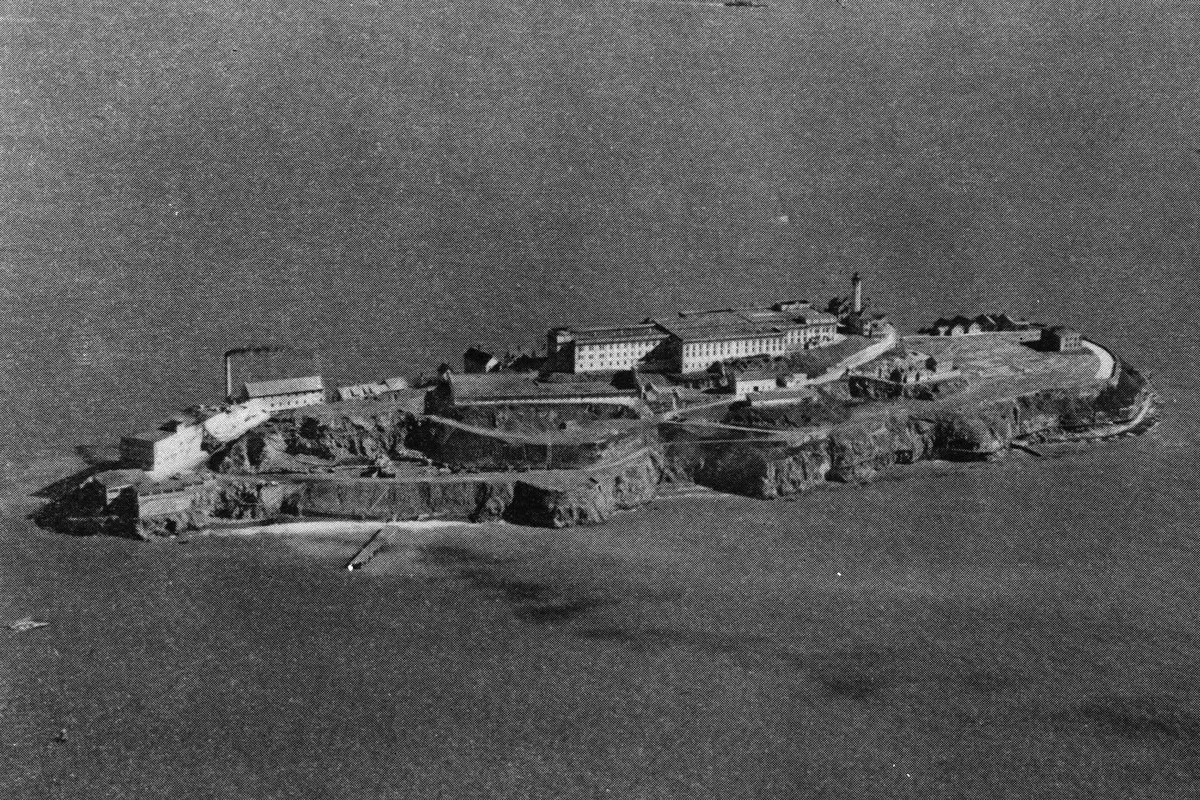
The name outlived every use of the island. The Army fortified it in the 1850s, and the first military prisoners arrived late in that decade. Between 1909 and 1911, the Bureau of Prisons says, military prisoners built the big cellhouse that would win fame as “The Rock.” The photo at the bottom of this page shows that building from the air in May 1928, while the Army still ran the prison.
The Army handed the island to the Justice Department in 1933, and the federal penitentiary operated from 1934 until March 21, 1963, when it closed because it cost too much to run. Indians of All Tribes occupied the island from 1969 until June 1971. In 1972 Congress folded it into the Golden Gate National Recreation Area, created that year, and it opened to visitors in the fall of 1973.
If you go, you’ll get there only on the Park Service’s contracted ferry, and the walk from the dock up to the cellhouse climbs 130 feet (40 m). The island is off-limits on Christmas, New Year’s Day and Thanksgiving, and parts of it close during the seabird nesting season. The birds, whichever kind Ayala meant, are still the reason for some of the rules.
Quick answers
What does Alcatraz mean in Spanish?
It comes from alcatraz, a seabird. Ayala named the island in 1775 for the birds he found there. The Park Service gives pelicans; a Park Service landscape study says newer translations say cormorants, and the Bureau of Prisons calls the exact meaning debated.
Who named Alcatraz Island?
Juan Manuel de Ayala gave the name in 1775, but his expedition’s chart put it on today’s Yerba Buena Island. The British surveyor Frederick Beechey attached it to the present island in 1826, according to the Park Service’s 1979 history.
Was today’s Alcatraz Island the one Ayala named?
Historians disagree: Stanger and Brown said only Alcatraz fits his description of an arid, steep island with no landing, while others trust the chart, which labels Yerba Buena. Beechey’s 1826 survey fixed the name on today’s island, whichever one Ayala saw.
Why is Alcatraz prison called The Rock?
The nickname belongs to the prison. The Bureau of Prisons says the cellhouse built by military prisoners between 1909 and 1911 came to be known as “The Rock,” and it stayed in use through the federal penitentiary years, 1934 to 1963.
Key dates
- 1775August: Juan Manuel de Ayala names an island "de las Alcatrazes" for its seabirds; his chart puts the name on today's Yerba Buena.
- 1825A Mexican chart of the bay still calls Yerba Buena Island Alcatraz.
- 1826British surveyor Frederick Beechey gives Alcatraz and Yerba Buena the names they have kept since.
- 1851The Coast Survey settles on the spelling Alcatraz; the Army takes until about 1866.
- 1934The federal penitentiary opens in the Army's 1909-1911 prison building, later famous as "The Rock."
- 1963March 21: the Bureau of Prisons closes the penitentiary.
- 1972Congress creates the Golden Gate National Recreation Area, which takes in Alcatraz.
Find it in Google Maps
Opens in a new tab. The pin is a point from the USGS place-name record, so it may not be the middle of the area.
Sponsored
Planning a visit?
Compare hotels in the area on Expedia.
See hotels nearbyWe may earn a commission if you buy through this link. It never changes what we write. Read our affiliate disclosure
Historical Sources & References
- Erwin N. Thompson, The Rock: A History of Alcatraz Island, 1847-1972 (National Park Service, 1979). Pages 3-5: Ayala’s voyage and his words, quoted from Stanger and Brown’s translation; the “Alcatraces” chart and its spellings, the Coast Survey in 1851, the Army by 1866; the chart’s label on Yerba Buena, the two scholarly views, Cañizares; the 1825 Mexican map and Beechey’s 1826 survey.
- National Park Service, “The Post on Alcatraces”. Ayala in 1775; the name translated as “Island of the Pelicans”; the 1852 Board of Engineers quote with “Alcatrazes Island.”
- National Park Service, Cultural Landscapes Inventory: Alcatraz Island. Part 2a, page 1: the chart’s “Alcatraces” on Yerba Buena, Beechey in 1826, and the traditional “pelicans” against newer translations as “cormorants,” citing Hart (1996).
- Frederick William Beechey, Narrative of a Voyage to the Pacific and Beering’s Strait (1831). Part 2, page 652, nautical remarks: “the small white island, Alcatrasses,” and the Island of Yerba Buena.
- Nellie Van de Grift Sanchez, Spanish and Indian Place Names of California (1914). Pages 203-204: “Alcatraz (pelican)” and “the story of its naming can not be run to earth”; page 207: the pelican statue idea.
- Federal Bureau of Prisons, “Alcatraz”. “Pelican” or “strange bird”; the Citadel of the early 1850s and the first military prisoners by the late 1850s; the 1909-1911 prison and “The Rock”; the transfer of 1933, the closing on March 21, 1963, the occupation, the 1972 recreation area and the 1973 opening.
- National Park Service, Alcatraz “Frequently Asked Questions”. Closed on three holidays (Christmas, New Year’s Day, Thanksgiving); the 130-foot climb to the cellhouse.
- National Park Service, Alcatraz “Plan Your Visit”. Access only by the contracted ferry company.
- National Park Service, Alcatraz “Operating Hours & Seasons”. Some parts of the island are closed to the public at certain times of year while seabirds nest.
- Library of Congress, HABS CA-1792, Signal Corps photo, May 1928. The aerial photo at the bottom of this page.
- GNIS feature 218080, Alcatraz Island (U.S. Geological Survey). The federal record for the island, in San Francisco County.
Spot something wrong, or know more? Tell us here. You can also email us or use our contact page. Corrections are noted here with their date, never made silently.