Why Is San Francisco Called San Francisco? A Saint's Port
The city is named for Saint Francis of Assisi, founder of the Franciscan friars. Spanish sailors had already marked a port of San Francisco on this coast, and the 1769 land expedition decided it had reached it. Spain founded a presidio on the bay in 1776, and the village of Yerba Buena took the name in 1847.
The saint behind San Francisco is Francis of Assisi, founder of the Franciscan friars, and his name came to the city by way of a Spanish harbor. The Spanish called this stretch of coast the port of San Francisco decades before there was a town, and the town didn’t take the name until 1847.
A promise about a port
The best story about the name comes from Francisco Palóu, a Franciscan friar who wrote the life of his teacher, Father Junípero Serra. Before the first Spanish settlers went north into Alta California in 1769, Serra sat down with José de Gálvez, the king’s inspector-general, to plan the first three missions. Looking over the names and patron saints, Serra noticed one missing and asked, “Sir, is there to be no Mission for our Father St. Francis?” Gálvez answered:
“If St. Francis wants a Mission, let him cause his port to be discovered and a Mission for him shall be placed there.”
Palóu wrote that down years later, and the English translation came out in 1913, so you’re getting a friar’s memory of a conversation, not a transcript. The Annals of San Francisco, a city history from 1855, tells the same exchange in more dramatic language and has the friars naming the bay on the spot. Palóu’s version is the safer one, because in it a port of San Francisco was already on the Spanish charts. Nobody had to invent the name. They had to find the harbor.
Looking for Monterey, finding San Francisco
The land expedition of 1769 was supposed to find Monterey Bay, which Sebastián Vizcaíno had praised in 1602. It walked right past Monterey without recognizing it and kept going north. Fray Juan Crespí, the expedition’s diarist, wrote on October 31, 1769:
“…we came to the recognition of this port; it is that of Our Father San Francisco, and we have left that of Monterey behind”
On November 11 the officers met in council and agreed that the coast showed all the marks of the harbor of San Francisco as the old sailing guides described it.
There’s a wrinkle you won’t see on a souvenir mug. The port Crespí recognized wasn’t the bay the city sits on now. Bolton, as the diary’s editor, identifies it as the Gulf of the Farallones, with Drake’s Bay at its northern end, and puts the camp on San Pedro Creek. In an earlier book, Bolton notes that Drake’s Bay was the place “called San Francisco by the Cermeño expedition,” an earlier Spanish voyage. Father Antonio de la Ascensión, sailing with Vizcaíno in 1602, mentions “the port of San Francisco, where in times past there was lost a ship from China.” The saint’s name sat on that outer harbor first. The Annals date the first discovery of the great bay inside to about the end of October 1769, on the same trip, and that’s where the name ended up.
The expedition got back to San Diego on January 24, 1770. Palóu says he took the news as a sign of Providence: the explorers had missed Monterey and reached “the port of our Holy Father, San Francisco.” Gálvez had his answer.
Presidio, mission and a feast day
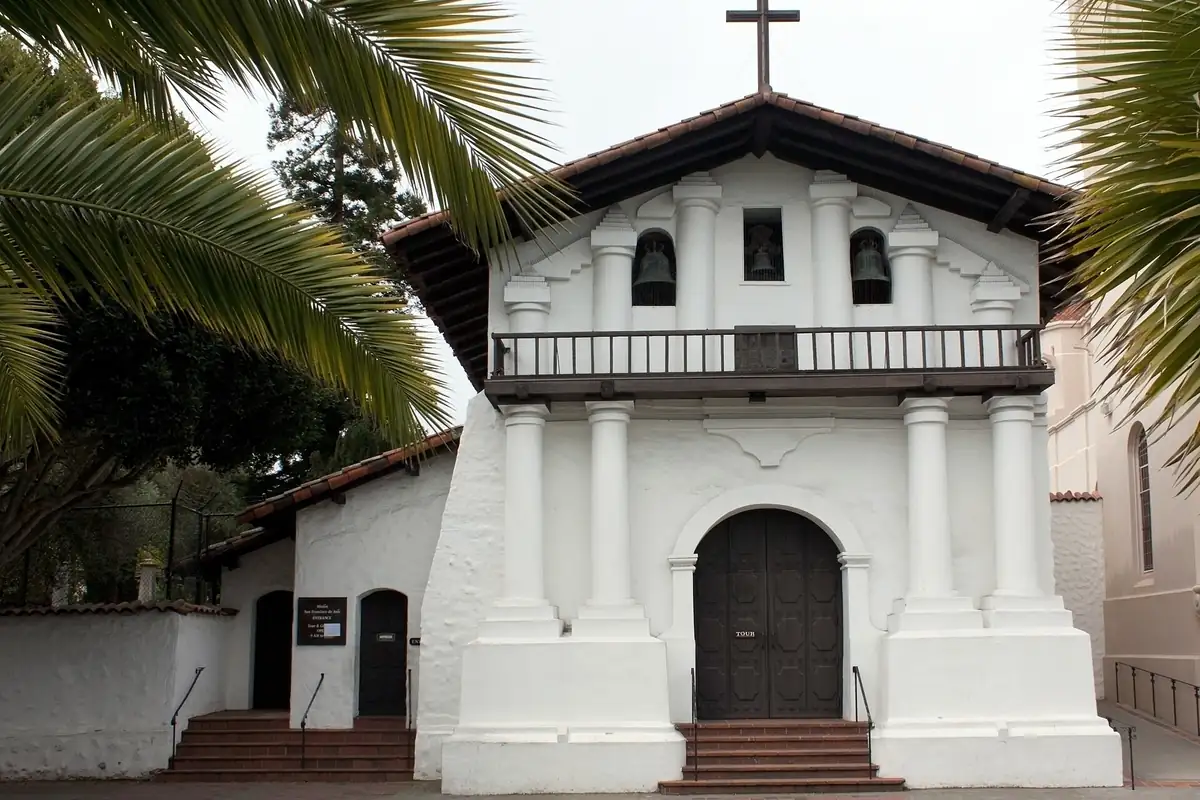
The Spanish settled the bay in 1776. The Annals quote Palóu on the ceremony at the presidio on September 17, chosen because it was “the festival of the impression of the sores of Saint Francis, the patron of the port.” A mission followed nearby, Mission San Francisco de Asís, which most people now call Mission Dolores.
Henry Gannett, compiling American place names for the Geological Survey in 1905, hedged a little. It says the city was named by some accounts “for the old Spanish mission of San Francisco de Assisi,” and by others for the founder of the order to which “Father Junipero, the discoverer of the bay,” belonged. Both versions land on the same saint. The “discoverer” part is off: Crespí and another friar, not Serra, were walking with the land party.
Yerba Buena becomes San Francisco
The town that grew up by the cove had a different name. The Annals say the Spanish village there was called “Yerba Buena—good herb,” after a fragrant herb, a kind of mint, that grew around it, and that “in some maps of the country it was designated as San Francisco; but locally it was only known by the name” Yerba Buena. In January 1847, with California under the American flag, the alcalde, Washington A. Bartlett, a navy lieutenant, issued an ordinance making the official name San Francisco. The California Star printed it on January 30. Our San Francisco travel guide quotes that ordinance.
Not everyone was thrilled. On March 20, the Annals say, the Star finally accepted the change “very unwillingly.” Mr. Semple of the Monterey Californian and T. O. Larkin, who’d just founded a town called Francisca on the Strait of Carquinez, worried it would be lost in the bigger name and renamed theirs Benicia.
Quick answers
Why is San Francisco called San Francisco?
Because the Spanish named a port on this coast for Saint Francis of Assisi, and the town of Yerba Buena took that name in January 1847, according to the Annals of San Francisco.
What was San Francisco’s original name?
Yerba Buena, Spanish for “good herb.” The Annals say the plant grew around the cove and on the island of the same name.
Who discovered San Francisco Bay?
Probably the Spanish land expedition of 1769. The Annals call its sighting, about the end of October that year, what “seems the true and first discovery of that great bay.”
Is San Francisco named after the mission?
Partly. Gannett gives two versions, the mission or the founder of the Franciscans, and both point to Saint Francis of Assisi.
Key dates
- 1769October 31: Crespí writes that the land expedition has recognized the port of San Francisco and left Monterey behind.
- 1770January 24: the expedition is back in San Diego, having reached the port of San Francisco instead of Monterey.
- 1776September 17: the Spanish take possession of the presidio of San Francisco on a feast of Saint Francis.
- 1847January 30: the California Star prints the alcalde's ordinance changing the town's name from Yerba Buena to San Francisco.
- 1847March 20: the California Star accepts the new name and dates its editorial from San Francisco for the first time.
Getting there
Open San Francisco in Google Maps
Opens in a new tab. The pin is the center of San Francisco in the USGS place-name record.
The closest airports, Amtrak stations and intercity bus stops, measured in a straight line from the center of San Francisco.
Airports
- San Francisco International (SFO) San Francisco International Airport 11 mi 18 km
- Oakland San Francisco Bay (OAK) 11 mi 18 km
Amtrak trains
- Oakland station (OKJ) 8 mi 13 km
- Emeryville station (EMY) 8 mi 13 km
Intercity buses
- FlixBus San Francisco Bus Station 1 mi 2 km
- Amtrak Chartered Vehicle Amtrak Connecting Service · San Francisco 1 mi 2 km
- Greyhound San Francisco 425 Mission St Ste 206 2 mi 3 km
Distances are as the crow flies, not by road. We don't list schedules or fares because they change; check with the airline, Amtrak or the bus company before you go. Official data (FAA commercial service airports (2025), FAA airport locations, Amtrak stations and Intercity Bus Atlas) from the FAA and the U.S. Bureau of Transportation Statistics, checked Nov 13, 2026.
Sponsored
Staying in San Francisco?
Compare hotels in San Francisco, California, on Expedia.
See hotels in San FranciscoWe may earn a commission if you buy through this link. It never changes what we write. Read our affiliate disclosure
Sponsored
Want the spooky side of San Francisco?
The name has its story above. For the ghost stories, US Ghost Adventures runs walking ghost tours in San Francisco.
See ghost tours in San FranciscoWe may earn a commission if you book through this link. It never changes what we write. Read our affiliate disclosure
Historical Sources & References
- Francisco Palóu, Life and Apostolic Labors of the Venerable Father Junípero Serra (1913), p. 85. Serra’s question about a mission for St. Francis and the inspector-general’s answer; the expedition’s return to San Diego on January 24, 1770, after passing Monterey and reaching the port of San Francisco.
- Francisco Palóu, Historical Memoirs of New California, ed. Herbert E. Bolton, vol. 2 (1926), pp. 214-215, 222-223. Crespí’s entry for October 31, 1769, with Bolton’s notes placing the port at the Gulf of the Farallones and the camp on San Pedro Creek (pp. 214-215); the council that agreed the coast matched the harbor of San Francisco (pp. 222-223).
- Herbert E. Bolton, ed., Spanish Exploration in the Southwest, 1542-1706 (1916), p. 120. Ascensión’s “port of San Francisco, where in times past there was lost a ship from China,” and Bolton’s note that Drake’s Bay was “called San Francisco by the Cermeño expedition.”
- Frank Soulé, John H. Gihon and James Nisbet, The Annals of San Francisco (1855), pp. 46-47, 157, 178-179, 193. The Gálvez story retold, with the friars naming the bay and the discovery dated about the end of October 1769 (p. 46); possession of the presidio on September 17, 1776, quoting Palóu (p. 47); Yerba Buena, “good herb,” and the change of name in January 1847 (p. 157); Bartlett’s ordinance in the California Star of January 30, 1847 (pp. 178-179); the Star’s acceptance on March 20 and the renaming of Francisca as Benicia (p. 193).
- Henry Gannett, The Origin of Certain Place Names in the United States (USGS, 1905), p. 274. The two versions, mission or founder of the order, and the claim about “Father Junipero, the discoverer of the bay.”
- GNIS feature 277593 (U.S. Geological Survey). Feature 277593, filed under San Francisco County.
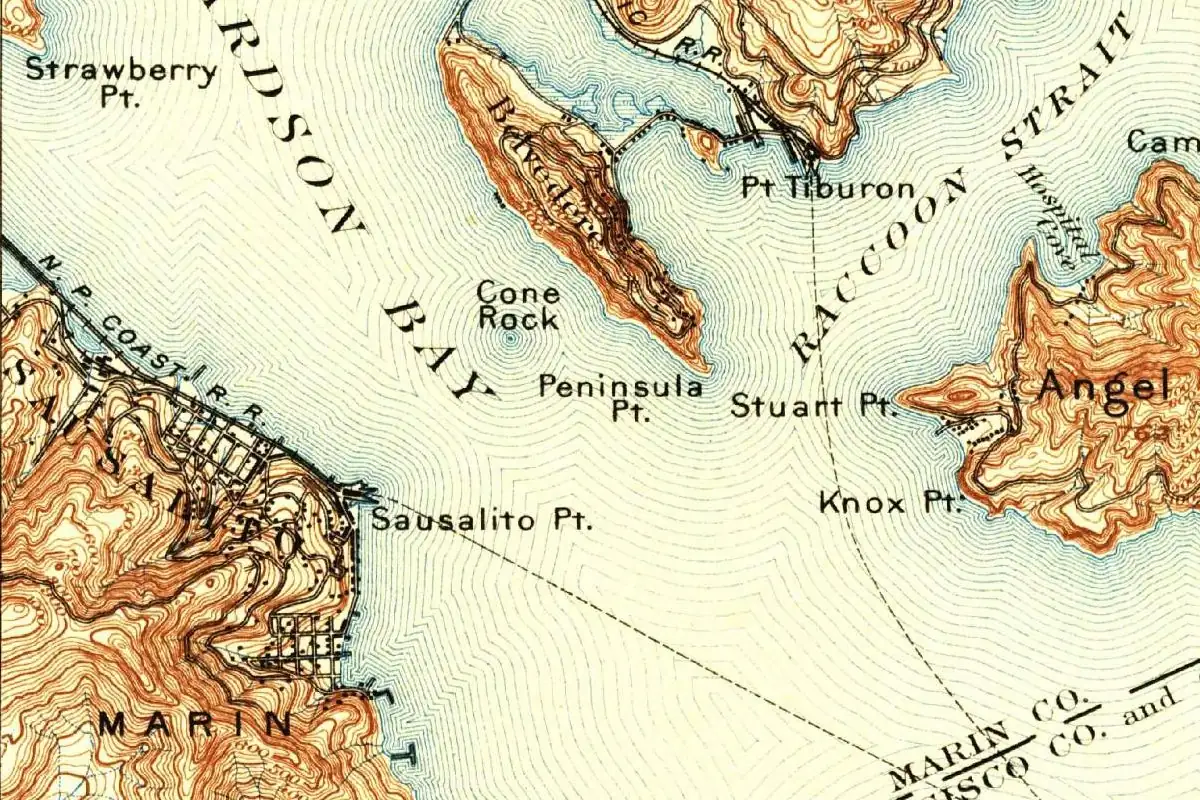
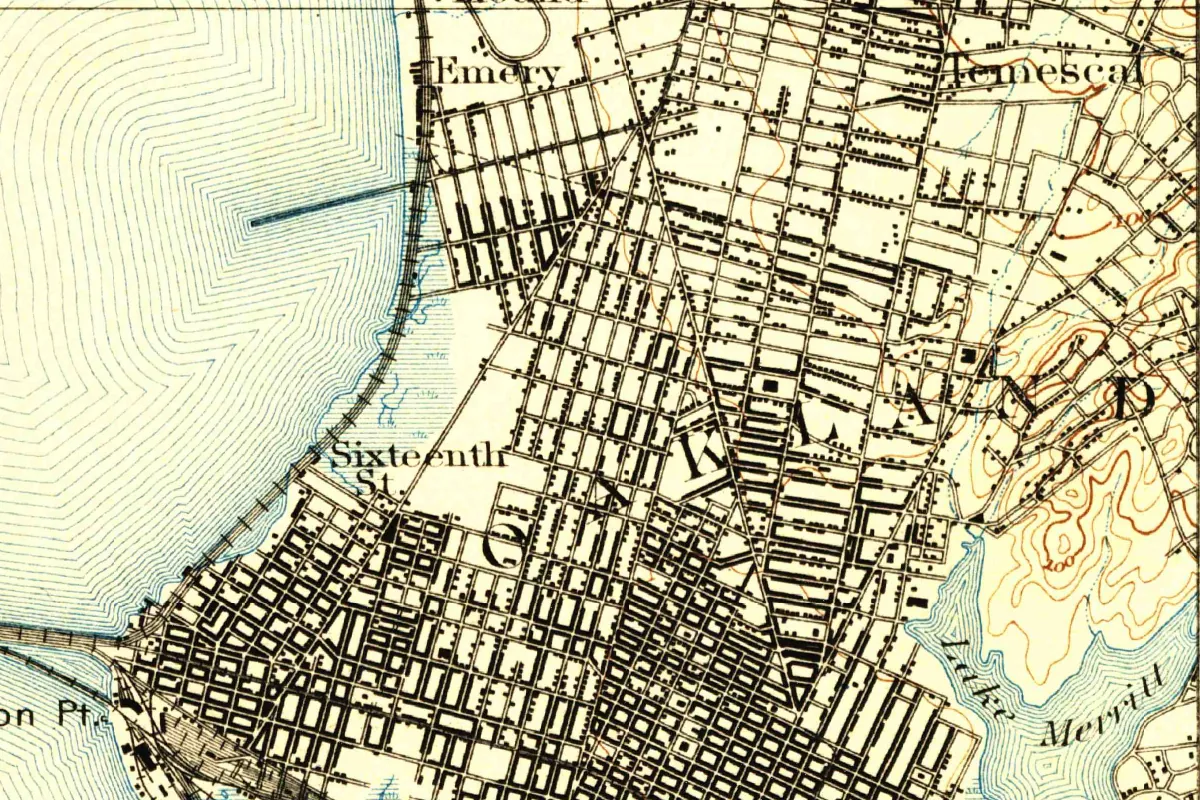
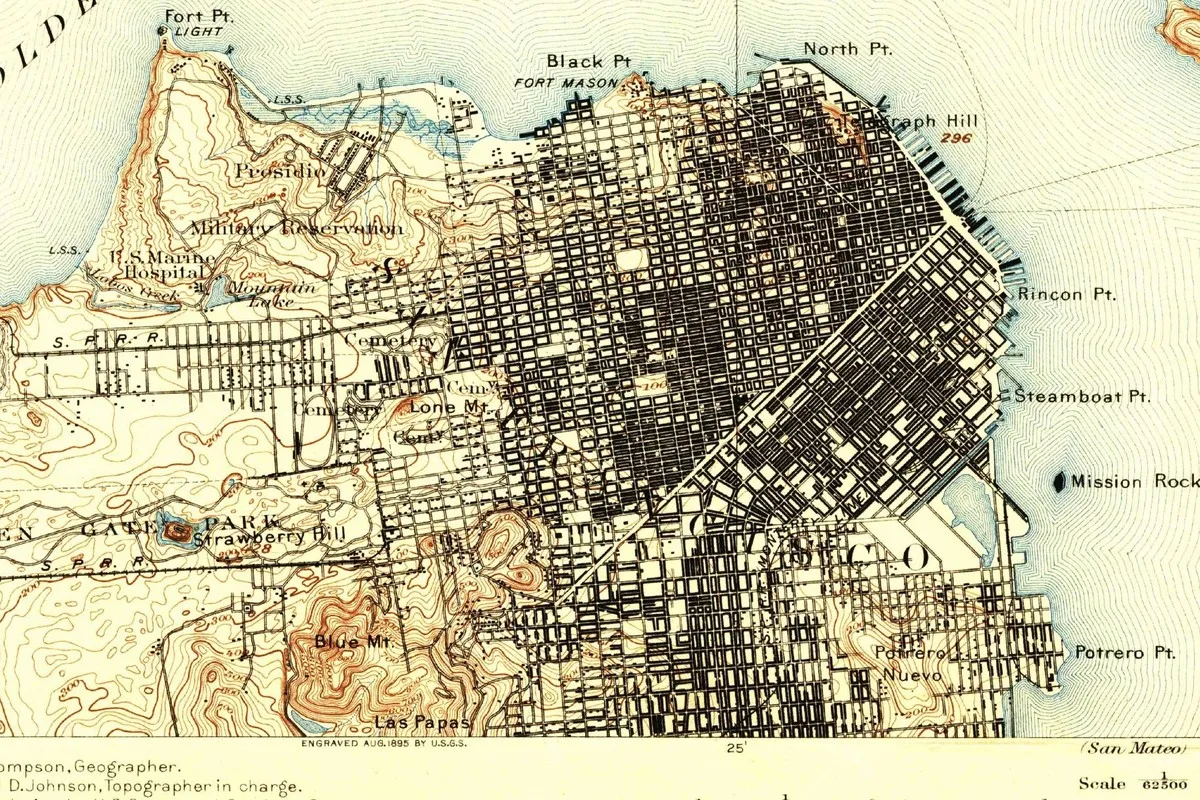
- U.S. Geological Survey, San Francisco sheet (1:62,500), 1895. The 1895 San Francisco sheet, surveyed in 1894 and engraved in August 1895, with the Presidio Military Reservation on the northwest edge of the street grid.
Sponsored
Sailing from San Francisco?
Compare cruises that leave from the port of San Francisco on CruiseDirect.
See cruises from San FranciscoWe may earn a commission if you buy through this link. It never changes what we write. Read our affiliate disclosure
Spot something wrong, or know more? Tell us here. You can also email us or use our contact page. Corrections are noted here with their date, never made silently.