Black Miners Bar Was Negro Bar Until 2026
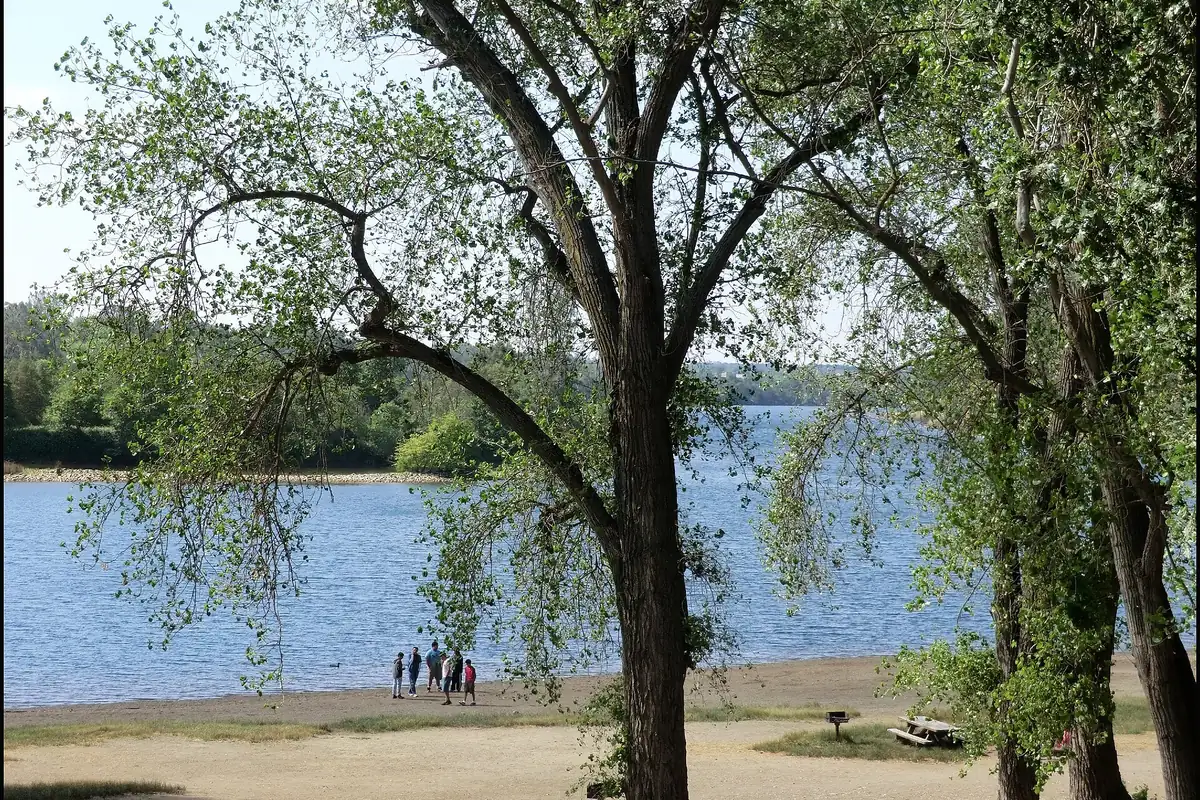
Black Miners Bar, on the American River at Folsom, California, was Negro Bar until 2026. Both names recall the Black miners who first worked it in 1849. The federal board made the new name official on September 22, 2026, and the bar is now a riverside beach and picnic area.
Named for the first miners, in 1849
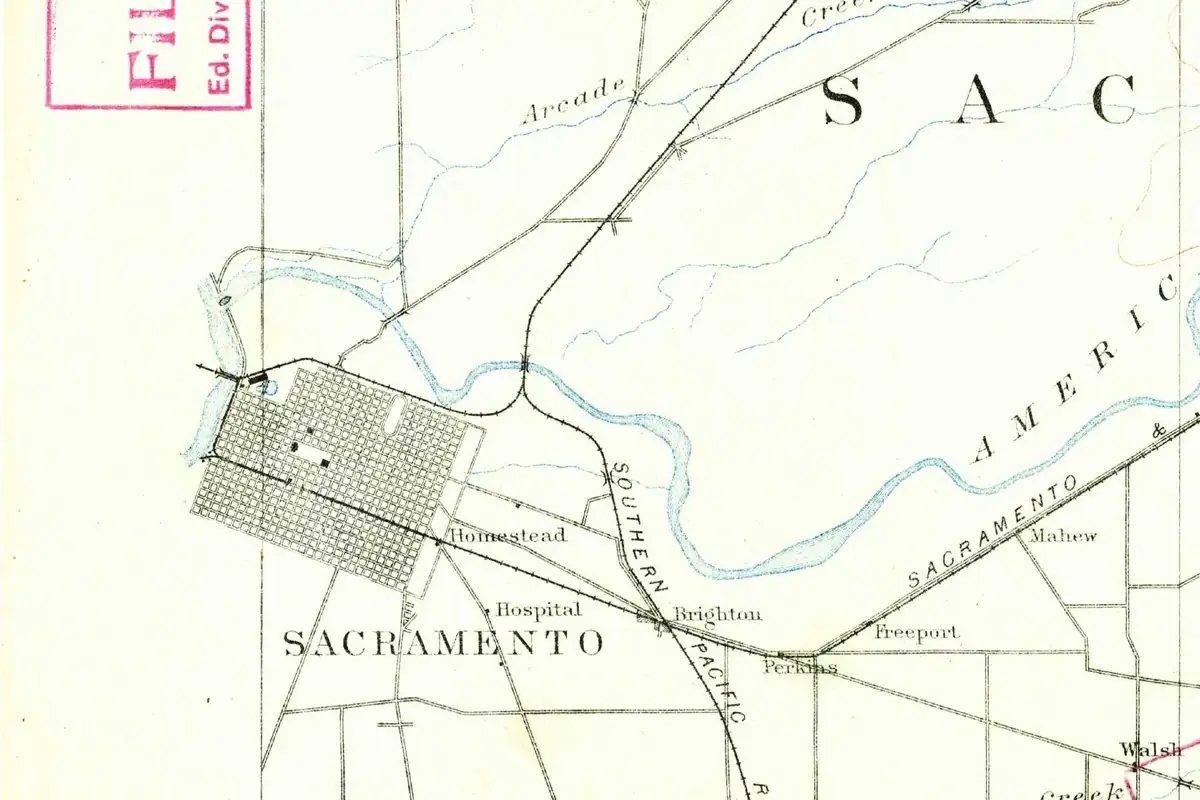
The oldest account of the name we found is in Winfield J. Davis’s An Illustrated History of Sacramento County, published in 1890, the same county history that tells the early story of Sacramento. Davis writes:
Negro Bar received its name from the circumstance of negroes being the first men to do any mining at that point. This was in 1849. The Bar commences at Folsom, on the same side of the river, and runs nine-tenths of a mile down stream.
That’s about 1.4 km of riverbank. In the 1800s, “negro” was the everyday word, and the 2022 renaming proposal makes the same point: the name “was not considered a derogatory term” at the time and “was used as ‘Black’ is today.”
The camp that came before Folsom
Davis is clear about which came first. “The history of Folsom properly includes that of Negro Bar,” he writes, and without “a mining camp of large proportions” there, Folsom “would have been located farther down the American Fork.” Miners came “flocking from all quarters,” and by 1851 there were 700 people at the bar. Davis also names the first businesses: J. S. Meredith opened the first hotel and store in April 1850. By 1855, the federal board’s file says, the city of Folsom had been established around the mining camp.
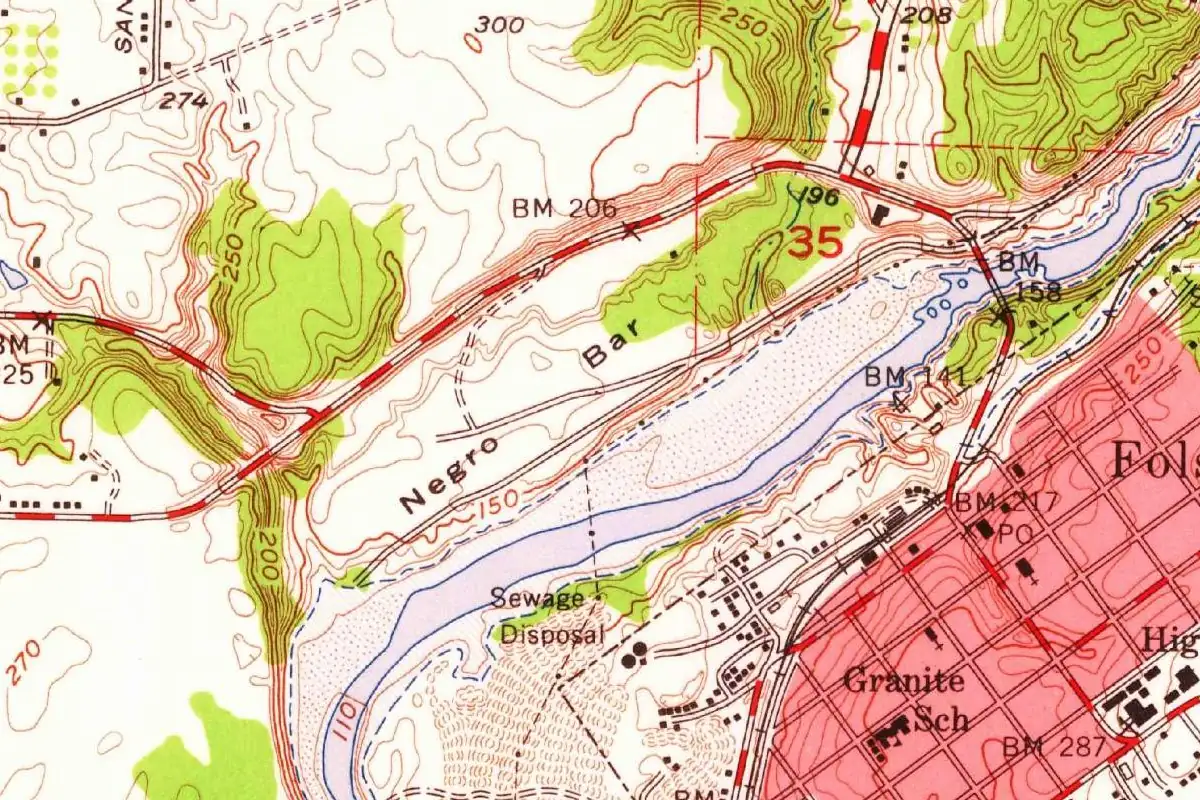
There’s a small puzzle on the map. Davis puts the bar on the Folsom side of the river. The feature that carries the name today sits on the opposite bank, as you can see on the 1954 Geological Survey map at the bottom of this page. The federal board’s file notes that many early maps put the label on the opposite side of the river from where it is today, and says it’s “unclear if they are labeling the community or the bar.”
A harsher word on the maps
The name didn’t stay the same on paper. Between 1914 and 1944, Geological Survey maps printed a slur form of it, and the same form shows up in mining papers of the 1890s, a 1910 state mining bulletin and a county map from 1950. Federal maps switched to Negro Bar in 1954, though the slur turned up once more in a 1961 Geological Survey paper.
The board’s file quotes an article from the journal California History, “The Historical Demographics of Sacramento’s Black Community, 1848-1900.” It says that wherever Black prospectors, “both slave and free,” gathered to stake out claims along the American River, white miners stuck the slur on the spot. The article calls those names “glaring testimony to the racism infecting many, if not most, white miners” in the gold country.
Freedom Bar, then Black Miners Bar
In 2019, someone asked the federal board to rename it Freedom Bar. California State Parks, which runs the area for the federal Bureau of Reclamation, didn’t back that name and wanted to talk with local people first. Some residents, the board noted, wanted to keep the old name “to preserve the history.”
On June 17, 2022, the State Park and Recreation Commission voted unanimously on a temporary name change for the day-use area, to Black Miners Bar. Ten days later, State Parks asked the federal board to give the natural feature the same name. Its proposal said the new name would recognize community members who found the old one “derogatory, offensive and a barrier” to enjoying the park, and added that “Black Miners Bar has a similar originating context to the term it is meant to replace.”
The Bureau of Reclamation supported the change. On September 22, 2026, the federal board approved Black Miners Bar and, the same day, turned down Freedom Bar.
Black Miners Bar today
The bar is part of Folsom Lake State Recreation Area. If you visit, you’ll find a swim area, a campground and group picnic sites, State Parks says, with “easy access to Lake Natoma,” the stretch of the American River below Folsom Lake. The park also holds a yearly Juneteenth celebration at the bar, and 2026 was the fifth.
So the name changed, but the history didn’t. The old name and the new one both say the same thing: Black miners got here first.
Quick answers
Why was Negro Bar renamed?
California State Parks asked for the change in 2022, saying community members found the old name derogatory, offensive and a barrier to visiting. The U.S. Board on Geographic Names approved Black Miners Bar on September 22, 2026.
Who is Black Miners Bar named for?
The Black miners who, according to an 1890 county history, were “the first men to do any mining at that point,” in 1849.
Is Black Miners Bar the same place as Negro Bar?
Yes. It’s the same feature in the federal place-names record, number 229447. Only the name changed.
Key dates
- 1849Black miners are the first to mine the bar on the American River, which takes the name Negro Bar.
- 1851The mining camp at the bar has 700 people. By 1855, Folsom is established around it.
- 1914A Geological Survey map labels the bar with a slur form of the name. It appears on federal maps through 1944.
- 1954The Geological Survey's Folsom map shows the name as Negro Bar.
- 2022June: the State Park and Recreation Commission votes for a temporary name change of the day-use area to Black Miners Bar.
- 2026September 22: the federal board approves Black Miners Bar and turns down Freedom Bar.
Find it in Google Maps
Opens in a new tab. The pin is a point from the USGS place-name record, so it may not be the middle of the area.
Sponsored
Planning a visit?
Compare hotels in the area on Expedia.
See hotels nearbyWe may earn a commission if you buy through this link. It never changes what we write. Read our affiliate disclosure
Historical Sources & References
- U.S. Board on Geographic Names, Quarterly Review List 448 (2022). The State Parks proposal of June 27, 2022, the names on early and later maps, the June 2022 commission vote, the Freedom Bar proposal and the quotation from California History.
- U.S. Board on Geographic Names, Action List. Black Miners Bar approved and Freedom Bar not approved, both on September 22, 2026.
- Winfield J. Davis, An Illustrated History of Sacramento County, California (1890). The origin of the name in 1849, the 700 people of 1851 and the first hotel and store, p. 227.
- GNIS feature 229447, Black Miners Bar (U.S. Geological Survey). The U.S. gazetteer entry for the bar.
- California State Parks, Folsom Lake State Recreation Area. The swim area, campground and picnic sites at Black Miners Bar, access to Lake Natoma, and the 2026 Juneteenth celebration.
Sponsored
Gear up for your next road trip
Explore rooftop tents, vehicle awnings and outdoor gear from TOPOAK Overland.
Shop TOPOAK overlanding gearWe may earn a commission if you buy through this link. It never changes what we write. Read our affiliate disclosure
Spot something wrong, or know more? Tell us here. You can also email us or use our contact page. Corrections are noted here with their date, never made silently.