Who Is Berkeley, California Named After? A Bishop's Poem
Berkeley is named for George Berkeley, the philosopher and Bishop of Cloyne who wrote "Westward the course of empire takes its way." Trustee Frederick Billings remembered that line while the College of California's board hunted for a town name, and on May 24, 1866, the trustees chose "Berkeley" unanimously, according to the college's 1887 history.
A town name borrowed from a poem
A single line of verse, “Westward the course of empire takes its way,” is why a California college town took the name of the bishop who wrote it: Berkeley. The man was George Berkeley, the philosopher who became Bishop of Cloyne in Ireland, and the trustees of the little College of California picked his name on May 24, 1866.
They didn’t get there easily. Samuel H. Willey, who sat on that board and wrote A History of the College of California in 1887, says the trustees wanted a name “not too common” and suited both to the place and to the school they planned to build there. They consulted Frederick Law Olmsted, who sent back a letter on “the principles of taste” and a list of possible names. None of them stuck. Neither did any of the names the trustees came up with themselves. The question kept coming up and kept getting put off.
Then the mapmaking caught up with them. On May 7, 1866, the board had already named the streets of its new tract: streets running north and south after American men of science, ways running east and west after American men of letters. The town itself still had no name, and in Willey’s words, “we must have a name.”
Frederick Billings remembers a line
Here’s how Willey tells the moment. Frederick Billings, one of the trustees, was turning over ideas, and the college’s “far western location” brought the old line about the course of empire to mind. Then:
“Berkeley,” he said to himself, “Berkeley, the author of those prophetic lines—why wouldn’t Berkeley be a good name for our town?”
Billings proposed it, the board talked it over, and “the more it was considered, the more it was favored.” Willey says the name was chosen unanimously at the trustees’ meeting of May 24, 1866. So the town wasn’t named for a settler or a landowner. It was named for a poet’s prediction that the future lay out West, picked by men trying to build a college about as far west as you could go.
The poem is George Berkeley’s “Verses on the Prospect of Planting Arts and Learning in America.” The Berkeley Historical Society dates it to 1726 and notes that the bishop himself had tried, and failed, to start a college in the American colonies. William Carey Jones printed the whole thing in his 1895 Illustrated History of the University of California, and the famous line opens the last stanza.
Henry Gannett’s 1905 bulletin on American place names lists the city as “named for Dean Berkley, Bishop of Cloyne.” Yes, he dropped the second “e.”
1860 or 1866?
If you look around online, you’ll find a different date. A University of California page says the trustees met at Founders’ Rock in 1860 and named the site Berkeley then. The two events are real, but they’re six years apart.
Jones’s 1895 history describes the first one. On April 16, 1860, the trustees drove out to what was then called the College Grounds and met on a “great rock” between two ravines to dedicate the land to learning, with the board’s president praying from the top of the rock. Willey adds a footnote that settles the naming side: before the 1866 vote, the place “was known only as ‘The College Grounds.’”
Where Billings had his idea is a softer question. Jones writes that he had “a vision from the ‘great rock’” toward the Golden Gate. The Historical Society says some of the trustees stood at Founders’ Rock that very day, May 24, talked it over at lunch at Willey’s home, and voted that afternoon in San Francisco with Billings absent. Willey, who sat on the board, just says Billings proposed it and the board agreed. The date of the vote is the one thing all three agree on.
From college town to Town of Berkeley
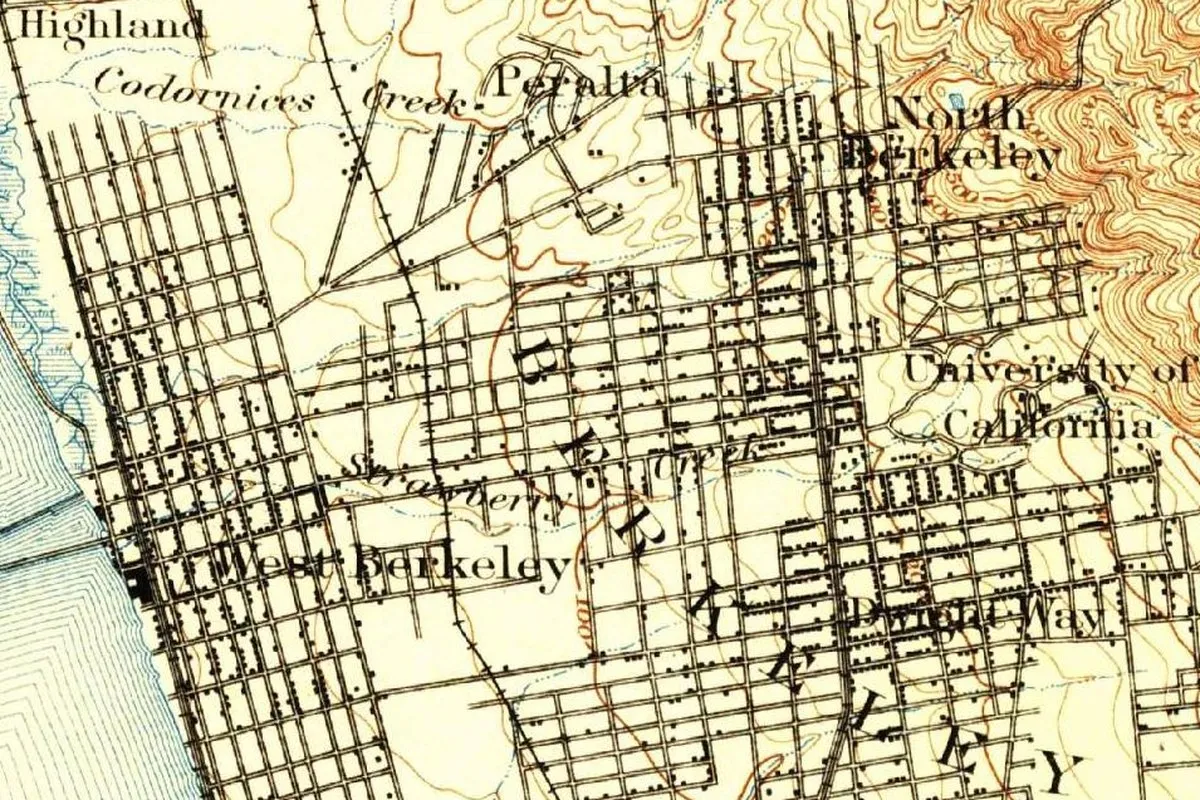
Not everyone in the area lived near the college. J. P. Munro-Fraser’s 1883 History of Alameda County says there was a hamlet near the bay called Ocean View, by then known as West Berkeley, while the houses near the campus took the name Berkeley and were “usually termed East Berkeley.” The town was incorporated in 1878. The Historical Society says the campus area and Ocean View joined at that point and agreed to use “Berkeley” for the whole community. You can see both halves on the 1895 survey map, with West Berkeley on the shore and the University of California up toward the hills.
The College of California itself had spent its early years in Oakland before handing its Berkeley land to the new state university, which opened its campus there in 1873. At that year’s commencement, Jones writes, Billings gave the university a portrait of Bishop Berkeley leaning on a pedestal carved with the words “Westward the course of empire takes its way.” The line that named the town ended up hanging in the school it was picked for, which is about as neat an ending as a California place name gets.
Quick answers
Who is Berkeley, California, named after?
George Berkeley, the philosopher and Bishop of Cloyne. Gannett’s 1905 bulletin and the Berkeley Historical Society both name him, and Willey’s 1887 history explains why the trustees thought of him.
What does “Westward the course of empire” have to do with Berkeley?
It’s the line that gave Frederick Billings the idea. It comes from George Berkeley’s “Verses on the Prospect of Planting Arts and Learning in America,” so the town got the poet’s name, not a word from the poem.
Was Berkeley named in 1860 or 1866?
In 1866. The trustees dedicated the site at a rock on April 16, 1860, but Willey dates the naming vote to May 24, 1866, and says the place was only “The College Grounds” before that.
Was Berkeley ever called Ocean View?
Not the whole town. Ocean View was a separate settlement by the bay, later West Berkeley, that joined the campus area when the town was incorporated in 1878.
Key dates
- 1860April 16: the College of California's trustees meet on a "great rock" at the College Grounds to dedicate the site, Jones's 1895 history says.
- 1866May 7: the board names the tract's streets for American men of science and its ways for American men of letters.
- 1866May 24: the trustees unanimously choose "Berkeley" as the name of their new college town, after Frederick Billings suggests it.
- 1873The university marks its move to the Berkeley site; Billings presents a portrait of Bishop Berkeley with the "Westward" line carved on it.
- 1878The town is incorporated. The Historical Society says the campus area and the waterfront's Ocean View joined under the name Berkeley.
Getting there
Open Berkeley in Google Maps
Opens in a new tab. The pin is the center of Berkeley in the USGS place-name record.
The closest airports, Amtrak stations and intercity bus stops, measured in a straight line from the center of Berkeley.
Airports
- Oakland San Francisco Bay (OAK) 11 mi 17 km
- San Francisco International (SFO) San Francisco International Airport 18 mi 30 km
Amtrak trains
- Berkeley station (BKY) 2 mi 3 km
- Emeryville station (EMY) 2 mi 4 km
Intercity buses
- FlixBus UC Berkeley Crescent Lawn under 1 mi 0.7 km
- Amtrak Chartered Vehicle Amtrak Connecting Service · Emeryville 2 mi 4 km
- Gold Runner Emeryville 2 mi 4 km
Distances are as the crow flies, not by road. We don't list schedules or fares because they change; check with the airline, Amtrak or the bus company before you go. Official data (FAA commercial service airports (2025), FAA airport locations, Amtrak stations and Intercity Bus Atlas) from the FAA and the U.S. Bureau of Transportation Statistics, checked Nov 13, 2026.
Sponsored
Staying in Berkeley?
Compare hotels in Berkeley, California, on Expedia.
See hotels in BerkeleyWe may earn a commission if you buy through this link. It never changes what we write. Read our affiliate disclosure
Historical Sources & References
- Samuel H. Willey, A History of the College of California (1887), pp. 151-152. The May 7, 1866 street names, the search for a town name, Olmsted’s letter, Billings’s recollection of the “Westward” line, the quoted passage, the unanimous vote of May 24, 1866, and the footnote on “The College Grounds.”
- William Carey Jones, Illustrated History of the University of California (1895), pp. 72-74 and 81. The dedication on the “great rock” on April 16, 1860 (pp. 72-73), Billings’s “vision from the ‘great rock’” and the May 24, 1866 choice (p. 73), the full text of Bishop Berkeley’s verses (p. 74), and the 1873 portrait with the carved line (p. 81).
- J. P. Munro-Fraser, History of Alameda County, California (1883), pp. 782-784. Ocean View as the hamlet later called West Berkeley, “East Berkeley,” the 1878 incorporation (p. 782), the College of California’s years in Oakland (p. 783) and the “famous line of Berkeley” behind the name (p. 784).
- Henry Gannett, The Origin of Certain Place Names in the United States (USGS, 1905), p. 44. Berkeley, Alameda County, “named for Dean Berkley, Bishop of Cloyne.”
- Berkeley Historical Society and Museum, “Why Is Berkeley Called Berkeley?” The trustees at Founders’ Rock on May 24, 1866, lunch at Willey’s home, the afternoon vote in San Francisco without Billings, the poem’s 1726 date, the bishop’s failed college plan and the 1878 merger with Ocean View.
- Berkeley Historical Society and Museum, “Berkeley History in Brief” Ocean View by the bay, the campus opening in 1873 and the Town of Berkeley incorporated in 1878.
- University of California, Berkeley, “Cal’s land-grant roots” The version that puts the naming at Founders’ Rock in 1860.
- GNIS feature 1658037 (U.S. Geological Survey). Berkeley’s file in the names index, begun January 19, 1981 and kept under the Oakland West quadrangle in Alameda County.
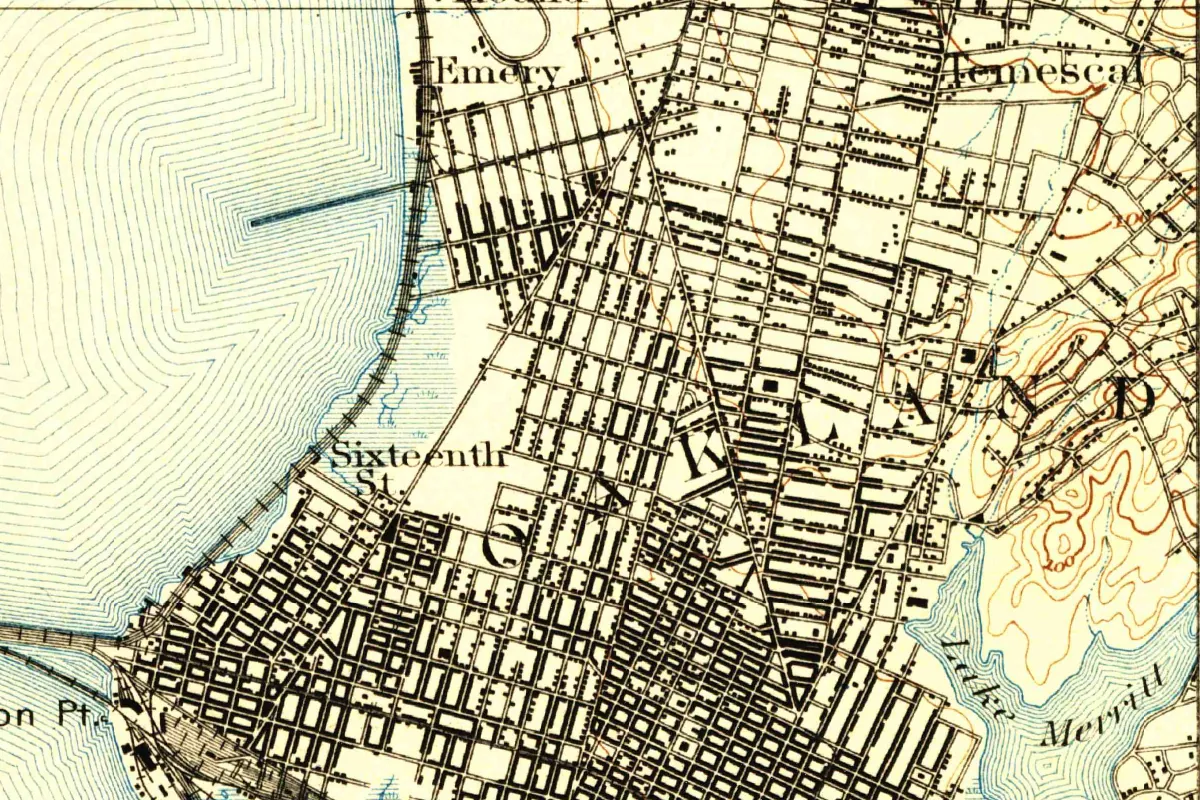
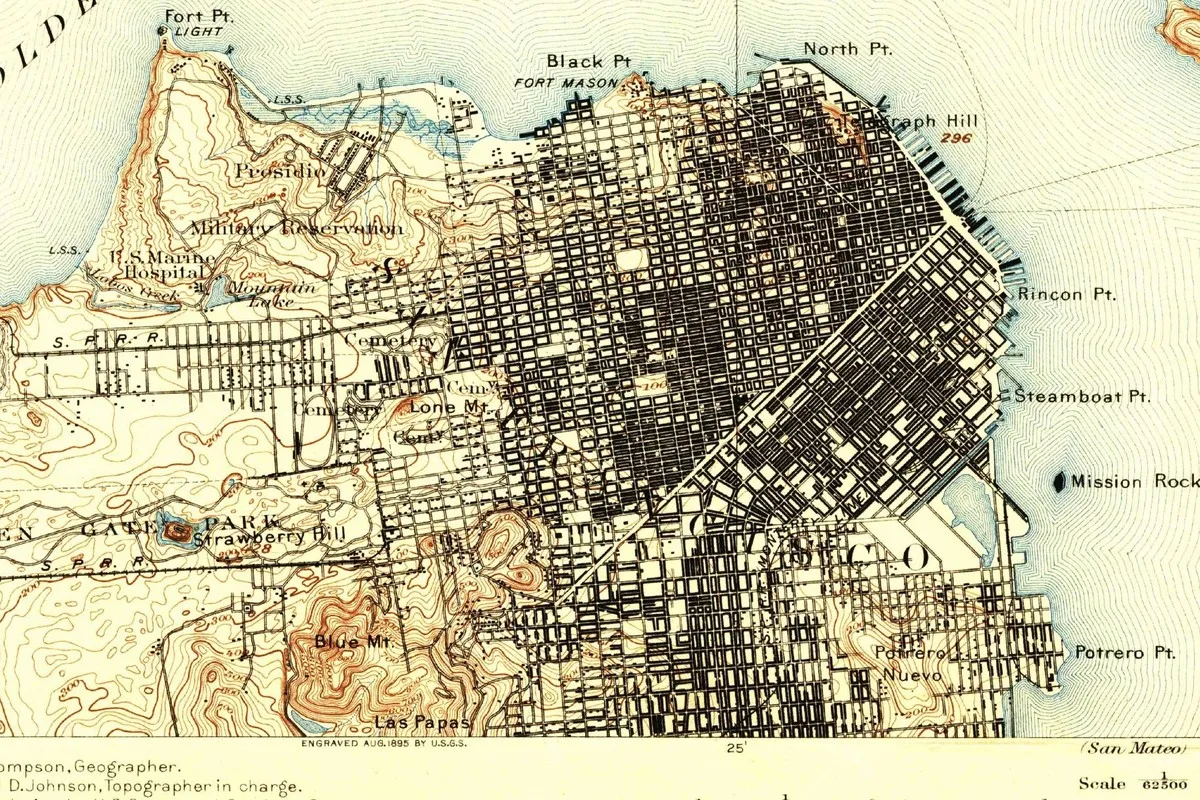
- U.S. Geological Survey, San Francisco sheet (1895). Scan of the 1895 survey sheet, trimmed here to the East Bay shore where West Berkeley, North Berkeley and the university appear.
Spot something wrong, or know more? Tell us here. You can also email us or use our contact page. Corrections are noted here with their date, never made silently.