How Did Oakland Get Its Name? A Town in the Oak Grove
Oakland, California, is named for the oak trees on its site. By 1842, under Mexican rule, the grove was the Encinal de Temescal, part of the Peralta family's rancho, and one account says it was first called Las Encinas, the oaks. American settlers built a town there, and it was incorporated as Oakland in 1852.
The Encinal de Temescal
The name is a translation of what was already there: oaks. Before there was a town, the land on the east side of San Francisco Bay belonged to the Peralta family’s Rancho San Antonio. William Halley’s Centennial Year Book of Alameda County (1876) says it held two “encinals, or oak-grove peninsulas.” The one that became the original site of Oakland was the Encinal de Temescal; the other, the Encinal de San Antonio, became Alameda.
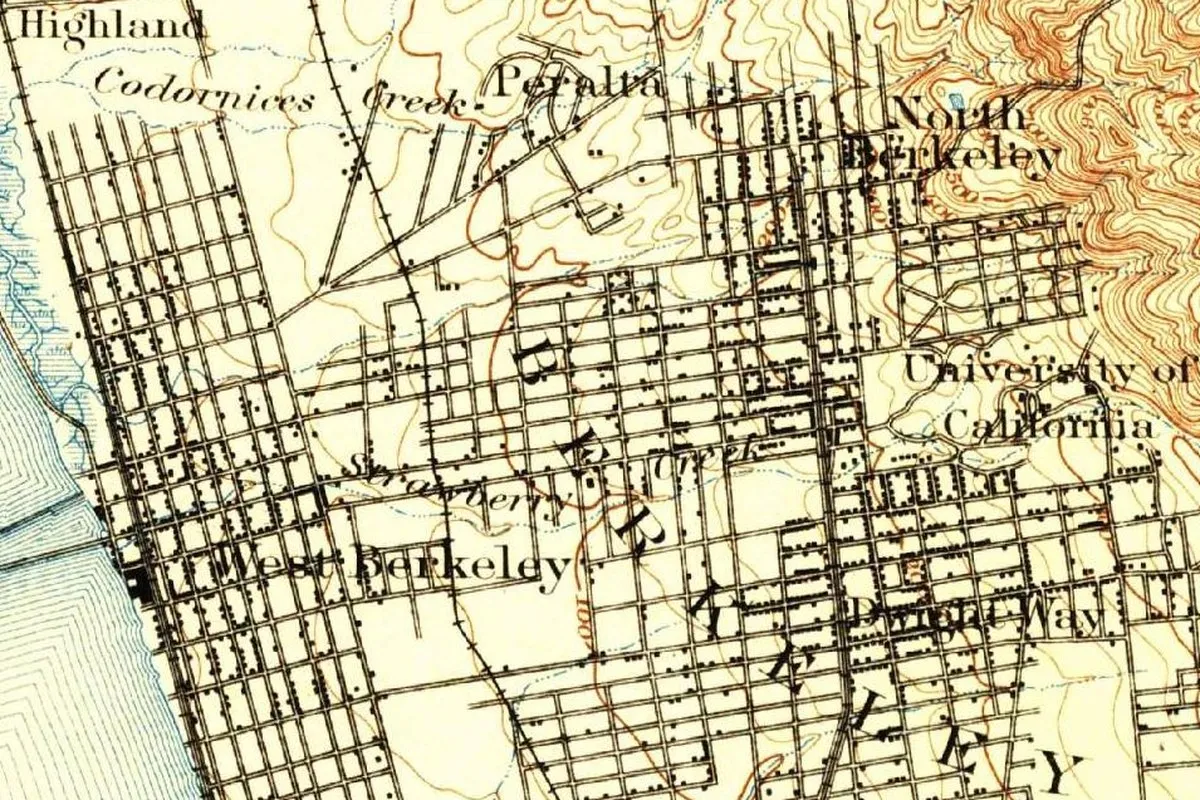
When Luis Peralta divided the rancho among his four sons in 1842, Halley writes, Vicente got the second strip from the north, “including the oak grove, then known as the Encinal de Temescal (now the City of Oakland).” Domingo got the land where Berkeley grew, and Antonio María the part with Brooklyn and Alameda.
“Las Encinas”
Nellie Van de Grift Sanchez adds one more Spanish name in her 1922 book on California place names. She cites as her source the memoirs of the Vallejo family, published in the San Francisco Bulletin in 1914:
“Oakland was originally called Las Encinas (the oaks), having been named by the commandante at Monterey as the result of the report of Lieutenant Vallejo of the great number of those trees growing upon the spot.”
You’ll want to read that as a family memory set down long after the fact. It doesn’t say when the name was given, and Halley’s older book uses Encinal de Temescal instead. Both versions agree on the part that matters: the place was known for its oaks long before anyone wrote “Oakland.”
The Americans’ oak land
The trees were still there when the Americans came. Halley prints the account of Col. Henry S. Fitch, who sailed across from San Francisco early in 1850 and camped under an oak near what is now the foot of Broadway. He was amazed to find a plateau stretching “a distance of several miles” toward San Francisco, “a large portion of which was covered with a growth of beautiful oak trees — so justly the pride of Oakland for these many years.”
None of the sources says who first wrote the English name down. By 1852 it was settled. That year, Halley says, the Legislature incorporated “the town of Oakland, then hardly possessing one hundred inhabitants,” with Horace W. Carpentier as the act’s promoter. On March 25, 1854, Oakland became a city, and Carpentier was elected its first mayor.
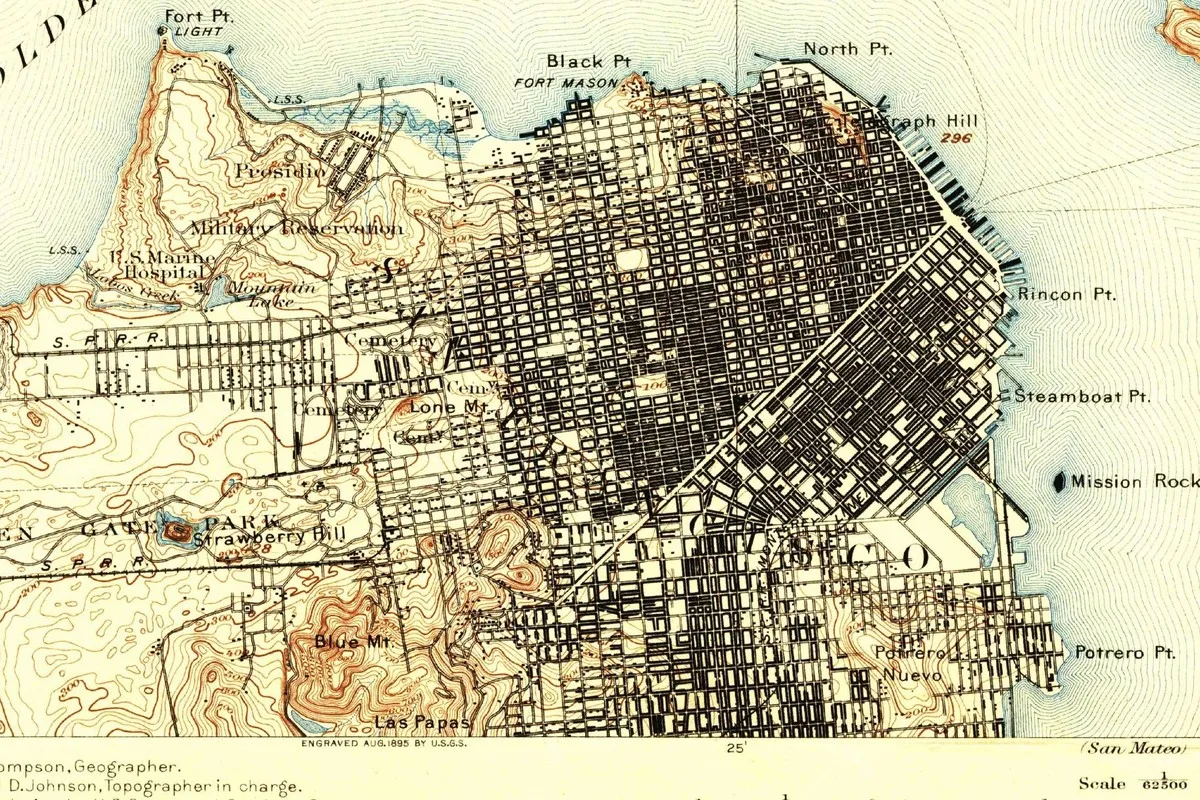
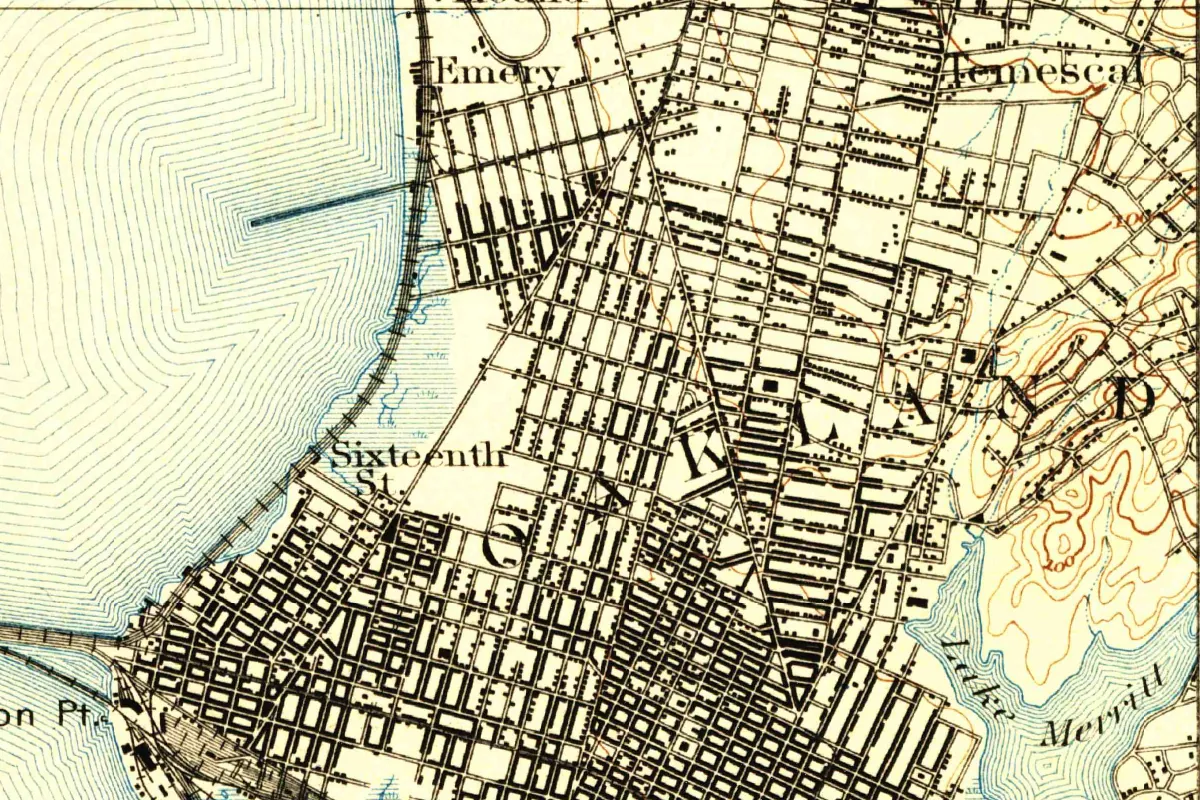
Modern accounts still connect the city to its trees. In 2015 the local news site Oakland North summed it up: “Oakland” comes from the name “nineteenth-century Spanish ranchers” gave the area, encinal, a grove of oak trees. If you look at the 1895 survey map above, you can see the old name too: Temescal is printed on the north side of town.
Quick answers
How did Oakland get its name?
From its oak trees. The site was an oak grove called the Encinal de Temescal on the Peralta rancho, and the town built there in the early 1850s was named Oakland.
What was Oakland called before?
The Encinal de Temescal, the oak grove of Vicente Peralta’s land. Nellie Sanchez’s 1922 book on California place names, drawing on a Vallejo family memoir, says it was first called Las Encinas, the oaks.
Who named Oakland?
The sources don’t say. The name was in use by 1852, when the Legislature incorporated the town; Horace W. Carpentier promoted that act and became the first mayor in 1854.
When did Oakland become a city?
On March 25, 1854. It had been incorporated as a town in 1852.
Key dates
- 1842Luis Peralta divides his rancho among his four sons; Vicente gets the oak grove called the Encinal de Temescal.
- 1850Early in the year, Col. Henry S. Fitch lands at San Antonio Creek and finds a plain covered with oak trees.
- 1852The Legislature incorporates the town of Oakland, which has fewer than one hundred people.
- 1854March 25: Oakland is incorporated as a city, with Horace W. Carpentier as its first mayor.
Getting there
Open Oakland in Google Maps
Opens in a new tab. The pin is the center of Oakland in the USGS place-name record.
The closest airports, Amtrak stations and intercity bus stops, measured in a straight line from the center of Oakland.
Airports
- Oakland San Francisco Bay (OAK) 6 mi 10 km
- San Francisco International (SFO) San Francisco International Airport 14 mi 23 km
Amtrak trains
- Oakland station (OKJ) under 1 mi 1 km
- Emeryville station (EMY) 3 mi 4 km
Intercity buses
- Amtrak Chartered Vehicle Amtrak Connecting Service · Oakland under 1 mi 1 km
- FlixBus Oakland 7th St 1 mi 2 km
- Gold Runner Emeryville 3 mi 4 km
Distances are as the crow flies, not by road. We don't list schedules or fares because they change; check with the airline, Amtrak or the bus company before you go. Official data (FAA commercial service airports (2025/2026 cached FAA categories from existing site), FAA airport locations, Amtrak stations and Intercity Bus Atlas) from the FAA and the U.S. Bureau of Transportation Statistics, checked Nov 10, 2026.
Sponsored
Staying in Oakland?
Compare hotels in Oakland, California, on Expedia.
See hotels in OaklandWe may earn a commission if you buy through this link. It never changes what we write. Read our affiliate disclosure
Historical Sources & References
- William Halley, The Centennial Year Book of Alameda County (1876). The 1842 division of the Peralta rancho and the “Encinal de Temescal (now the City of Oakland)” (p. 41), the 1852 town “then hardly possessing one hundred inhabitants” (p. 67), the two encinals (p. 443), Col. Fitch’s oak-covered plateau (pp. 443-444), and the city of March 25, 1854, with Carpentier as first mayor (p. 451).
- Nellie Van de Grift Sanchez, Spanish and Indian Place Names of California (1922 edition), pp. 404-405. The “Las Encinas” entry quoted above, citing the Vallejo memoirs of 1914.
- Alissa Greenberg, “Mystery, commerce, local pride in that one familiar tree,” Oakland North (2015). A modern summary: “Oakland” comes from encinal, a grove of oak trees.
- GNIS feature 277566 (U.S. Geological Survey). Oakland’s populated-place record in the Geographic Names Information System, in Alameda County.
- U.S. Geological Survey, San Francisco sheet (1895). The source of the map at the top of this page.
Spot something wrong, or know more? Tell us here. You can also email us or use our contact page. Corrections are noted here with their date, never made silently.