How Did San Jose Get Its Name? A Pueblo for St. Joseph
San Jose, California, is named for St. Joseph, San José in Spanish. It began as El Pueblo de San José de Guadalupe, founded on November 29, 1777, by order of Governor Felipe de Neve. The saint gave the town its name, and the Guadalupe River beside it gave the rest of the original name.
A pueblo, not a mission
San Jose didn’t grow out of a mission. It was a pueblo, a town for settlers and their farms, and it came before the mission that shares its saint.
In November 1774, a small Spanish party under Capt. Fernando Rivera y Moncada climbed the hills at the edge of the valley. Padre Francisco Palou, who was with them, noted a wide plain covered with oaks below. The Tamien people already lived there. That’s how Ralph Pearce of the San José Public Library’s California Room tells the start of the story.
Three years later, on the orders of Governor Felipe de Neve, José Joaquín Moraga, commander of the presidio at San Francisco, gathered nine soldiers, five settlers and one servant. With the settlers’ wives and children they were 66 people. They made the journey to a spot just east of the Guadalupe River, along what’s now Market Street, between about San Salvador and St. James streets.
St. Joseph and the Guadalupe River
The settlement was founded on November 29, 1777, as El Pueblo de San José de Guadalupe. Pearce explains each half of the name:
“San José was named after St. Joseph, and Guadalupe identified its location alongside the Guadalupe River.”
The library calls it the first civilian settlement in Alta California; the pueblo of Los Angeles came later. Nellie Van de Grift Sanchez’s Spanish and Indian Place Names of California (1922) heads its entry “San José (St. Joseph)” and adds the founding details: Lt. José Moraga, acting “under orders from Governor Neve,” on November 29, 1777. Henry Gannett’s first federal guide to American place names, in 1902, gave it one line: “named for the patron saint of Mexico.”
The town moved, the mission was elsewhere
The first site didn’t last. Sanchez says it sat about a mile and a quarter (2 km) from the later city and was moved in 1797, because the low ground there flooded in the winter rains.
She also clears up a common mix-up. Mission San José, founded in 1797 and dedicated to the same saint, isn’t in San Jose at all. It was built “some fourteen miles distant from the town,” about 23 km, and Sanchez warns that some maps put it in the wrong place. So if you go looking for the mission, don’t expect to find it downtown.
From pueblo to state capital
The pueblo grew slowly under Spain and then Mexico. The library’s timeline puts its population at 68 in 1777, about 700 in 1835 and about 900 in 1845. American forces occupied the town in 1846.
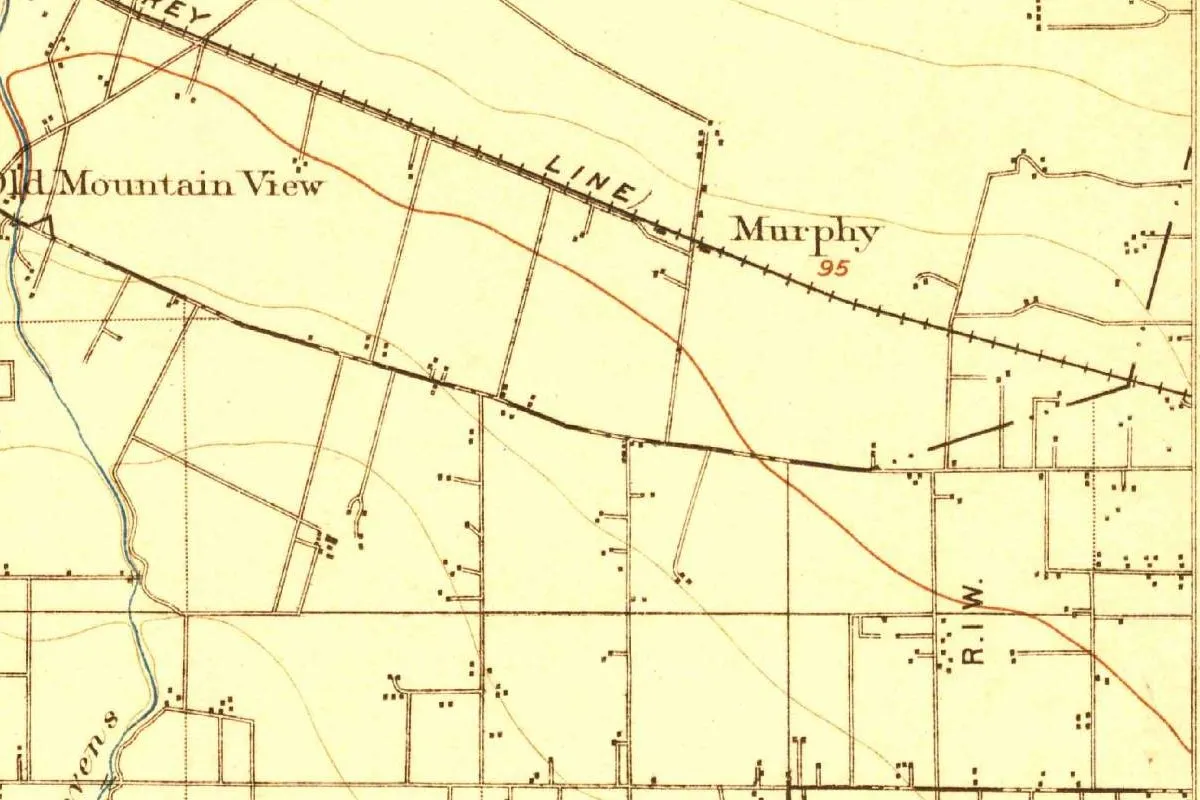
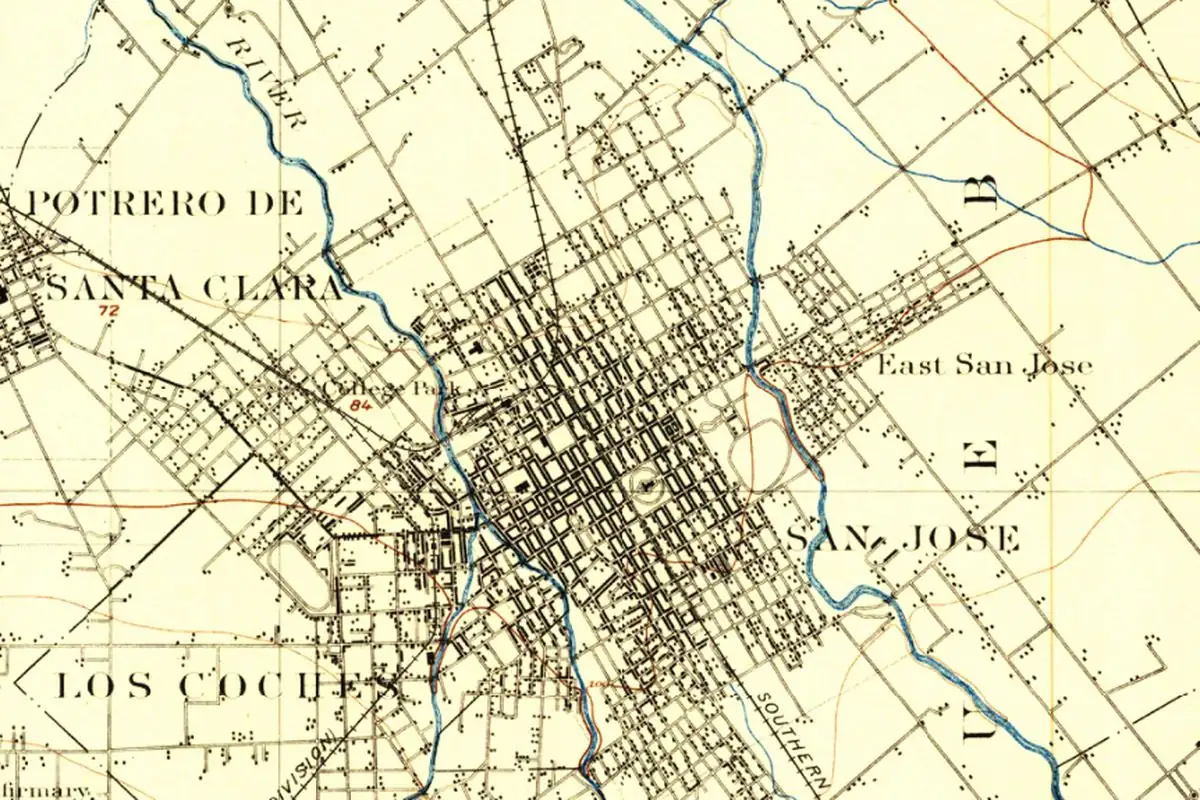
Then it had a short turn at the top. From November 13, 1849, to May 1, 1851, San José was the first capital of the new State of California, and it was chartered as a city in 1850. If you look at the 1897 survey map above, you’ll see the result: a dense grid between the Guadalupe River and Coyote Creek, still named for the saint the settlers chose in 1777.
Quick answers
How did San Jose get its name?
It’s named for St. Joseph, San José in Spanish. The pueblo founded in 1777 was El Pueblo de San José de Guadalupe, and the Guadalupe part came from the river beside it.
What was San Jose’s original name?
El Pueblo de San José de Guadalupe. It was founded on November 29, 1777, by order of Governor Felipe de Neve.
Is San Jose named after the mission?
No. The pueblo came first, in 1777. Mission San José was founded in 1797, some fourteen miles (23 km) away from the town.
Was San Jose California’s first capital?
Yes. It was the state capital from November 13, 1849, to May 1, 1851.
Key dates
- 1774November 25: Padre Francisco Palou, with Capt. Fernando Rivera y Moncada's party, sees an oak-covered plain in the valley.
- 1777November 29: El Pueblo de San José de Guadalupe is founded, the first civilian settlement in Alta California.
- 1797The pueblo moves after its first site floods; Mission San José is founded some 14 miles (23 km) away.
- 1849November 13: San José becomes the first capital of the new state of California, until May 1, 1851.
- 1850San José is chartered as a city.
Getting there
Open San Jose in Google Maps
Opens in a new tab. The pin is the center of San Jose in the USGS place-name record.
The closest airports, Amtrak stations and intercity bus stops, measured in a straight line from the center of San Jose.
Airports
- San José Mineta International Airport (SJC) 3 mi 4 km
- Oakland San Francisco Bay (OAK) 32 mi 52 km
Amtrak trains
- San Jose station (SJC) under 1 mi 1 km
- Santa Clara station (SCC) 3 mi 4 km
Intercity buses
- FlixBus San Jose Diridon Station under 1 mi 1 km
- Amtrak Chartered Vehicle Amtrak Connecting Service · San Jose under 1 mi 1 km
- Gold Runner San Jose under 1 mi 1 km
Distances are as the crow flies, not by road. We don't list schedules or fares because they change; check with the airline, Amtrak or the bus company before you go. Official data (FAA commercial service airports (2025/2026 cached FAA categories from existing site), FAA airport locations, Amtrak stations and Intercity Bus Atlas) from the FAA and the U.S. Bureau of Transportation Statistics, checked Nov 10, 2026.
Sponsored
Staying in San Jose?
Compare hotels in San Jose, California, on Expedia.
See hotels in San JoseWe may earn a commission if you buy through this link. It never changes what we write. Read our affiliate disclosure
Sponsored
Want the spooky side of San Jose?
The name has its story above. For the ghost stories, US Ghost Adventures runs walking ghost tours in San Jose.
See ghost tours in San JoseWe may earn a commission if you book through this link. It never changes what we write. Read our affiliate disclosure
Historical Sources & References
- Ralph Pearce, “Looking Back: The Founding of Our City,” San José Public Library (2020). The 1774 expedition and Palou’s oak plain, the Tamien, Moraga’s 66 settlers, the site along Market Street, the founding date and the St. Joseph and Guadalupe River explanation quoted above.
- San José Public Library, San José History Timeline. Population in 1777, 1835 and 1845, the 1846 occupation, the capital from November 13, 1849, to May 1, 1851, and the 1850 charter.
- Nellie Van de Grift Sanchez, Spanish and Indian Place Names of California (1922 edition), pp. 168, 171-172. “San José (St. Joseph),” the founding by Lt. José Moraga, the move of 1797 after the floods and the mission “some fourteen miles distant from the town.”
- Henry Gannett, The Origin of Certain Place Names in the United States (USGS, 1902), p. 231. The first edition of the federal guide: San Jose, “named for the patron saint of Mexico.”
- GNIS feature 1654952 (U.S. Geological Survey). USGS lists San Jose as a populated place in Santa Clara County; its coordinates are the ones used here.
- U.S. Geological Survey, San Jose sheet (1897). The source of the map at the top of this page.
Spot something wrong, or know more? Tell us here. You can also email us or use our contact page. Corrections are noted here with their date, never made silently.