Napa, California: Fish, Village or Harpoon Point?
No source has settled what Napa means. The Indigenous name is older than the town Nathan Coombs laid out in 1847 or 1848. An 1873 guide said "fish," an 1881 history preferred "village" and Henry Gannett wrote "city" or "house." In 1916 A. L. Kroeber called the old explanations unverified and noted a Pomo word for a harpoon point.
A name older than the town
Napa, California, carries an Indigenous name older than the town, and its meaning is still argued over: fish, village, house or a harpoon point. That’s not a modern confusion either. Local writers were already disagreeing about it in the 1870s and 1880s, and an anthropologist who went back over all of it in 1916 said none of the explanations had been proved.
What everyone agrees on is the order of things. The word was already on the land before the town. Napa City was laid out by Nathan Coombs between the river and what’s now Brown Street, from Napa Creek down to the steamboat landing. The city’s history page, which comes from the Napa County Historical Society, puts that in 1847. C. A. Menefee’s 1873 sketch book of the county says the spring of 1848. Either way, Coombs took a name that was already there.
“Fish,” from the pioneers
Menefee’s guide is the oldest of the explanations here. He wrote that when George C. Yount, the valley’s first white settler, arrived in 1831, six tribes lived in the valley, speaking related languages. One group, he said, lived on the Mexican grant called Entre Napa, the land between Napa River and Napa Creek, and gave it their name. Then:
“The word Napa is said to signify ‘fish.’ The authority for this signification rests on the declaration of old pioneers, and is corroborated by the fact that in the cognate languages of the tribes on the northern coast, the word still bears the same signification.”
His evidence for that northern-coast link was one man’s story: someone among the Gold Bluff adventurers had traded the shirt off his back to an Indian there for a salmon, and remembered the word.
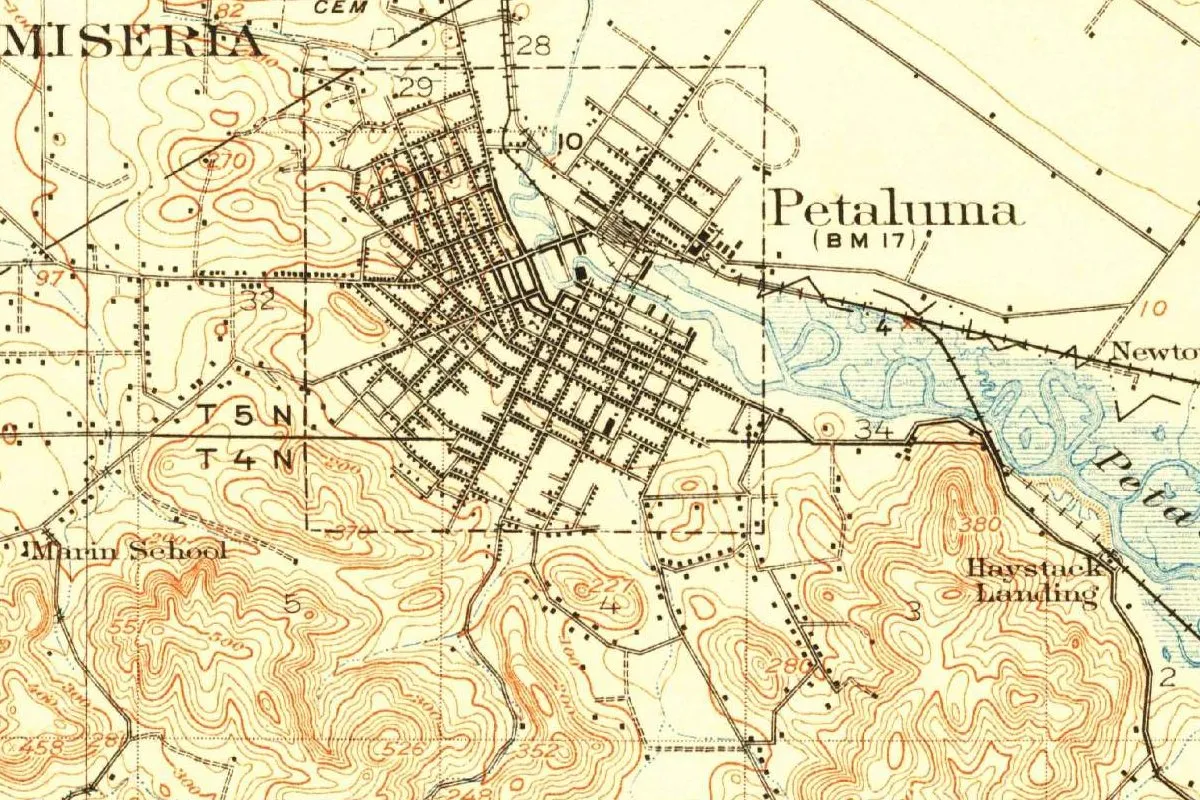
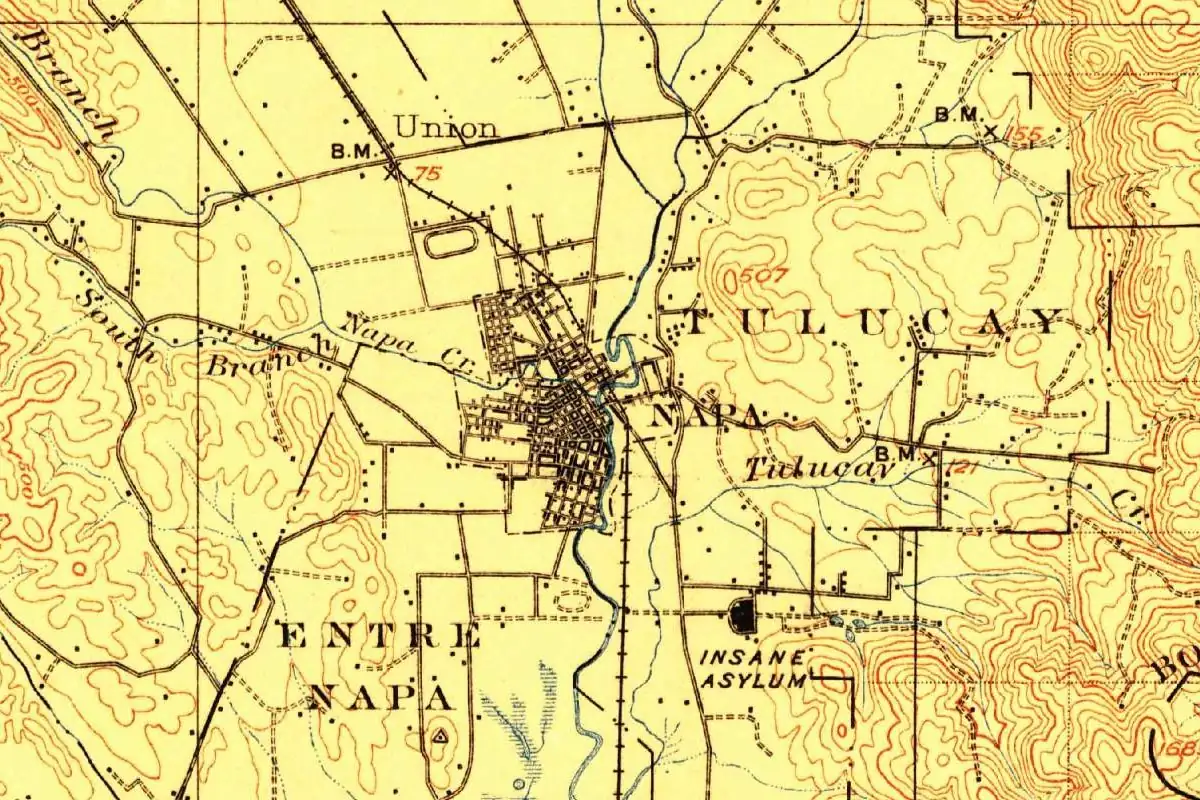
Look at the 1902 map at the top of this page and you’ll find ENTRE NAPA printed in big spaced letters just south of town. Across the river is TULUCAY, another rancho. Menefee tied that one to a different group, the Ulucas, whose word he said survived in the name Tulocay.
“Village,” from the county history
Eight years later, in 1881, the big History of Napa and Lake Counties took the question up again and called it “a mooted question.” The authors repeated Menefee’s fish, said they had nothing to add about the pioneers’ statements, and went looking in other languages instead.
Their idea came from around Clear Lake, to the north. There, they wrote, the word “Nap-po” turned up again and again meaning village, in names they translated as lily village, rocky village and wood village. Maybe, they suggested, Napa remembered a village that once stood on the stream. They said they were “inclined to give the preference to this last idea.” You’ll notice it’s a guess built on resemblance, and they framed it as one.
The same book reprinted a newspaper piece from 1864 that looked back at the town of 1854, with no more than 40 buildings, all wood. It opened by calling the place a town “by some aspiring genius of early days, misnamed Napa City.” So even the “City” part got some teasing.
“House,” and a harpoon point
Henry Gannett put a third meaning on the table in 1905. Napa, he wrote, was “said to be an Indian word meaning ‘city,’ or ‘house.’” Note the “said to be.” He wasn’t claiming to know.
Then in 1916 A. L. Kroeber, writing in the University of California’s series on American archaeology and ethnology, went through California’s Indigenous place names with a much harder eye. He counted Napa among nine counties whose names were “demonstrably or almost demonstrably” Indian in origin. But he called the etymologies in the state’s official list, Napa’s included, “either positively erroneous or unverified.”
On Napa itself, he laid out the claims side by side: “fish” from Prentiss Maslin and others, a “tribe” from another writer named Bailey, and Gannett’s “house.” Then he added a flat sentence: “No Indian village called Napa has ever been located in the region.” That sits awkwardly next to Menefee’s group on the Entre Napa grant, and next to the 1881 village idea.
Kroeber offered one more lead, borrowed from S. A. Barrett’s study of the Pomo and their neighbors. No word napa had turned up in the Wintun, Wappo or Miwok languages, the ones you’d expect around here. But in several Pomo dialects, some spoken not far away, napa was the name for the detachable points of a fish harpoon. If the old “fish” meaning had a grain of truth in it, Kroeber thought, “harpoon-point” might be the better reading. He then closed the door he’d just opened: “there is no distinct evidence that this is the origin of the name Napa.”
So what does Napa mean?
Put it all together and here’s where it stands. Fish rests on pioneers and a trade on the far north coast. Village rests on a resemblance to Clear Lake place names. House or city comes with a “said to be.” Harpoon point is a real word in nearby Pomo dialects, with no proof it’s the source. Kroeber, who had the language evidence in front of him, wouldn’t pick one.
So if you’ve seen a confident one-word translation somewhere, that’s why this page doesn’t give you one. The name is clearly older than the town. What it meant to the people who first said it is a question the written record hasn’t answered.
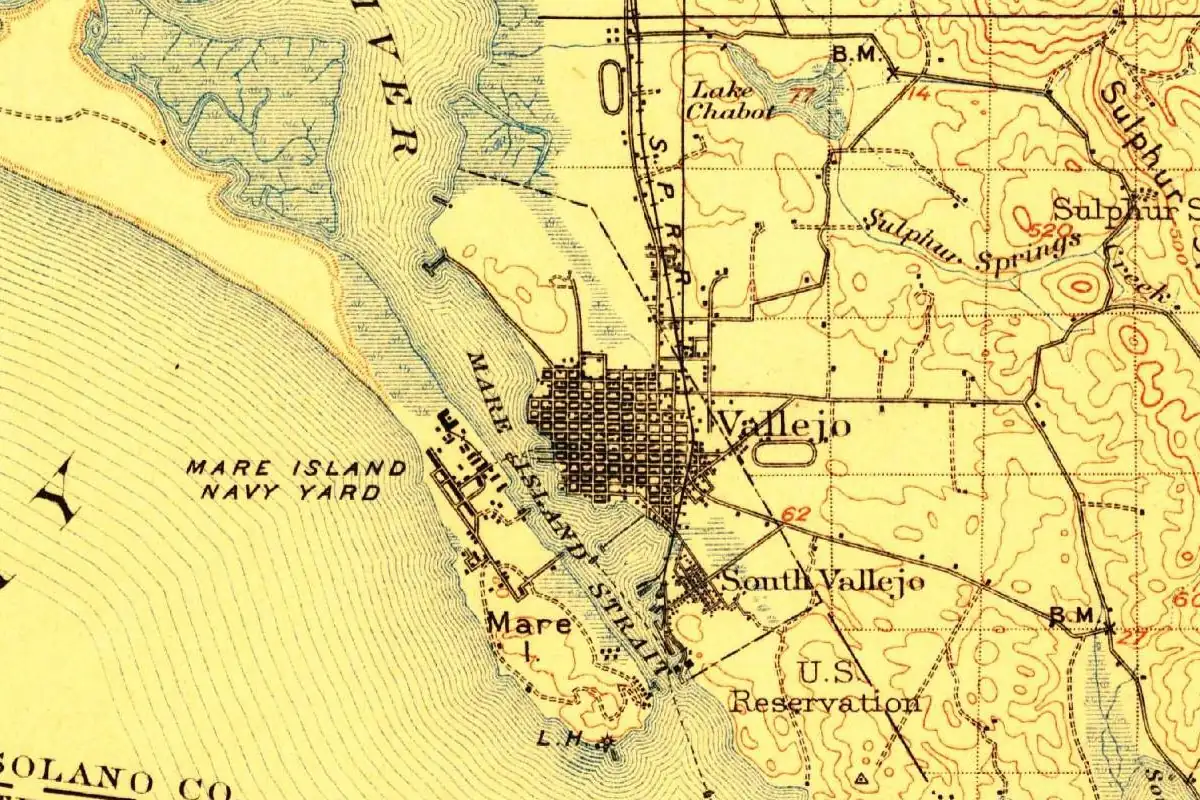
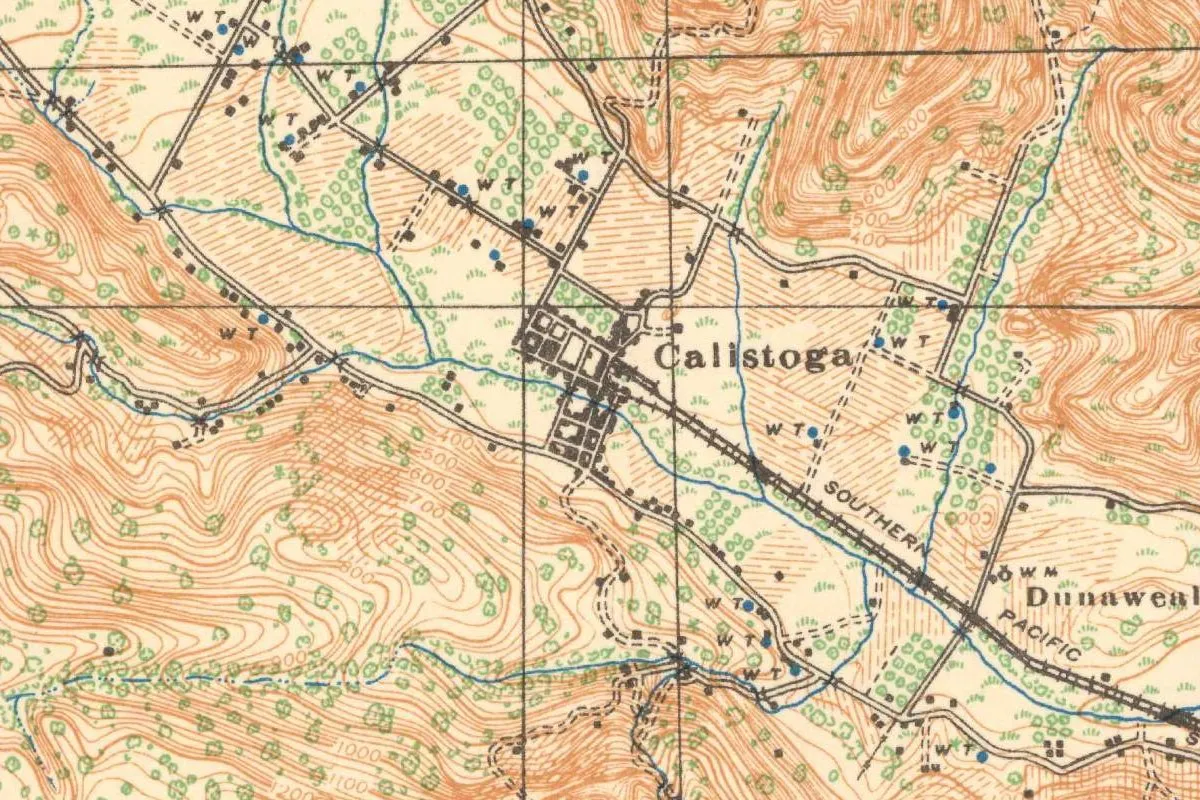
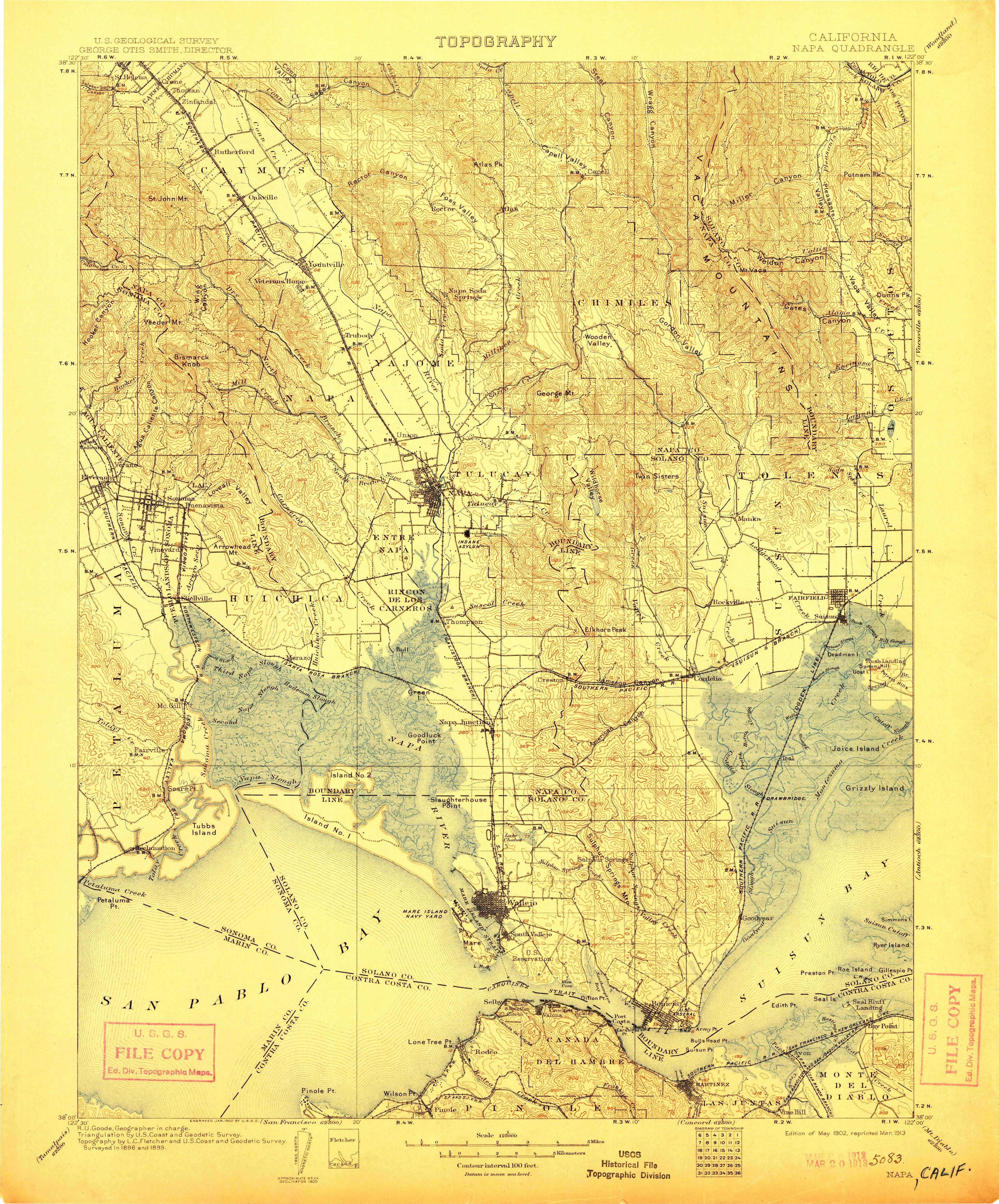
The same 1902 Napa sheet also covers Vallejo, and Kroeber’s 1916 list weighs in on other Indigenous names in the state too, like Temecula. There’s plenty more on our California page.
Quick answers
What does the name Napa mean?
No one knows for sure. Writers have offered “fish” (1873), “village” (1881) and “city” or “house” (1905), and Kroeber in 1916 called the old explanations unverified.
Does Napa mean fish?
That’s the oldest claim, from Menefee’s 1873 guide, which rested it on the word of old pioneers and on related languages of the northern coast. Kroeber suggested a Pomo word for a harpoon point might fit better, while saying there was no distinct evidence for that either.
Was Napa named after a Native village?
It’s been suggested. The 1881 county history leaned toward a village, but Kroeber wrote in 1916 that no Indian village called Napa had ever been located in the region.
Who founded the town of Napa?
Nathan Coombs laid out Napa City, in 1847 by the city’s account or spring 1848 by Menefee’s. He used a name that was already attached to the river and the land around it.
Key dates
- 1831George C. Yount, the first white settler in the valley, later counts six tribes living there, Menefee writes.
- 1847Nathan Coombs lays out Napa City, by the city's account; Menefee's 1873 guide says spring 1848.
- 1873C. A. Menefee writes that the word Napa "is said to signify 'fish.'"
- 1881The History of Napa and Lake Counties calls the meaning "a mooted question" and leans toward "village."
- 1916A. L. Kroeber writes that no Indian village called Napa has ever been located in the region.
Things to do in Napa, California
Napa County Historical Society at the Goodman Library
Founded in 1948, the society runs exhibits, a research library and education programs in downtown Napa's historic Goodman Library on First Street, its home since the late 1970s.
Napa Valley Wine Train
Antique railcars on a 36-mile (58 km) round trip from a station near downtown Napa, at the Oxbow Commons, up the valley to St. Helena and back, on a route that once carried visitors to a Calistoga spa resort.
Oxbow Public Market
A market hall of local food and wine purveyors in Napa, with bakers, butchers, cheese and spice shops, an oyster bar, a bookshop and places to sit down and eat.
Skyline Wilderness Park
A park in the foothills on Imola Avenue at the edge of Napa, with hiking trails and tent and RV camping.
Getting there
Open Napa in Google Maps
Opens in a new tab. The pin is the center of Napa in the USGS place-name record.
The closest airports, Amtrak stations and intercity bus stops, measured in a straight line from the center of Napa.
Airports
- Charles M Schulz/Sonoma County (STS) Santa Rosa 32 mi 52 km
- Oakland San Francisco Bay (OAK) 40 mi 64 km
Amtrak trains
- Suisun-Fairfield station (SUI) 14 mi 22 km
- Fairfield-Vacaville station (FFV) 17 mi 28 km
Intercity buses
- Gold Runner Napa Soscol Gateway Transit Center under 1 mi 0.5 km
- Amtrak Chartered Vehicle Amtrak Connecting Service · Napa Amtrak Bus Stop under 1 mi 0.5 km
- Greyhound Vallejo CA - Curtola Park & Ride (VAL) 14 mi 22 km
Distances are as the crow flies, not by road. We don't list schedules or fares because they change; check with the airline, Amtrak or the bus company before you go. Official data (FAA commercial service airports (2025), FAA airport locations, Amtrak stations and Intercity Bus Atlas) from the FAA and the U.S. Bureau of Transportation Statistics, checked Nov 14, 2026.
Sponsored
Staying in Napa?
Compare hotels in Napa, California, on Expedia.
See hotels in NapaWe may earn a commission if you buy through this link. It never changes what we write. Read our affiliate disclosure
Historical Sources & References
- A. L. Kroeber, “California Place Names of Indian Origin” (1916), pp. 31-32. Napa among nine counties with names “demonstrably or almost demonstrably” of Indian origin; Maslin’s etymologies, Napa’s included, “either positively erroneous or unverified.” Page 32 is the next page.
- A. L. Kroeber, “California Place Names of Indian Origin” (1916), p. 50. “Fish” from Maslin and others, “tribe” from Bailey, “house” from Gannett; “No Indian village called Napa has ever been located in the region”; Barrett’s report of napa as the Pomo word for detachable harpoon points, and “no distinct evidence” that it’s the source.
- C. A. Menefee, Historical and Descriptive Sketch Book of Napa, Sonoma, Lake and Mendocino (1873), p. 19. Yount in 1831 and the six tribes; the group on the Entre Napa grant; the quoted “said to signify ‘fish’” and the old pioneers; the shirt-for-salmon trade at Gold Bluff; the Ulucas and Tulocay.
- C. A. Menefee, Sketch Book (1873), pp. 52-53. Napa City laid off by Nathan Coombs in spring 1848, between Brown Street and the river, from Napa Creek to the steamboat landing.
- Lyman L. Palmer and others, History of Napa and Lake Counties (1881), pp. 3-4. “A mooted question”; Menefee’s “fish”; “Nap-po” as village around Clear Lake and the authors’ preference for it.
- Lyman L. Palmer and others, History of Napa and Lake Counties (1881), p. 243. The 1864 Register piece on Napa in 1854: “misnamed Napa City” and no more than 40 buildings.
- Henry Gannett, The Origin of Certain Place Names in the United States, 2nd ed. (1905), p. 219. Napa “said to be an Indian word meaning ‘city,’ or ‘house.’”
- City of Napa, “History of Napa”. Nathan Coombs laying out Napa City in 1847, from Napa Creek to the steamboat landing.
- GNIS feature 277561 (U.S. Geological Survey). The national gazetteer entry for Napa, in Napa County.
- U.S. Geological Survey, Napa sheet (1902, 1913 reprint). The 1:125,000 quadrangle the map at the top of this page was cropped from.
Sponsored
Put this 1902 map on your wall
The 1902 USGS Napa sheet, in a 1913 reprint, is in the public domain. Download the full-size scan for free, then have it printed on canvas with CanvasOnTheCheap.
Print a map on canvasDownload the full-size mapWe may earn a commission if you buy through this link. It never changes what we write. Read our affiliate disclosure
Spot something wrong, or know more? Tell us here. You can also email us or use our contact page. Corrections are noted here with their date, never made silently.