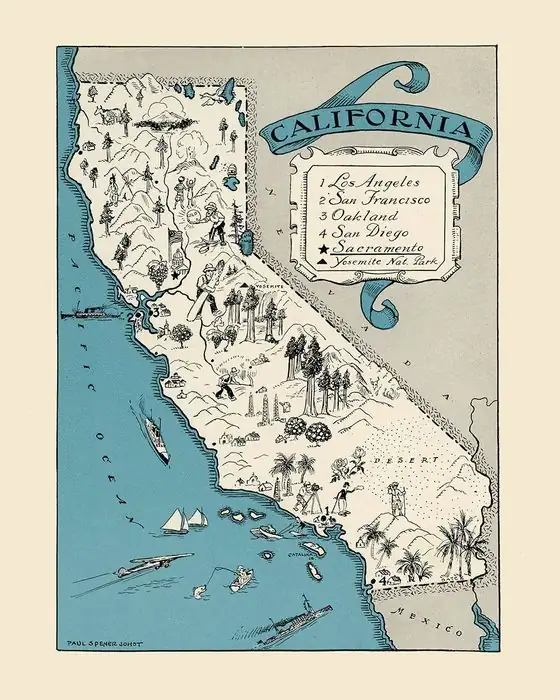
Who Is Monterey, California, Named After? A Viceroy
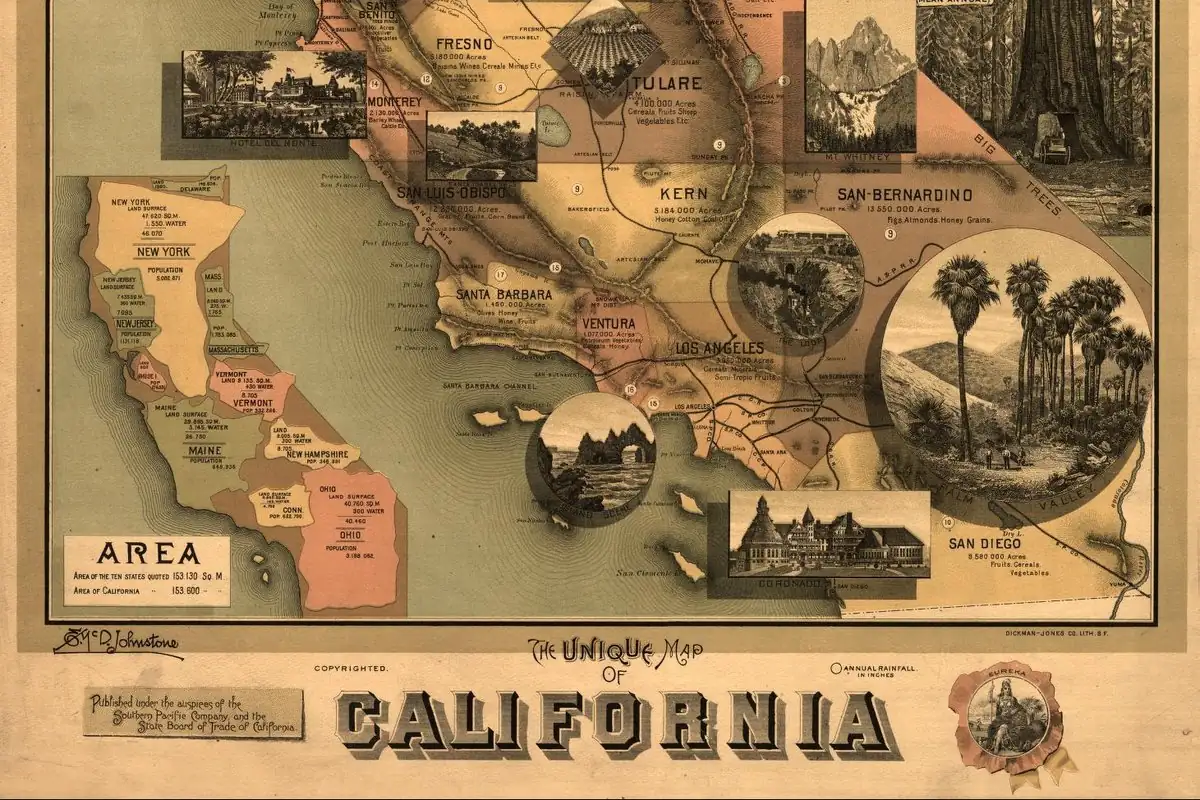
Monterey honors Gaspar de Zúñiga y Acevedo, Count of Monterey, who was viceroy of New Spain when Sebastián Vizcaíno sailed up the coast in 1602. The expedition reached the bay that December and named the port for him. When Spain came back to settle in 1770, the new settlement kept the port's name.
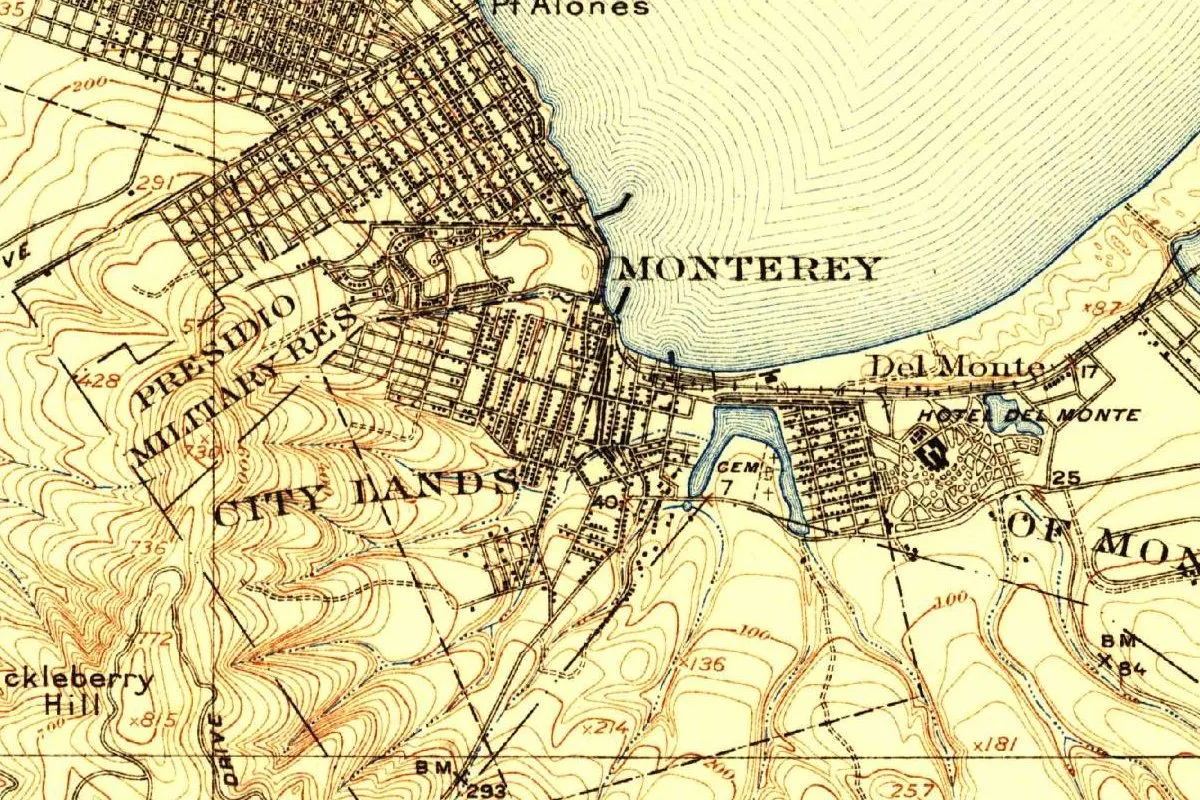
The name on Monterey, California, honors a viceroy of New Spain, the Count of Monterey, and it went on the bay during Sebastián Vizcaíno’s voyage of 1602. It’s a title, not a landscape description, even though it looks like one.
A viceroy’s title on a harbor
The man was Gaspar de Zúñiga y Acevedo, Count of Monterey, and in 1602 he ran New Spain for King Philip III. Father Antonio de la Ascensión, a friar who sailed with Vizcaíno and wrote an account of the trip, explains that the ships were fitted out by the king’s order while the count was viceroy.
In a footnote to his 1916 translation of Vizcaíno’s diary and Ascensión’s account, Herbert Bolton spells it out: the port was “so named in honor of the ruling viceroy.” He adds that the expedition’s charts label it “Puerto de Monterrey,” with two r’s. The single-r spelling is the one you see on signs today.
Henry Gannett’s The Origin of Certain Place Names in the United States, printed in 1905, agrees on the viceroy and then adds a translation: “A Spanish name meaning ‘mountain of the king.’” That’s what the pieces mean if you split them up, monte and rey. But the bay wasn’t named for a mountain or a king. It was named for a man whose title happened to be Monterey.
December 1602
Vizcaíno left Acapulco on May 5, 1602, to explore the coast of the Californias. By December he was working north past the islands of the Santa Barbara Channel. Bolton’s summary says that on December 15 the ships sighted the Bay of Monterey, which the explorers called “the best that could be desired.” They came to anchor on the evening of the 16th, and the next morning a mass was said under a big oak near the shore.
One of the earliest accounts of the naming, and a short one, is Ascensión’s:
“Thereupon we went forward with our voyage, and at the end of some days arrived at a fine port, which was named Monterrey.”
He goes on about the pines, oaks and fresh water, and a river nearby that “was named the Carmelo.” He thought Spain ought to settle the place to help the ships coming back from the Philippines. Spain took more than 160 years to agree.
The bay nobody recognized
When the Spanish finally came back by land in 1769, Monterey was the goal. Vizcaíno’s description had made it sound like a perfect harbor, and nobody on the Portolá expedition could match it to the open bay they found. Francisco Palóu, a Franciscan friar who later wrote the life of Father Junípero Serra, says the party “actually arrived at the port of Monterey and stopped there and planted a Cross without any one of those belonging to the expedition recognizing the place.” They kept going about forty leagues north and ended up at the port of San Francisco instead, which is how San Francisco enters the story. On January 24, 1770, the explorers were back in San Diego, reporting that Monterey couldn’t be found.
Palóu’s book has a couple of mistakes to watch for if you read it yourself. It calls the viceroy the “Duke of Monterey” and puts Vizcaíno’s visit in 1603. Bolton’s edition of the diary has Vizcaíno at the bay in December 1602.
The second try worked. In a letter Palóu copies, Serra writes that the ship San Antonio anchored on May 31, 1770, in “this beautiful harbor of Monterey,” the same one Vizcaíno had used. On the holy day of Pentecost, June 3, a cross went up, mass was sung and the Spanish took formal possession. The settlement founded there kept the port’s name, and so did the town that grew around it.
A name that spread inland
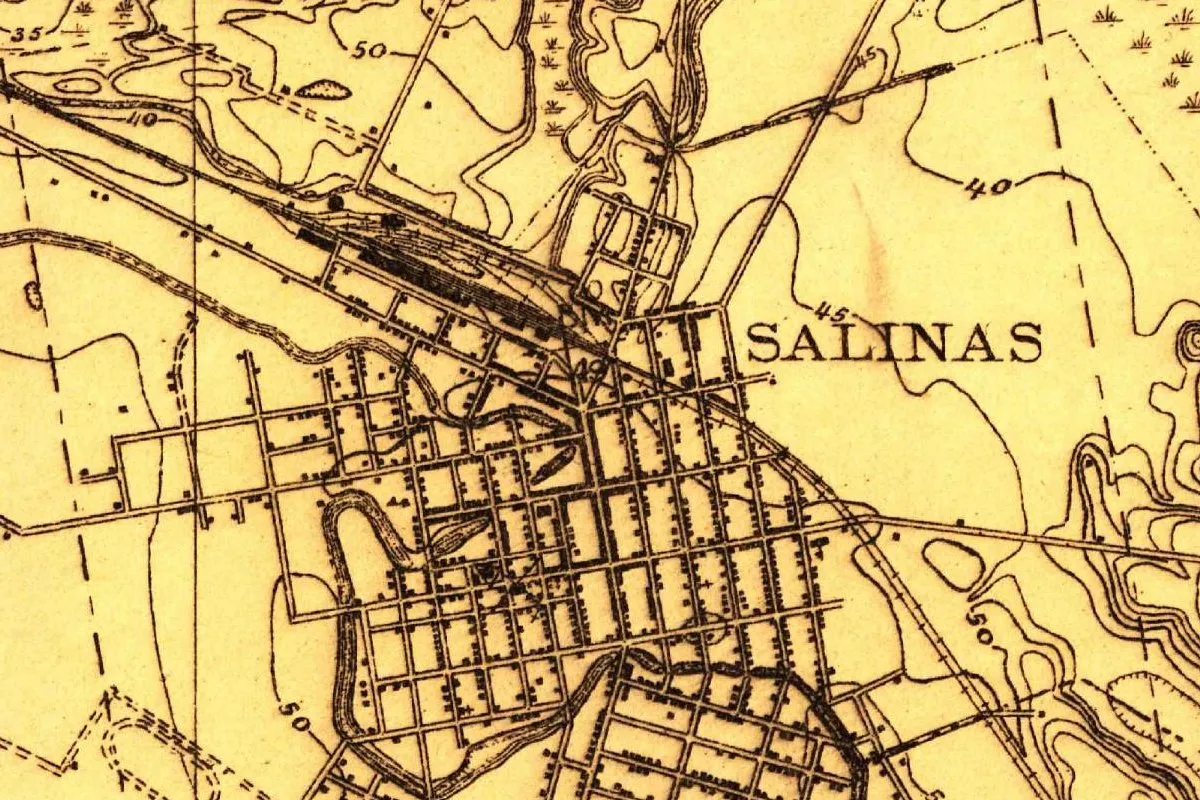
From the bay, the name spread across this part of California. Gannett’s entry covers both the county and the city, and he even slips into the double r once, placing Salinas “in Monterrey County.” That county also holds Salinas, a town with a very different naming story.
By our own measurement between the two cities’ coordinates, Monterey sits about 86 miles (139 km) south-southeast of San Francisco in a straight line.
Quick answers
Who is Monterey named after?
Gaspar de Zúñiga y Acevedo, Count of Monterey, viceroy of New Spain. Bolton’s 1916 edition of the Vizcaíno diary says the port was named in his honor.
Does Monterey mean “mountain of the king”?
Not really. Gannett’s bulletin gives that translation of the two Spanish words. The bay itself was named for the viceroy’s title, not for a mountain.
Who named Monterey Bay, and when?
Sebastián Vizcaíno’s expedition, which anchored in the bay on December 16, 1602. Ascensión’s account says only that the port “was named Monterrey,” without saying which officer chose the name.
When was Monterey founded?
In 1770. Spain took possession of the port on June 3 of that year, according to Serra’s letter in Palóu’s biography, and founded a presidio and mission there.
Key dates
- 1602May 5: Sebastián Vizcaíno's ships leave Acapulco to explore the coast of the Californias.
- 1602December 16: the ships anchor in the bay, which is named for the viceroy, the Count of Monterey.
- 1769The Portolá land expedition reaches the bay, plants a cross and goes on north without recognizing it as Monterey.
- 1770January 24: the land expedition is back in San Diego, reporting that it never found the port of Monterey.
- 1770June 3: on Pentecost, the Spanish raise a cross at Monterey and take formal possession of the port.
Getting there
Open Monterey in Google Maps
Opens in a new tab. The pin is the center of Monterey in the USGS place-name record.
The closest airports, Amtrak stations and intercity bus stops, measured in a straight line from the center of Monterey.
Airports
- Monterey Regional (MRY) 3 mi 5 km
- Mineta San Jose International (SJC) 53 mi 85 km
Amtrak trains
- Seaside-Marina station (MYU) 6 mi 10 km
- Salinas station (SNS) 14 mi 23 km
Intercity buses
- Amtrak Chartered Vehicle Amtrak Connecting Service · Monterey Amtrak Bus Stop under 1 mi 0 km
- Gold Runner Gilroy 33 mi 54 km
- Limousine Express Gilroy 34 mi 54 km
Distances are as the crow flies, not by road. We don't list schedules or fares because they change; check with the airline, Amtrak or the bus company before you go. Official data (FAA commercial service airports (2025), FAA airport locations, Amtrak stations and Intercity Bus Atlas) from the FAA and the U.S. Bureau of Transportation Statistics, checked Nov 13, 2026.
Sponsored
Staying in Monterey?
Compare hotels in Monterey, California, on Expedia.
See hotels in MontereyWe may earn a commission if you buy through this link. It never changes what we write. Read our affiliate disclosure
Sponsored
Want the spooky side of Monterey?
The name has its story above. For the ghost stories, US Ghost Adventures runs walking ghost tours in Monterey.
See ghost tours in MontereyWe may earn a commission if you book through this link. It never changes what we write. Read our affiliate disclosure
Historical Sources & References
- Herbert E. Bolton, ed., Spanish Exploration in the Southwest, 1542-1706 (1916), pp. 46, 90-91, 106, 119. Vizcaíno’s departure on May 5, 1602, and the bay sighted on December 15, “the best that could be desired” (p. 46); the anchoring on the 16th, the mass under the oak and Bolton’s note that the port was “so named in honor of the ruling viceroy,” with “Puerto de Monterrey” on the charts (pp. 90-91); Ascensión on the ships fitted out while the Count of Monterey was viceroy (p. 106); his line “arrived at a fine port, which was named Monterrey” (p. 119).
- Francisco Palóu, Life and Apostolic Labors of the Venerable Father Junípero Serra (1913), pp. 85, 98. The 1769 expedition planting a cross at Monterey without recognizing it, and its return to San Diego on January 24, 1770 (p. 85); Serra’s letter on the San Antonio anchoring on May 31, 1770, and the possession on Pentecost, June 3 (p. 98).
- Henry Gannett, The Origin of Certain Place Names in the United States (USGS, 1905), pp. 213, 272. Monterey county and city “named for Count de Monterey, viceroy of Mexico,” with the translation “mountain of the king” (p. 213); Salinas “in Monterrey County” (p. 272).
- GNIS feature 1659762 (U.S. Geological Survey). Entry 1659762, listing the city inside the county that shares its name.
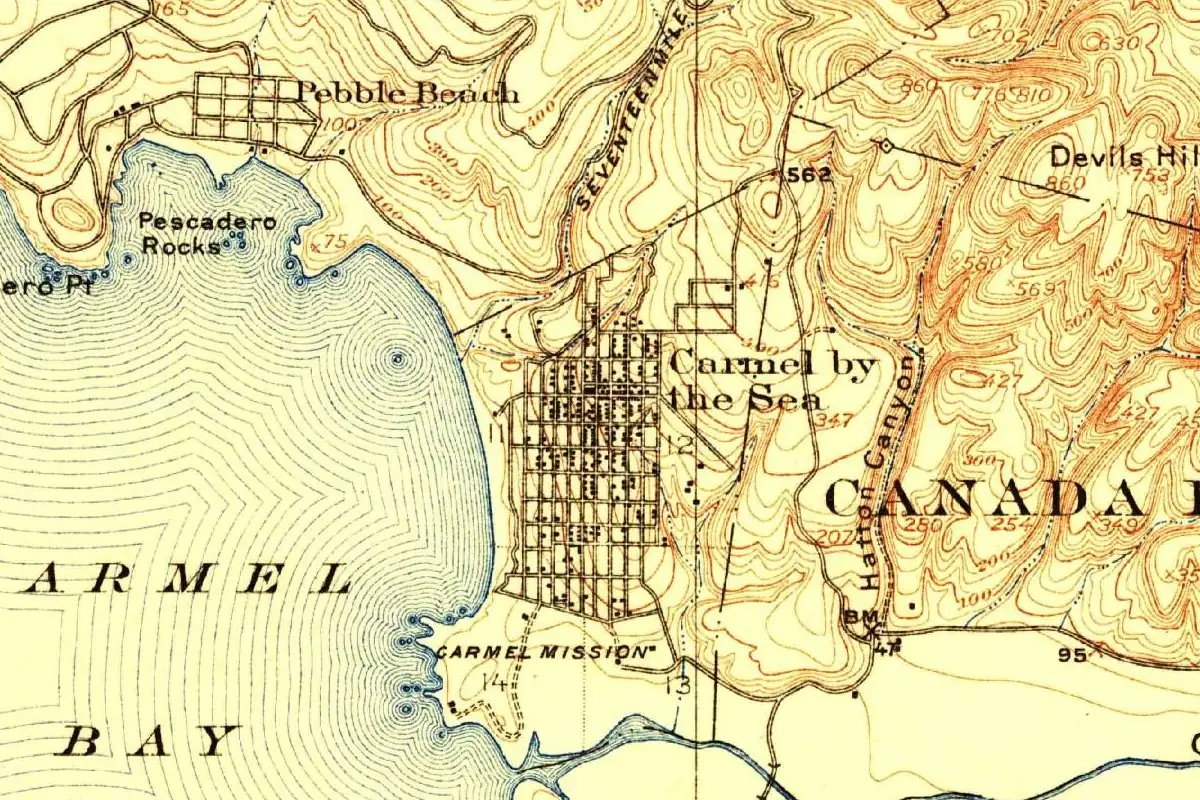
- U.S. Geological Survey, Monterey sheet (1:62,500), 1913. The Monterey sheet dated 1913 (surveyed in 1912; this scan is a 1923 reprint), with the presidio reservation and the Hotel Del Monte grounds on either side of town.
Spot something wrong, or know more? Tell us here. You can also email us or use our contact page. Corrections are noted here with their date, never made silently.