Carlsbad Caverns: How a Bat Cave Got a Spa's Name
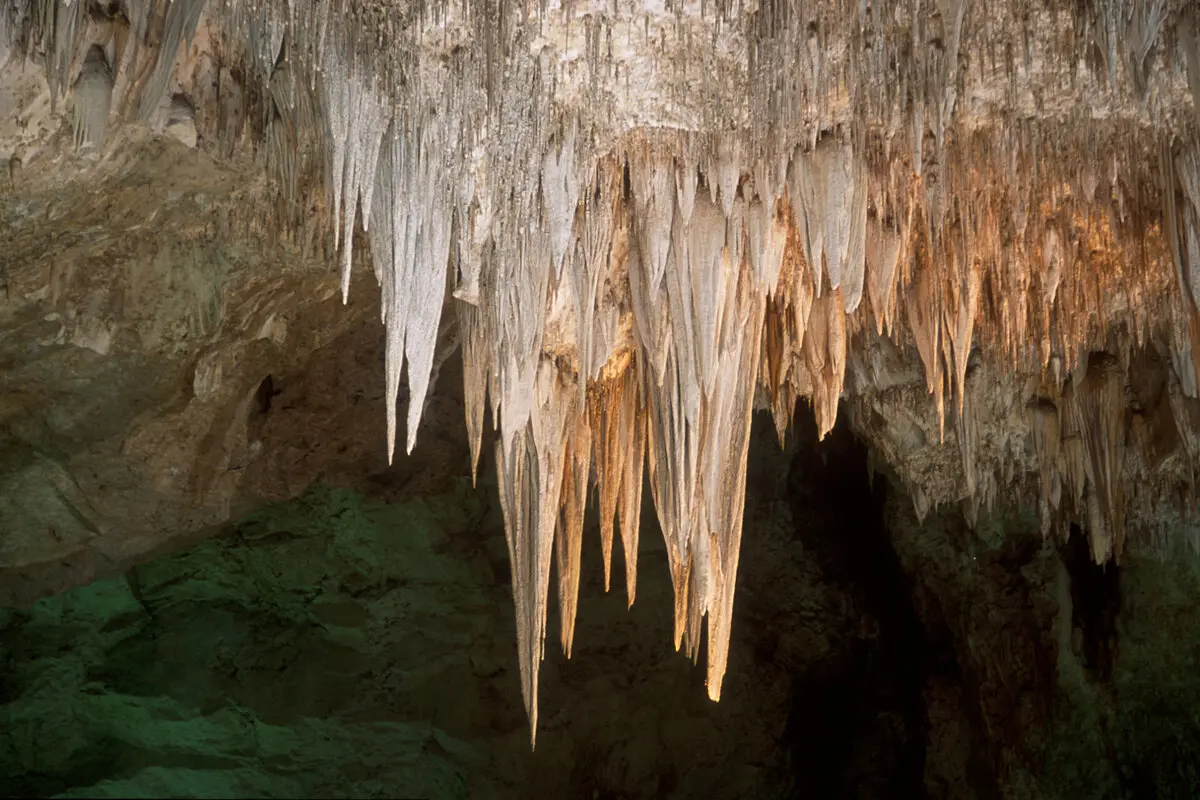
Carlsbad Caverns shares its name with the nearby town, which swapped Eddy for a European spa’s name in 1899. Settlers had called the cave Bat Cave. So the park’s name is secondhand twice over: a cave named for a New Mexico town, and a town named for a spa an ocean away. Nobody on record says who first called it the Carlsbad Cave, and that’s worth knowing before you read a confident version somewhere else.
How Carlsbad Caverns National Park Got Its Name
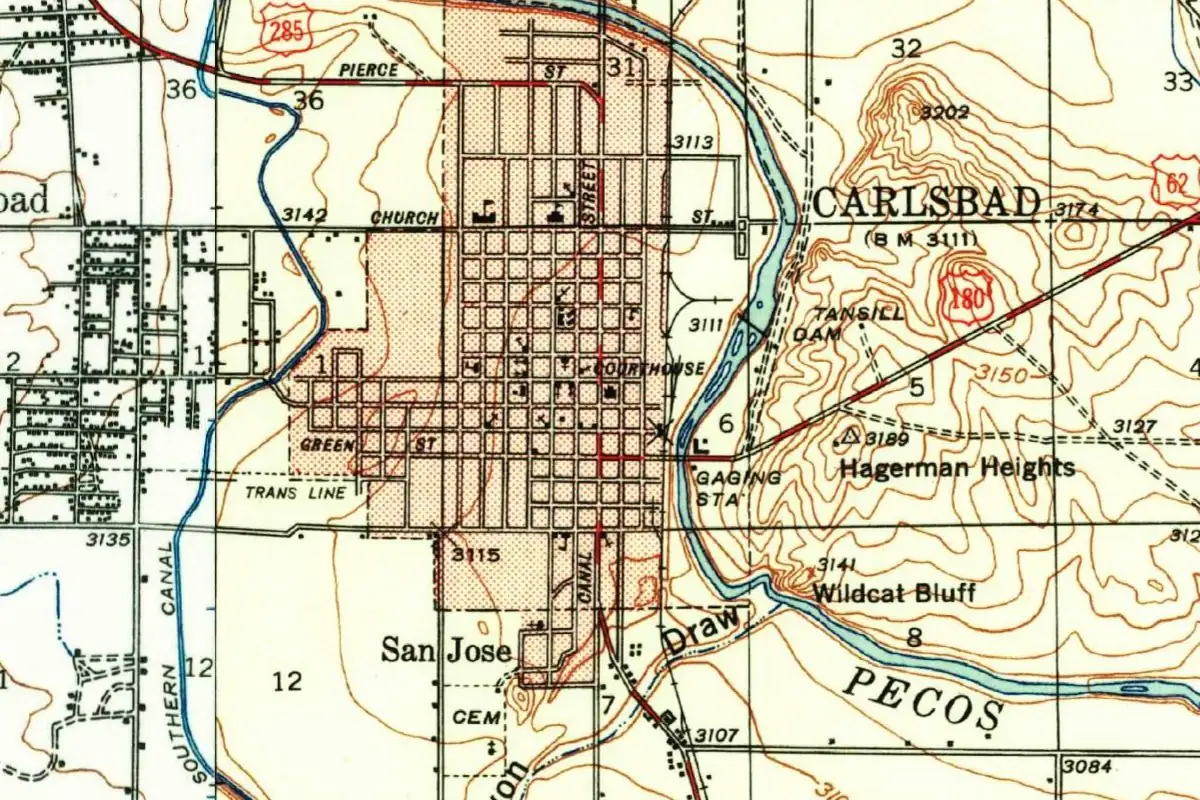
Start with the town. The Park Service’s chronology of the caverns says Eddy, “the future Carlsbad,” dates from 1888. A roadside marker listed in New Mexico’s official historic markers database explains both names: Eddy honored the Eddy brothers, cattlemen who promoted railroads, and in 1899 the town became Carlsbad, after the resort of Karlsbad, because its water had a similar mineral content.
Then the cave picked up the town’s name. When Calvin Coolidge signed Proclamation 1679 on October 25, 1923, it described a cave in limestone “known as the Carlsbad Cave,” located “near the town of Carlsbad,” in Eddy County. The new reserve was called Carlsbad Cave National Monument. Seven years later Congress went plural. The act of May 14, 1930, took the land “heretofore known as the Carlsbad Cave National Monument” and turned it into “the Carlsbad Caverns National Park.”
What none of these documents says is when the cave first took the town’s name, or who first used it. The proclamation simply treats “Carlsbad Cave” as the name people already knew. Today the Park Service uses the singular, Carlsbad Cavern, for the main cave, and the plural for the park.
Carlsbad Caverns History Before the Name
Long before Carlsbad, the cave and the land around it had names in other languages. A 2016 Park Service blog post on Jim White says the Mescalero Apache had a name for the area that translates as “Home of the Bat,” and that the Zuni Pueblo’s name for it translates as “Bat Cave.” The same post points out mescal cooking pits and a cave painting near the entrance. In the park’s Caverns Historic District nomination to the National Register, the settlers call it Bat Cave too, after the clouds of bats that cowboys saw leaving it on summer evenings.
The bats also brought miners. The Register nomination says shafts were cut near the entrance in the early 1900s so miners could dig out bat guano, and in the cave’s early tourist years, visitors were let down the same way, on a hoist in a guano bucket. The chronology says a staircase from the natural entrance went in during 1925, which ended those bucket rides; the Register nomination says it was first used in 1926.
Who Discovered Carlsbad Caverns?
The honest answer is that nobody knows who got there first. The Park Service’s chronology says Jim White, a Texas-born cowhand of 16, “probably” made his first trip into the caverns in 1898, and that who first found the entrance “remains disputed.” The Register nomination is firmer and calls White the first to explore the cave.
The blog post tells White’s story the way it’s usually told: he saw what he took for smoke from a wildfire, rode toward it and found bats instead, thousands upon thousands of them pouring out of the hole. He later came back with wire and wood, built a ladder and climbed down. He gave many of the rooms the names you’ll still hear on a tour, including the Big Room and the King’s Palace. The post also calls White the cave’s chief promoter for life, then adds, with a wink, that backers of Colonel Thomas Boles might not agree. Boles was the park’s first Park Service superintendent, arriving in 1927, according to the Library of Congress’s HABS record.
The federal survey came in 1923, when the chronology says Robert Holley, a surveyor for the General Land Office, mapped the cavern with White as his guide, and the photographer Ray V. Davis, whose pictures ran in the New York Times that year, went along. A National Geographic Society expedition led by Willis T. Lee followed in 1924. White died in Carlsbad on April 26, 1946.
Visiting Carlsbad Caverns
The Park Service’s Plan Your Visit page says you need a timed entry ticket to go into Carlsbad Cavern, and it strongly recommends reserving one ahead. The reservation only sets your entry time. Rules like these change, so check that page before you go. Carlsbad Cavern is one of more than 300 limestone caves the Park Service counts in the area’s fossil reef, and it became a World Heritage Site in December 1995.
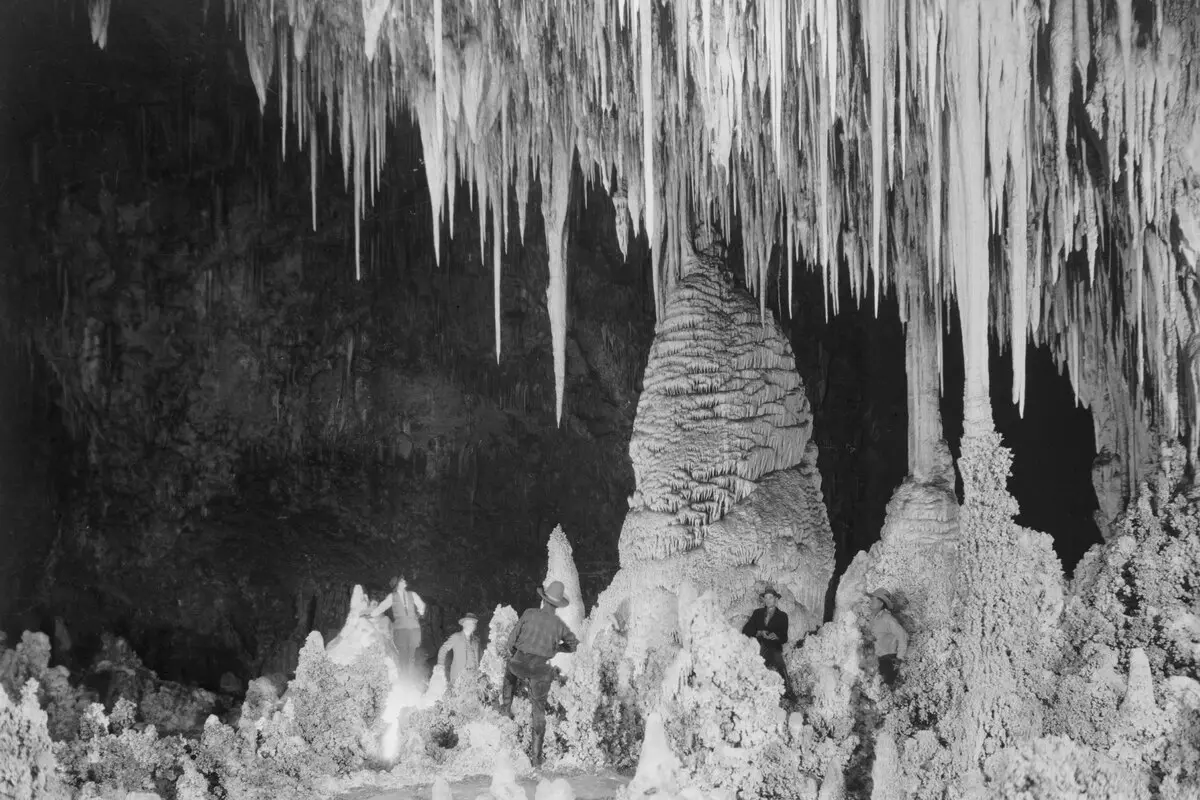
The old photo lower on this page, a Santa Fe railroad print copyrighted about 1926, shows what early tourists came for: a towering stalagmite in the room it calls the King’s chamber, with a few people dwarfed at its base.
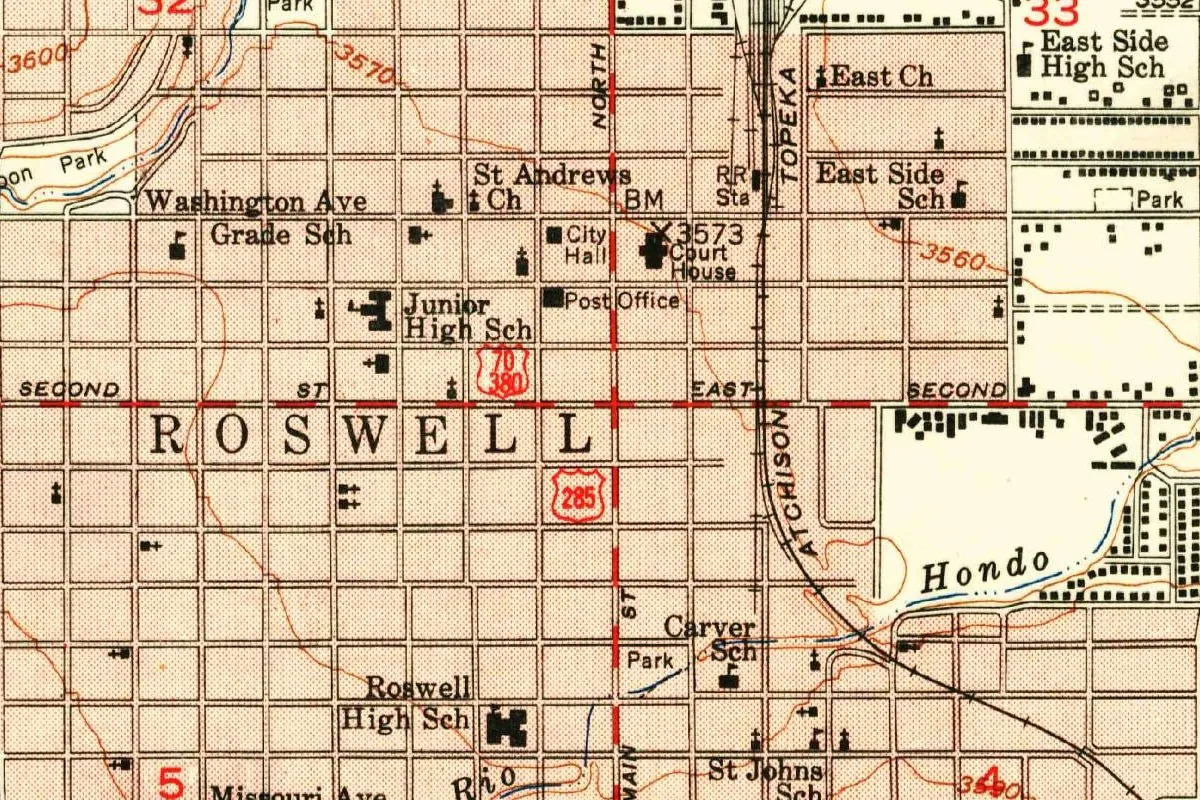
The town that lent its name sits on the Pecos River, and our Carlsbad story follows the spa name back to a retired Chicago cigar man who named local springs after the European resort before the town adopted it in 1899. Farther up the Pecos Valley, Roswell got its name from the first name of Van C. Smith’s father.
Quick answers
Why Is It Called Carlsbad Caverns National Park?
Because it lies near Carlsbad, New Mexico. The 1923 proclamation called it “the Carlsbad Cave,” near the town of Carlsbad, and Congress made it Carlsbad Caverns National Park in 1930. The town itself was Eddy until 1899, when it adopted the name of Karlsbad, a European spa.
What Was Carlsbad Caverns Called Before?
Settlers called it Bat Cave, for the huge flights of bats at dusk. The Mescalero Apache and Zuni Pueblo had names for the area that translate as “Home of the Bat” and “Bat Cave.” From 1923 to 1930 it was Carlsbad Cave National Monument.
Who Discovered Carlsbad Caverns?
Nobody knows for certain. The Park Service says Jim White, a 16-year-old cowhand, probably first went in during 1898, but who found the entrance first is still disputed. American Indians knew of the cave long before White.
Do You Need a Reservation for Carlsbad Caverns?
The Park Service requires a timed entry ticket to go into Carlsbad Cavern and strongly recommends booking ahead, since the reservation fixes your entry time. Its Plan Your Visit page, last updated in May 2025, has the current rules, so check it before your trip.
Key dates
- 1888The Pecos River town that will lend the cave its name is founded as Eddy.
- 1898Jim White, a 16-year-old cowhand, probably makes his first trip into the cave the settlers call Bat Cave.
- 1899Eddy renames itself Carlsbad after the European spa town of Karlsbad.
- 1923October 25: Calvin Coolidge proclaims Carlsbad Cave National Monument around "the Carlsbad Cave."
- 1925A staircase into the cave replaces the guano bucket as the way visitors get in.
- 1930May 14: Congress makes the monument Carlsbad Caverns National Park, switching to the plural.
- 1995December: the park joins the list of World Heritage Sites.
Find it in Google Maps
Opens in a new tab. The pin is a point from the USGS place-name record, so it may not be the middle of the area.
Sponsored
Planning a visit?
Compare hotels in the area on Expedia.
See hotels nearbyWe may earn a commission if you buy through this link. It never changes what we write. Read our affiliate disclosure
Historical Sources & References
- National Park Service, “Proclamation 1679”. Coolidge’s proclamation of October 25, 1923: a cavern “known as the Carlsbad Cave,” “near the town of Carlsbad,” in Eddy County, set apart as Carlsbad Cave National Monument.
- National Park Service, “Act of May 14, 1930”. The monument becomes “the Carlsbad Caverns National Park.”
- National Park Service, “Carlsbad Caverns’ Chronology”. Eddy founded in 1888; White “probably” in the caverns in 1898, first finder “disputed”; Holley’s 1923 survey and Davis’s photos; Lee’s 1924 expedition; the 1925 staircase; White’s death in 1946; World Heritage listing, December 1995.
- Lacey Thomas, “Jim White, Cave Explorer”. The Apache and Zuni names in translation; the bats he mistook for smoke; his wire ladder; room names such as the Big Room and King’s Palace; the nod to the backers of Colonel Thomas Boles.
- Caverns Historic District, National Register nomination (1988). “The settlers gave the cave the name of Bat Cave”; White as first explorer, 1898; guano shafts of the early 1900s and the bucket ride in.
- HABS NM-227, Iceberg Rock Staircase, Carlsbad Caverns National Park. The Library of Congress record notes the 1930 change from Carlsbad Cave to Carlsbad Caverns National Park and the arrival of Thomas Boles, the first Park Service superintendent, in 1927.
- New Mexico Historic Preservation Division, Historic Markers Database (2017). Page 5, “Carlsbad” marker: Eddy for the Eddy brothers, renamed Carlsbad in 1899 for Karlsbad; “Carlsbad Caverns National Park (1)” marker: monument 1923, park 1930, World Heritage 1995.
- National Park Service, Carlsbad Caverns “History & Culture”. Over 300 caves of limestone, all in a fossil reef.
- National Park Service, Carlsbad Caverns “Plan Your Visit”. Entry needs a timed ticket; booking ahead is strongly recommended.
- Library of Congress, “King’s chamber, Carlsbad Caverns” (c1926). The historic photo on this page, copyright Santa Fe System Lines, no known restrictions on publication.
- GNIS feature 904780, Carlsbad Caverns National Park (USGS). Listing of the park in the USGS Geographic Names Information System.
Spot something wrong, or know more? Tell us here. You can also email us or use our contact page. Corrections are noted here with their date, never made silently.