Pikes Peak: Named for an Explorer Who Never Reached the Top
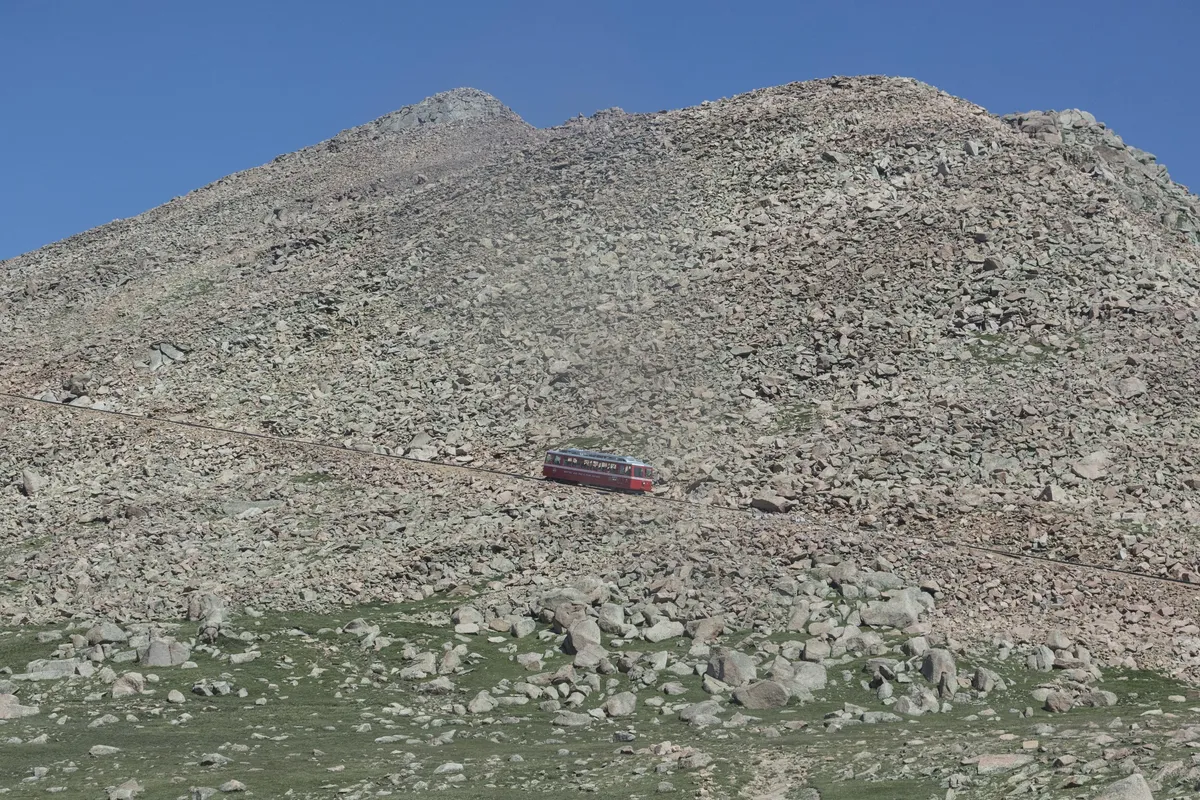
Pikes Peak is named for Zebulon Pike, who tried to climb it in November 1806, gave up in deep snow and wrote that he doubted anyone could reach the top. He never called it Pikes Peak himself. For decades the mountain went by other names, including the name of the man who actually got to the summit first.
Why Is It Called Pikes Peak?
Zebulon Montgomery Pike was a young Army officer leading a party west along the Arkansas River in 1806. The Colorado Encyclopedia says he first spotted the mountain on November 15 and called it “the Grand Peak.” History Colorado adds that his journal also calls it the “Highest Peak.”
On November 23, at a fork of the river that Coues identifies as the mouth of the Fountain, Pike decided to climb what he took for a one-day hike to the top, so he could map the country from there. It wasn’t. In the 1895 edition of his journals, under November 27, he describes reaching the top of a lower ridge with snow “middle-deep” and the thermometer at 4 degrees below zero. From there the top of the Grand Peak looked 15 or 16 miles (24 to 26 km) away and “as high again as what we had ascended,” and he added that “no human being could have ascended to its pinical.” His soldiers had light overalls and no stockings, so they turned back. The book’s editor, Elliott Coues, figured Pike got to about 9,000 feet (2,700 m), south of Cheyenne Mountain and Mount Rosa.
So how did Pike’s name end up on top? Coues admitted he didn’t know: “When, where, and by whom the mountain was first called Pike’s Peak is unknown, to me at least.” He found the name in speech by 1838, on Gregg’s map of 1844 as “Pikes Peak (or James’),” and in John C. Frémont’s report of his 1843-44 explorations. History Colorado puts it later, saying newspapers first called it Pike’s Peak during the gold rush of 1859. Either way, the gold rush settled it.
The first recorded climb came in 1820. Coues says Dr. Edwin James of Major Stephen Long’s expedition, a botanist according to History Colorado, reached the summit with a few others, and the expedition named it James’ Peak. The Colorado Encyclopedia says the two names were used side by side for close to 40 years.
The mountain had names long before either man came. The Colorado Encyclopedia and History Colorado both give the Ute name as Tava, which they translate as “Sun Mountain,” and the encyclopedia gives an Arapaho name, heey-otoyoo, as “long mountain.” Another History Colorado page says the Mouache and Kapuuta call the peak Tava-kaavi, and it adds that although Edwin James is famous for his 1820 climb, in Nuuchiu tradition their ancestors were the first on the summit, placed there by the Creator.
Pikes Peak History
The gold rush is what made the name famous. The Colorado Encyclopedia says wagons heading west in 1858 and 1859 carried the slogan “Pikes Peak or Bust,” even though most of the gold was farther north. Our story on the state of Colorado explains how those miners in the Pike’s Peak country tried to set up a “Territory of Jefferson” that Congress never recognized.
The apostrophe disappeared on paper later. The U.S. Board on Geographic Names, in the first report it put out in 1892, listed “the avoidance, so far as seems practicable, of the possessive form of names” among its reforms, saying the possessive was “rapidly disappearing.” That’s still the federal rule: the Board’s policy today discourages apostrophes that suggest possession, so the official name in the federal database is Pikes Peak. We haven’t found the date of a Board decision on this mountain in particular.
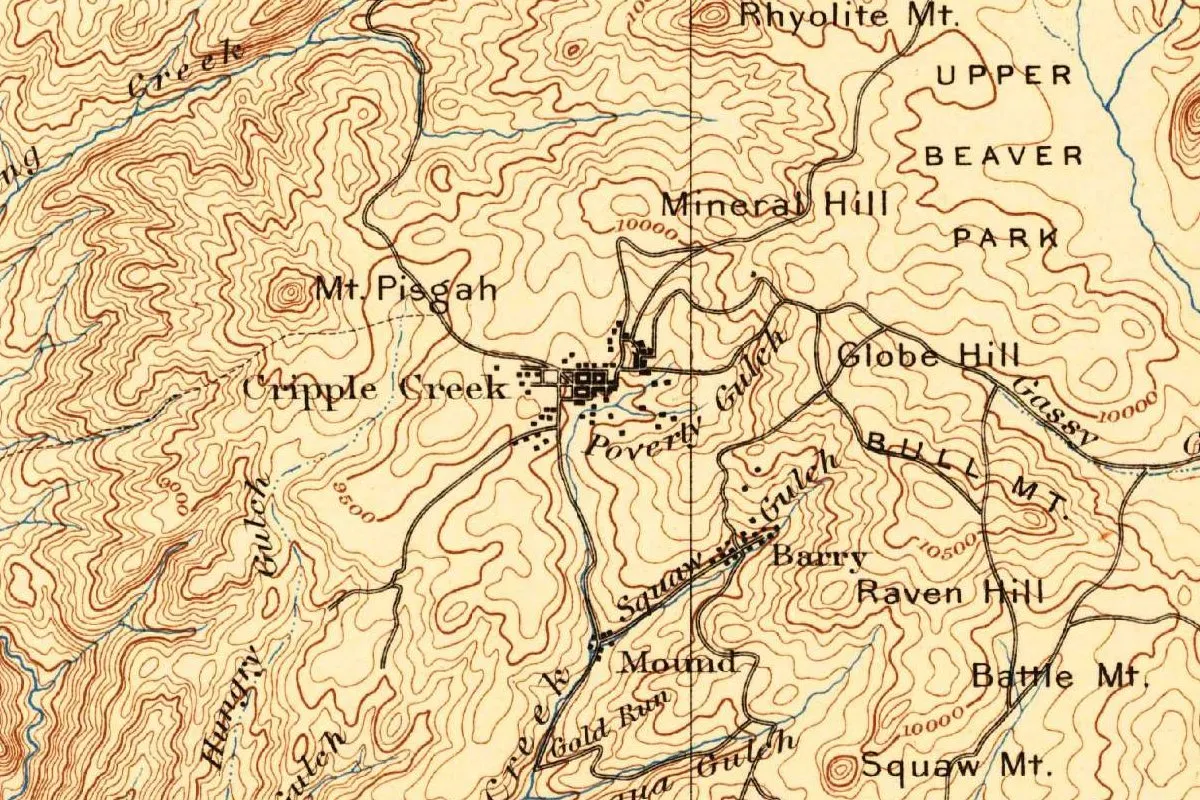
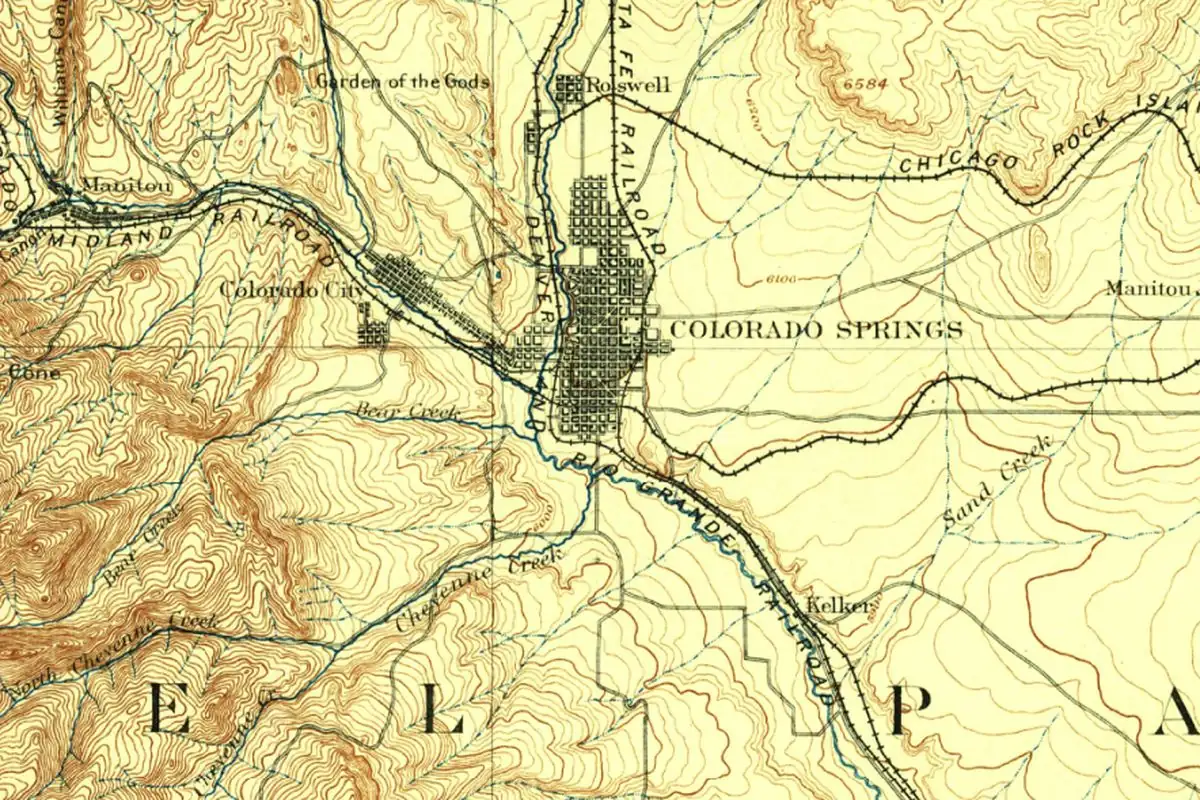
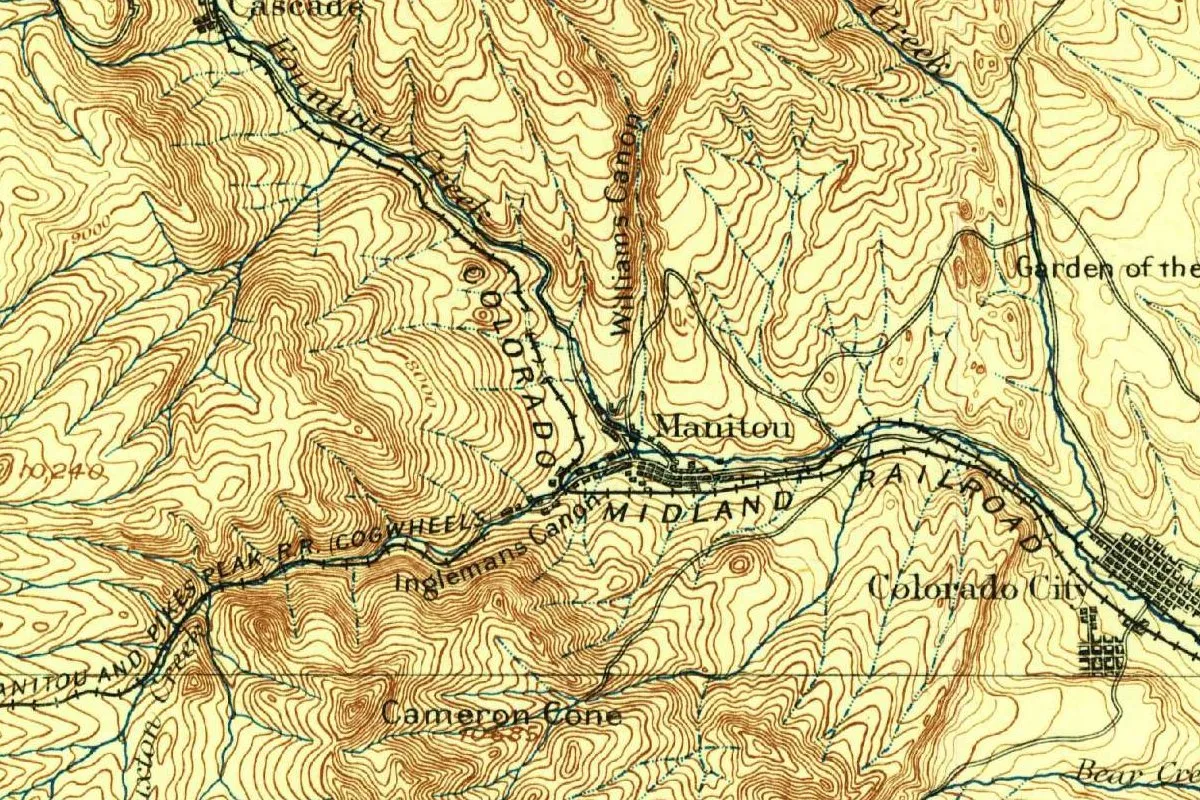
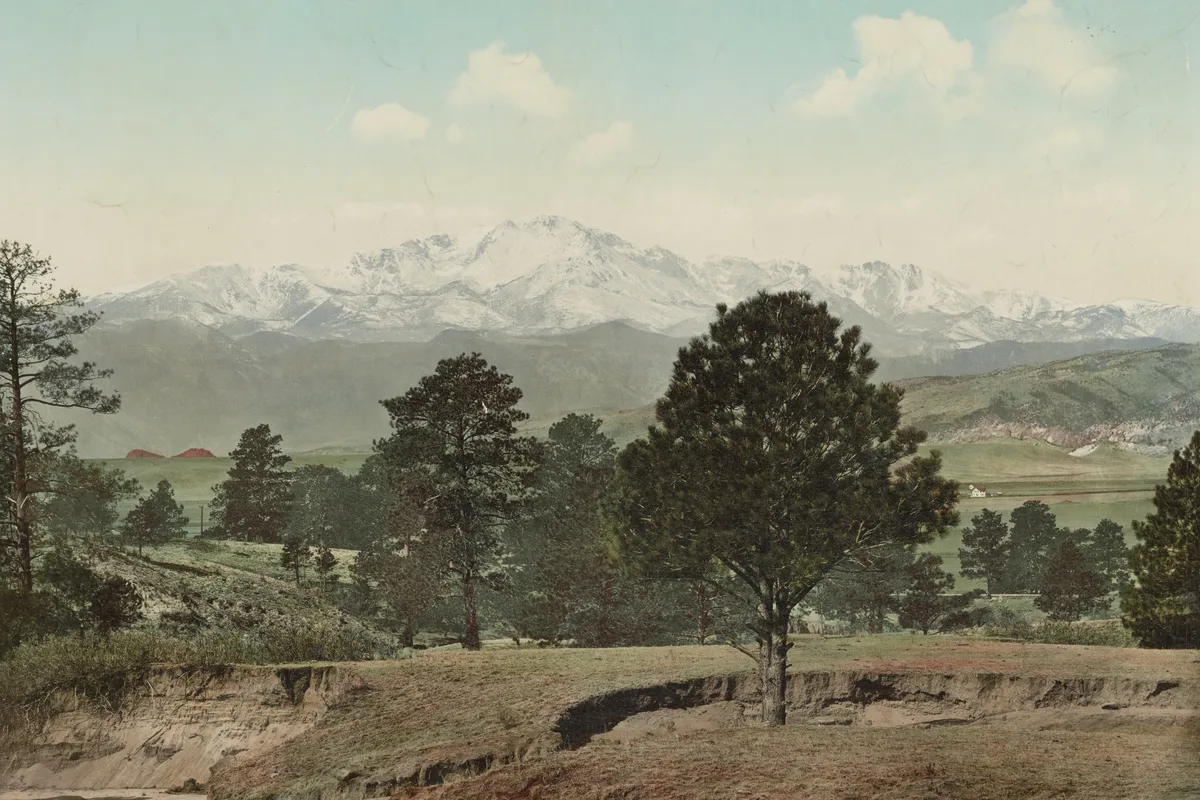
You’ll still see the old spelling in old pictures. The photochrom at the bottom of this page, by William Henry Jackson, was sold as “Pike’s Peak, Colorado.” When colony officials laid out Colorado Springs in 1871, their first stake went in where Cascade Avenue crosses Pikes Peak Avenue, and the Geological Survey’s 1894 topographic sheet that shows Cripple Creek is named for the mountain too.
The mountain is in Pike National Forest, and the Colorado Encyclopedia says the City of Colorado Springs operates the toll road to the summit. The encyclopedia dates the highway to 1916 and the first cog-railway service to the summit to 1890. In 1893 the poet Katharine Lee Bates climbed the peak, and the encyclopedia says the view inspired the poem that became “America the Beautiful.”
At the top, you’ll find the Pikes Peak Summit Visitor Center, which opened on June 30, 2021, according to the Forest Service. It sits at 14,115 feet (4,302 m), and the Southern Ute Indian Tribe was one of the partners on the project.
Quick answers
Who named Pikes Peak?
No one knows. Pike called it the Grand Peak, and the name Pikes Peak came into use among travelers and mapmakers by the 1830s and 1840s. Elliott Coues wrote in 1895 that its first use was “unknown, to me at least.”
Did Zebulon Pike climb Pikes Peak?
No. He tried in November 1806, reached a lower summit in deep snow, and turned back, writing that no one could get to the top. The first recorded climb was by Edwin James in 1820.
Why doesn’t Pikes Peak have an apostrophe?
Federal naming policy. Since its first report in 1892, the U.S. Board on Geographic Names has steered names away from the possessive form, and its rules still discourage that kind of apostrophe.
What is the Ute name for Pikes Peak?
Tava, translated as “Sun Mountain,” according to History Colorado and the Colorado Encyclopedia. A History Colorado page gives the Mouache and Kapuuta form as Tava-kaavi.
Key dates
- 1806November 27: Zebulon Pike gives up his climb and writes that no one could reach the "Grand Peak."
- 1820Edwin James and others from Stephen Long's expedition make the first recorded ascent; it's called James Peak.
- 1844Gregg's map labels the mountain "Pikes Peak (or James')," Elliott Coues notes.
- 1858-1859During the gold rush, newspapers spread the name "Pike's Peak" (History Colorado), and wagons carry "Pikes Peak or Bust."
- 1892The new federal Board on Geographic Names says possessive forms should be avoided in place names.
- 1893Katharine Lee Bates climbs the peak and is inspired to write what became "America the Beautiful."
- 2021June 30: the Pikes Peak Summit Visitor Center opens on the 14,115-foot summit.
Find it in Google Maps
Opens in a new tab. The pin is a point from the USGS place-name record, so it may not be the middle of the area.
Sponsored
Planning a visit?
Compare hotels in the area on Expedia.
See hotels nearbyWe may earn a commission if you buy through this link. It never changes what we write. Read our affiliate disclosure
Historical Sources & References
- Elliott Coues, ed., The Expeditions of Zebulon Montgomery Pike, vol. 2 (1895). Pike’s journal for November 23 and 27, 1806, with the “Grand Peak,” the snow “middle-deep” and “no human being could have ascended to its pinical” (pp. 451 and 458); Coues’s notes on Pike’s route to about 9,000 feet, Edwin James’s ascent of 1820 and the name James’ Peak, Gregg’s 1844 map, Frémont, and “When, where, and by whom the mountain was first called Pike’s Peak is unknown” (pp. 455-457).
- Colorado Encyclopedia, “Pikes Peak”. Pike’s first sight on November 15, 1806, and “the Grand Peak”; Tava and heey-otoyoo; James Peak and Pikes Peak used side by side; “Pikes Peak or Bust”; Bates in 1893; the highway of 1916, the cog railway of 1890 and the city-run toll road.
- History Colorado, “The Mountain of the Sun: The Many Names of Pikes Peak”. Tava, “Sun Mountain”; Pike’s “Grand Peak” and “Highest Peak”; James Peak; “Pike’s Peak” in newspapers during the 1859 gold rush.
- History Colorado, “Tava-Kaavi / Sun Mountain”. The Mouache and Kapuuta name Tava-kaavi, and the Nuuchiu tradition that the Creator placed their ancestors on the summit before Edwin James came.
- First Report of the United States Board on Geographic Names, 1890-1891 (1892). “The avoidance, so far as seems practicable, of the possessive form of names,” and the possessive “rapidly disappearing” (pp. 6-8).
- U.S. Board on Geographic Names, Principles, Policies, and Procedures (2016). “Genitive apostrophes”: apostrophes suggesting possession “are discouraged.”
- USDA Forest Service, Pikes Peak Summit Visitor Center (2021). The opening on June 30, 2021, on “14,115-foot Pikes Peak,” and the partners, among them the Southern Ute Indian Tribe and the City of Colorado Springs.
- William Henry Jackson, “Pike’s Peak, Colorado” (c1899), Library of Congress. The photochrom at the bottom of this page; the Library lists no known restrictions on publication.
- GNIS feature 204770, Pikes Peak (U.S. Geological Survey). The official name, Pikes Peak, a summit in El Paso County.
Spot something wrong, or know more? Tell us here. You can also email us or use our contact page. Corrections are noted here with their date, never made silently.