Devils Tower: How Bear Lodge Became a "Bad God's Tower"
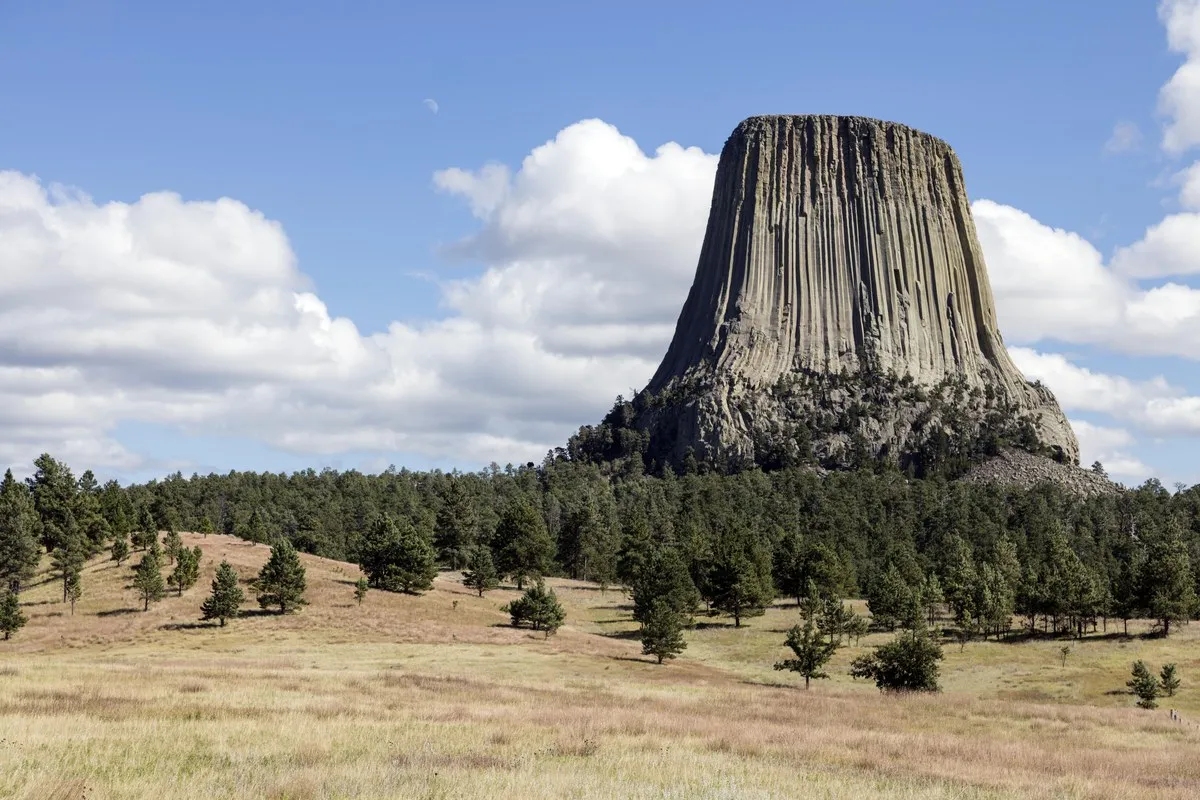
Devils Tower got its English name in 1875, when Army officer Richard Dodge reported that Indians called it the “bad god’s tower.” Older maps call it Bear Lodge. The Park Service, which runs the monument, says it has found no record of any tribe linking the rock with evil spirits, so the name on the park’s signs may rest on a misunderstanding.
Why Is It Called Devils Tower?
Dodge was a lieutenant colonel in 1875, in command of the soldiers escorting a scientific survey into the Black Hills after the gold rumors of the year before. A small party from the expedition, including the geologist and mapmaker Henry Newton, rode out to study the tower. When they got back, Dodge wrote in his journal that “the Indians call this place ‘bad god’s tower,’ a name adopted with proper modification,” according to the Park Service. The modification was the devil.
His book The Black Hills, published in 1876, put it in print. On page 95 Dodge describes “an immense obelisk of granite” rising from the country north of the Belle Fourche River and adds that the Indians call it “The Bad God’s Tower,” a name his surveyors took up “with proper modification.” The book sold well, the Park Service says, and the new name stuck in the public mind even while maps and government papers went on saying Bear Lodge.
What Dodge’s journal doesn’t say is who told him. The Park Service notes that the only record of his interpreter gives the name Romeo, a man of Cheyenne and Mexican descent, and that nobody knows how much Romeo knew about Plains cultures or whether he took part in this translation at all.
Devils Tower Name Origin: Bear Lodge on the Old Maps
The older name is well documented. The first government map of the area, drawn by Lt. G. K. Warren from his 1857 expedition, labels the rock “Mato Teepee or Bear’s Lodge,” and the Park Service says Custer’s expedition of 1874 used Bear Lodge too. Between 1857 and 1901, most maps label it Bear Lodge, sometimes Bears Lodge, which the Park Service calls a translation of Mato Tipila, a common Lakota name.
Other tribes name it differently. The Park Service lists English versions such as The Place Where Bears Live, Tree Rock and Grey Horn Butte, and says that many tribal names come out as Bear Lodge, Bear Home or Bear Tipi in English. Lakota, Kiowa, Cheyenne, Crow, Arapaho and Shoshone people all lived in or controlled the area at one time or another. The stories differ from tribe to tribe, but in each one, the Park Service says, a bear, or a group of bears, ends up scratching the grooves into the rock.
Even Dodge’s own geologist didn’t follow him. In the official survey report of 1880, Newton headed his section “The Bear Lodge (Mato Teepee),” noted that the rock was “more recently” said to be called “the bad god’s tower” or “the devil’s tower,” and wrote that “the former name, well applied, is still retained.” He also compared it to the unfinished Washington Monument, adding that nature had finished her own work.
Was it a mistranslation or a deliberate change? Nobody can prove which. The Park Service gives two explanations and says both seem valid. One is a bad translation: the park’s history of the early explorers says that in Lakota the words for “bad god” (wakansica) and for “black bear” (wahanksica) sound close, citing Jeanne Rogers’s 2008 history of the monument. The other is that Dodge, whose writing about Native people the Park Service calls elitist and often negative, swapped the name of a sacred place on purpose.
The new name won out anyway. A General Land Office letter of 1890, quoted by the Park Service, called the rock a “great national wonder locally known as the ‘Devils Tower’ technically called the ‘Bear Lodge Butte.’”
Who Dropped the Apostrophe From Devils Tower?
Dodge wrote “Devil’s,” and so did most settlers. Theodore Roosevelt’s proclamation of September 24, 1906, which made the rock the country’s first national monument, already speaks of “the lofty and isolated rock in the State of Wyoming known as the ‘Devils Tower,’” as Lucas Fralick quotes it in his WyoHistory.org article on the monument. The Park Service says older park materials blamed a grammar slip, but the likelier reason is the Board on Geographic Names, which has avoided possessive apostrophes since it was set up in 1890.
Devils Tower History: Attempts to Change the Name
One early attempt came from an unlikely place. In 1920, according to Fralick’s WyoHistory.org article, a Hulett newspaper reported that Rep. Frank Mondell of Wyoming, who voted for few conservation bills, was working on a bill renaming the tower “Matoe Tepee,” which the paper glossed as a Sioux name. The name didn’t change.
In 2014, petitions asking for Bear Lodge went to the Board on Geographic Names, the Interior Department and the president. The Park Service explains that Wyoming’s members of Congress then filed bills to keep the name Devils Tower, and they refile them every two years. Because the board won’t consider a name while a bill about it is pending, the petitions are stuck. The Park Service itself has no power to rename the place, it says.
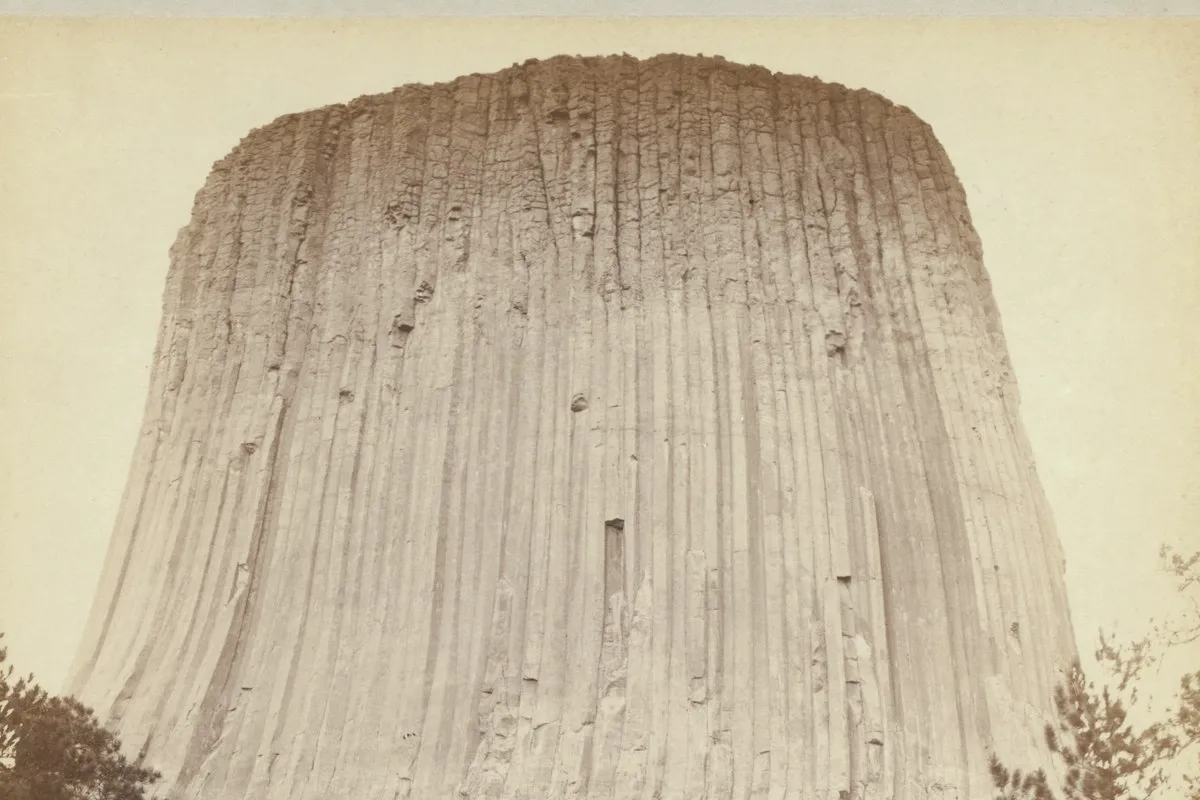
You can see the old and new names side by side in the photo at the bottom of this page. When John C. H. Grabill of Sturgis, Dakota Territory, deposited it for copyright in 1887, he titled it “Devil’s Tower or Bear Lodge (Mato Tepee of the Indians), on the Belle Fourche.”
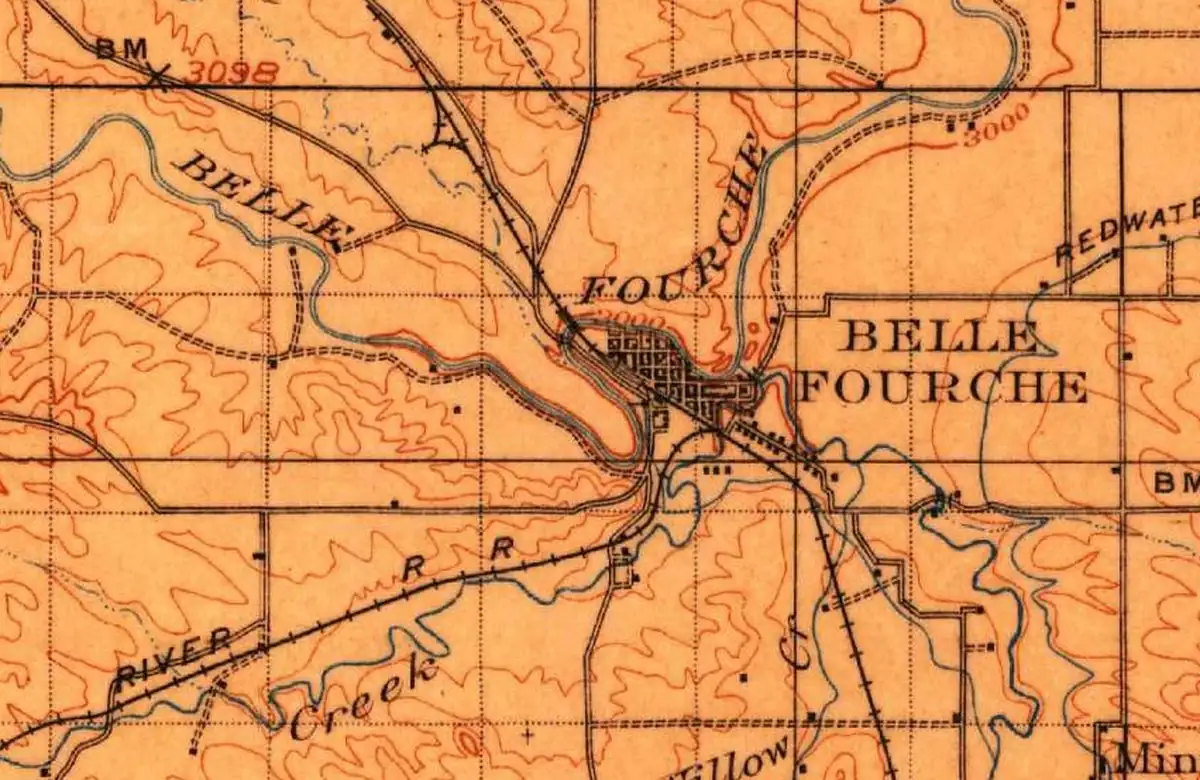
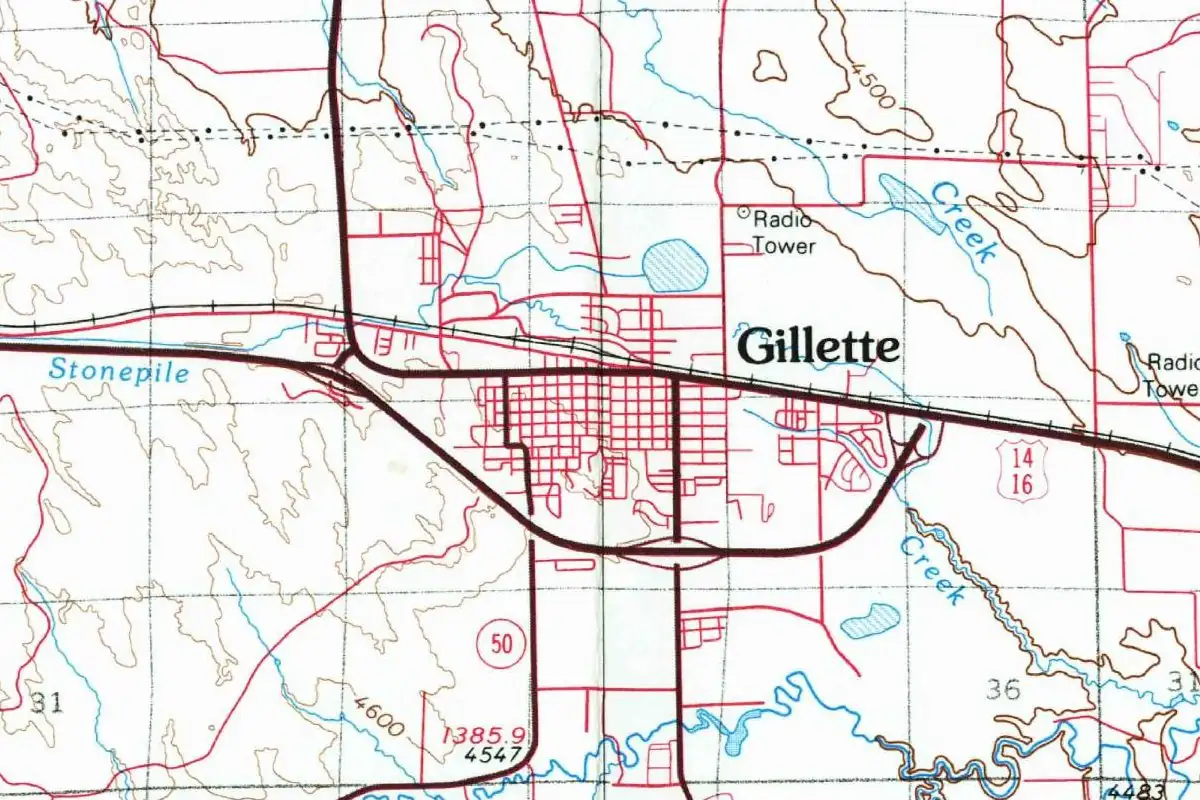
That river runs right past the tower. Dodge used it to place the rock, and the Park Service notes that Warren’s 1857 map already labeled the Belle Fourche with the name it has today. Downstream, the town of Belle Fourche, South Dakota, was named for that river, which early French explorers knew as the “beautiful fork.” In Gillette, Wyoming, the railroad wiped out a different nickname: the tent camp of Donkey Town became Gillette, after the surveyor whose crew found a shorter route.
If you visit in June, the Park Service asks you not to climb the tower or go above the loop trail around it, a voluntary closure worked out with climbers and tribal groups out of respect for the ceremonies held there. The bright cloths you may see placed near the trails are prayer offerings, and the park asks visitors to leave them alone.
Quick answers
Who named Devils Tower?
Lt. Col. Richard Irving Dodge, who commanded the military escort of the 1875 Black Hills expedition. In his journal and in his book of 1876 he said the Indians called it “bad god’s tower” and that his surveyors adopted the name “with proper modification,” which turned it into Devil’s Tower.
Did the Lakota call Devils Tower the Bad God’s Tower?
There’s no record that they did. The Park Service says nothing else on record ties the site to bad gods or evil spirits, and suspects either a bad translation or a deliberate change. Between 1857 and 1901, most maps call it Bear Lodge, from the Lakota Mato Tipila.
Why is there no apostrophe in Devils Tower?
The proclamation that made it the country’s first national monument, in 1906, already wrote “Devils Tower.” Older park materials blamed a grammar slip, but the Park Service says the likelier reason is the Board on Geographic Names, which has avoided possessive apostrophes in place names since 1890.
Has Devils Tower ever been renamed Bear Lodge?
No. Rep. Frank Mondell of Wyoming floated “Matoe Tepee” in 1920, and petitions in 2014 asked for Bear Lodge. Since then, bills to keep the current name have kept the Board on Geographic Names from taking up the request, and the Park Service says it can’t change the name itself.
Key dates
- 1857Lt. G. K. Warren's map, the first government map of the region, labels the rock "Mato Teepee or Bear's Lodge."
- 1875Lt. Col. Richard Irving Dodge writes in his journal that the Indians call the place "bad god's tower."
- 1876Dodge's book The Black Hills prints the name Devil's Tower and becomes a popular read.
- 1880Henry Newton's government report keeps the older name, Bear Lodge (Mato Teepee), as the better one.
- 1887Photographer J. C. H. Grabill titles his print "Devil's Tower or Bear Lodge."
- 1906September 24: Theodore Roosevelt proclaims Devils Tower the nation's first national monument, with no apostrophe.
- 1920A Hulett paper reports that Rep. Frank Mondell wants to rename the tower "Matoe Tepee."
- 2014Petitions ask the Board on Geographic Names, the Interior Department and the president to restore Bear Lodge.
Find it in Google Maps
Opens in a new tab. The pin is a point from the USGS place-name record, so it may not be the middle of the area.
Sponsored
Planning a visit?
Compare hotels in the area on Expedia.
See hotels nearbyWe may earn a commission if you buy through this link. It never changes what we write. Read our affiliate disclosure
Historical Sources & References
- National Park Service, “The Genesis of a Name”. Warren’s 1857 map (“Mato Teepee or Bear’s Lodge”) and Custer’s in 1874; Dodge’s 1875 journal entry; Romeo the interpreter; no records of bad gods; mistranslation or a deliberate change, “Both ideas seem valid”; the 1906 monument, the 1890 policy on possessives; the 2014 petitions and the bills that block them.
- National Park Service, Devils Tower, “About the Name”. between 1857 and 1901 most maps label it Bear Lodge or a close variant, from Mato Tipila; other English versions of tribal names; Newton’s party; the 1890 General Land Office letter; the board’s rule on apostrophes; the Park Service can’t change the name.
- National Park Service, Devils Tower, “First Explorers”. Dodge’s 1875 expedition and the book he published in 1876; the Lakota words wakansica and wahanksica, citing Jeanne Rogers, Standing Witness (2008).
- Richard Irving Dodge, The Black Hills (1876). Page 95: “an immense obelisk of granite” and “The Indians call this shaft ‘The Bad God’s Tower,’ a name adopted, with proper modification, by our surveyors.”
- Henry Newton and Walter P. Jenney, Report on the Geology and Resources of the Black Hills of Dakota (1880). Pages 200-201: “The Bear Lodge (Mato Teepee),” “the former name, well applied, is still retained,” and the comparison with the unfinished Washington Monument.
- Lucas Fralick, “Protecting Public Land” (WyoHistory.org, 2023). The Wyoming State Historical Society’s encyclopedia: Roosevelt’s proclamation of September 24, 1906, quoted with “the ‘Devils Tower’”; Mondell’s 1920 “Matoe Tepee” bill, from the Hulett Inter Mountain Globe of November 25, 1920.
- WyoHistory.org, “Devils Tower”. Its 1906 status as the first national monument, and tribal names such as Bear Lodge and Bear’s Tipi.
- National Park Service, “Wyoming: Devil’s Tower National Monument”. September 24, 1906, the nation’s first national monument; more tribal names; the prayer cloths visitors shouldn’t touch.
- National Park Service, Devils Tower, “Current Climbing Closures”. The voluntary June closure, which covers everyone above the Tower loop trail.
- Library of Congress, J. C. H. Grabill, “Devil’s Tower or Bear Lodge” (1887). The photo at the bottom of this page, a copyright deposit with no known restrictions on reproduction.
- GNIS feature 1609083, Devils Tower (U.S. Geological Survey). The federal record for the rock, filed as a summit in Crook County, Wyoming.
Spot something wrong, or know more? Tell us here. You can also email us or use our contact page. Corrections are noted here with their date, never made silently.