Mount Rushmore History: The Lawyer Behind the Name
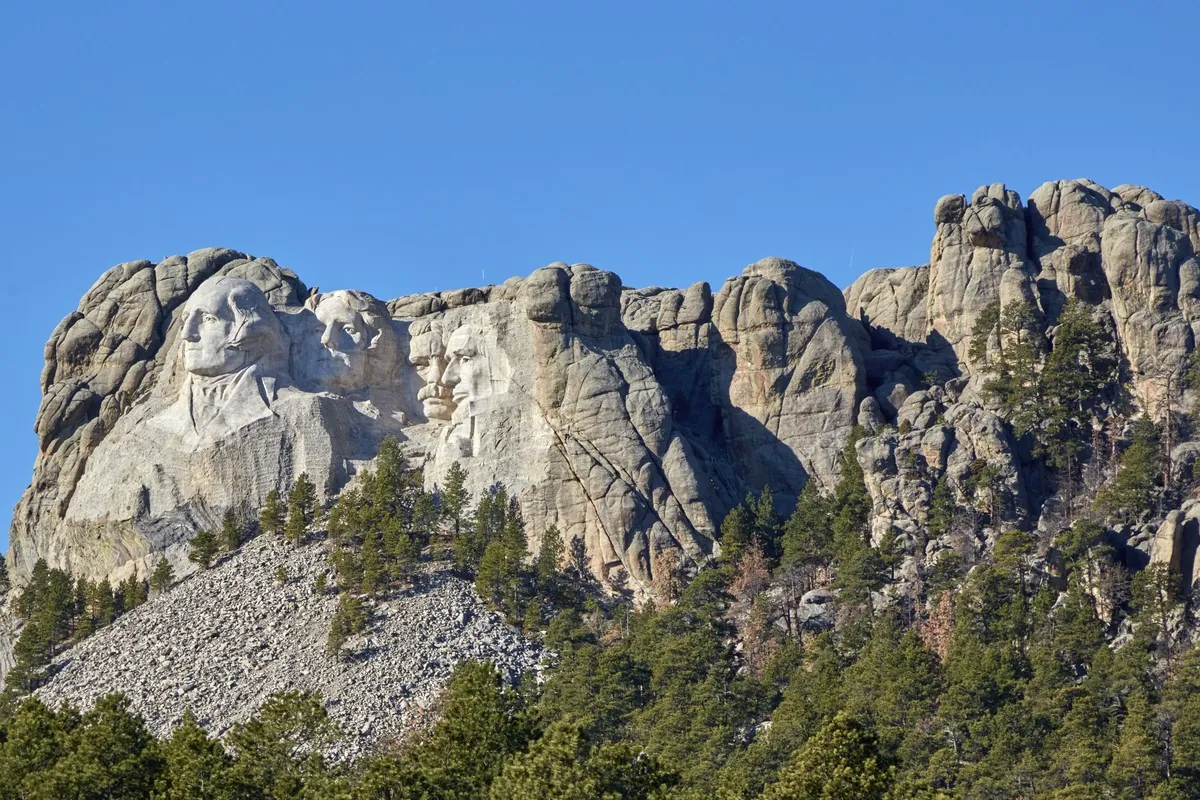
Mount Rushmore is named for Charles E. Rushmore, a New York lawyer who came to the Black Hills on tin-mine business in 1884 and had a peak named for him. The presidents came four decades later. The mountain already had the lawyer’s name when the sculptor picked it.
Why Is It Called Mount Rushmore?
The best account comes from Rushmore himself. In December 1925, after South Dakota’s state historian, Doane Robinson, had written that the rock was named for “a lawyer of Philadelphia,” Rushmore sent him a letter to set the record straight. The National Park Service has published the full text. “I am the lawyer in question,” he wrote, “though of New York City, and not of Philadelphia.”
Here’s his story. Late in 1883, word that the Black Hills held tin reached a group of New York investors, and early in 1884 they hired the young attorney to go out and line up options on the Etta and several other tin claims. He stayed several weeks, came back two or three more times that year and in 1885, and spent part of his time among the prospectors at Harney. One day, looking up at a granite mountain that stood above the peaks around it, he asked the men with him what it was called. “They said it had no name, but one of them spoke up and said ‘We will name it now, and name it Rushmore Peak.’”
There was no ceremony and no paperwork he could point to, just a name one of the men proposed on the spot. Rushmore added that people called it Rushmore Peak, Rushmore Mountain and Rushmore Rock, and that he’d been told his friends got the name recorded at the Land Office in Washington, though he’d “never sought to verify” it. Keep in mind that you’re reading one man’s memory of events about 40 years earlier. PBS’s history of the carving dates the naming to 1885. The name became official much later: the federal record for the summit lists a decision of the U.S. Board on Geographic Names dated June 4, 1930.
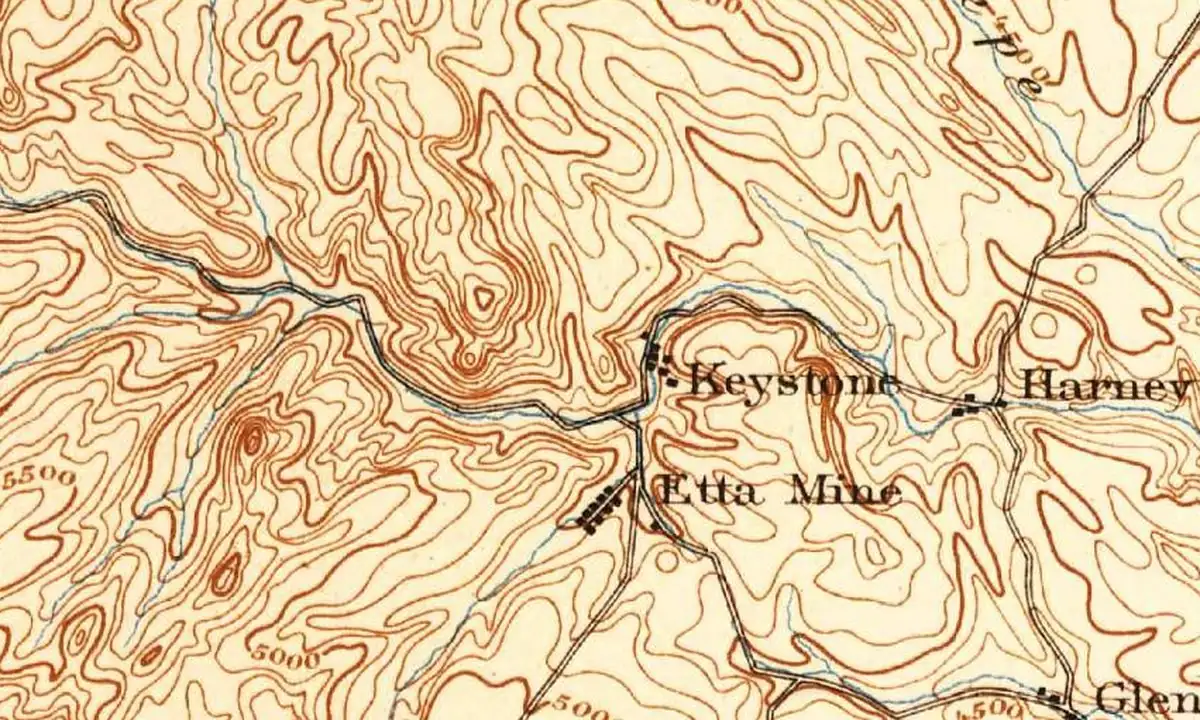
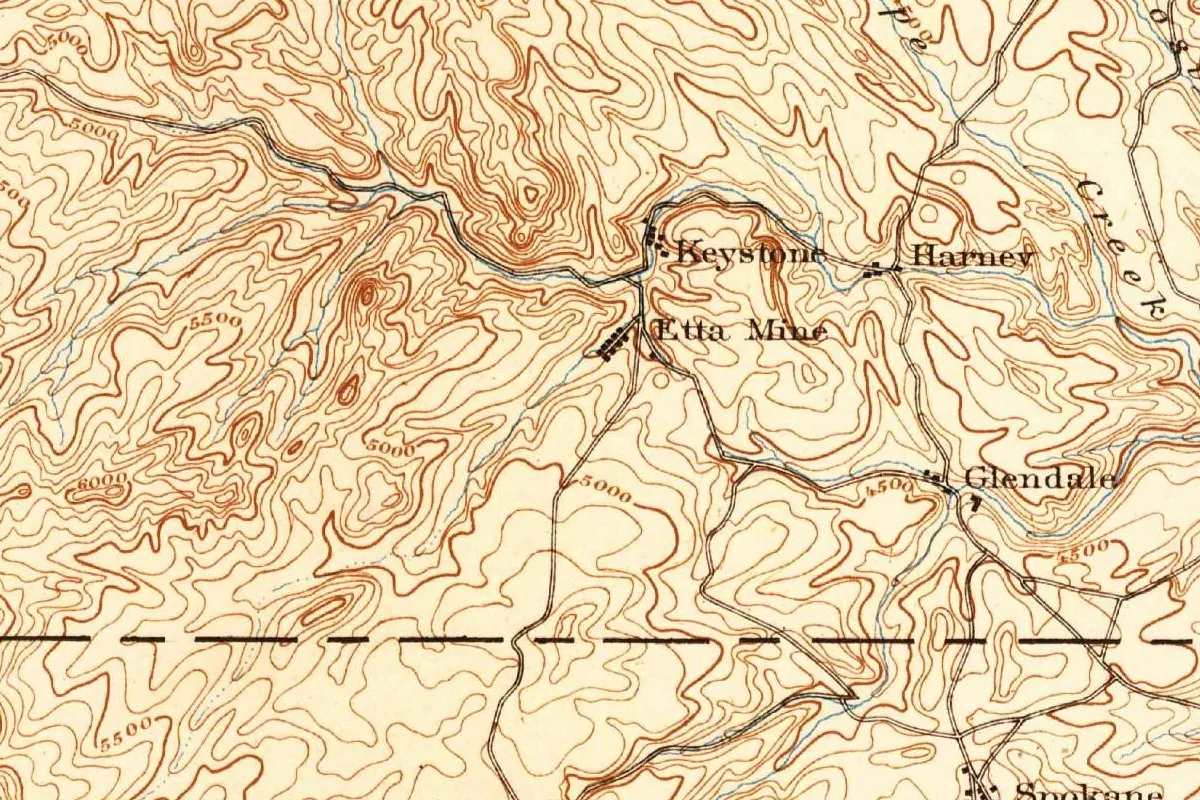
You can see the places he mentions on the map at the bottom of this page. The U.S. Geological Survey’s Hermosa sheet, surveyed in 1891-92 and issued in February 1894, labels the Etta Mine and the settlement of Harney next to Keystone. The hills to the west, where the mountain is, have contour lines and heights on that map but no peak names.
Mount Rushmore History: From Rushmore Rock to a Memorial
The carving idea came from Robinson. The Park Service’s timeline says he suggested a sculpture in the Black Hills on December 28, 1923, and PBS adds that he first imagined carving the granite spires called the Needles into Western figures, such as “a notable Sioux such as Red Cloud.” The sculptor Gutzon Borglum had other plans. The Park Service says that on his second trip, in August 1925, he chose Mount Rushmore.
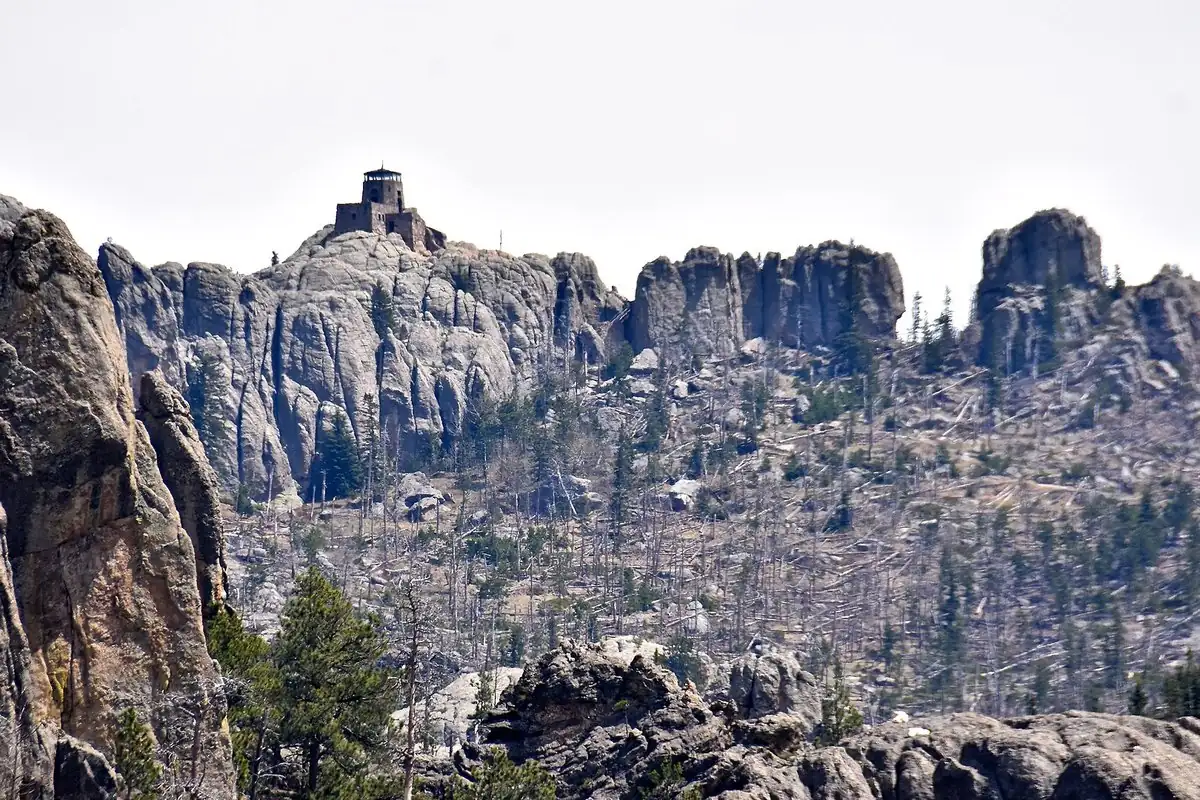
Robinson’s own Encyclopedia of South Dakota, published that same year, still calls it Rushmore Rock. It says Borglum spent two weeks looking over the granite of the Harney Range and “settled upon Rushmore Rock” as the best place to carve, and it describes the mountain as rising about 850 feet above the plateau beneath it. The organization the state set up to run the project was even called the Mount Harney Memorial Association. Harney Peak, South Dakota’s highest point, is now Black Elk Peak, renamed by a federal board in 2016 to honor Black Elk, a Lakota holy man.
Carving started on October 4, 1927, and the last drilling took place on October 31, 1941, under Borglum’s son Lincoln, according to the Park Service. Gutzon Borglum had died that March.
The nearest town has a mining name of its own. Keystone, the gateway on the road up to the memorial, is named for the Keystone Mine.
The Black Hills: Mount Rushmore History Before the Name
Rushmore’s prospectors weren’t the first people to know this mountain. PBS’s timeline begins in 1868, with a treaty under which the Sioux held permanent property rights to a territory including the Black Hills. After gold was found in 1874, it says, prospectors moved in, and by 1876 they were displacing the Sioux. That’s the world Rushmore walked into eight years later: mining camps on land the 1868 treaty had recognized as Sioux territory.
The Park Service now consults with 21 tribal nations connected to the memorial, and it calls the Black Hills a place of historical, spiritual and cultural importance to many of them. It also says many park sites carry histories “marred by dispossession and exclusion of Native peoples.” The sources we were able to read don’t record a Lakota name for this particular peak, so we haven’t given one here.
Quick answers
Who Is Mount Rushmore Named After?
Charles Edward Rushmore, a lawyer from New York City. Investors sent him to the Black Hills in 1884 to secure options on tin mines. In his 1925 letter to Doane Robinson, he wrote that prospectors with him named the unnamed mountain “Rushmore Peak” when he asked what it was called.
Who Named Mount Rushmore, and When?
Prospectors who were with Rushmore did, in 1884 or 1885. Rushmore made several trips to the Black Hills in those two years and didn’t give an exact date for the naming in his letter. PBS’s timeline puts it in 1885. A federal naming board made Mount Rushmore official on June 4, 1930.
What Was Mount Rushmore Called Before?
Its earliest English names were all versions of Rushmore’s: Rushmore Peak, Rushmore Mountain and Rushmore Rock, as he listed them in 1925. Doane Robinson’s encyclopedia used Rushmore Rock that same year. Before 1884, Rushmore said, the miners told him it had no name.
Key dates
- 1868A treaty between the United States and the Sioux recognizes Sioux rights to a territory that includes the Black Hills.
- 1884New York lawyer Charles E. Rushmore comes to the Black Hills to secure options on the Etta tin mine and returns more than once.
- 1885Rushmore makes more trips to the Black Hills; PBS dates the naming of the mountain for him to this year.
- 1923December 28: South Dakota's state historian, Doane Robinson, suggests a big sculpture in the Black Hills.
- 1925August: Gutzon Borglum picks the mountain. December 14: Rushmore writes to Robinson telling how it got his name.
- 1927October 4: Carving begins on the mountain.
- 1930June 4: The U.S. Board on Geographic Names makes Mount Rushmore the official name.
- 1941October 31: The last drilling on the sculpture, under Lincoln Borglum.
Find it in Google Maps
Opens in a new tab. The pin is a point from the USGS place-name record, so it may not be the middle of the area.
Sponsored
Planning a visit?
Compare hotels in the area on Expedia.
See hotels nearbyWe may earn a commission if you buy through this link. It never changes what we write. Read our affiliate disclosure
Historical Sources & References
- Charles Edward Rushmore to Doane Robinson, December 14, 1925 (National Park Service transcription): the tin news that reached New York late in 1883, the trips of 1884 and 1885, the Etta mine and the prospectors at Harney, the naming of “Rushmore Peak,” the other forms of the name and the Land Office story he never checked.
- Doane Robinson, Doane Robinson’s Encyclopedia of South Dakota (1925), pp. 977-979: the state historian’s own encyclopedia, with the Mount Harney Memorial Association, Borglum’s study of the Harney Range, “Rushmore Rock” and its height above the plateau. Public domain.
- PBS, American Experience, “Carving Mount Rushmore”: the 1868 treaty, gold in 1874 and the displacement of the Sioux by 1876, the naming in 1885, and Robinson’s first idea of carving the Needles.
- National Park Service, Mount Rushmore National Memorial, “Timeline”: Robinson’s proposal of December 28, 1923, the start of carving on October 4, 1927, Borglum’s death in March 1941 and the final drilling on October 31, 1941.
- National Park Service, “Doane Robinson”: Borglum’s visits of 1924 and August 1925, when he chose the mountain.
- National Park Service, “The Associated Tribal Nations of Mount Rushmore National Memorial”: the 21 tribal nations the memorial consults and the importance of the Black Hills to them.
- U.S. Geological Survey, Hermosa sheet, edition of February 1894: the map at the bottom of this page, with Keystone, Harney and the Etta Mine.
- GNIS feature 1267035, Mount Rushmore (U.S. Geological Survey): the federal record for the summit, in Pennington County, made official by a Board on Geographic Names decision of June 4, 1930.
Spot something wrong, or know more? Tell us here. You can also email us or use our contact page. Corrections are noted here with their date, never made silently.