Sequoia National Park: History, Name and Giant Trees
Sequoia National Park got its name from the Interior secretary in 1890, after Congress created the park and left it without a name. Secretary John W. Noble picked the name of the big trees, and then went further: he wrote that the trees themselves were named for Sequoyah, the Cherokee man who created a way to write his language. That second step is where you’ll want to slow down. The botanist who coined the word Sequoia never explained it.
Sequoia National Park History: Why the Giant Trees Were Protected
The law President Benjamin Harrison signed on September 25, 1890, is short. Its opening lines speak of trees that are “wonders of the world on account of their size,” and it sets the tract aside “as a public park, or pleasure ground.” That’s all. The act never calls the place anything, and the word sequoia doesn’t appear in it.
The Park Service counts it as the country’s second national park and says it was the first one created to protect a living organism, the giant sequoia, from logging. The first boundary didn’t hold the famous grove, though. According to the park’s page on its founding laws, the September act covered land along the South Fork of the Kaweah River, and Giant Forest only came in with a second act on October 1, 1890.
Noble explained the choice in his 1890 annual report. Because the act had left the reservation nameless, and he needed a name to write its rules, he “called it the Sequoia National Park.” Then he added: “The reason for thus naming the park is more weighty than that it is the name of the trees.” The botanist Endlicher, Noble said, had named the trees Sequoia to honor “the inventor of the Cherokee alphabet.” Noble spelled the man’s name Sequoyah, glossed it as “he guessed it,” and called him the “Cadmus of America.” In the same report he named the second park, General Grant, for its biggest tree, because that name had already stuck “by common consent.”
Noble may not have come up with the idea alone. Francis P. Farquhar’s 1926 book Place Names of the High Sierra says the secretary named the park “upon suggestion of George W. Stewart,” and cites the Bakersfield Morning Echo of June 18, 1902. Stewart was a Visalia newspaperman. Lary Dilsaver and William Tweed’s history of the park says he started writing for the Visalia Delta in 1876 and was its city editor two years later, when he first used its pages to protest the cutting of the big trees. Farquhar is the only source we found for the suggestion, and he gives it secondhand.
The soldiers came next. Army cavalry patrolled the park between 1891 and 1913, the Park Service says, cracking down on poaching and illegal grazing. In 1903 Captain Charles Young led troops of the 9th Cavalry here and served as acting superintendent for the summer, and the Park Service calls him the park’s first African American superintendent. His men worked on the old wagon road toward Giant Forest. The Generals Highway followed in 1926.
People lived here long before any of that. The Park Service names these mountains as homelands of the Mono (Monache), Yokuts, Tübatulabal, Paiute and Western Shoshone, and says those nations still keep close ties to the parks.
How to Pronounce Sequoia
Say it si-KWOY-uh, with the weight on the middle syllable. Merriam-Webster and the Cambridge Dictionary’s American entry both give it three syllables and stress the second one.
Sequoyah’s name sounds close, and that resemblance is the whole case for the tribute. Stephan Endlicher, an Austrian botanist, gave the coast redwood the genus name Sequoia in 1847. The giant sequoia of the Sierra came later. A 1975 Park Service monograph by Richard Hartesveldt and three colleagues points out that science didn’t know the big tree until 1852 and hadn’t named it until 1853, years after Endlicher died in March 1849. Farquhar credits J. Decaisne with first putting the name sequoia on the big tree, in 1854.
Endlicher wrote nothing about where his word came from, and that’s the problem. The same monograph says that the botanist Asa Gray went through Endlicher’s papers looking for proof of the Sequoyah link, “but in vain,” and that the botanist de Candolle called the link “entirely fanciful.” Gray thought the word came from the Latin sequi, to follow, as if the two living species were the last followers of an extinct family. The authors still close by saying the tree’s name has been linked to Sequoyah for over a century, so “let it so remain.”
London’s Natural History Museum takes the other side, carefully. It says Endlicher “gave no reasons,” that a Yosemite guidebook of the 1860s spread the Sequoyah story, and that in 2012 someone suggested it was “an American myth.” But it adds that later readings of Endlicher’s papers made the Latin theory less likely, and it calls Sequoyah the most plausible answer. Neither side has a document from Endlicher. So the park’s name is clear, and the honor to Sequoyah is a reasonable guess that nobody has proved.
Visiting Sequoia National Park: Giant Forest and General Sherman
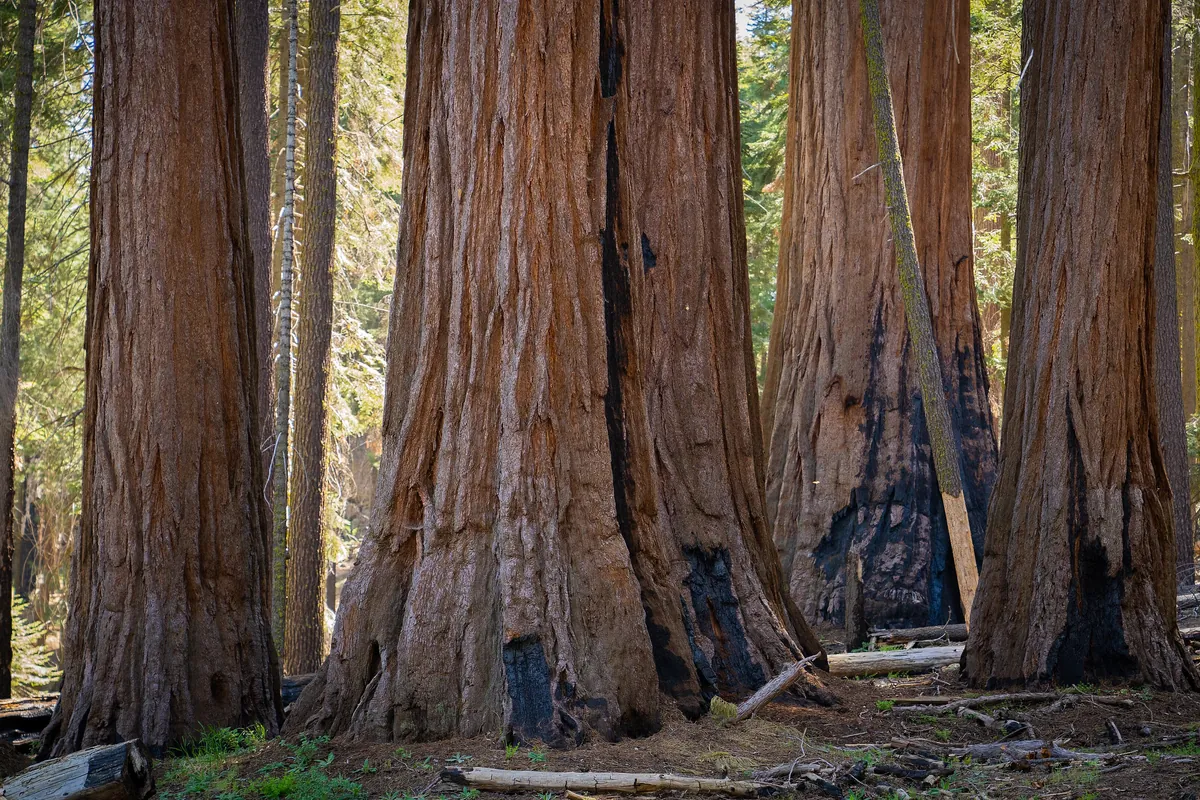
Giant Forest is the place to see what the name is about. The Park Service says it’s the largest giant sequoia grove that was never logged, and that staff count about 40 groves inside the two parks. John Muir named it. In his own words, quoted by Farquhar, he thought this stretch of the sequoia belt the finest and in 1875 “named it ‘the Giant Forest.’”
The General Sherman Tree stands in the grove. Farquhar says James Wolverton named it in 1879 for General William Tecumseh Sherman. The Park Service puts its volume at about 52,500 cubic feet (1,487 m³), and the park calls it the largest tree in the world by volume. If you take the Main Trail, you’ll walk half a mile (0.8 km) downhill to reach it, and climb back up afterward.
Moro Rock has a horse in its name. A 1923 letter from Superintendent John R. White, printed by Farquhar, says a man named Swanson of Three Rivers had a blue roan mustang in the 1860s, a color the letter says Mexicans called moro, and the pony ranged below the rock so often that people called it Moro’s Rock.
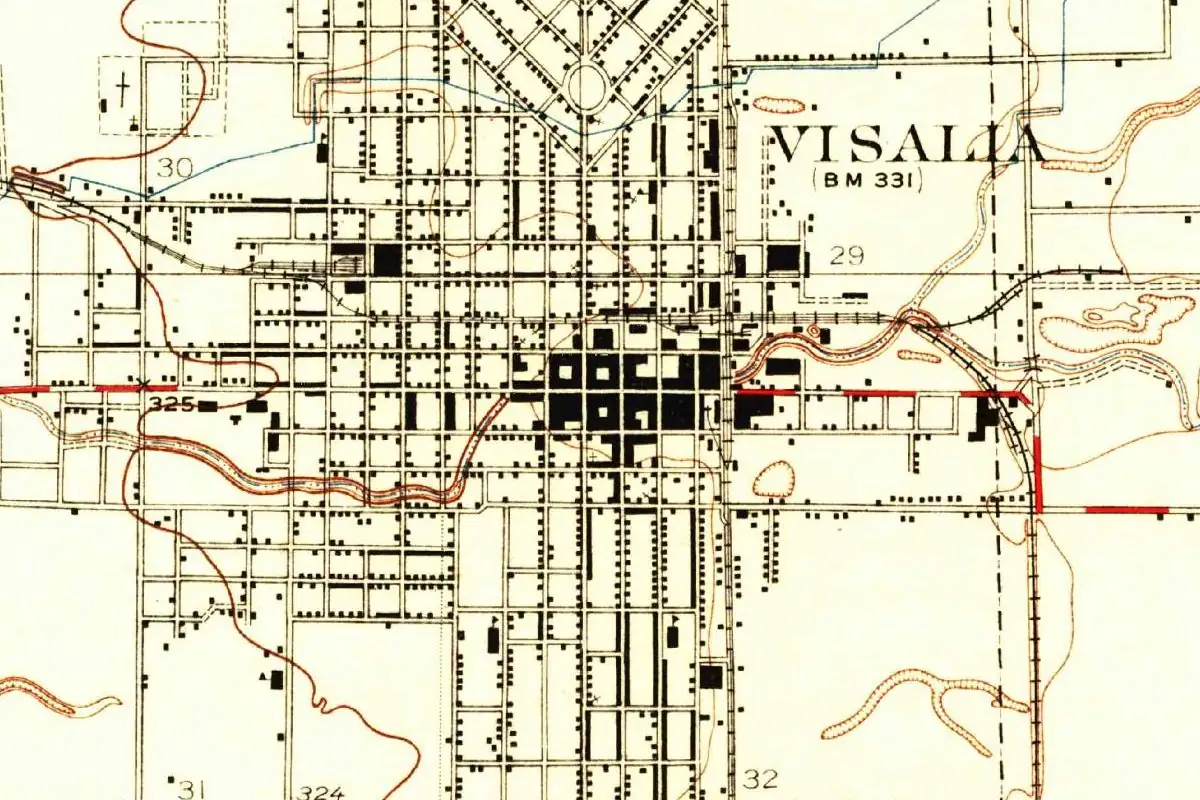
The Park Service says the Ash Mountain entrance, which you reach on Highway 198 from Visalia, turned into the main way in once the Generals Highway was built. That town’s name honors Nat Vise, who made his home on the site in 1852. And if you’ve read about Yosemite Valley, named by a voice vote around a campfire in 1851, you’ll notice the contrast: here one cabinet officer settled it in a report.
Quick answers
Why is Sequoia National Park called Sequoia?
For its giant sequoia trees. Congress didn’t name the park in 1890, so Interior Secretary John W. Noble did, and he wrote that he chose the trees’ name.
Is Sequoia named after the Cherokee scholar Sequoyah?
Maybe. Noble said so in 1890, but botanist Stephan Endlicher never explained the word when he coined it in 1847, and historians still argue about it. Treat it as disputed.
When was Sequoia National Park established?
September 25, 1890, when President Benjamin Harrison signed the act. A second act on October 1, 1890, enlarged it and brought in Giant Forest.
What can visitors see in Sequoia National Park?
Giant Forest, the General Sherman Tree and Moro Rock are the best-known stops. The Park Service counts about 40 sequoia groves in Sequoia and Kings Canyon together.
Key dates
- 1847Botanist Stephan Endlicher names the coast redwood's genus Sequoia, without saying why.
- 1875John Muir, by his own account, names the Giant Forest.
- 1879James Wolverton names a giant sequoia for General William T. Sherman, Farquhar records.
- 1890September 25: President Benjamin Harrison signs the act creating the park, which Interior Secretary John W. Noble then names Sequoia.
- 1903Captain Charles Young and troops of the 9th Cavalry spend the summer running the park and building road.
- 1926The Generals Highway opens to cars, the Park Service says.
Find it in Google Maps
Opens in a new tab. The pin is a point from the USGS place-name record, so it may not be the middle of the area.
Sponsored
Planning a visit?
Compare hotels in the area on Expedia.
See hotels nearbyWe may earn a commission if you buy through this link. It never changes what we write. Read our affiliate disclosure
Historical Sources & References
- Act of September 25, 1890 (26 Stat. 478). The law that created the park: trees that are “wonders of the world on account of their size,” a “public park, or pleasure ground,” and no name.
- Report of the Secretary of the Interior, 1890, vol. I. Pp. CXXIII-CXXIV, signed by John W. Noble: “The park was not given a name by the act,” the choice of “Sequoia National Park,” Endlicher and Sequoyah, “he guessed it,” “Cadmus of America.” P. CXXV: General Grant named “by common consent.”
- Francis P. Farquhar, Place Names of the High Sierra (1926). Pp. 83-84: Noble named the park “upon suggestion of George W. Stewart” (citing the Bakersfield Morning Echo, June 18, 1902); Endlicher, 1847, “did not state the source of the name”; Decaisne, 1854. Other entries: General Sherman Tree (Wolverton, 1879), Giant Forest (Muir, 1875), Moro Rock (White’s 1923 letter).
- Hartesveldt, Harvey, Shellhammer and Stecker, The Giant Sequoia of the Sierra Nevada (1975), chapter 1. The big tree unknown to science until 1852, unnamed until 1853; Endlicher’s death in March 1849; Gray’s search “in vain”; de Candolle’s “entirely fanciful”; Gray’s sequi theory; “let it so remain.”
- Natural History Museum, “Giant sequoia: the world’s biggest tree”. Endlicher “gave no reasons”; the 1860s Yosemite guidebook; the 2012 suggestion that the Sequoyah story was “an American myth”; later readings that made sequor less likely; Sequoyah as the most plausible answer.
- Dilsaver and Tweed, Challenge of the Big Trees, chapter 4. George W. Stewart at the Visalia Delta from 1876, city editor two years later, and his first editorial against cutting the big trees.
- National Park Service, “History & Culture”. Harrison’s signature on September 25, 1890; second national park and first to protect a living organism; cavalry patrols, 1891-1913; the Generals Highway, 1926; the Mono (Monache), Yokuts, Tübatulabal, Paiute and Western Shoshone homelands.
- National Park Service, “Enabling Legislation”. The September 1890 act along the South Fork of the Kaweah; the October 1, 1890, act that added Giant Forest.
- National Park Service, “Brigadier General Charles Young”. Young’s summer of 1903 as acting superintendent with troops of the 9th Cavalry, and the road toward Giant Forest.
- National Park Service, “The General Sherman Tree”. About 52,500 cubic feet; the Main Trail, half a mile (0.8 km) down, uphill on the way back.
- National Park Service, “Exploring Giant Sequoia Groves”. Giant Forest as the largest unlogged grove; about 40 groves in the parks.
- Merriam-Webster, “sequoia” and Cambridge Dictionary, “sequoia”. Pronunciation, stress on the second syllable.
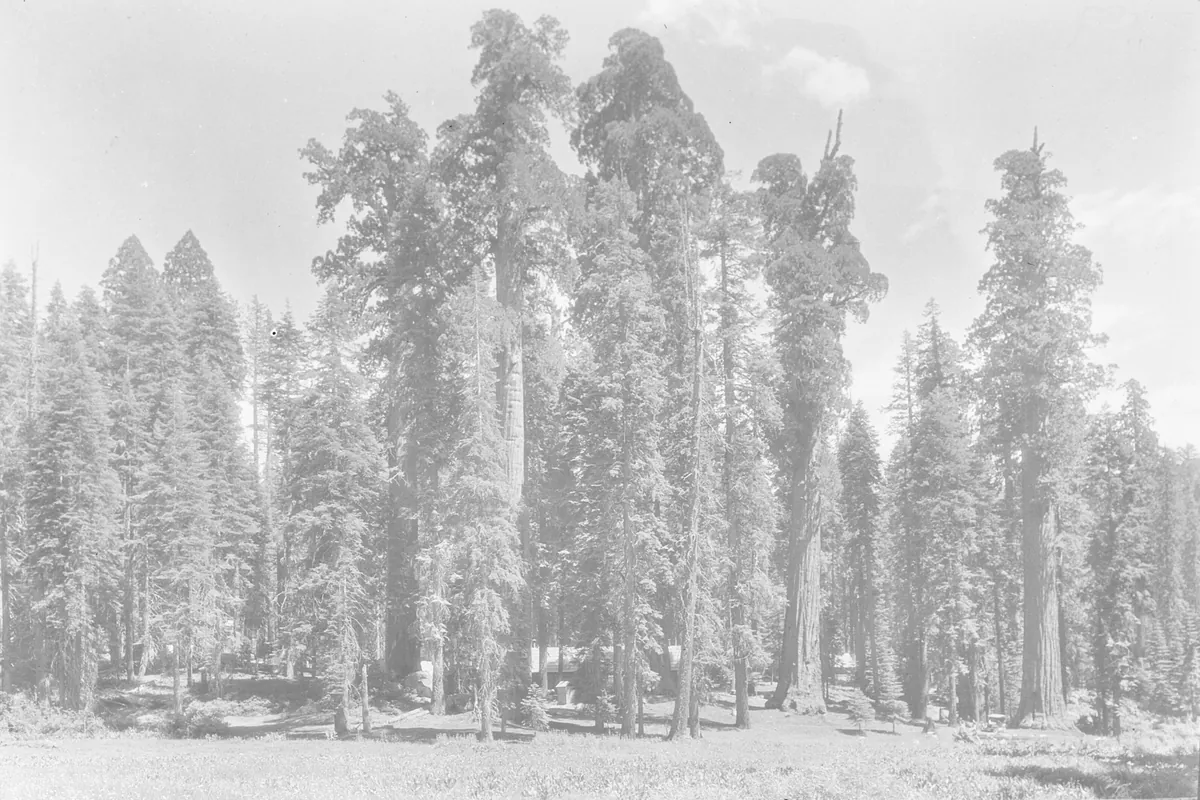
- Sequoia Grove by meadow in Giant Forest, 1919. The photo at the bottom of this page, from the Park Service’s NPGallery archive, dated July 13, 1919; public domain because its copyright has expired.
- GNIS feature 266000, Sequoia National Park (U.S. Geological Survey). The park’s entry in the federal place-names database, the identifier Wikidata gives for it.
Spot something wrong, or know more? Tell us here. You can also email us or use our contact page. Corrections are noted here with their date, never made silently.