Death Valley: Why the Lost '49ers Called It Death Valley
Death Valley got its name from gold-rush emigrants trapped there in the winter of 1849-50. Only one of them is known to have died in the valley. The name came from what they expected, not from what happened: the National Park Service says they all assumed the valley would be their grave. As for the famous farewell, “Goodbye, Death Valley,” it rests on one survivor’s memory, written down more than 40 years later.
Why Is It Called Death Valley?
The Park Service tells it this way. A wagon train left Salt Lake City in October 1849, when it was already too late for a safe crossing of the Sierra Nevada, so it took the Old Spanish Trail, a winter route that skirted the southern end of the range. Along the way, a young man rode in with a hand-drawn map of a “short cut” to Walker Pass that would save some 500 miles (800 km). Most of the 107 wagons tried it, and most turned back when they hit a deep canyon. More than 20 kept going west. That group later split in two, the Jayhawkers and the Bennett-Arcan party, and both halves ended up in this valley. Some of them reached the springs that feed Furnace Creek on Christmas Eve of 1849.
The Bennett-Arcan group got stuck on the valley floor. Two young members of the party, William Lewis Manly and John Rogers, set out over the mountains for help. The Park Service says they walked more than 300 miles (480 km) to Mission San Fernando, found supplies at a ranch and hiked back, and it took them nearly a month. When they returned, only two families with children were still waiting. Then, as the Park Service’s history puts it, someone in the party “is said to have proclaimed ‘Goodbye, Death Valley,’” and the name was born. Its FAQ page adds that, as far as anyone knows, only one person in the group died there.
Death Valley Name Origin: Manly’s Own Version
Manly wrote his account in 1894, in a memoir called Death Valley in ’49. On pages 216 and 217, he describes the group stopping on the way out to look back over the valley. They took off their hats, he says, and “overlooking the scene of so much trial, suffering and death spoke the thought uppermost saying: ‘Good bye Death Valley!’” In his telling, it’s the whole group speaking, not one man.
Manly knew other people claimed the name. “Many accounts have been given to the world as to the origin of the name and by whom it was thus designated,” he wrote, but he insisted that his party left the first footprints and gave the valley its name. Nobody wrote the farewell down in 1850, so you’re reading a memory set down decades later. The Park Service’s careful “is said to have” is the right way to take it.
The story grew in other hands. By 1902 it had hardened into a tragedy in Henry Gannett’s government digest of name origins, which says the valley was “so called because a party of immigrants perished there from thirst and starvation.” That’s not what the Park Service says now: the emigrants suffered, but the record shows one death in the valley, not a party wiped out.
Death Valley History
The valley had a name long before 1849, and the people who gave it are still here. Pauline Esteves, a retired tribal chairperson of the Timbisha Shoshone, wrote in a preface that the Park Service publishes that timbisha is a red material, ochre in English, that comes from the Black Mountains near the tribe’s village at Furnace Creek. “Our people, the Timbisha, are named after this material and so is our valley,” she wrote. She also called the term Death Valley “unfortunate,” because her people avoid talking about death, and she described the valley as a place about life.
California marked the ‘49ers’ route on October 24, 1949, a century after they arrived, with three state historical landmarks. One is at Death Valley Gateway, where more than 100 emigrants entered the valley in December 1849, by the state’s count. Another is at Burned Wagons Point, where the Jayhawkers burned their wagons and dried the meat of some of their oxen. The third marks the Bennett-Arcane Long Camp, where that group was stranded for a month.
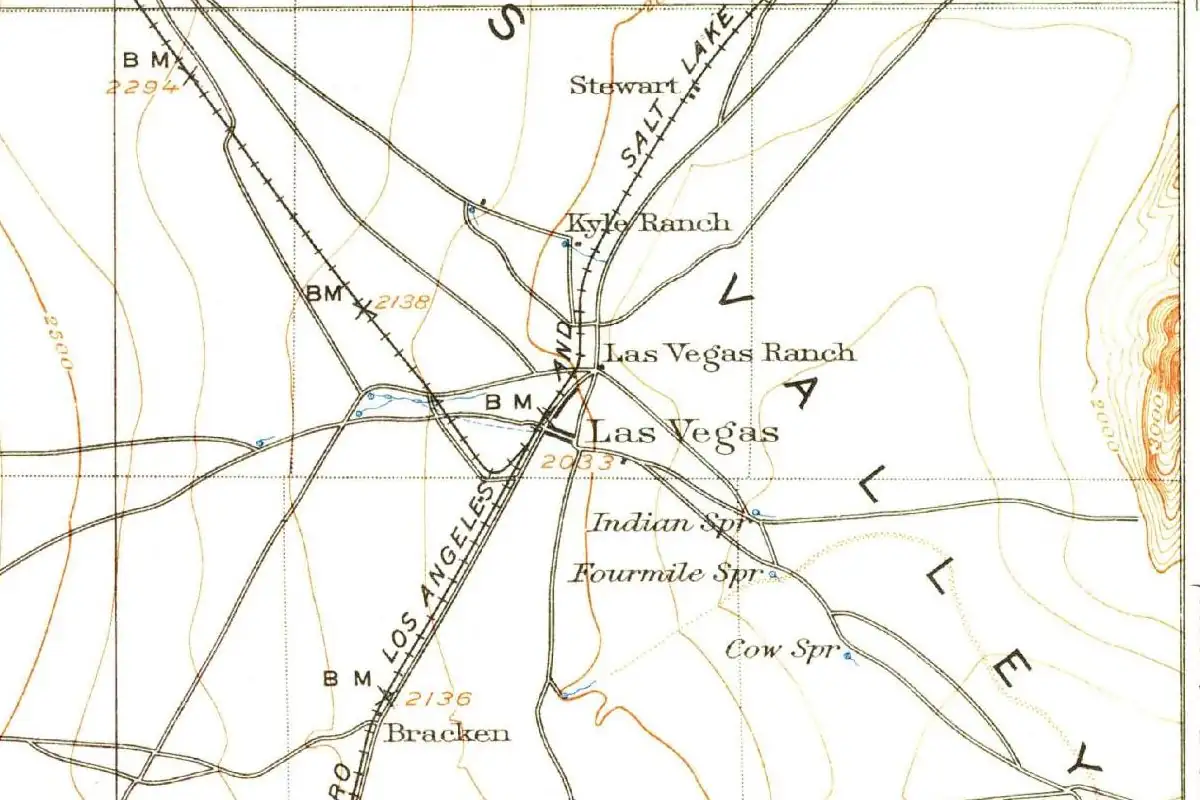
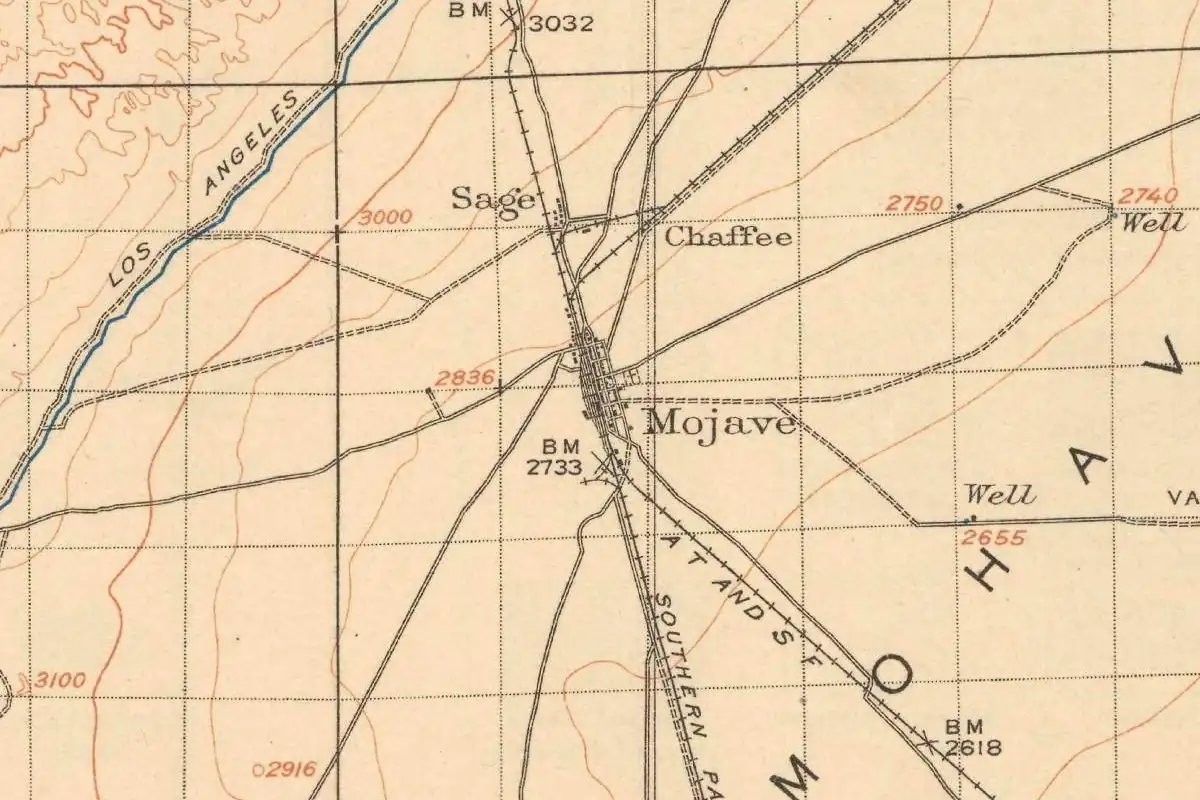
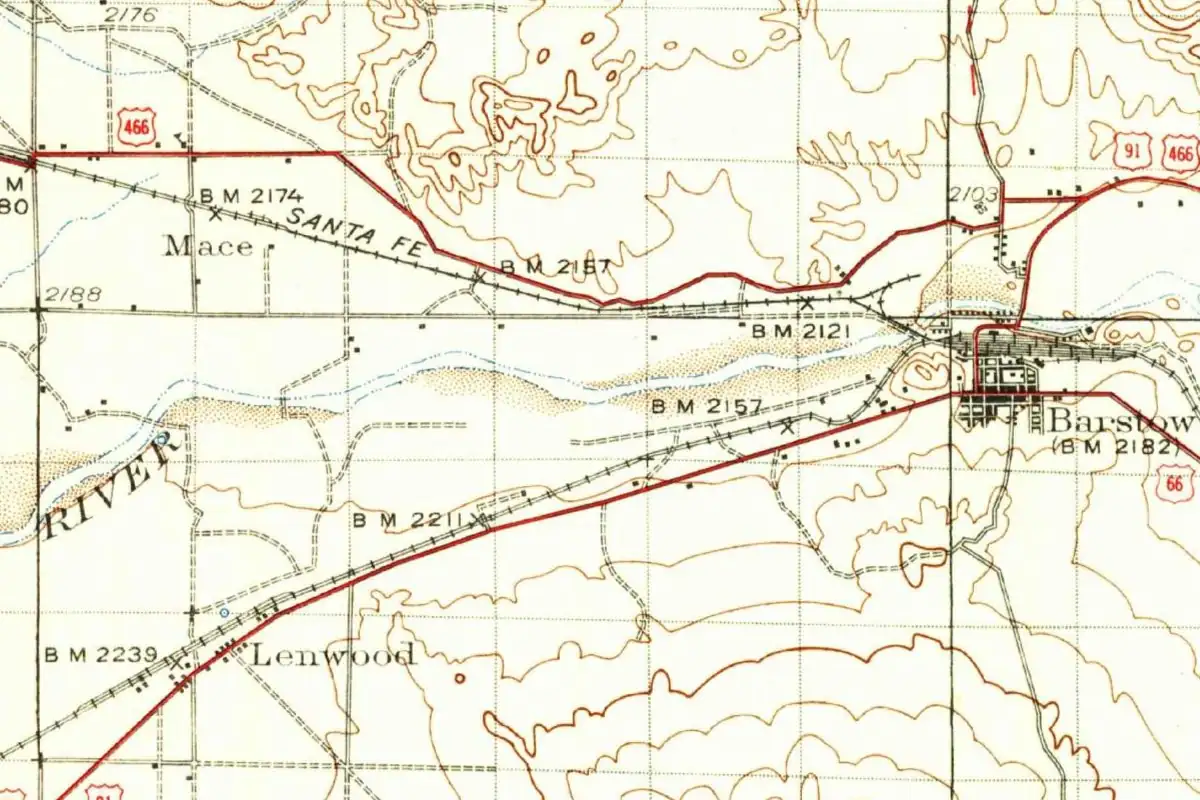
Later, the valley’s name went on a different kind of label. Our story on Mojave tells how, starting in 1883, 20-mule teams hauled borax from Death Valley to that railroad town for five years. The Old Spanish Trail that the ’49ers had set out on also ran past Las Vegas, where John C. Frémont camped on his way along the Spanish trail and wrote down that Spanish name.
A presidential proclamation created Death Valley National Monument on February 11, 1933, and the California Desert Protection Act of October 31, 1994, turned it into a national park. The park’s foundation document says no national park unit in the lower 48 states is bigger, at about 3.4 million acres (1.4 million ha), and says that while 95 percent of it lies in California, more than 100,000 acres (40,000 ha) are in Nevada.
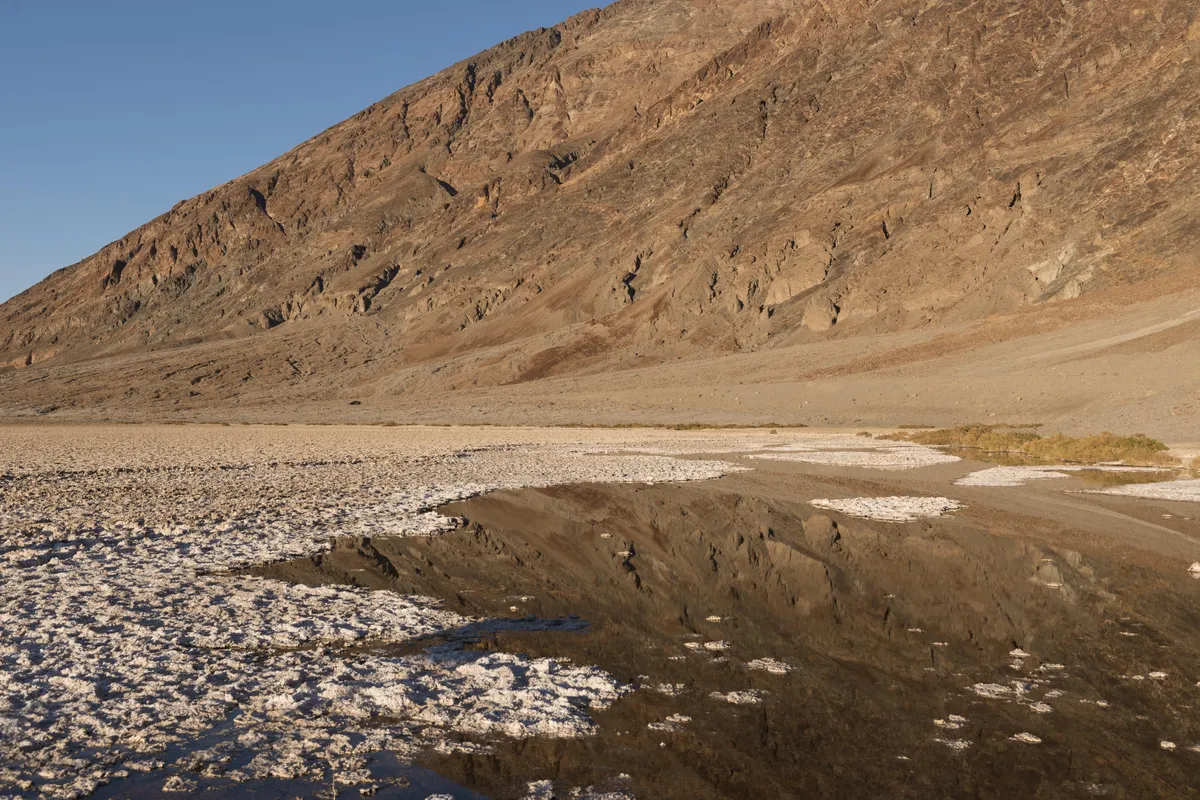
If you drive down to the valley floor, you’ll see where the numbers get extreme. Badwater Basin, at 282 feet (86 m) below sea level, is the lowest point in North America, according to the Park Service.
Quick answers
Why is Death Valley called Death Valley?
Because gold-rush emigrants lost there in the winter of 1849-50 believed it would kill them. The Park Service says that as they climbed out, one of them looked back and said “goodbye, Death Valley.”
How many people died in Death Valley in 1849?
As far as the Park Service knows, one member of the group died in the valley. Gannett’s 1902 claim that a party “perished” there doesn’t match that record.
Who said “Goodbye, Death Valley”?
It isn’t certain. The Park Service says someone “is said to have” said it. William Lewis Manly’s 1894 memoir has the whole group saying it together.
What did the Timbisha Shoshone call Death Valley?
Pauline Esteves of the Timbisha Shoshone wrote that the valley, like her people, is named for timbisha, a red ochre from the Black Mountains.
Key dates
- 1849October: a wagon train leaves Salt Lake City for California by the Old Spanish Trail; many wagons later split off on a supposed shortcut.
- 1849December 24: some of the lost emigrants reach the springs at the head of Furnace Creek.
- 1850William Lewis Manly and John Rogers return with supplies and lead the last families out of the valley.
- 1894Manly's memoir, Death Valley in '49, tells of the farewell "Good bye Death Valley!"
- 1933February 11: a presidential proclamation creates Death Valley National Monument.
- 1949October 24: California registers three historical landmarks on the '49ers' route through the valley.
- 1994October 31: the California Desert Protection Act makes it Death Valley National Park.
Find it in Google Maps
Opens in a new tab. The pin is a point from the USGS place-name record, so it may not be the middle of the area.
Sponsored
Planning a visit?
Compare hotels in the area on Expedia.
See hotels nearbyWe may earn a commission if you buy through this link. It never changes what we write. Read our affiliate disclosure
Historical Sources & References
- National Park Service, Death Valley, “Frequently Asked Questions”. “Why is it called Death Valley?”: the pioneers of 1849-1850, only one death “as far as we know,” Manly and Rogers, and “goodbye, Death Valley”; Badwater Basin at 282 feet below sea level.
- National Park Service, Death Valley, “The Lost ’49ers”. The October 1849 departure, the Old Spanish Trail, the 107 wagons and the “short cut,” the Jayhawkers and the Bennett-Arcan party, Christmas Eve at the springs, Manly and Rogers’s walk of more than 300 miles, and “someone is said to have proclaimed ‘Goodbye, Death Valley.’”
- William Lewis Manly, Death Valley in ’49 (1894). Pages 216-217: “Good bye Death Valley!” and “Many accounts have been given to the world as to the origin of the name.” Scanned copy at the University of California, Berkeley, library.
- California Office of Historic Preservation, Historical Landmark No. 442, Death Valley Gateway. More than 100 emigrants entering in December 1849, registered October 24, 1949. Also online: No. 441, Burned Wagons Point and No. 444, Bennett-Arcane Long Camp.
- Pauline Esteves, Preface to the “Draft Secretarial Report to Congress”. Timbisha as the red ochre of the Black Mountains, the people and the valley named after it, and “The term ‘Death Valley’ is unfortunate.”
- Henry Gannett, The Origin of Certain Place Names in the United States (1902). “Death; valley in California, so called because a party of immigrants perished there from thirst and starvation.”
- National Park Service, Foundation Document: Death Valley National Park (2017). The monument of February 11, 1933, the national park of October 31, 1994, the park’s size and its share in California and Nevada.
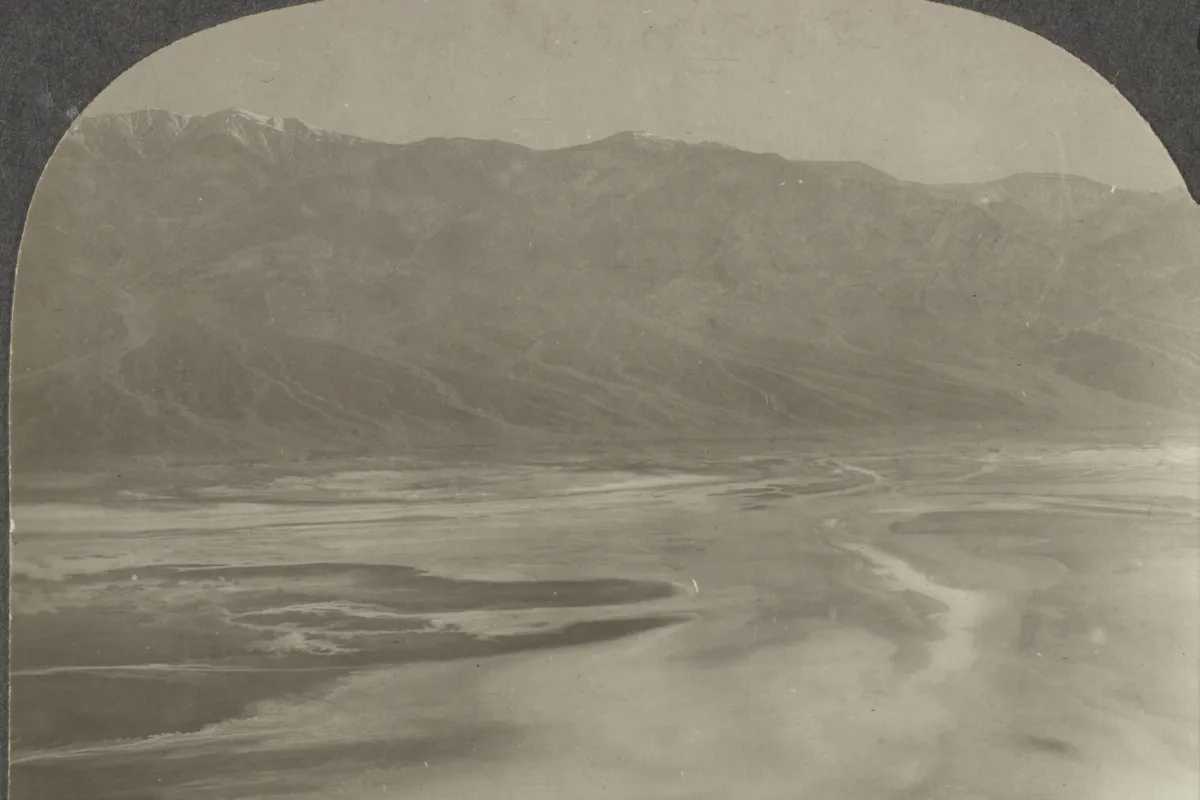
- Keystone View Company, “Death Valley, California from Dante’s View” (1928), Library of Congress. The stereograph at the bottom of this page; the Library lists no known restrictions on publication.
- GNIS feature 270787, Death Valley (U.S. Geological Survey). The valley’s entry in the federal place-names database, a basin in Inyo County, California.
Spot something wrong, or know more? Tell us here. You can also email us or use our contact page. Corrections are noted here with their date, never made silently.