Albany, New York: A Duke's Scottish Title on the Hudson
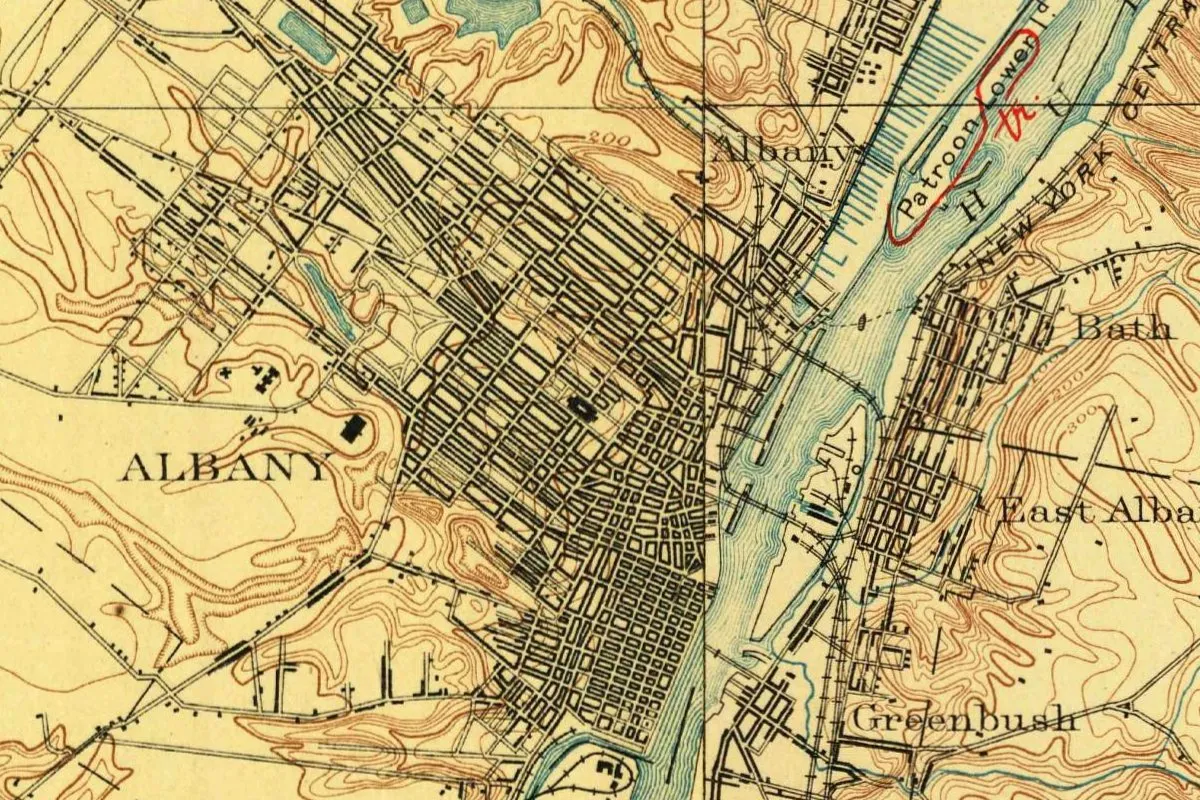
Albany, New York, carries the Scottish title of James, Duke of York and Albany, and a treaty signed there on September 24, 1664, calls it Fort Albany. Before that day the place was Dutch, with a fort called Fort Orange and a village called Beverswyck.
A beaver village by Fort Orange
The Dutch fortified the spot on the Hudson in 1624, as Fort Orange, according to The Century Cyclopedia of Names. The same entry says the Dutch had settled there in 1614, though it doesn’t say where that first settlement stood. A village grew up around the fort, and in April 1652 the colony’s director-general, Peter Stuyvesant, gave it a name. Arthur James Weise’s 1884 history of Albany says Stuyvesant “designated this area of land surrounding the fort the Dorpe Beverswyck,” which Weise translates as “the beaver-district village.”
Weise breaks the word down in a footnote: dorp means village, bever means beaver, and wijk or wyck means a ward or district.
The day it became Albany
In the summer of 1664, an English squadron took New Netherland for the Duke of York, the brother of King Charles II. Up the river, Weise writes, Vice-Director La Montagne “quietly surrendered Fort Orange to Colonel Cartwright on the twenty-fourth of September.” Then came the new name: “In honor of the lord-proprietor of the province, the name of the village of Beverswyck and that of the fort were changed to Albany.”
The best proof is a document signed that same day. Col. George Cartwright, acting for Governor Richard Nicolls, made a peace agreement with Mohawk and Seneca leaders, and the colony’s papers, printed in 1853, preserve its opening line:
Articles made and agreed upon the 24th day of September 1664 in Fort Albany
So on the very day the Dutch handed over the fort, the English were already writing its new name. The same agreement tells anyone with a complaint to go “to the Officer in Cheife at Albany.” None of the sources we read quotes a written order making the change, so we can’t tell you who signed it.
Why a Scottish title
The duke had two titles, and the colony used both. John Romeyn Brodhead’s 1853 History of the State of New York says New Amsterdam became New York, and Fort Orange took the name “Fort Albany,” “after the second title of the Duke of York.” You can read how the duke’s first title named the whole state in our story of New York.
Henry Gannett’s 1905 federal book on place names puts it simply. Albany, New York, is “named for the Duke of York, whose Scotch title was ‘Duke of Albany,’ afterwards James II of England.” Weise quotes Chambers’s Encyclopaedia on the word itself: “Albany or Albainn, an ancient name for the Highlands of Scotland.”
Capital since 1797
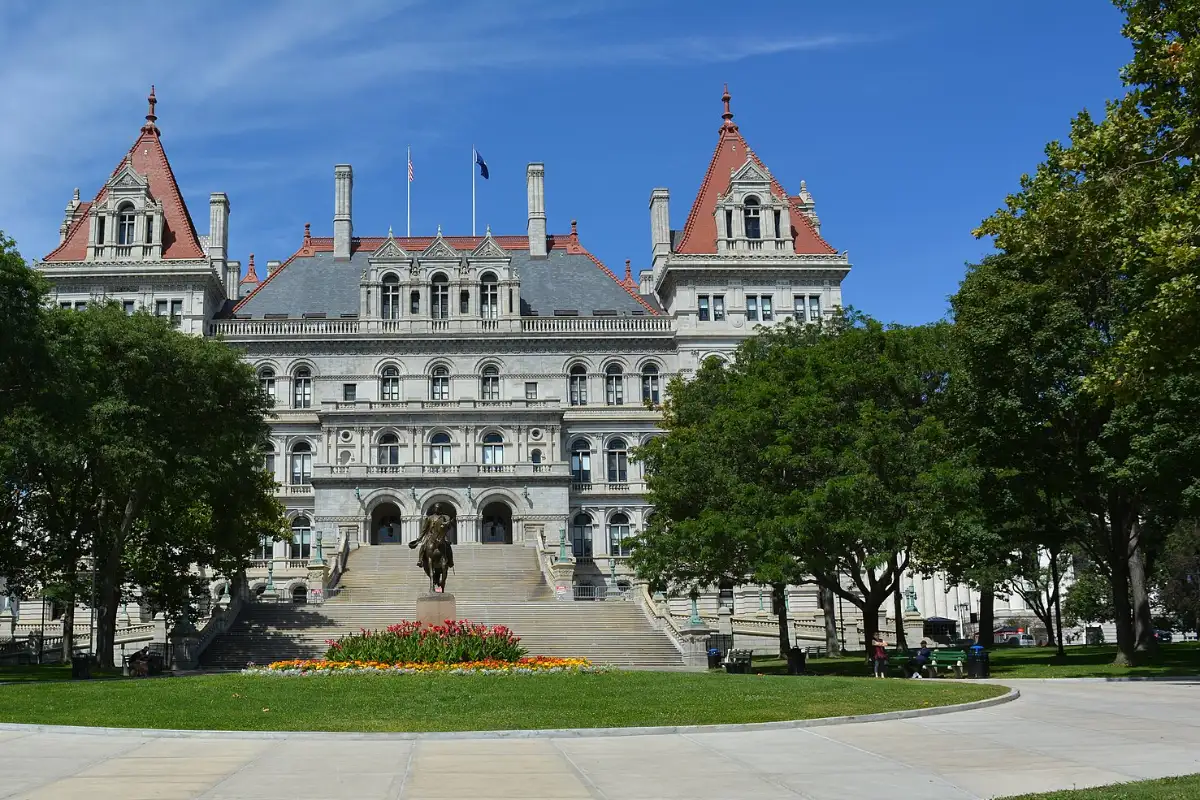
Albany got its city charter in 1686, and it became the state’s permanent capital in 1797, according to The Century Cyclopedia of Names. The federal place-names record agrees: Albany “became the state capital of New York in 1797.”
Weise adds a wrinkle. He says the legislature hadn’t yet named Albany the permanent seat of government that year, though “there were many manifestations that the city was to become the capital.” One of them came in the spring of 1797, when a house on State Street was rented for Governor John Jay.
Quick answers
Why is Albany, New York, called Albany?
It’s named for James, Duke of York and Albany, who later became King James II of England. Gannett’s 1905 federal list says the duke’s “Scotch title was ‘Duke of Albany,’” and Brodhead’s 1853 history says Fort Orange became Fort Albany “after the second title of the Duke of York.”
What was Albany called before?
The Dutch fort was Fort Orange, and the village around it was Beverswyck, a name Peter Stuyvesant gave it in April 1652. Weise’s 1884 history translates Beverswyck as “the beaver-district village.” Both names were changed to Albany when the English took over in 1664.
When did Albany get its name?
In September 1664. The English took Fort Orange on September 24, and an agreement with Mohawk and Seneca leaders signed that day is dated “in Fort Albany.” None of the sources we read quotes the order that made the change.
When did Albany become the capital of New York?
In 1797, according to the U.S. Geological Survey’s place-names record and The Century Cyclopedia of Names. Weise’s 1884 history notes that the legislature hadn’t formally made it the permanent seat that year, but the signs were already there, like a house rented for Governor John Jay.
Key dates
- 1614The Dutch settle here, the Century Cyclopedia of Names says. It doesn't say where that first settlement stood.
- 1624The Dutch fortify the spot as Fort Orange, the Century Cyclopedia of Names says.
- 1652April: Director Stuyvesant names the land around the fort the village of Beverswyck.
- 1664September 24: Fort Orange is surrendered to Col. George Cartwright, and a treaty signed that day is dated "in Fort Albany."
- 1686Albany gets its city charter.
- 1797Albany becomes New York's state capital, in the federal place-names record's words.
Historical Sources & References
- E. B. O’Callaghan, ed., Documents Relative to the Colonial History of the State of New-York, vol. 3 (1853), pp. 67-68. The articles of September 24, 1664, “in Fort Albany,” between Mohawk and Seneca leaders and Col. George Cartwright for Governor Nicolls, and the “Officer in Cheife at Albany” (p. 67).
- Arthur James Weise, The History of the City of Albany, New York (1884). Stuyvesant names the “Dorpe Beverswyck” in April 1652, with the footnote on dorp, bever and wyck (pp. 97-98); the surrender of Fort Orange on September 24, 1664, the change to Albany “in honor of the lord-proprietor,” and the Chambers’s Encyclopaedia note on the name (p. 145); the 1797 signs that Albany would be the capital (p. 426).
- John Romeyn Brodhead, History of the State of New York, vol. 1 (1853), p. 744. Fort Orange renamed “Fort Albany,” “after the second title of the Duke of York.”
- Henry Gannett, The Origin of Certain Place Names in the United States, 2nd ed. (USGS, 1905). The “Albany” entry: “named for the Duke of York, whose Scotch title was ‘Duke of Albany,’ afterwards James II of England.”
- The Century Cyclopedia of Names (1905), “Albany”. The Dutch settlement of 1614, Fort Orange in 1624, the city charter of 1686 and the permanent capital in 1797.
- GNIS feature 977310 (U.S. Geological Survey). “Capital of State of New York.” Its history note says Albany “became the state capital of New York in 1797.”
Spot something wrong, or know more? Tell us here. You can also email us or use our contact page. Corrections are noted here with their date, never made silently.