Cooperstown, New York: Named for the Novelist's Father
Cooperstown is named for William Cooper, the land developer who began settling the foot of Otsego Lake in 1786 and was the father of novelist James Fenimore Cooper. People also called the spot the Foot of the Lake. An 1807 law named the village Otsego, but residents ignored it, and an 1812 act made it the Village of Cooperstown.
A history with no name on it
Cooperstown, New York, is named for William Cooper, who settled it in 1786, and its first history is catalogued under his son, James Fenimore Cooper. That little book, The Chronicles of Cooperstown, came off a local press in 1838 without an author’s name on the title page. Library catalogs file it under the novelist. If they’re right, the founder’s own son is the one who explained the name.
It doesn’t waste words on the point, either. When it gets to William Cooper’s death, the book calls him “the original proprietor, after whom the village was named.” Henry Gannett’s 1905 roundup of American place names says the same in his own way: the village in Otsego County was “named for the father of James Fenimore Cooper.”
So if you’ve ever assumed the town was named for the author of The Last of the Mohicans, you’re one generation off.
Cooper’s Patent
The land had a paper trail long before it had a village. According to the Chronicles, the colonial government granted a big tract around Otsego Lake to George Croghan and ninety-nine other people in 1769, and the others promptly signed their shares over to Croghan. He borrowed against it, a court ruled against him on the debt in 1773, and the mortgages and judgment ended up in the hands of William Cooper and Andrew Craig, of Burlington, New Jersey. The book notes that the tract, first known as the Otsego Patent, “has since been called Cooper’s Patent.”
Cooper came to see what he’d acquired in the autumn of 1785, bringing surveyors to fix the boundaries. The Chronicles says the party got its first view of the lake from a mountain that has since been called the “Vision,” and that Cooper liked to tell how he climbed a sapling for a better look and watched a deer come down to drink near the Otsego Rock. In January 1786 he took possession under a deed from the sheriff of Montgomery County, and settlement started that year. The village itself, the Chronicles says, wasn’t “systematically planned” until the summer of 1788. The National Baseball Hall of Fame’s history of the town adds that Cooper sold land to anyone who wanted it and gave buyers seven to 10 years to pay.
Cooperstown or the Foot of the Lake?
The name came early, but it didn’t have the field to itself. Here’s how the Chronicles puts it:
“The name of ‘Cooperstown,’ it is true, appears in one or two papers as early even as 1786; but the place was indiscriminately known by this appellation, and that of the ‘Foot of the Lake,’ until the year 1791, when it became the county town.”
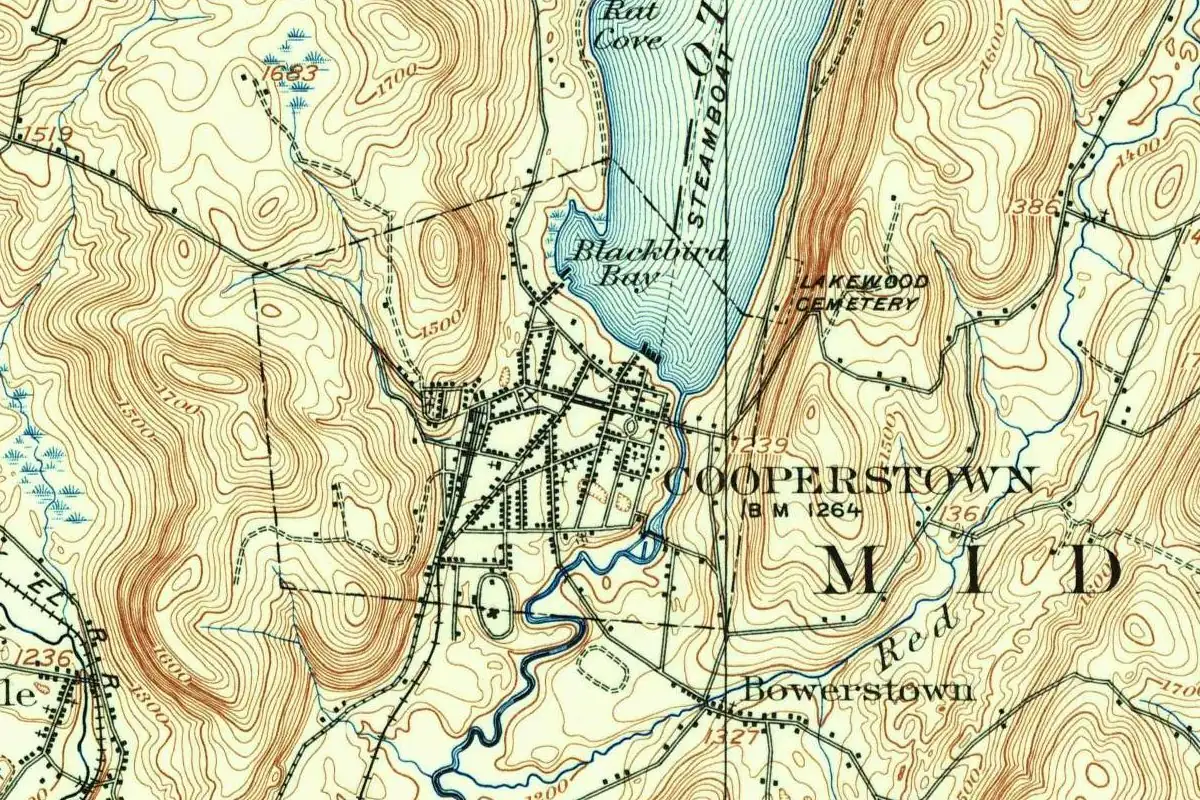
That second name is pure geography. The Chronicles slips into the same phrase when it notes that George Washington, on a 1784 journey, “visited the foot of Lake Otsego.” You can see why on the 1907 map at the top of this page. The village sits right at the southern tip of Otsego Lake, with a river winding away from it. Once Cooperstown became the seat of Otsego County in 1791, its own name won out. The lake kept its old name, though the village’s website points out that the novelist gave it a nickname of his own, the Glimmerglass.
The year it was legally Otsego
Then politics got involved. On April 3, 1807, the state passed a law letting the inhabitants elect trustees under an act of incorporation that, in the words of the Chronicles, “styled the place the ‘Village of Otsego.’” The book is blunt about why: “This change of name arose from party politics.”
The village didn’t go along. Most residents opposed the new name, so they elected trustees who, as the book puts it, “rendered the law a dead letter, by declining to do any thing under its provisions.” It’s a quiet kind of protest, and it worked. On June 12, 1812, a new act incorporated the place “by the name of ‘The Village of Cooperstown,’” and this time the people organized their government right away.
William Cooper didn’t see the name restored. He died in Albany on December 22, 1809, in his fifty-sixth year, and was buried in his family’s plot in the Christ Church yard. The Chronicles gives him the credit for the whole region, saying Otsego County owed more of its rapid settlement to him “than to those of any other person.”
A second William Cooper
One more oddity in Gannett’s list. Right below the New York entry sits Cooperstown, Pennsylvania, a borough in Venango County “named for its founder, William Cooper.” Gannett doesn’t say whether that’s the same man, and nothing in these sources connects the two, so it’s best read as a coincidence on the page. The entry after that is better still: a Cooperstown in Robertson County, Tennessee, “so named because a great many barrels were made there for the Red River mills.” Gannett ties that one to barrel making, not to anybody named Cooper.
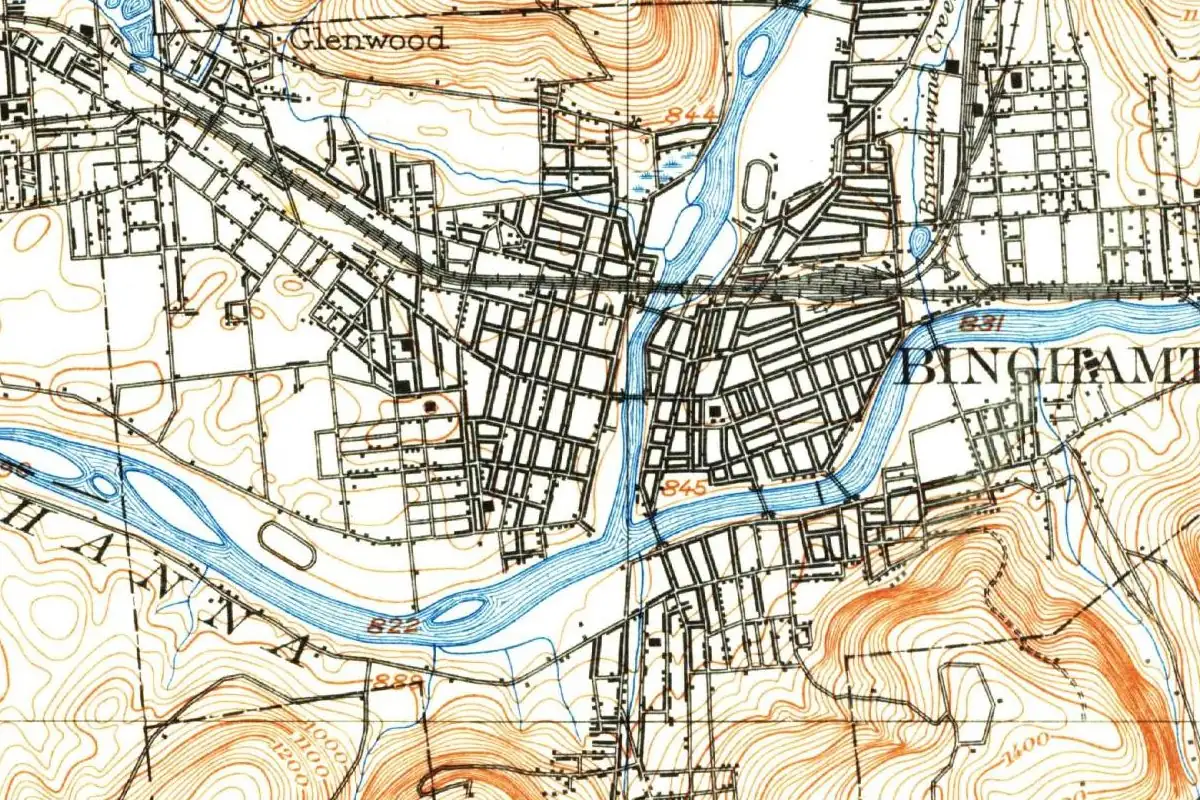
New York has other towns named for the people who held the land, too. Binghamton carries the name of William Bingham, who owned the patent there. Cooperstown is just the one people know for baseball, and for a son whose Leatherstocking Tales called the lake the Glimmerglass. More name stories from the state are on our New York page.
Quick answers
Is Cooperstown named after James Fenimore Cooper?
No. It’s named for his father, William Cooper, the original proprietor who began settling the village in 1786. James Fenimore Cooper was his son, and the village says his novels were set in and around Cooperstown.
Was Cooperstown ever called Otsego?
Yes, legally, from 1807. A state law that year styled it the Village of Otsego, but residents ignored it, and an act of June 12, 1812, made it the Village of Cooperstown.
What was the Foot of the Lake?
An early name for the same spot at the south end of Otsego Lake. The Chronicles says people used it alongside Cooperstown until 1791.
Key dates
- 1769The colonial government grants the Otsego Patent to George Croghan and ninety-nine others.
- 1785William Cooper first visits Otsego Lake in the autumn with a party of surveyors.
- 1786Cooper takes possession of the patent in January; settlement begins, and the name Cooperstown first shows up in papers.
- 1791Cooperstown becomes the county town of Otsego County.
- 1807On April 3, a state law incorporates the place as the Village of Otsego.
- 1809William Cooper dies on December 22.
- 1812On June 12, a new act incorporates The Village of Cooperstown.
Things to do in Cooperstown, New York
National Baseball Hall of Fame and Museum
One-of-a-kind artifacts and sweeping exhibitions on pivotal moments in the game and its impact beyond the field, plus the Plaque Gallery that honors the Hall of Famers.
Fenimore Art Museum
A Cooperstown museum on State Highway 80 whose collections include American folk art, photography and the Thaw Collection of American Indian Art.
Doubleday Field
The village ballpark where the first significant game between adult teams was played on September 6, 1920, when a Cooperstown team beat the Cuban Giants 9-8. It still hosts most of the high school's baseball games.
Glimmerglass State Park
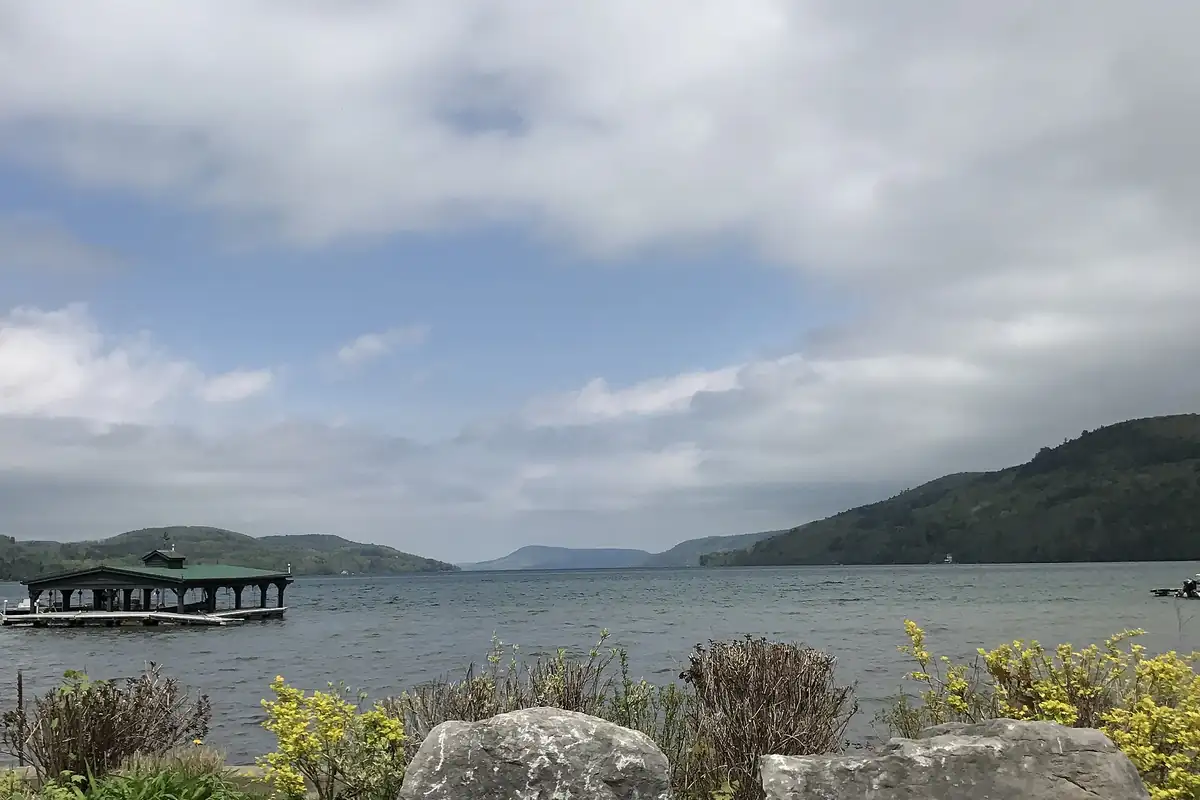
A park overlooking Otsego Lake, the "Glimmerglass" of James Fenimore Cooper's Leatherstocking Tales, with forest trails, a beaver pond nature trail, a covered bridge and the Hyde Hall mansion inside its boundaries.
Getting there
Open Cooperstown in Google Maps
Opens in a new tab. The pin is the center of Cooperstown in the USGS place-name record.
The closest airports, Amtrak stations and intercity bus stops, measured in a straight line from the center of Cooperstown.
Airports
- Albany International (ALB) 57 mi 92 km
- Greater Binghamton/Edwin A Link Field (BGM) 64 mi 102 km
- Bradley International (BDL) Windsor Locks 126 mi 203 km
Amtrak trains
- Utica station (UCA) 32 mi 51 km
- Amsterdam station (AMS) 40 mi 64 km
Intercity buses
- Adirondack Trailways Trailways · Cooperstown under 1 mi 0.6 km
- OurBus Oneonta, NY (SUNY Oneonta - Opposite to Morris Conference Center on W Dormitory RD. Oneonta, NY 13820, United States.) 18 mi 28 km
- Birnie Bus Mohawk Main St 22 mi 35 km
Distances are as the crow flies, not by road. We don't list schedules or fares because they change; check with the airline, Amtrak or the bus company before you go. Official data (FAA commercial service airports (2025), FAA airport locations, Amtrak stations and Intercity Bus Atlas) from the FAA and the U.S. Bureau of Transportation Statistics, checked Nov 14, 2026.
Sponsored
Staying in Cooperstown?
Compare hotels in Cooperstown, New York, on Expedia.
See hotels in CooperstownWe may earn a commission if you buy through this link. It never changes what we write. Read our affiliate disclosure
Historical Sources & References
- The Chronicles of Cooperstown (1838), pp. 7-8. The 1769 grant to George Croghan and ninety-nine others, the judgment of 1773, the Otsego Patent “since been called Cooper’s Patent,” William Cooper and Andrew Craig of Burlington, Cooper’s first visit in the autumn of 1785, the sheriff’s deed of January 1786, and Washington’s visit to “the foot of Lake Otsego” in 1784. Published without an author’s name; catalogued under James Fenimore Cooper. Also online: p. 8.
- The Chronicles of Cooperstown, pp. 25-26. Settlement beginning in 1786, the village planned in 1788 (p. 25), and the quoted passage on “Cooperstown” and the “Foot of the Lake” until 1791 (p. 26). Also online: p. 25.
- The Chronicles of Cooperstown, pp. 63-65. William Cooper’s death on December 22, 1809, “the original proprietor, after whom the village was named” (p. 63), the 1807 “Village of Otsego” and the party politics behind it (p. 64), and the act of June 12, 1812 (p. 65). Also online: p. 63 and p. 65.
- Henry Gannett, The Origin of Certain Place Names in the United States (USGS, 1905), p. 91. Cooperstown, Otsego County, “named for the father of James Fenimore Cooper,” Cooperstown, Pennsylvania, “named for its founder, William Cooper,” and the Tennessee Cooperstown of the barrel makers.
- Village of Cooperstown, “About”. Settled in the late 18th century by William Cooper, father of the novelist, and Otsego Lake, which Cooper nicknamed the Glimmerglass.
- National Baseball Hall of Fame and Museum, “Cooperstown, New York”. Cooper’s founding of the village in 1786, the land bought from George Croghan, and buyers given seven to 10 years to pay.
- GNIS feature 979671 (U.S. Geological Survey). The U.S. names register lists Cooperstown as a populated place in Otsego County, record 979671.
- U.S. Geological Survey, Cooperstown sheet (1907). The 1:62,500 sheet behind the map at the top of this page, with the village at the foot of the lake.
Spot something wrong, or know more? Tell us here. You can also email us or use our contact page. Corrections are noted here with their date, never made silently.