Garland, Texas: Two Feuding Towns and a Third Name
Garland, Texas, is named for Augustus H. Garland, U.S. attorney general under President Grover Cleveland. In 1887 the rival towns of Duck Creek and Embree were fighting over the post office, and the settlement put a new post office between them under his name. The Handbook of Texas credits Congressman Joseph Abbott with the compromise.
Duck Creek against Embree
Garland, Texas, came out of two railroad towns fighting over one post office, and the name that ended it belonged to Grover Cleveland’s attorney general. His name was Augustus H. Garland.
The older town was Duck Creek, one of the Peters Colony settlements, with a post office since 1854. Then, in 1886, two railroads came through and both missed it. The Handbook of Texas says the Gulf, Colorado and Santa Fe laid its line about a mile (1.6 km) east, where a new town called Embree sprang up, and the Dallas and Greenville ran a mile (1.6 km) northeast, where a second, newer Duck Creek took shape. A county history printed in 1892 says Embree was named for Dr. K. H. Embree, “one of the leading physicians of Duck Creek.”
So now you had two towns a short walk apart, each wanting to be the one. Early in 1887 a fire burned much of old Duck Creek’s business district, and the post office moved to Embree. Embree then tried to incorporate and got accused of padding its numbers with Duck Creek’s people. The quarrel went to court. The 1892 history, written while people still remembered it, makes it sound like a horse race:
“Many interesting scenes and circumstances attended this scramble for a name, including midnight rides to Dallas and back with an officer to restrain one or the other of the towns from incorporating…”
The City of Garland’s own history puts it more bluntly: “Men began carrying guns where they hadn’t before.”
A third name for a neutral spot
The way out was to give neither town the prize. According to the Handbook of Texas, Congressman Joseph Abbott settled it late in 1887 by creating a new town between the two and putting the post office there. The new town took the name of Augustus H. Garland, the attorney general. The city tells the same story with “Congressman Joe Abbott” and “a more fairly located post office and a new name: Garland.”
A Texas Historical Commission marker, put up downtown in 1991, says the post office “was positioned between the two towns” and was “Named for U.S. Attorney General A. H. Garland.” The city adds a bit about why the name might have appealed in Texas at the time. It calls Garland “something of a hero in the Reconstruction South,” because he won the right to serve as Cleveland’s attorney general, “a privilege previously withheld from anyone associated with the Confederacy.”
The book that got his job wrong
Here’s the odd part. The 1892 county history, the oldest account of the naming that you can read today, tells it a little differently. It credits “Hon. Thomas F. Nash and several other prominent citizens of Duck Creek,” not the congressman, and it says the post office was “changed from Embree to Garland (after the then postmaster general).”
Garland wasn’t postmaster general. He was attorney general, as the Handbook, the city and the state marker all say. It looks like the 1892 writer, five years after the fact, mixed up which cabinet job went with the name. The person behind it is still the same.
The book is good on what came next, though. Duck Creek took the new post office’s name at once, and “on the home-run Garland gained on her adversary and passed under the wires a full length ahead.” The houses that had been hauled from old Duck Creek to Embree got moved again, this time to Garland, “and Embree is now numbered among the things of the past.”
The legend about nobody knowing him
There’s a story you’ll hear about why both sides went along with it. The Handbook of Texas reports it as a “local legend”: the people of Duck Creek and Embree agreed to the name because the attorney general had never been to Texas, “and nobody knew who he was.” It’s a good line. No source in hand shows anyone actually said it in 1887, so it stays a legend.
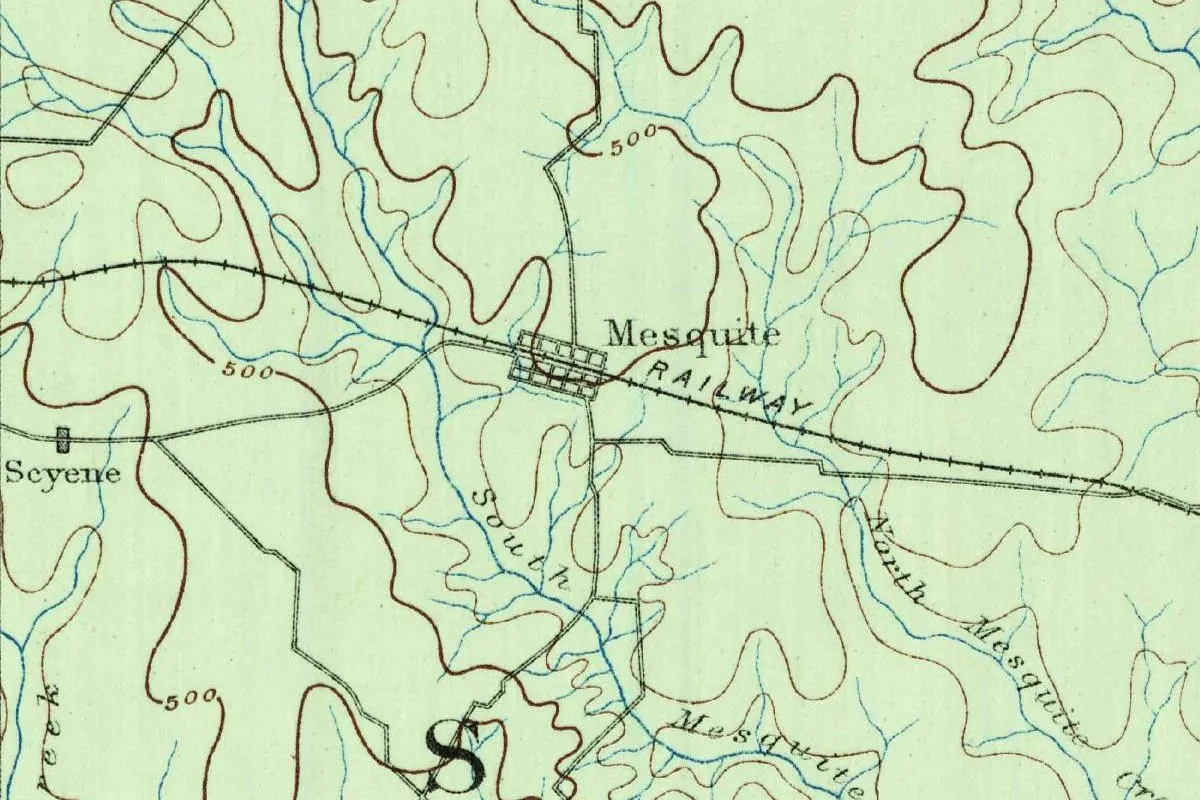
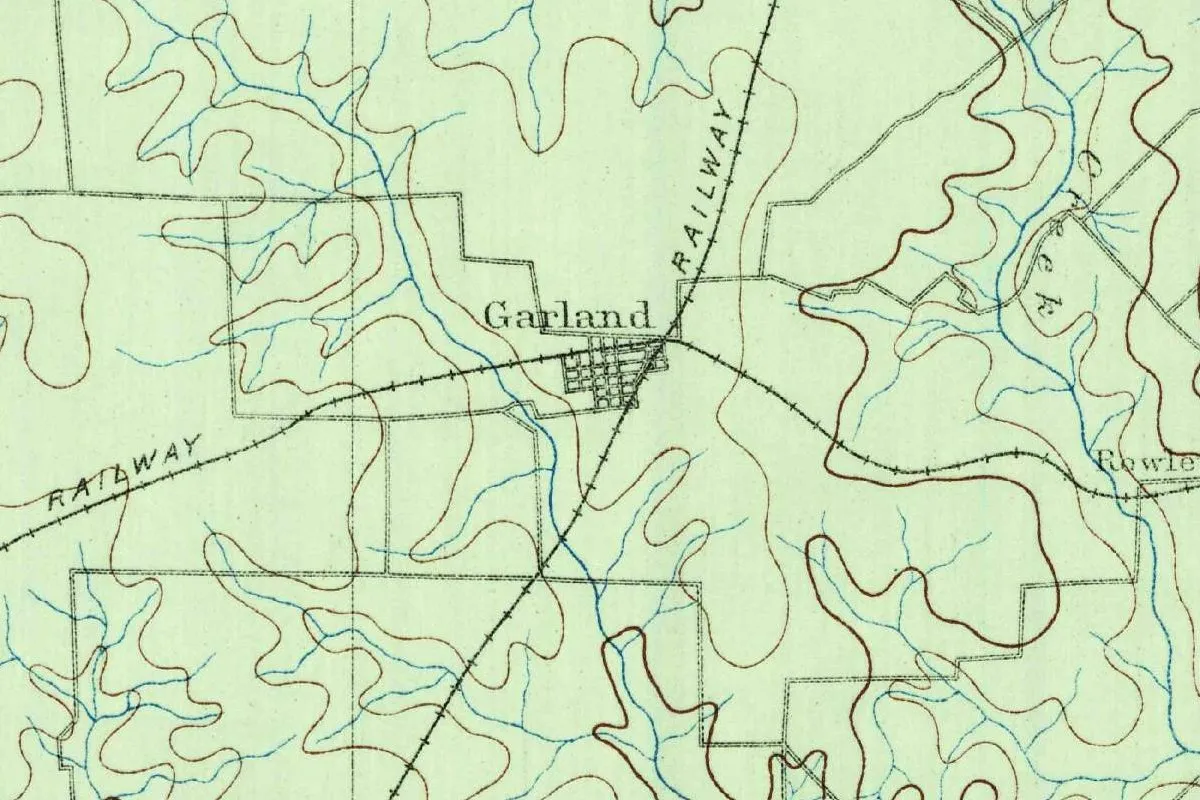
What’s on paper is the vote. The 1892 history prints the charter: on April 18, 1891, 71 voters chose to incorporate the Town of Garland and one voted no. The Handbook dates the incorporation to April 21, 1891. That same year, a federal survey map already showed Garland where the two railways crossed, about 13 miles (21 km) northeast of downtown Dallas. Two towns that couldn’t stand each other ended up as one, under the name of a man from somewhere else.
Quick answers
Who is Garland, Texas, named after?
Augustus H. Garland, U.S. attorney general under President Grover Cleveland, according to the Handbook of Texas, the City of Garland and a state historical marker.
Was Garland ever called Duck Creek or Embree?
Not exactly. Duck Creek and Embree were the two rival towns. Garland was a new town between them, and both merged into it.
Who settled the fight between Duck Creek and Embree?
The Handbook of Texas and the city credit Congressman Joseph Abbott. An 1892 county history credits Thomas F. Nash and other Duck Creek citizens.
When did Garland become a town?
Voters approved incorporation on April 18, 1891, by 71 to 1. The Handbook of Texas gives April 21, 1891, as the date Garland was incorporated.
Key dates
- 1854Duck Creek, a Peters Colony settlement, gets a post office.
- 1886Two railroads bypass Duck Creek. Embree grows up on the Santa Fe line and a new Duck Creek on the Dallas and Greenville.
- 1887Early in the year a fire burns much of old Duck Creek's business district and the post office moves to Embree.
- 1887Late in the year a new post office named Garland opens between the two towns, the Handbook of Texas says.
- 1891April 18: voters approve incorporating the Town of Garland, 71 to 1, by the 1892 county history.
Getting there
Open Garland in Google Maps
Opens in a new tab. The pin is the center of Garland in the USGS place-name record.
The closest airports, Amtrak stations and intercity bus stops, measured in a straight line from the center of Garland.
Airports
- Dallas Love Field (DAL) 13 mi 21 km
- Dallas-Fort Worth International (DFW) 23 mi 37 km
Amtrak trains
- Dallas station (DAL) 14 mi 22 km
- Fort Worth station (FTW) 41 mi 67 km
Intercity buses
- FlixBus Downtown Dallas / Deep Ellum 12 mi 20 km
- Greyhound Mckinney New Midway Convenience 21 mi 33 km
Distances are as the crow flies, not by road. We don't list schedules or fares because they change; check with the airline, Amtrak or the bus company before you go. Official data (FAA commercial service airports (2025), FAA airport locations, Amtrak stations and Intercity Bus Atlas) from the FAA and the U.S. Bureau of Transportation Statistics, checked Nov 13, 2026.
Sponsored
Staying in Garland?
Compare hotels in Garland, Texas, on Expedia.
See hotels in GarlandWe may earn a commission if you buy through this link. It never changes what we write. Read our affiliate disclosure
Historical Sources & References
- Memorial and Biographical History of Dallas County, Texas (1892), pp. 331-332. Embree named for Dr. K. H. Embree, the “scramble for a name” with “midnight rides to Dallas,” the change “from Embree to Garland (after the then postmaster general)” through Thomas F. Nash and others, and the incorporation vote of April 18, 1891.
- Handbook of Texas Online, “Garland, TX”. Duck Creek’s post office in 1854, the railroads of 1886, the fire of early 1887, Congressman Joseph Abbott’s settlement in late 1887, the namesake Augustus H. Garland, the local legend, and incorporation on April 21, 1891.
- City of Garland, “Garland History”. “Men began carrying guns,” Congressman Joe Abbott, “a new name: Garland,” and Garland’s appointment as attorney general.
- Texas Historical Commission, Garland marker no. 6721 (1991). Embree named for an early Duck Creek doctor and the 1887 post office between the towns, “Named for U.S. Attorney General A. H. Garland.”
- GNIS feature 1388185 (U.S. Geological Survey). Garland’s populated-place record in the Geographic Names Information System, in Dallas County, with its coordinates.
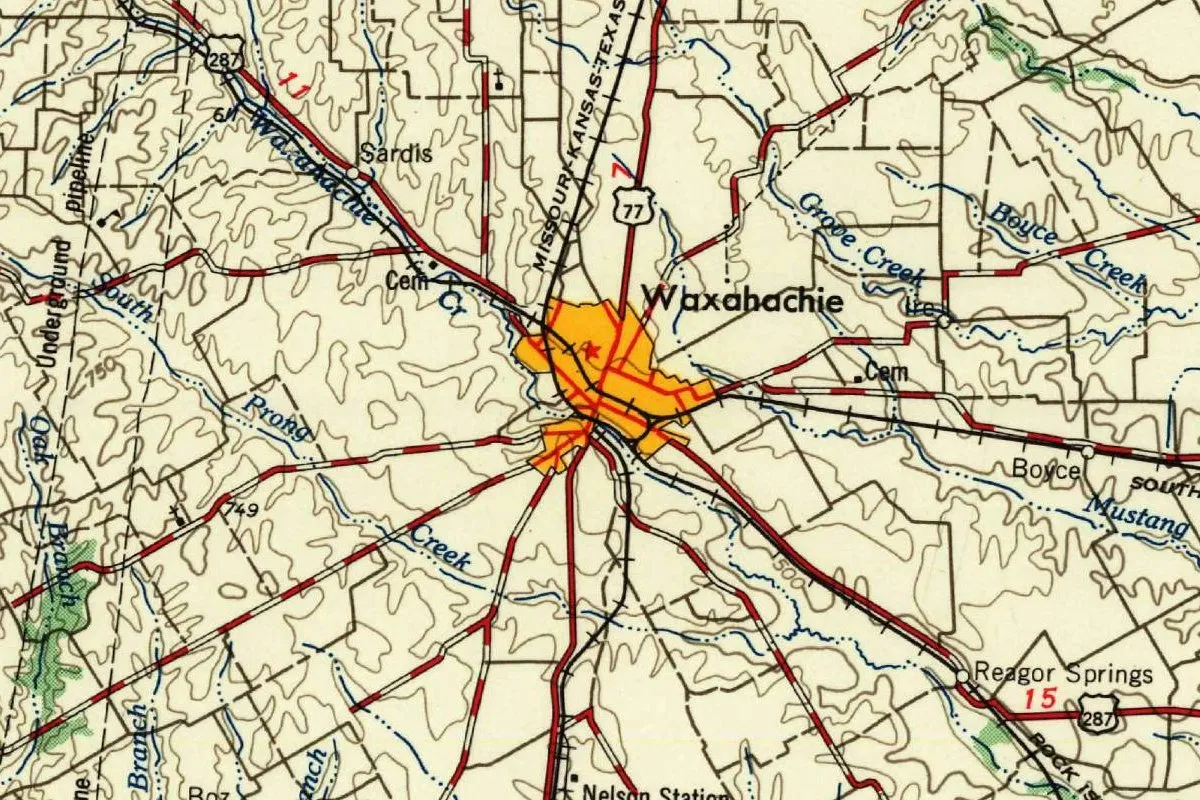
- U.S. Geological Survey, Dallas sheet (1891). The source of the map at the top of this page.
Spot something wrong, or know more? Tell us here. You can also email us or use our contact page. Corrections are noted here with their date, never made silently.