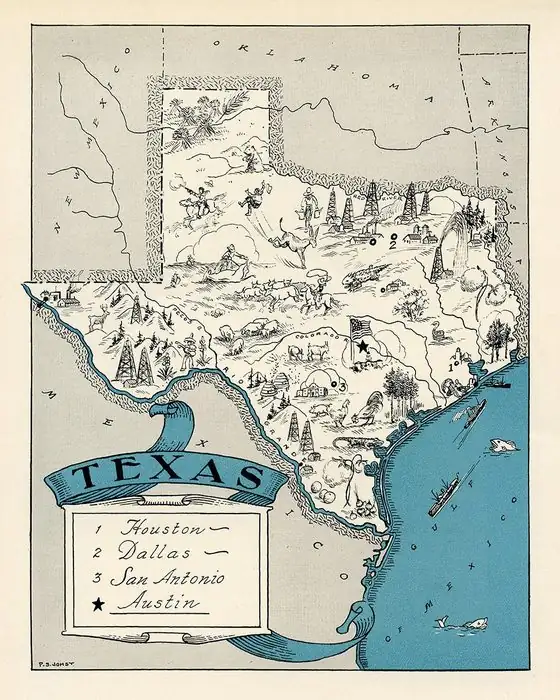
Plano, Texas: Not Forman, Not Fillmore, but Flat
Plano, Texas, got its name from the Spanish word plano, meaning flat. When the settlement set up a post office in 1852, Forman and Fillmore were considered, but postal authorities approved Plano, suggested by Dr. Henry Dye, who understood it to mean plain, his word for the flat land around town.
Fillmore, Forman or Plano
Plano, Texas, takes its name from a Spanish word for flat, chosen for its first post office in 1852 over two other names, Forman and Fillmore. The word was supposed to describe the land, and anyone who’s looked across that stretch of north Texas prairie can see why.
The Handbook of Texas tells it in one tidy sentence. When the town set up its post office in 1852, it “considered Forman and Fillmore, for President Millard Fillmore, as possible names, but postal authorities approved Plano, Spanish for ‘flat,’ suggested by Dr. Henry Dye because he understood it to mean ‘plain,’ his description of the surrounding terrain.”
So you had three choices on the table. Forman was the name of the man who ran the store and the post office. Fillmore was the sitting president. And Plano was a doctor’s idea, a Spanish word for what everybody could see out the window.
The farmer and the doctor
The Forman in question was William Forman, a Kentucky farmer who’d scouted the area in the 1840s and moved his family down. The Handbook says he bought Sanford Beck’s survey in 1851, built a general store and a few other businesses, and opened a post office in his home. That’s about as close to a founder as Plano gets.
The doctor was Henry Dye. The oldest printed source found for this page that ties him to the name is a photo caption in the Plano Daily Star-Courier on August 22, 1975. A family had just given the local library a microfilm of Dye’s medical casebook, kept from 1861 to 1904, and the paper called him “Plano’s first doctor.” Then it added:
“Dr. Dye has often been credited with suggesting the name of Plano for the city…”
“Often been credited” is careful wording, and it’s fair. Nobody has turned up a letter from 1852 where Dye proposes the name. What you have is a strong local tradition that the Handbook of Texas accepts.
Planno, or plain with an O
There’s a second version, and Plano people have argued over the two for a long time. Rick Saigling laid both out in Plano Magazine in 2017. In the first, Dr. Dye “submitted the name of Planno, which he understood to be the Spanish word for ‘plain,’” and “the extra ‘n’ was eventually dropped.”
In the second, the credit goes to William Forman himself. From his home on a hill east of town, the story goes, he looked out on flat prairie and, “to add a Spanish flair,” tacked an “o” onto the English word “plain.” Saigling doesn’t pick a winner: “No matter which story is factual, the U.S. government approved the name of Plano, and Fillmore’s controversial label was dismissed.” Forman became the postmaster, running the office out of his house.
Both versions land in the same place. The name is about flat land, and it’s Spanish, or at least Spanish-flavored. Downtown Plano’s own history page sums it up as “a Spanish word for flat, an apt description of the area’s topography.”
Notice the Handbook’s careful wording, though. It translates plano as “flat” and says Dye “understood” it to mean plain. Either way, the word fit the land, and that was good enough for a post office in 1852.
A town on the rails
The name came before the railroad, but the railroad made the town. The Handbook says the Houston and Texas Central reached Plano in 1872, and the town was platted and incorporated the next year. A fire in 1881 destroyed 52 buildings and left Plano a tent city for a while. Then in 1888 the St. Louis, Arkansas and Texas line crossed the Houston and Texas Central there, and Plano became a trading town for blackland-prairie farmers. By 1890 it had 1,200 people.
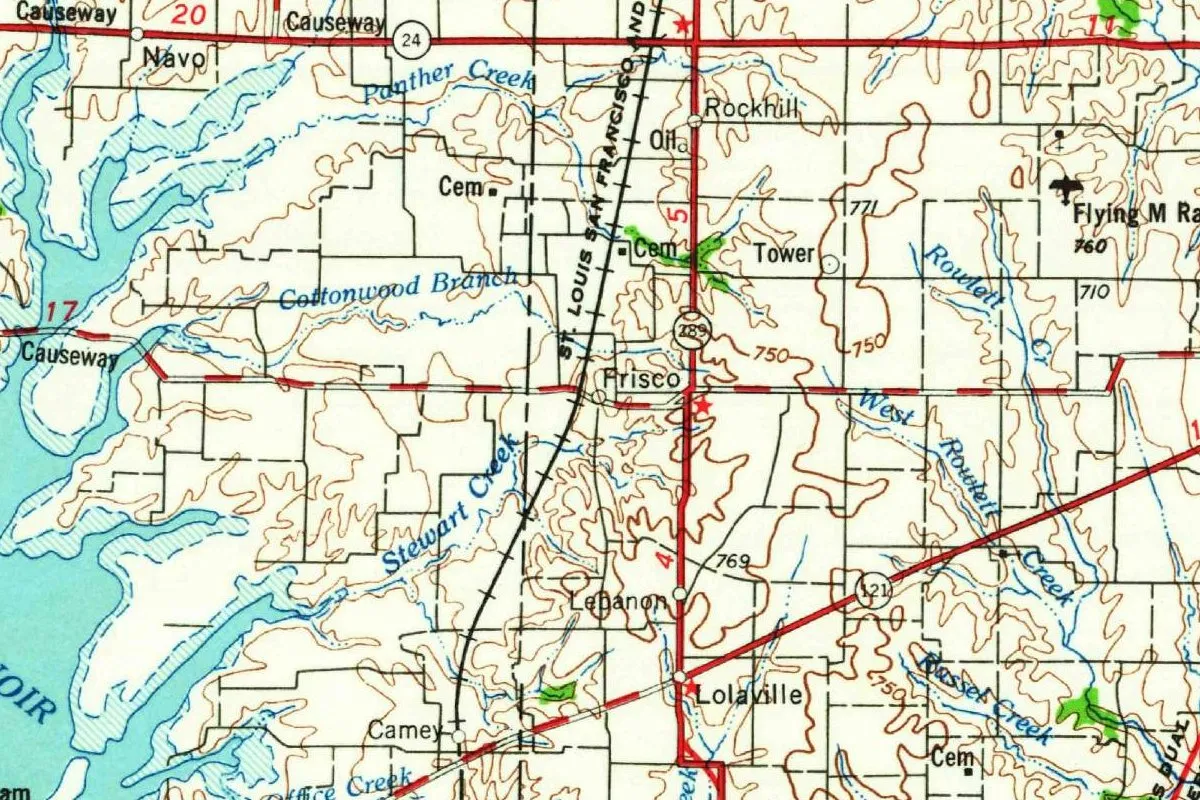
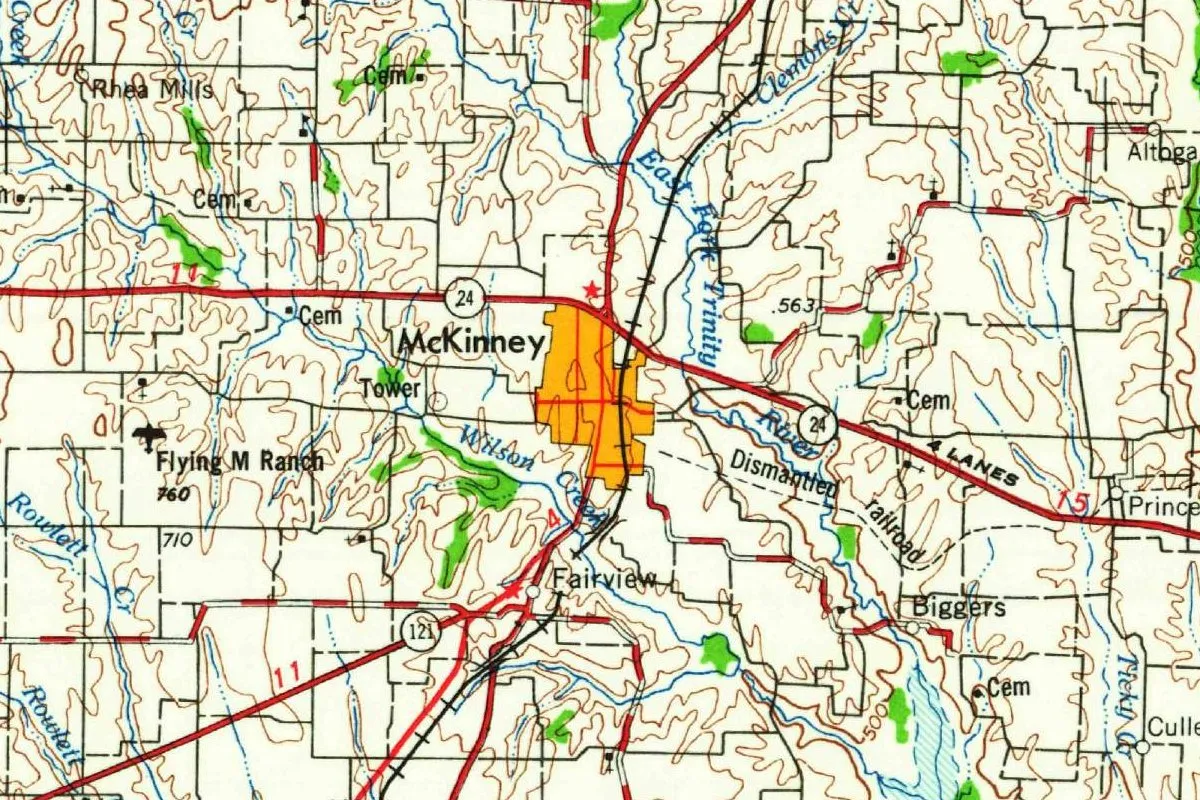
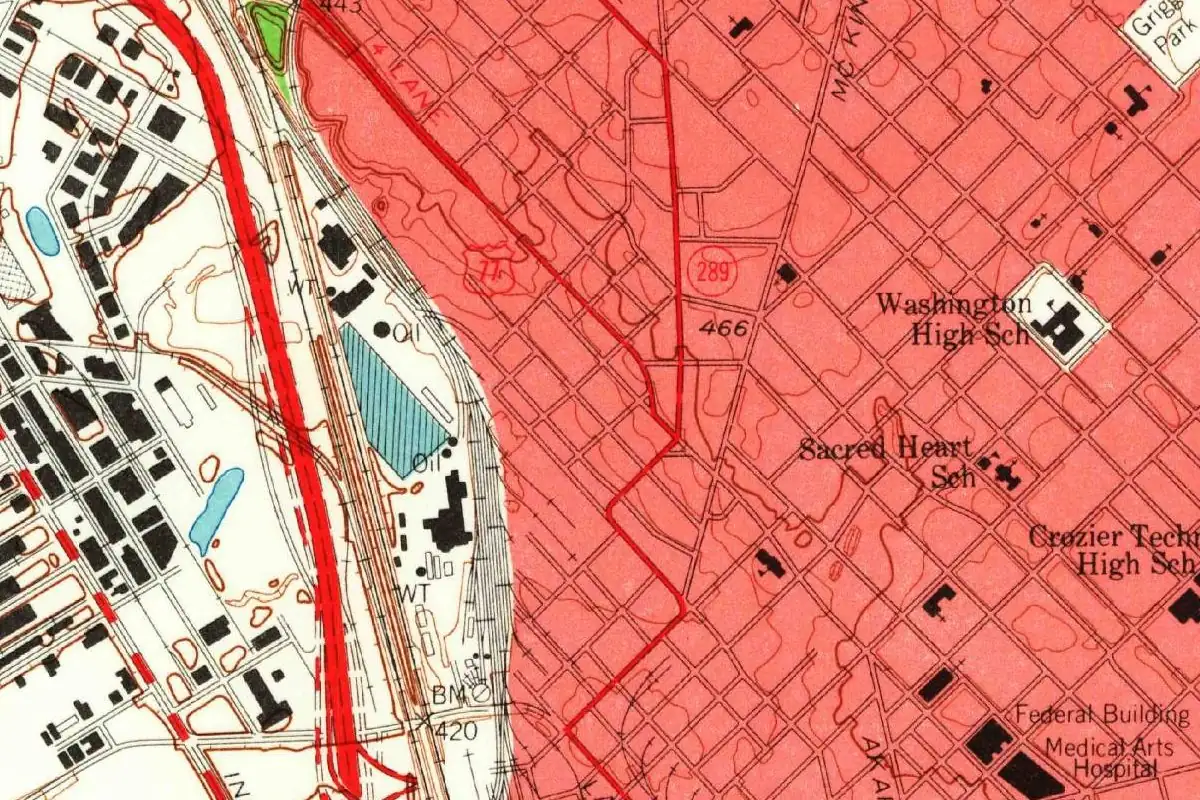
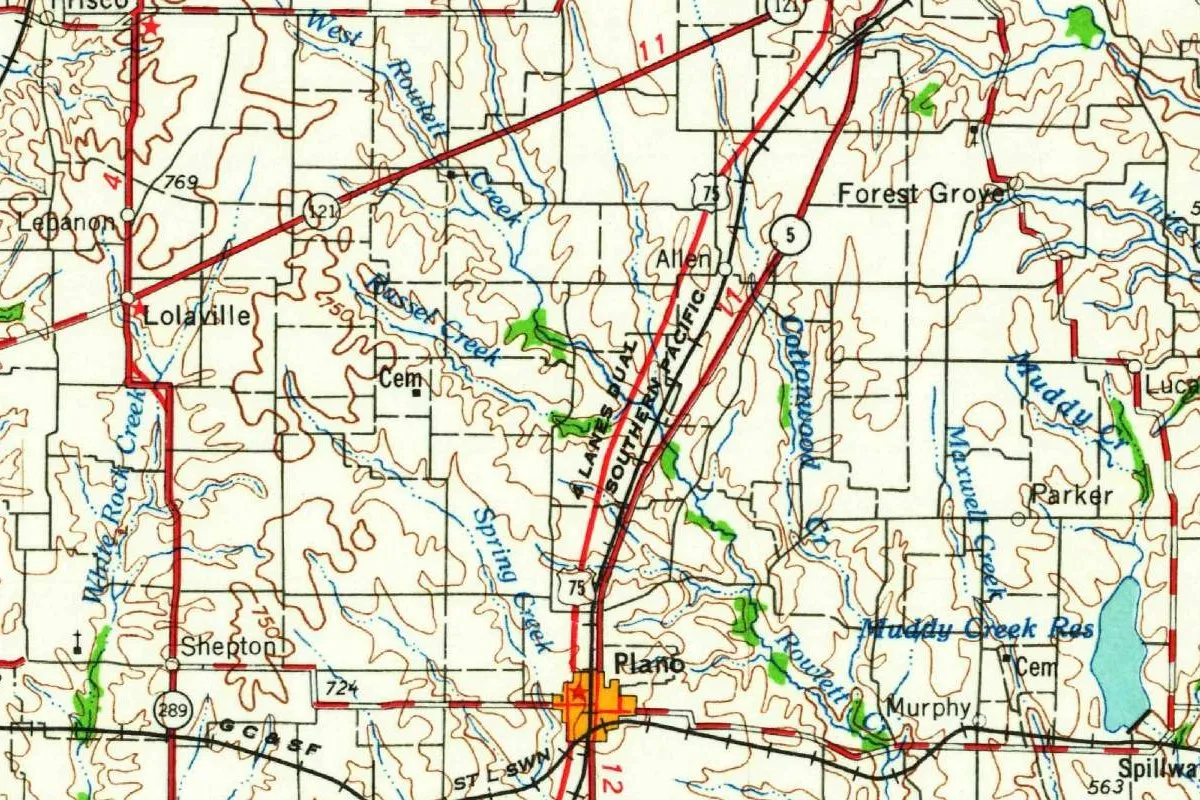
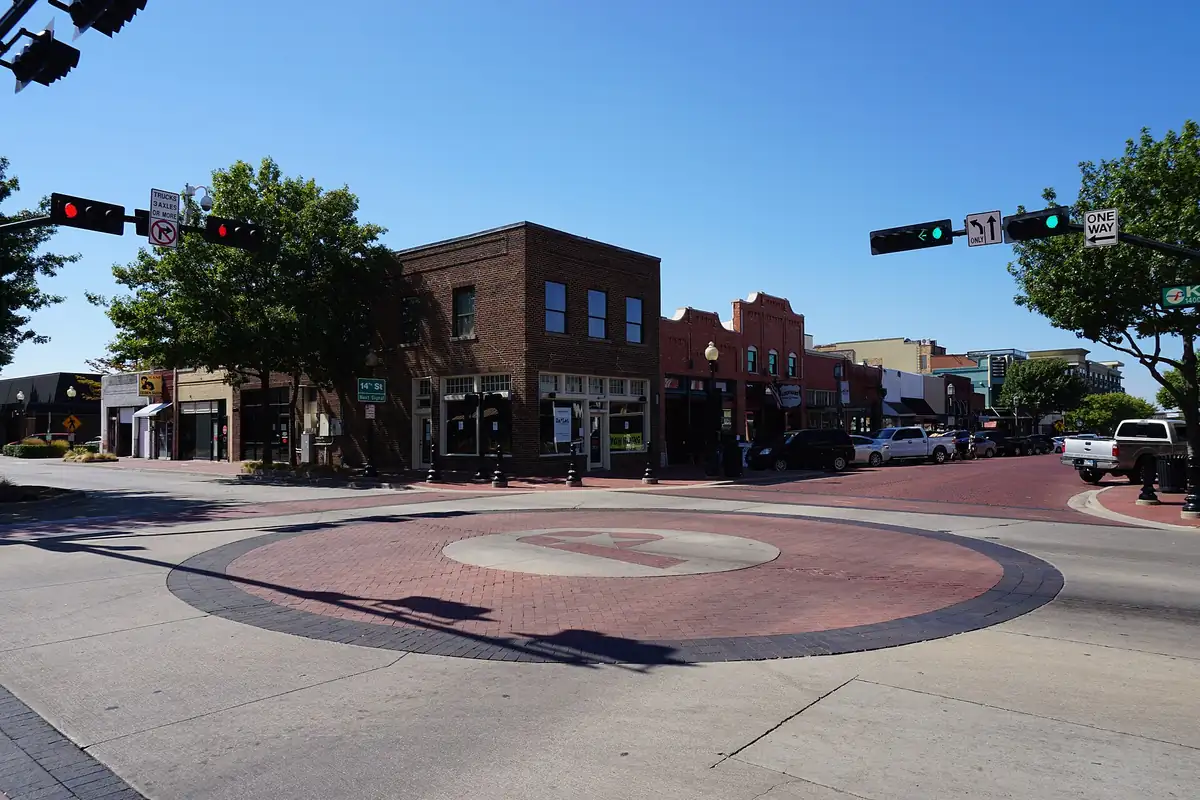
You can still see that crossing on the 1954 map at the top of this page, where two rail lines meet at the little orange town, about 15 miles (24 km) north of Dallas. Downtown’s streets changed names too. In 1948, Downtown Plano says, they were renamed for door-to-door mail delivery, and “Main Street became K Avenue.” The photo below shows K Avenue at 15th Street in 2015.
Quick answers
Why is Plano, Texas, called Plano?
Plano is a Spanish word for flat. Dr. Henry Dye suggested it for the 1852 post office, understanding it to mean plain, a description of the land, by the Handbook of Texas.
What does Plano mean in Spanish?
Flat, as the Handbook of Texas puts it. Dye took it to mean plain, and Downtown Plano calls it “a Spanish word for flat.”
Was Plano almost called Fillmore?
Fillmore was one of the names on the table. In 1852 the town considered Forman and Fillmore, for President Millard Fillmore, before postal authorities approved Plano, the Handbook of Texas says.
Who named Plano?
The Handbook of Texas and a 1975 Plano newspaper credit Dr. Henry Dye. Another local story, told in Plano Magazine in 2017, credits William Forman.
Key dates
- 1851Kentucky farmer William Forman buys Sanford Beck's survey and later opens a post office in his home.
- 1852The town sets up a post office, and postal authorities approve the name Plano over Forman and Fillmore, the Handbook of Texas says.
- 1872The Houston and Texas Central Railway reaches Plano.
- 1873Plano is platted and incorporated.
- 1948Downtown streets are renamed for door-to-door mail, and Main Street becomes K Avenue.
Getting there
Open Plano in Google Maps
Opens in a new tab. The pin is the center of Plano in the USGS place-name record.
The closest airports, Amtrak stations and intercity bus stops, measured in a straight line from the center of Plano.
Airports
- Dallas Love Field (DAL) 15 mi 24 km
- Dallas-Fort Worth International (DFW) 21 mi 34 km
Amtrak trains
- Dallas station (DAL) 18 mi 29 km
- Fort Worth station (FTW) 41 mi 66 km
Intercity buses
- Greyhound Mckinney New Midway Convenience 14 mi 22 km
- FlixBus Dallas Harry Hines Blvd Dallas Bus Station 16 mi 25 km
Distances are as the crow flies, not by road. We don't list schedules or fares because they change; check with the airline, Amtrak or the bus company before you go. Official data (FAA commercial service airports (2025), FAA airport locations, Amtrak stations and Intercity Bus Atlas) from the FAA and the U.S. Bureau of Transportation Statistics, checked Nov 13, 2026.
Sponsored
Staying in Plano?
Compare hotels in Plano, Texas, on Expedia.
See hotels in PlanoWe may earn a commission if you buy through this link. It never changes what we write. Read our affiliate disclosure
Historical Sources & References
- Handbook of Texas Online, “Plano, TX”. William Forman and Beck’s survey in 1851, the 1852 post office and the names Forman, Fillmore and Plano, Dr. Henry Dye’s suggestion, the railroads of 1872 and 1888, incorporation in 1873, the 1881 fire, the 1890 population and the distance from Dallas.
- Plano Daily Star-Courier, August 22, 1975. Dr. Henry Dye as “Plano’s first doctor,” his 1861-1904 casebook, and “Dr. Dye has often been credited with suggesting the name of Plano for the city.”
- Rick Saigling, Plano Magazine (2017). The two local versions, Dye’s “Planno” and Forman’s “plain” with an “o,” and Forman as postmaster.
- Downtown Plano, History. Plano as “a Spanish word for flat,” and the 1948 street renaming, when Main Street became K Avenue.
- GNIS feature 1344166 (U.S. Geological Survey). Plano’s populated-place record in the Geographic Names Information System, in Collin County, with its coordinates.
- U.S. Geological Survey, Sherman sheet (1954). The source of the map at the top of this page.
Spot something wrong, or know more? Tell us here. You can also email us or use our contact page. Corrections are noted here with their date, never made silently.