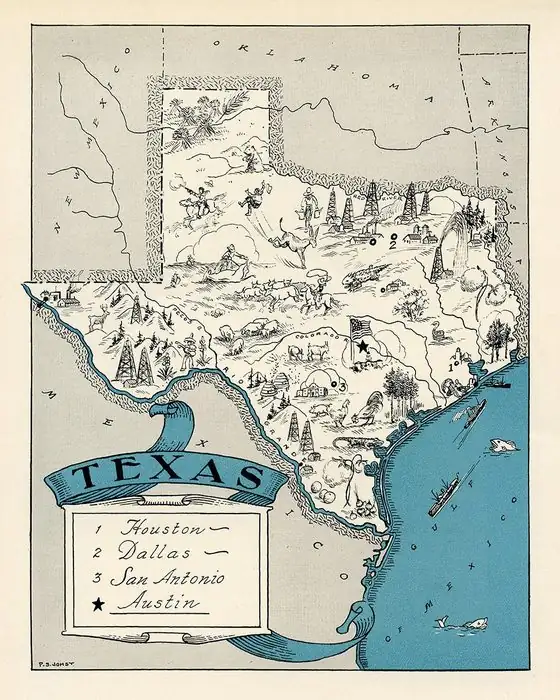
How McKinney, Texas Got Collin McKinney's Name
McKinney is named for Collin McKinney, a signer of the Texas Declaration of Independence, who also gave his first name to Collin County. In 1848 the county seat had to leave Buckner, which lay outside the legal three miles from the county's center, and the Legislature named the new seat McKinney, the City of McKinney says.
The first seat of Collin County, Texas, was Buckner, but it sat too far from the county’s center, and the town that replaced it in 1848 was named McKinney. Both the county and the new town honor one man, Collin McKinney, who signed the Texas Declaration of Independence in 1836.
A county seat called Buckner
The story starts with a law. On April 3, 1846, the Texas Legislature carved Collin County out of Fannin County, and the act spelled out how to pick a county seat. Five commissioners were to find the center of the new county and choose two places “within three miles of said centre” (about 5 km). Then the voters would decide, and the act had already settled on a name for the winner:
“…the place receiving the greatest number of votes shall be the county seat, and the place so elected, shall be known and called by the name of Buckner…”
So Buckner came first, by statute. A state historical marker put up in 1978 says the townsite was laid off at the settlement of John (Jack) and Polly McGarrah, who’d come from Tennessee in 1842 and opened a trading post there. Citizens met at Buckner on the Fourth of July in 1846 to elect their first county officials, town lots went up for auction on September 21, and a post office opened on November 25, with McGarrah as postmaster.
One small detail in the 1846 act, if you’re reading closely: one of the five commissioners was named Ashley McKinney. The act doesn’t say anything more about him.
Three miles from the center
Buckner’s problem was geography. The marker says that “by 1848 it was noticed that Buckner townsite was outside the legal limits for the county seat.” The Handbook of Texas puts it the same way: Buckner “was not within three miles of the center of the county,” so the Legislature called a special election for a new site.
That’s where the sources start to tell it differently. The City of McKinney says the vote was between today’s McKinney and a spot near Sloan’s Grove, now in Fairview, and that “Heavy rains and swollen creeks prevented Sloan’s Grove voters from reaching the polls.” The Handbook just says McKinney won “by a vote of ten to one.” The city dates the act making McKinney the county seat to March 16, 1848, while the Handbook ties the three-mile rule to January 12, 1848. Without the 1848 act itself in hand, we’re not picking a day.
They don’t agree on distance either. The marker sends you 3 miles (5 km) east from Buckner to McKinney; the Handbook puts Buckner 7 miles (11 km) northwest of McKinney. Either way, the people of Buckner packed up. The marker says residents moved their homes and other buildings to the new town, and the Buckner site went back to farmland.
Not Buckner after all
What about the name? The city says residents expected the new seat to be called Buckner too, but “the Texas Legislature named the town McKinney for Collin McKinney.” The marker agrees that the Legislature named the new county seat McKinney, “honoring early settler Collin McKinney, a signer of the Texas Declaration of Independence.” The townsite itself came a year later: on March 24, 1849, the Handbook says, William Davis donated 120 acres of his land for it.
The oldest federal list of place names is briefer. Henry Gannett’s 1905 edition says McKinney, “city in Collin County, Texas,” was “named for Collin McKinney, a pioneer settler.” Pioneer settler is true, but it undersells him.
Who Collin McKinney was
The Handbook of Texas entry on him, by Lois Garver, says Collin McKinney was born on April 17, 1766, in Hunterdon County, New Jersey. He moved with his family to Virginia and then Kentucky, and later to the Red River country that both Mexico and the United States claimed. He was one of five delegates from Red River to the Convention of 1836, one of five men named to the committee that drafted the Texas Declaration of Independence, and, at seventy, the oldest member of the convention.
In 1840 he joined relatives in the part of Fannin County, Texas, that later became Grayson and Collin counties. The Handbook credits him with insisting that the new counties of North Texas get straight boundaries, which is a fitting thing for a man whose name ended up on one of them. He died on September 9, 1861, at his home in Collin County. “Collin County and McKinney, the county seat, were named in his honor,” the entry says.
First name, last name
So the county got his first name in 1846, and two years later its seat got his last. If you drive the square in McKinney today, you’re in a town that exists because Buckner turned out to sit outside the three-mile (5 km) limit the 1846 law set. The Handbook notes that McKinney was the county’s main commercial center for most of its history and that by 1970 it had been passed in size by Plano, another Collin County town. On a map of North Texas, you can read Collin McKinney’s whole name by looking at the county and then at its seat.
Quick answers
Who was McKinney, Texas, named after?
Collin McKinney, who signed the Texas Declaration of Independence in 1836. The City of McKinney, a state historical marker and the Handbook of Texas all say so.
Was McKinney once called Buckner?
No. Buckner was a separate townsite a few miles away and Collin County’s first county seat. When it turned out to be outside the legal limits, the seat moved to a new site named McKinney, and Buckner’s residents moved their buildings there.
Are Collin County and McKinney named for the same person?
Yes. The county carries Collin McKinney’s first name and the city his last name, the Handbook of Texas says.
Why did the county seat leave Buckner?
The 1846 act required a site within three miles (5 km) of the county’s center, and Buckner wasn’t. In 1848 the Legislature called a new election for another site.
Key dates
- 1836Collin McKinney, a Red River delegate to the Convention of 1836, signs the Texas Declaration of Independence.
- 1842John and Polly McGarrah settle at the site that becomes Buckner, the state historical marker says.
- 1846April 3: the Legislature creates Collin County and says its county seat will be called Buckner.
- 1848Buckner is found to lie outside the legal limits; a new election picks the site, and the new seat is named McKinney.
- 1849March 24: William Davis gives 120 acres for the McKinney townsite, according to the Handbook of Texas.
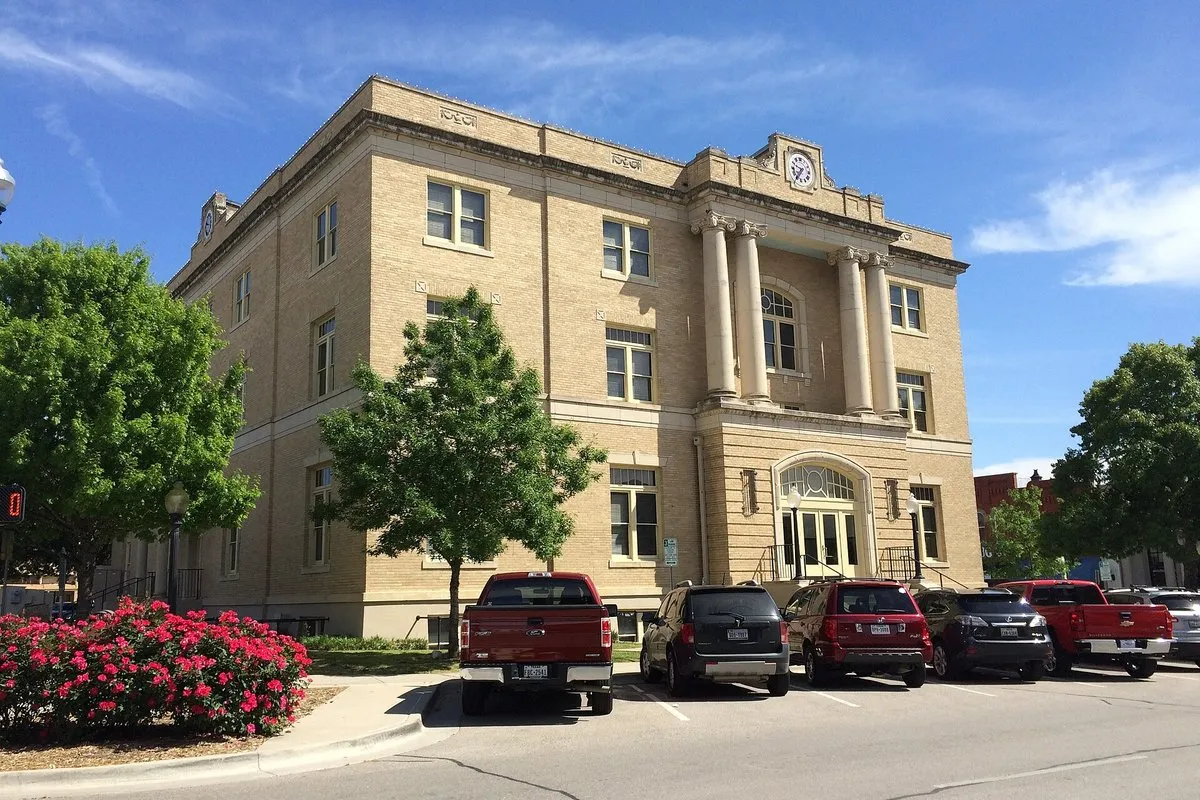
Getting there
Open McKinney in Google Maps
Opens in a new tab. The pin is the center of McKinney in the USGS place-name record.
The closest airports, Amtrak stations and intercity bus stops, measured in a straight line from the center of McKinney.
Airports
- Dallas Love Field (DAL) 28 mi 45 km
- Dallas-Fort Worth International (DFW) 32 mi 52 km
Amtrak trains
- Dallas station (DAL) 31 mi 50 km
- Gainesville station (GLE) 42 mi 68 km
Intercity buses
- Greyhound Mckinney New Midway Convenience 2 mi 2 km
- FlixBus Dallas Harry Hines Blvd Dallas Bus Station 28 mi 46 km
Distances are as the crow flies, not by road. We don't list schedules or fares because they change; check with the airline, Amtrak or the bus company before you go. Official data (FAA commercial service airports (2025), FAA airport locations, Amtrak stations and Intercity Bus Atlas) from the FAA and the U.S. Bureau of Transportation Statistics, checked Nov 13, 2026.
Sponsored
Staying in McKinney?
Compare hotels in McKinney, Texas, on Expedia.
See hotels in McKinneyWe may earn a commission if you buy through this link. It never changes what we write. Read our affiliate disclosure
Historical Sources & References
- “An Act to create the County of Collin” (April 3, 1846), in Gammel, The Laws of Texas, vol. 2, pp. 1350-1351. The new county, the five commissioners (Ashley McKinney among them), the two sites “within three miles of said centre,” and the seat “known and called by the name of Buckner.”
- Henry Gannett, The Origin of Certain Place Names in the United States (1905), p. 194. McKinney “named for Collin McKinney, a pioneer settler.”
- David Minor, “McKinney, TX,” Handbook of Texas Online. Buckner seven miles northwest, the three-mile rule and January 12, 1848, the ten-to-one vote, William Davis’s 120 acres of March 24, 1849, and Plano passing McKinney by 1970.
- Lois Garver, “McKinney, Collin,” Handbook of Texas Online. His birth in 1766, the Convention of 1836 and the Declaration committee, the move of 1840, the straight county lines, his death in 1861, and the county and town “named in his honor.”
- Texas Historical Commission, “Site of Buckner” marker (1978). The McGarrahs in 1842, the Buckner townsite, the dates of 1846, the finding of 1848, the new seat named for Collin McKinney, and McKinney “3 Mi.E.”
- City of McKinney, “McKinney’s History”. The vote against Sloan’s Grove, the rains and swollen creeks, the act of March 16, 1848, and the Legislature naming the town McKinney instead of Buckner.
- GNIS feature 1341241 (U.S. Geological Survey). Where McKinney’s official name record sits, under Collin County.
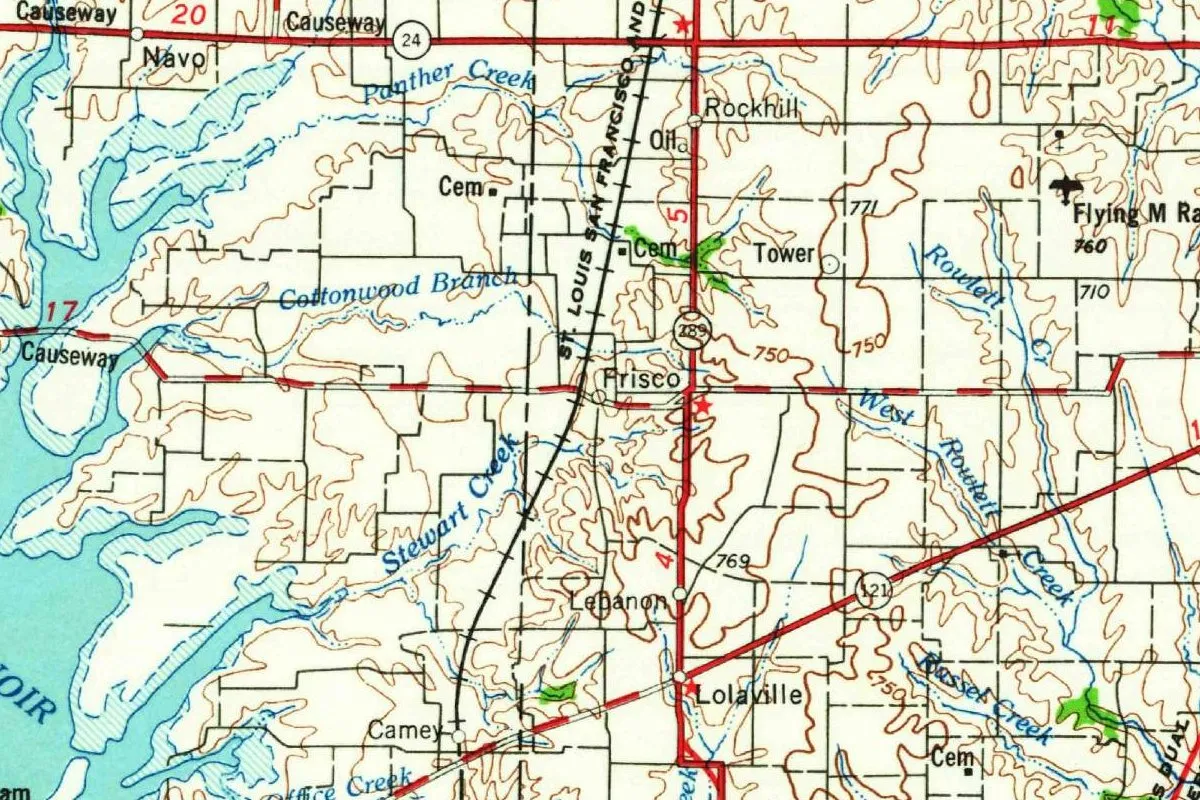
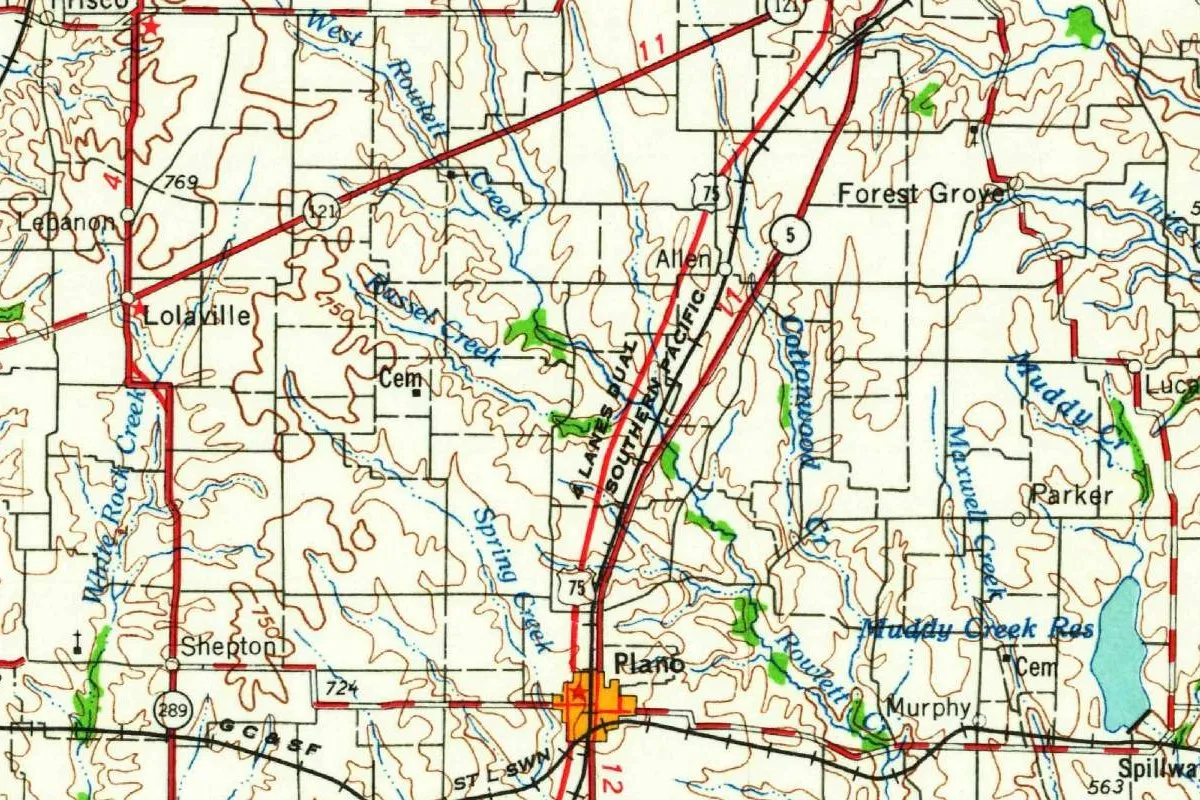
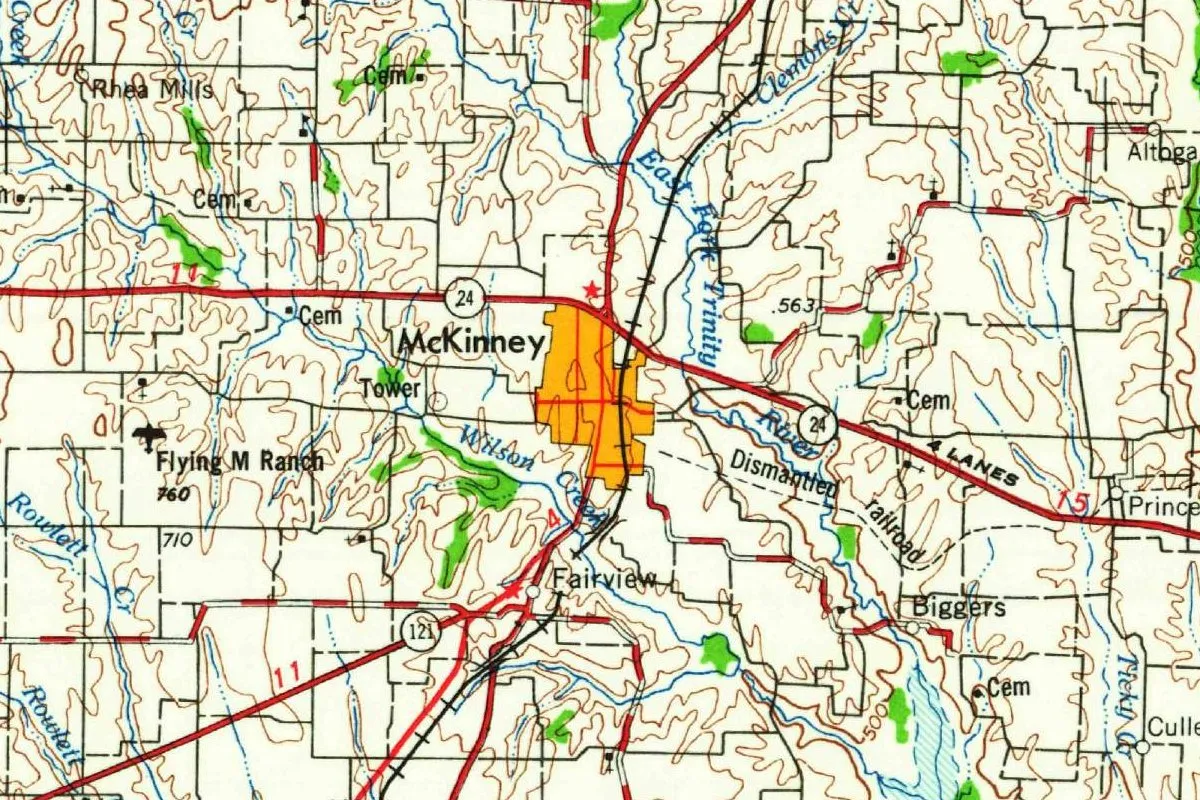
- U.S. Geological Survey, Sherman sheet (1954). A 1:250,000 regional sheet dated 1954, in a later printing, that shows McKinney as an orange block between Wilson Creek and the East Fork of the Trinity.
Spot something wrong, or know more? Tell us here. You can also email us or use our contact page. Corrections are noted here with their date, never made silently.