Bellingham, Washington: A Bay Name That Ended a Rivalry
The city took the name of its bay. George Vancouver wrote Bellingham's Bay into his journal in 1792 without saying whom it honored, and a 1923 Washington place-names book has very little doubt it was Sir William Bellingham, who checked his supplies. Whatcom and Fairhaven picked the bay's name as a compromise when they merged in 1903.
A name borrowed from the water
When Whatcom and Fairhaven merged in 1903, they ended a rivalry by borrowing a name from the water: Bellingham Bay, charted by George Vancouver in 1792. There was never a founder called Bellingham. The name came off a British explorer’s chart, decades before the first mill on the shore.
The first European name on the bay was Spanish. Edmond Meany, in his 1923 dictionary of Washington geographic names, says the Spaniard Eliza entered it in 1791 and called it Seno de Gaston, the Gulf of Gaston. The next June, Vancouver’s officer Joseph Whidbey went in by boat to survey it. When Vancouver wrote up that survey in his journal, he gave the bay the name that stuck:
“The broken part of the coast that Mr. Whidbey had been employed in examining, was found to extend but a few miles to the northward of the spot where his former researches had ended; forming altogether an extensive bay, which I have distinguished as Bellingham’s Bay.”
That’s the whole naming, from the man who did it. Notice what’s missing: he never says who Bellingham was.
Which Bellingham?
That gap left room for guessing, and the old books don’t agree. Henry Gannett, writing for the U.S. Geological Survey in 1905, said the bay was named “probably for Sir Henry Bellingham, who was knighted in 1796.” Meany came to a different answer. He pointed out that Vancouver liked to spread one person’s names across neighboring features, and that the point just south of the bay’s entrance is Point William. Then he went looking among Vancouver’s contemporaries and found Sir William Bellingham, who “checked over Vancouver’s supplies and accounts as he was leaving England.”
“There is very little doubt,” Meany wrote, “that Sir William Bellingham was the man thus honored.” The Port of Bellingham tells it the same way today. Meany’s case is the stronger one, and you can see a problem with Gannett’s even from his own entry: by his date, Sir Henry wasn’t knighted until four years after the bay got its name. Still, neither book quotes Vancouver naming his man, because Vancouver never did.
The Spanish didn’t give up right away, either. Meany says the Sutil y Mexicana expedition charted the bay again that same year as Bahia de Gaston, but the Spanish charts sat unpublished for years. The British ones came out right away and, in Meany’s words, “fixed the name permanently.”
Four towns, one bay
The towns came much later, and they didn’t come as one. HistoryLink, Washington’s online history encyclopedia, counts four of them. Whatcom was first, started in December 1852 when Henry Roeder and Russell Peabody built a lumber mill on Whatcom Creek. Fairhaven and a small village called Bellingham, near today’s Boulevard Park, followed in 1853, and Sehome in 1854.
They spent the next half century as rivals. Sehome’s incorporation was thrown out by the state Supreme Court in 1890, and it reincorporated as New Whatcom. Fairhaven swallowed the little Bellingham village that same spring. Whatcom and New Whatcom voted to merge at the end of 1890, and the legislature dropped the “New” in 1901. The poet Ella Higginson, Meany noted, said she’d lived in three cities, Sehome, New Whatcom and Bellingham, “without having moved out of her house.”
Back in September 1890, an informal vote had already picked Bellingham as the name for a union of all the bay towns. Fairhaven walked away from that deal, so the name sat on the shelf.
Why Bellingham won
By 1903, Whatcom and Fairhaven had grown until they touched, and the old arguments were losing steam. HistoryLink says the name fight came right back anyway. Whatcom was the obvious favorite, older and bigger. Fairhaven wanted its own name, and Sehome’s backers argued theirs fit best. Bellingham was chosen mainly as a compromise, because the original village had been far too small to take sides in the old rivalries.
Voters approved the merger on October 27, 1903. Western Washington University’s archives add that a new city charter followed in July 1904. On the night of December 28, 1903, Whatcom’s mayor, J. B. Bennett, closed out the old cities with “Farewell, Whatcom and Fairhaven. Hail, Bellingham, all hail!” as HistoryLink quotes the next day’s Daily Reveille. The bell on City Hall rang, and Fairhaven’s last mayor, Alfred Black, became Bellingham’s first.
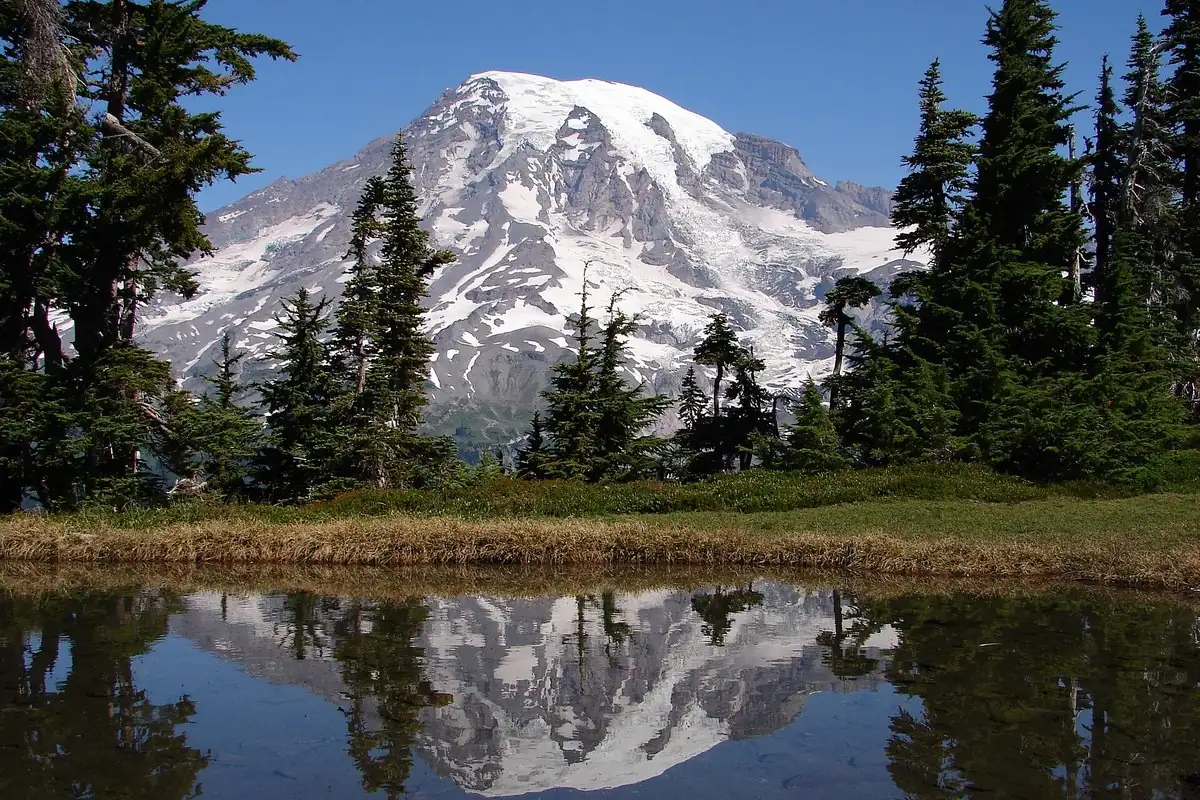
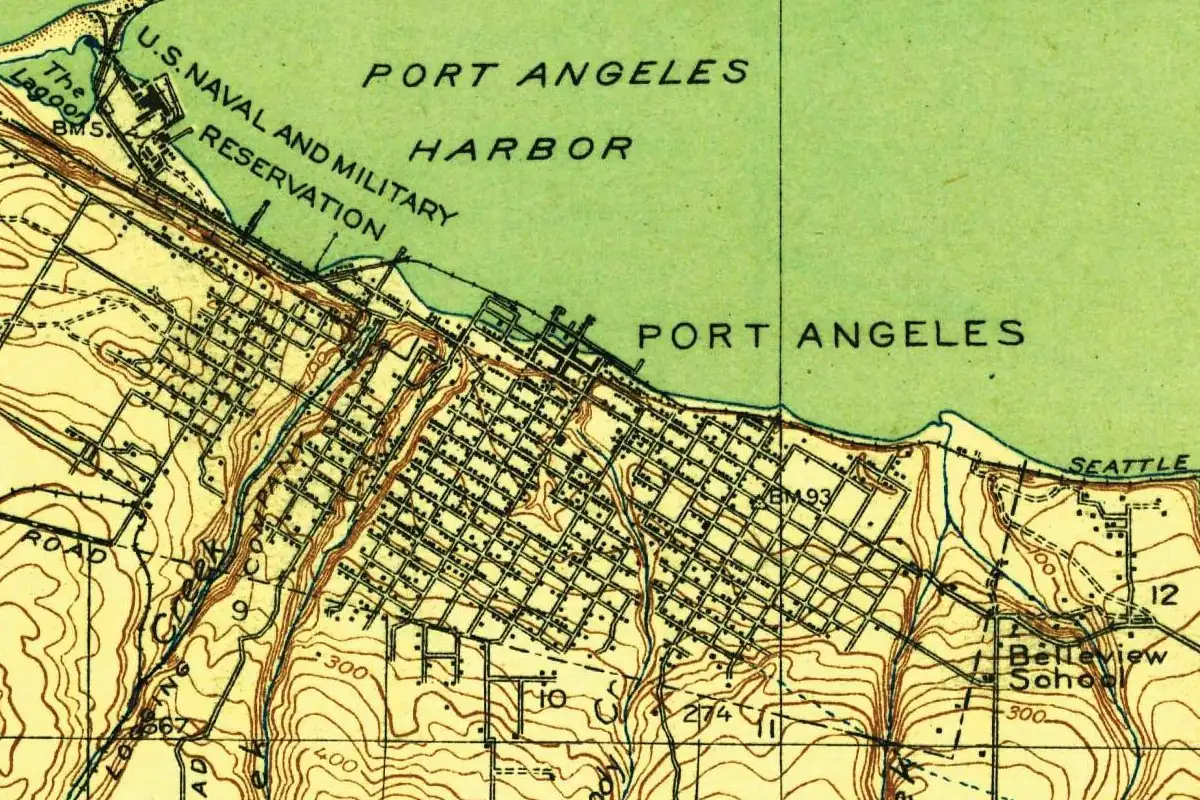
So if you’re wondering why a city in Washington carries the surname of the man who, Meany believed, checked Vancouver’s accounts, that’s the answer. Nobody had to win: the name belonged to the smallest town, and to the bay they all shared. The same 1792 voyage named Mount Rainier, and the same Spaniard, Eliza, is behind the old name of Port Angeles.
Quick answers
Who is Bellingham, Washington, named after?
Indirectly, Sir William Bellingham. The city is named for Bellingham Bay, and Meany’s 1923 book has “very little doubt” that the bay honors the man who checked Vancouver’s supplies. The 1905 USGS place-name bulletin guessed Sir Henry Bellingham instead.
Was there a town founder named Bellingham?
No. The name came from Vancouver’s 1792 survey of the bay, more than half a century before the first mill went up on Whatcom Creek.
Which towns became Bellingham?
Whatcom, Sehome, Fairhaven and a small village called Bellingham. After earlier mergers, Whatcom and Fairhaven were the two left to unite in 1903.
Why didn’t the merged city keep the name Whatcom?
Because Fairhaven and Sehome wanted their own names too. HistoryLink says Bellingham was picked mainly as a compromise, since the original Bellingham village had stayed out of the rivalries.
Key dates
- 1791The Spanish explorer Eliza names the bay Seno de Gaston, or Gulf of Gaston.
- 1792June: Joseph Whidbey surveys the bay for George Vancouver, who writes it down as Bellingham's Bay.
- 1852December: Henry Roeder and Russell Peabody start a lumber mill on Whatcom Creek, the beginning of Whatcom.
- 1890September: an informal vote picks Bellingham as the name for a proposed union of the bay towns, but Fairhaven pulls out.
- 1903October 27: voters in Whatcom and Fairhaven approve the merger. December 28: the city of Bellingham comes into being.
- 1904July: a new charter for the city of Bellingham is passed.
Getting there
Open Bellingham in Google Maps
Opens in a new tab. The pin is the center of Bellingham in the USGS place-name record.
The closest airports, Amtrak stations and intercity bus stops, measured in a straight line from the center of Bellingham.
Airports
- Bellingham International (BLI) 3 mi 5 km
- Friday Harbor (FHR) 29 mi 47 km
- Seattle-Tacoma International (SEA) 91 mi 146 km
Amtrak trains
- Bellingham station (BEL) 3 mi 5 km
- Mount Vernon station (MVW) 25 mi 40 km
Intercity buses
- FlixBus Bellingham WWU 2 mi 3 km
- Amtrak Chartered Vehicle Amtrak Connecting Service · Bellingham Amtrak Station 3 mi 5 km
- Greyhound Bellingham Bus Stop 3 mi 5 km
Distances are as the crow flies, not by road. We don't list schedules or fares because they change; check with the airline, Amtrak or the bus company before you go. Official data (FAA commercial service airports (2025), FAA airport locations, Amtrak stations and Intercity Bus Atlas) from the FAA and the U.S. Bureau of Transportation Statistics, checked Nov 13, 2026.
Sponsored
Staying in Bellingham?
Compare hotels in Bellingham, Washington, on Expedia.
See hotels in BellinghamWe may earn a commission if you buy through this link. It never changes what we write. Read our affiliate disclosure
Historical Sources & References
- George Vancouver, A Voyage of Discovery to the North Pacific Ocean, and Round the World, vol. I (1798), p. 314. Vancouver’s journal for late June 1792: Whidbey’s survey and the bay “which I have distinguished as Bellingham’s Bay.” The quotation above follows the 1798 text, with the old long s printed as a modern s.
- Edmond S. Meany, Origin of Washington Geographic Names (1923), p. 17. Eliza’s Seno de Gaston of 1791, Whidbey’s survey of June 1792, Point William, Sir William Bellingham and Vancouver’s accounts, the Spanish Bahia de Gaston, and Ella Higginson’s three cities.
- Henry Gannett, The Origin of Certain Place Names in the United States (USGS, 1905), p. 42. The bay “named by Vancouver, the explorer, probably for Sir Henry Bellingham, who was knighted in 1796.”
- Phil Dougherty, “Whatcom and Fairhaven merge and incorporate as Bellingham on December 28, 1903” (HistoryLink.org). The four towns and their founding years, the 1890 mergers and the informal vote for the name, the compromise of 1903, the October 27 vote and Mayor Bennett’s farewell.
- Western Washington University, “The Towns That Became Bellingham”. The petitions of September 1903, the vote of October 27, 1903, and the new charter of July 1904.
- Port of Bellingham, “Early History of the Area”. Vancouver naming the bay in 1792 for Sir William Bellingham, and the four towns consolidated in 1903.
- GNIS feature 1512001 (U.S. Geological Survey). Bellingham’s permanent ID in the national names database, used to identify this page.
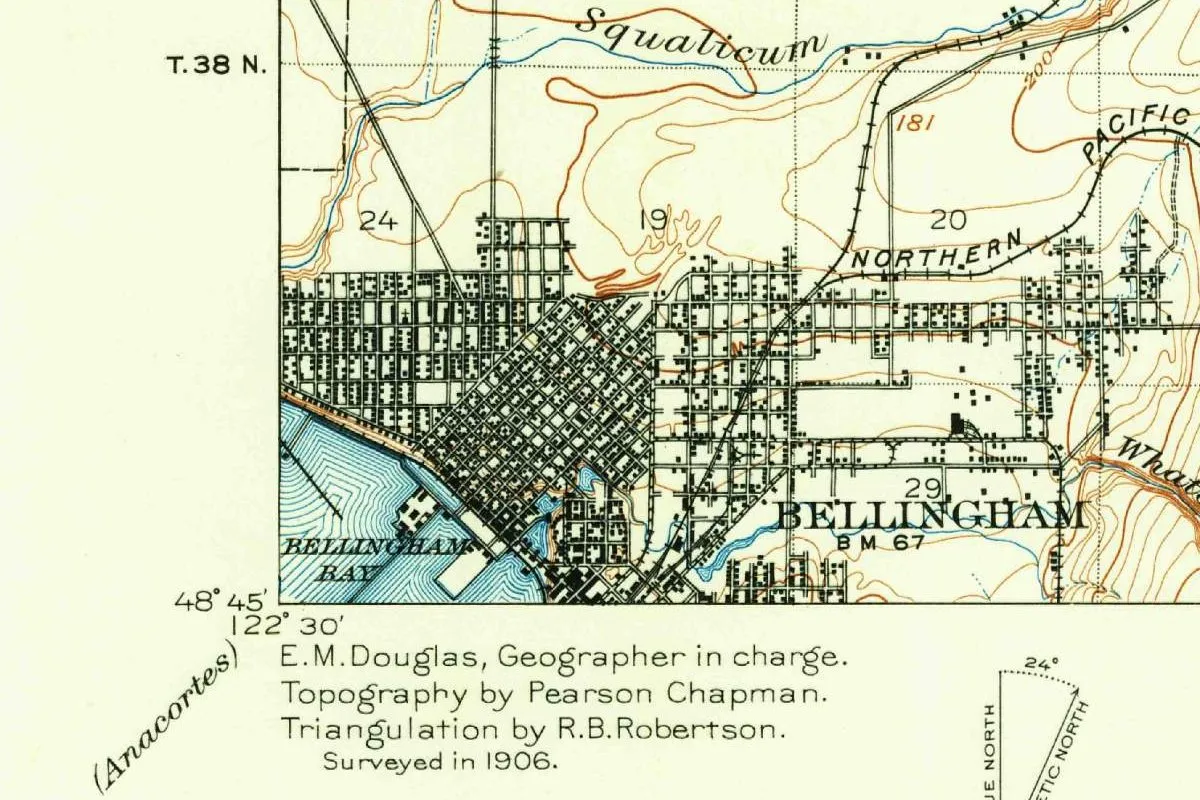
- U.S. Geological Survey, Sumas sheet (1906). A 1906 topographic sheet with Bellingham printed on the shore of Bellingham Bay.
Spot something wrong, or know more? Tell us here. You can also email us or use our contact page. Corrections are noted here with their date, never made silently.