Fayetteville, Arkansas: Renamed by the Postmaster General
Fayetteville was first called Washington Courthouse. In 1829 Postmaster General William T. Barry ordered a new name because mail was getting mixed up with Washington in Hempstead County. Two of the county-seat commissioners, James Buchanan and John Wooddy, came from Fayetteville, Tennessee, and that's the name that was chosen.
Washington Courthouse, Arkansas Territory
Fayetteville, Arkansas, started out as Washington Courthouse, and it took an order from the Postmaster General in 1829 to give it a name of its own. The new name wasn’t invented on the spot. It was borrowed from a town in Tennessee that two of the founders had left behind.
So if you’ve ever wondered why a college town in the Ozarks shares its name with a town in Tennessee, the answer starts with a mail problem.
A county seat by a spring
The City of Fayetteville tells the early part simply. Northwest Arkansas was Native American country, used as a hunting ground by the Osage and later home to the Cherokee. Permanent settlers came in the mid-1820s, while Arkansas was still a territory, and in 1828 they settled near a spring at the base of what’s now Mount Sequoyah. The George McGarrah family put up the first homestead by Big Spring, also called Spout Spring, at what’s now the corner of Spring Street and Willow Avenue. The James Leeper family came next, and the Leepers ended up owning all the land on the south side of Mount Sequoyah down to the White River, plus lots around today’s downtown square.
On October 17, 1828, the territory created Washington County out of Lovely County, and the settlement became its seat. It was called, plainly enough, Washington Courthouse.
Too many Washingtons
That name lasted about a year. The trouble was the mail. Hempstead County already had a town named Washington, and it was the seat of justice there. Two Washingtons in one territory meant letters going to the wrong one.
In 1829, the city says, Postmaster General William T. Barry ordered the name changed. On November 3 of that year, the Arkansas Gazette announced the order. Charles Alison, who keeps a day-by-day history of the city, transcribes the paper’s warning this way: “Persons writing to that place should direct their letters to ‘Fayetteville, Washington County, A.T.,’ otherwise they may be sent to Washington, the Seat of Justice of Hempstead County.” The “A.T.” stands for Arkansas Territory.
Barry didn’t pull the new name out of a hat, though. Somebody local had to suggest it.
Two commissioners from Tennessee
When the county seat was located, two of the commissioners were James Buchanan and John Wooddy. Both came from Fayetteville, Tennessee, according to the city. The city says the county commissioners chose the name for that reason. Charles W. Stewart, writing for the Encyclopedia of Arkansas, puts it a little differently: the two men “urged Barry to name it after that community.”
Either way, the result is the same. A town in the Arkansas hills ended up named for a town in Tennessee because that’s where the men drawing up the county seat came from. It’s a hometown name, carried west.
And the Marquis de Lafayette?
It’s tempting to assume that every Fayetteville honors the Marquis de Lafayette. In a general way, that’s what Henry Gannett found when he sorted out the nation’s place names for the Geological Survey in 1905. On page 124 he lists counties named Fayette in 11 states “and many places throughout the country, named for the Marquis de la Fayette,” and adds that “the name is also used with suffixes, such as ‘ville’ and ‘corner.’”
But Gannett doesn’t list Fayetteville, Arkansas, or Fayetteville, Tennessee, by name, and none of the Arkansas sources we read mentions Lafayette at all. What they say is that the Arkansas town was named for the Tennessee one. If there’s a Lafayette link, it’s one step back, in Tennessee, and we haven’t traced that step here. For a town where the Lafayette connection is spelled out, see Lafayette, Louisiana.
From a log courthouse to a town patent
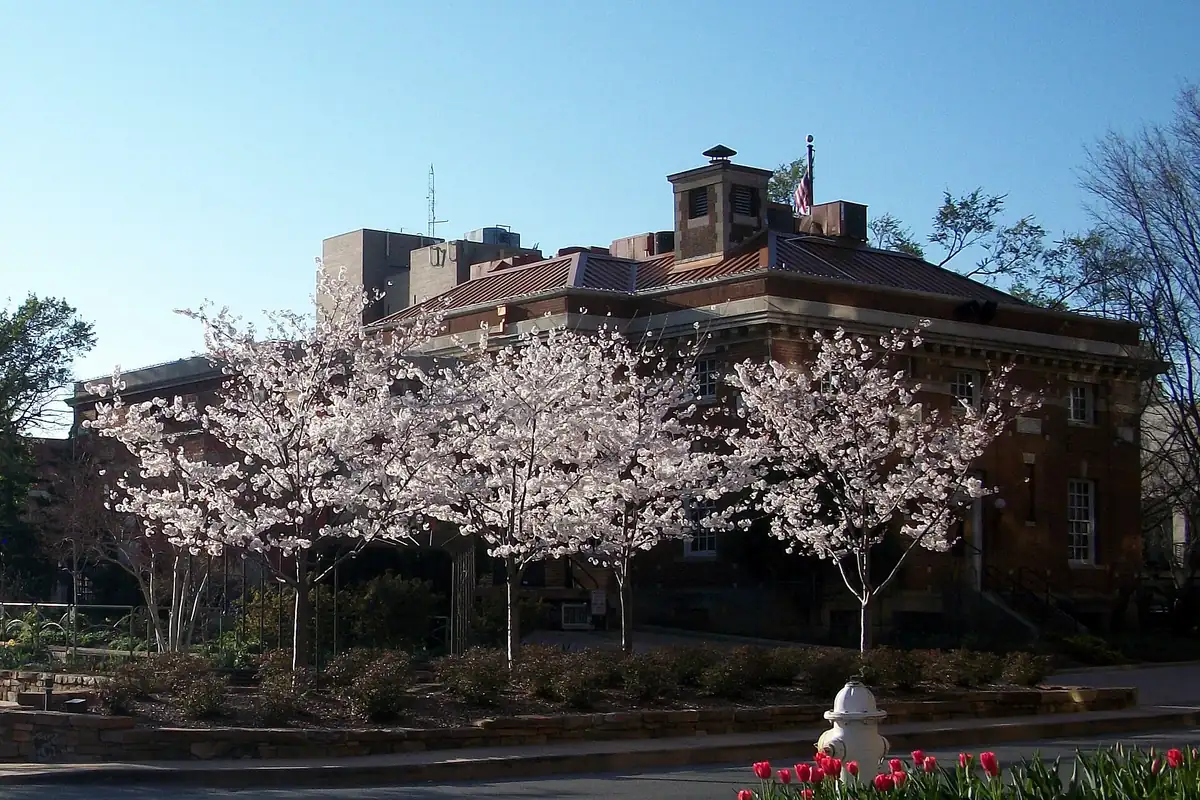
The renamed town didn’t look like much yet. In 1829, the city says, a crude courthouse went up, 20 by 20 feet (6 by 6 m), with puncheon floors made of thick logs flattened on one side. It stood where Block Avenue now runs, between the Bank of Fayetteville and the Old Post Office in the middle of the square, the building in the photo at the bottom of this page. Around 1830 John Nye opened a store on the west side of the square, and the next day the Sevier brothers opened another one nearby. On February 27, 1835, President Andrew Jackson issued a patent for the 160 acres that made up the original town, and the lots, except for the square, were auctioned off between 1835 and 1837. The 169 sales brought in $6,339, and the money went to build a courthouse and a clerk’s office.
You’ll see different dates for when Fayetteville became a legal town. Alison points to an act of the first state legislature on November 3, 1836, exactly seven years after the Gazette notice. The Encyclopedia of Arkansas says the county court granted incorporation in 1841 and the legislature gave the city a charter in 1859. None of that changes the name, which was settled in 1829.
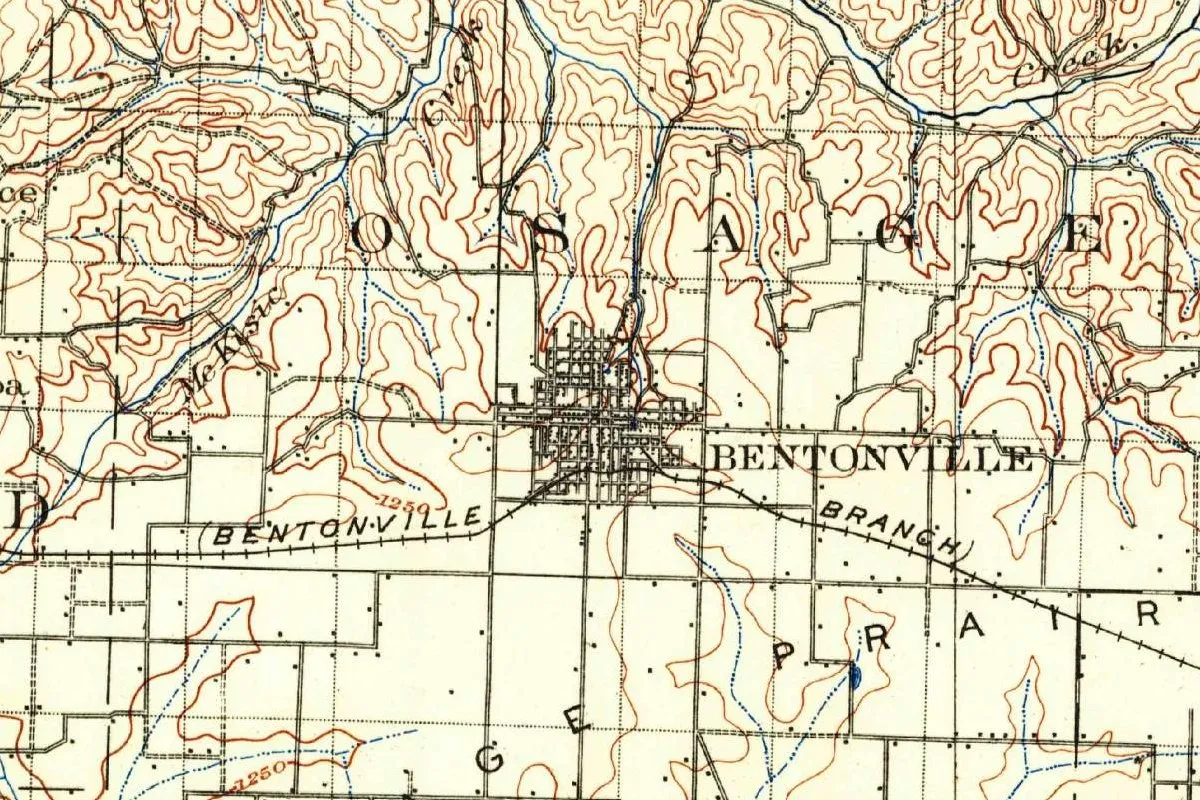
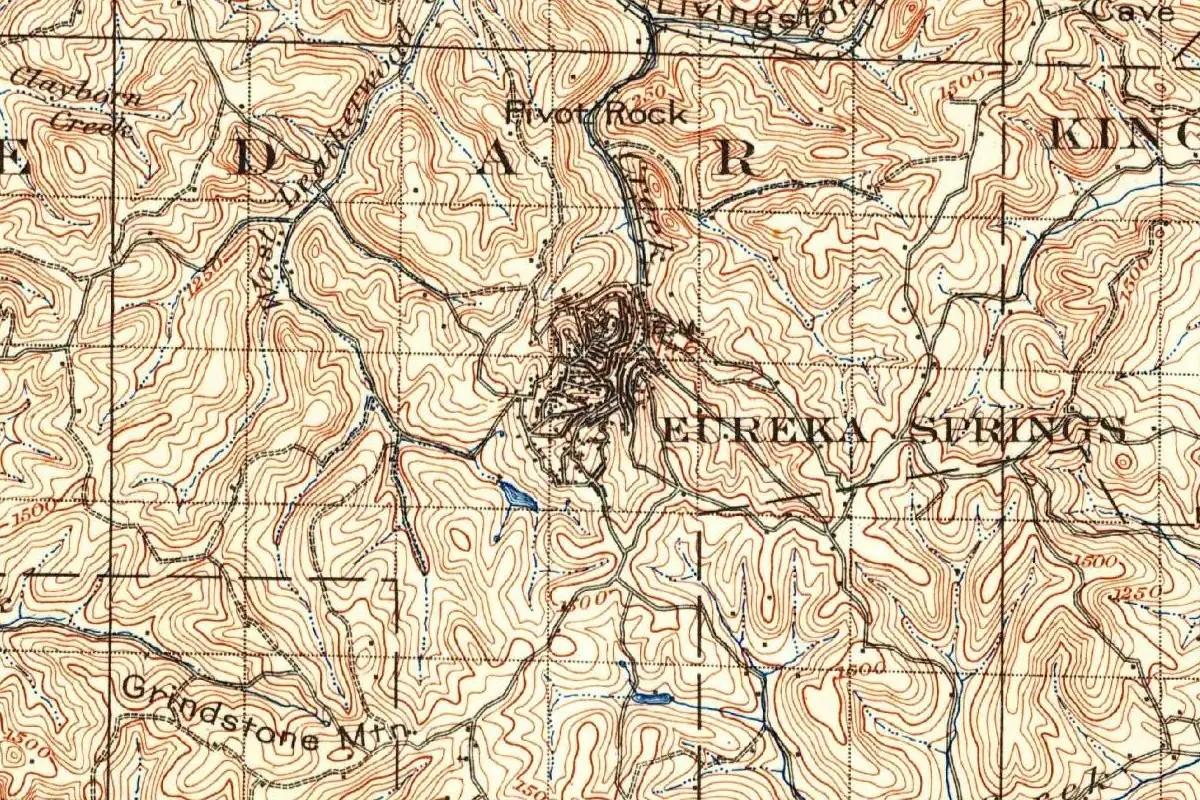
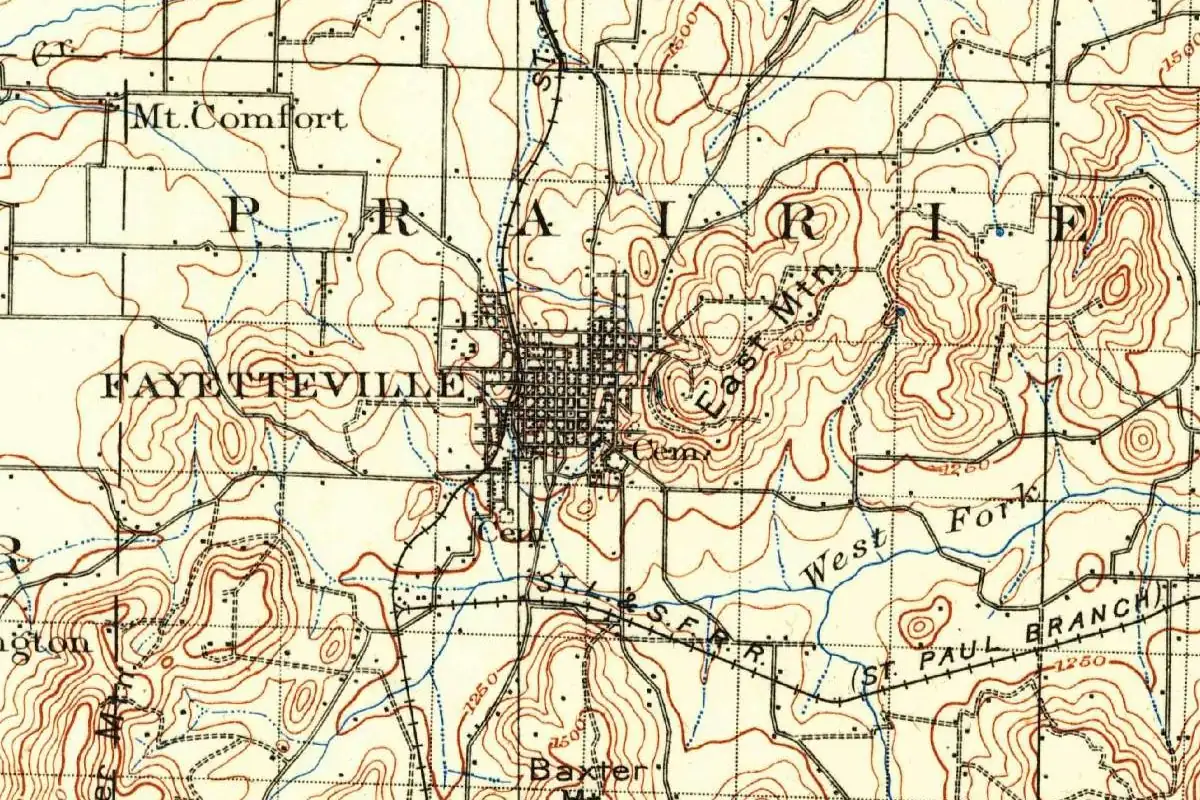
On the 1899 survey sheet up top, you can see what grew from that patent: a tight grid with the township name “PRAIRIE” printed to the north and the hills rising to the east.
Fayetteville isn’t the only Arkansas town that went through more than one name; North Little Rock went through several before it settled. There are more in our collection of towns that changed their names, and more from this state on the Arkansas page.
Quick answers
What was Fayetteville, Arkansas, originally called?
Washington Courthouse. That was the name of the Washington County seat from 1828 until 1829.
Why was Washington Courthouse renamed?
Because of the mail. Hempstead County already had a town called Washington, so in 1829 Postmaster General William T. Barry ordered a new name to stop letters going to the wrong place.
Where does the name Fayetteville, Arkansas, come from?
From Fayetteville, Tennessee. Two of the commissioners who located the county seat, James Buchanan and John Wooddy, came from there, according to the city and the Encyclopedia of Arkansas.
Is Fayetteville, Arkansas, named after Lafayette?
Not directly. The Arkansas sources say it was named for Fayetteville, Tennessee. The U.S. Geological Survey’s 1905 name-origin guide, by Henry Gannett, says Fayette places in general honor the Marquis de Lafayette, but it doesn’t name either Fayetteville.
Key dates
- 1828Washington County is created out of Lovely County on October 17, with its seat at the place called Washington Courthouse.
- 1829Postmaster General William T. Barry orders the name changed to Fayetteville; the Arkansas Gazette prints the notice on November 3.
- 1835President Andrew Jackson issues a patent on February 27 for the 160 acres of the original town.
Things to do in Fayetteville, Arkansas
Headquarters House
A house built by the Tebbetts family before the Civil War and used by both Union and Confederate forces, now the Washington County Historical Society's museum, with gardens the family planted and a tribute to the people they enslaved.
Botanical Garden of the Ozarks
Twelve theme gardens on 8 cultivated acres, from a Japanese garden and a rock and water garden to an Ozark native garden and a butterfly garden, drawing more than 100,000 visitors a year.
Trail of Tears National Historic Trail
Sections of the Trail of Tears cross Fayetteville, along with the old Butterfield Overland Stage route. Both are part of the National Trails System, and you can follow their history through town.
Mount Sequoyah
The hill where Fayetteville began: pioneers settled near a spring at its base in 1828, the city says. Today Mount Sequoyah is a campus with recreation, creative spaces and a pool.
Getting there
Open Fayetteville in Google Maps
Opens in a new tab. The pin is the center of Fayetteville in the USGS place-name record.
The closest airports, Amtrak stations and intercity bus stops, measured in a straight line from the center of Fayetteville.
Airports
- Northwest Arkansas Ntl (XNA) Bentonville 17 mi 28 km
- Fort Smith Regional (FSM) 52 mi 83 km
Intercity buses
- Jefferson Lines Fayetteville 3 mi 5 km
- Greyhound Van Buren/ Ft Smith Bus Depot 45 mi 73 km
Distances are as the crow flies, not by road. We don't list schedules or fares because they change; check with the airline, Amtrak or the bus company before you go. Official data (FAA commercial service airports (2025), FAA airport locations, Amtrak stations and Intercity Bus Atlas) from the FAA and the U.S. Bureau of Transportation Statistics, checked Nov 14, 2026.
Sponsored
Staying in Fayetteville?
Compare hotels in Fayetteville, Arkansas, on Expedia.
See hotels in FayettevilleWe may earn a commission if you buy through this link. It never changes what we write. Read our affiliate disclosure
Historical Sources & References
- City of Fayetteville, “Fayetteville History”. Osage and Cherokee country; the 1828 settlement by the spring at the base of Mount Sequoyah and the McGarrah homestead; Washington County, October 17, 1828; “Originally named Washington Courthouse”; Barry’s 1829 order and the Washington in Hempstead County; Buchanan and Wooddy from Fayetteville, Tennessee; the 1829 log courthouse; the 1835 patent for 160 acres and the lot sales.
- Charles W. Stewart, “Fayetteville (Washington County),” Encyclopedia of Arkansas. “The name was changed to Fayetteville in 1829”; the two commissioners from Fayetteville, Tennessee, who “urged Barry to name it after that community”; incorporation by the county court in 1841 and the 1859 city charter.
- Charles Alison, “Nov. 3,” Fayetteville History. The Arkansas Gazette notice of November 3, 1829, as transcribed there, and the incorporation act of November 3, 1836.
- Henry Gannett, The Origin of Certain Place Names in the United States (1905), p. 124. Fayette counties and “many places throughout the country, named for the Marquis de la Fayette,” with the suffix “ville.” No entry for either Fayetteville.
- GNIS feature 76914 (U.S. Geological Survey). The federal names file lists Fayetteville as a populated place in Washington County.
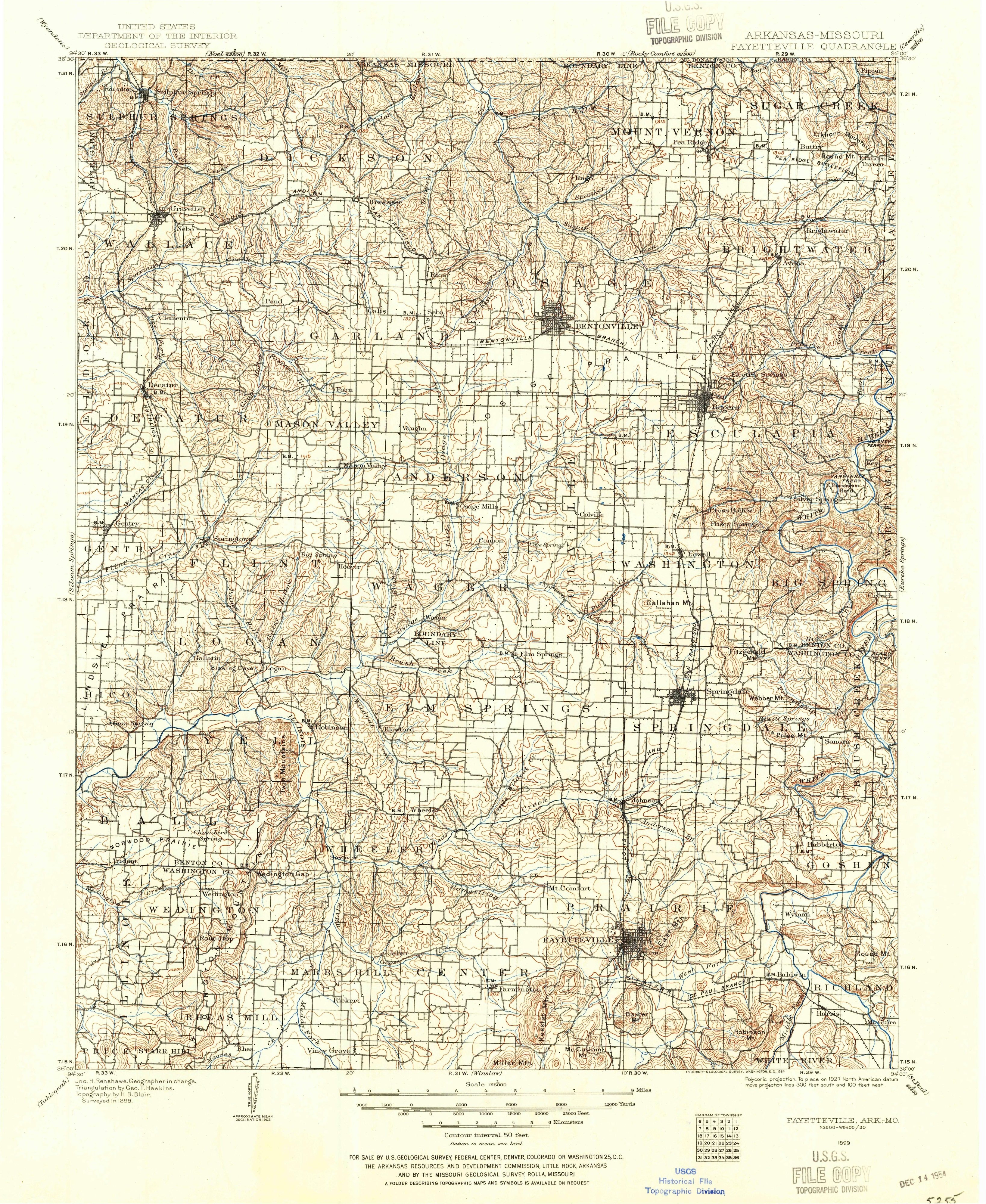
- U.S. Geological Survey, Fayetteville sheet (1899). Source of the cropped 1:125,000 map above.
Sponsored
Put this 1899 map on your wall
The 1899 USGS Fayetteville, Arkansas, sheet is in the public domain. Download the full-size scan for free, then have it printed on canvas with CanvasOnTheCheap.
Print a map on canvasDownload the full-size mapWe may earn a commission if you buy through this link. It never changes what we write. Read our affiliate disclosure
Spot something wrong, or know more? Tell us here. You can also email us or use our contact page. Corrections are noted here with their date, never made silently.