Why Is It Called Madison Square Garden?
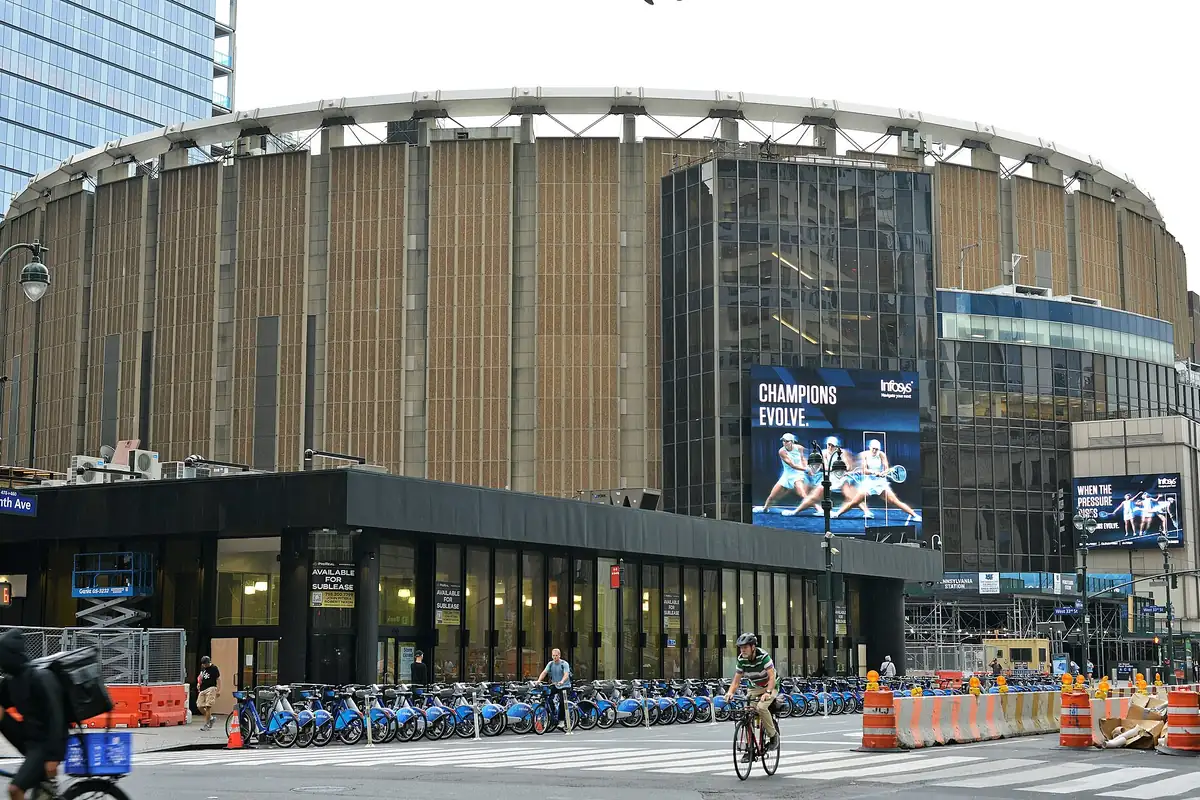
Madison Square Garden in New York City is named for a park it hasn’t stood beside since 1925. Madison Square honors President James Madison, while “Garden” comes from Gilmore’s Garden, the entertainment venue that preceded the first arena to use the name.
The square came first
There really is a Madison Square in Manhattan, and the name reaches back to James Madison, the fourth U.S. president. Madison Square Park opened to the public in 1847.
Here’s where the paper trail gets a little messy. The city’s Landmarks Preservation Commission dates the naming of the square to March 1811, while the Historic Districts Council puts it in 1814. Both agree on the person behind the name. You don’t need to settle that disagreement to understand why Madison appears on a famous arena.
The original entertainment ground stood beside the square, around Madison Avenue and East 26th Street. It wasn’t at the site of today’s arena. NYC’s Landmarks Preservation Commission describes Madison Square as a short-lived theater district.
Why a sports arena was called a “Garden”
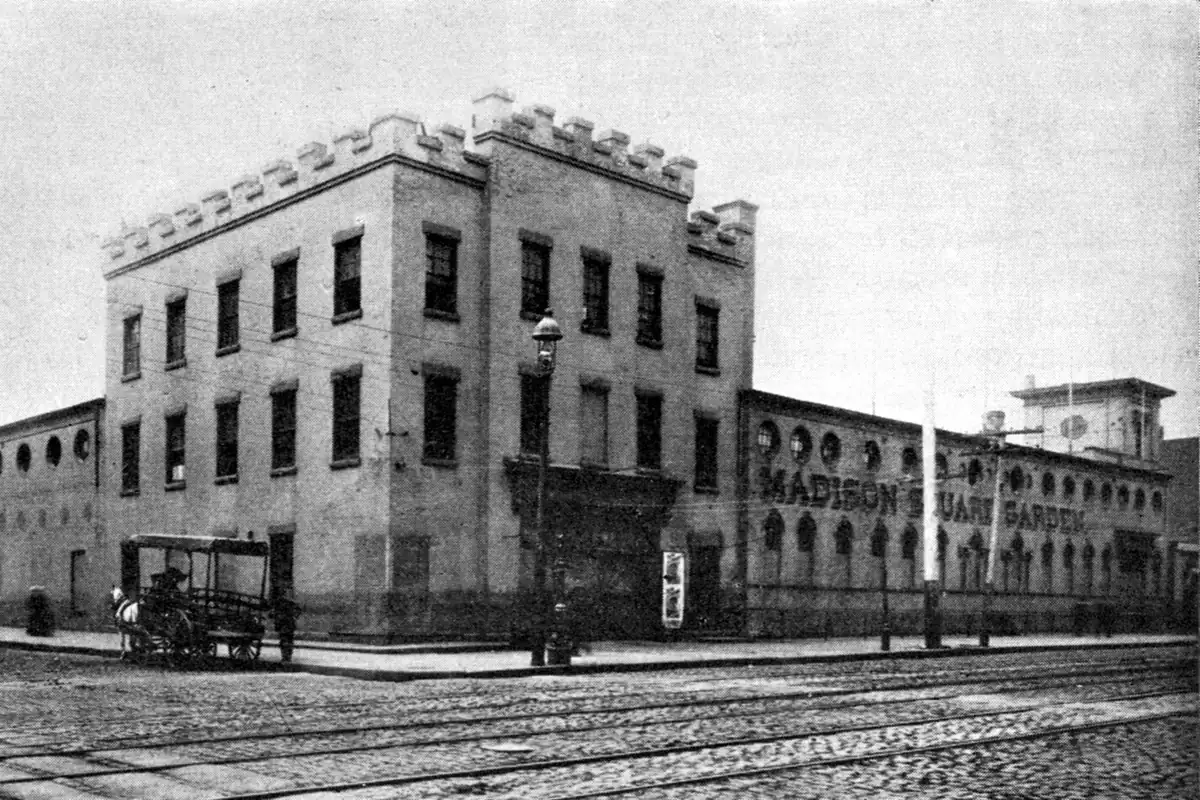
Before anyone used the name Madison Square Garden, the site had been a railroad depot. In 1873, P. T. Barnum turned it into a performance space, and after Barnum closed in 1875, Patrick Gilmore leased the site. Barnum’s name did not survive in the hall’s later title.
That part came from Patrick Gilmore, the bandleader who operated the place as Gilmore’s Garden. He presented music and other public entertainments there. As Andy Logan explained in a 1965 history for The New Yorker, calling entertainment halls “gardens” was familiar among nineteenth-century showmen. The word “garden” was a euphemism for “theatre,” a term Logan says still evoked disreputable entertainment.
Gilmore actually used plants, fountains and statues to decorate his grounds. The name was an entertainment-hall term that survived after the institution moved away; it isn’t a description of flower beds inside the modern arena.
May 1879: a name that stuck
The change came while the Vanderbilt railroad interests controlled the property. A Flatiron NoMad history reproduces the reported May 22, 1879 New York Times announcement:
“Gilmore’s Garden will hereafter be known as the ‘Madison-Square Garden.’”
— The New York Times (1879), as quoted by Flatiron NoMad (2009). That local historical account says the new name made its public debut nine days later.
The New Yorker historian Andy Logan identified William H. Vanderbilt, president of the New York Central Railroad, as the man who announced the name in May 1879.
Andy Logan suggested that the new name was probably meant to give the aging hall a little class.
Four arenas, one borrowed address
The first Garden gave way to a more elaborate building on the same site in 1890, designed by McKim, Mead & White. That second venue still stood near Madison Square.
But the name eventually became bigger than its address. The third Madison Square Garden opened uptown in 1925 on Eighth Avenue, as the National Park Service’s separate site history records. The fourth and current arena opened above Penn Station in 1968.
If you’re outside today’s Garden, Madison Square Park isn’t across the street. You can still hear the old location in the name, even though the venue moved away from the square decades ago.
That’s the twist: the three words on a modern arena are reminders of a president, a nineteenth-century concert hall, and an address the arena no longer has.
Quick answers
Why is it called Madison Square Garden?
Madison Square Garden got its name from Madison Square, the Manhattan park named for President James Madison. The word “Garden” came from Gilmore’s Garden, an earlier entertainment venue at the original location. That site became Madison Square Garden in 1879, and later arenas kept the name even after moving away from the park.
Why is Madison Square Garden called a garden?
Because it grew out of Gilmore’s Garden, a concert and entertainment hall operated by bandleader Patrick Gilmore in the 1870s. “Garden” was also a familiar name for entertainment venues of that era. It doesn’t mean the current arena was built in a botanical garden or contains one today.
Is Madison Square Garden actually in Madison Square?
No. The first two venues stood near Madison Square Park in Manhattan, but the name followed the institution when it moved to Eighth Avenue in 1925. The fourth Garden opened over Penn Station in 1968, away from the original square.
How many Madison Square Gardens have there been?
Four arenas have carried the name: the first used it in 1879, the second opened on the same site in 1890, and the third moved uptown in 1925. Today’s fourth Garden opened above Penn Station in 1968; only the first two were near the square that gave the venue its name.
Key dates
- 1847Madison Square Park opens.
- 1875Patrick Gilmore's entertainment ground is known as Gilmore's Garden.
- 1879The venue takes the name Madison Square Garden in May.
- 1890A second Garden opens at the first site.
- 1925The third Garden opens uptown on Eighth Avenue.
- 1968The current, fourth arena opens above Penn Station.
Getting there
Open Madison Square Garden in Google Maps
Opens in a new tab. The pin is an approximate point for Madison Square Garden.
The closest airports, Amtrak stations and intercity bus stops, measured in a straight line from the center of Madison Square Garden.
Airports
- Laguardia (LGA) New York 7 mi 11 km
- Newark Liberty International (EWR) 10 mi 16 km
Amtrak trains
- New York station (NYP) under 1 mi 0.2 km
- Newark station (NWK) 9 mi 15 km
Intercity buses
- FlixBus NYC Midtown 31st St & 8th Ave under 1 mi 0.2 km
- OurBus New York, NY (Penn Station - 8th Avenue and 31st Street, west side of 8th avenue, on the 31st Street Side of Moynihan Train Hall.) under 1 mi 0.2 km
- Monsey Trails B&H Photo under 1 mi 0.3 km
Distances are as the crow flies, not by road. We don't list schedules or fares because they change; check with the airline, Amtrak or the bus company before you go. Official data (FAA commercial service airports (2025), FAA airport locations, Amtrak stations and Intercity Bus Atlas) from the FAA and the U.S. Bureau of Transportation Statistics, checked Nov 12, 2026.
Sponsored
Planning a visit?
Compare hotels near Madison Square Garden on Expedia.
See hotels nearbyWe may earn a commission if you buy through this link. It never changes what we write. Read our affiliate disclosure
Sponsored
Want the spooky side of New York City?
The arena's name has its story above. For ghost stories, US Ghost Adventures runs walking ghost tours in New York City.
See ghost tours in New York CityWe may earn a commission if you book through this link. It never changes what we write. Read our affiliate disclosure
Historical Sources & References
- NYC Landmarks Preservation Commission, Madison Square North Historic District Designation Report (2001), printed pp. 4-5, 13. Namesake, original venue, historical district.
- Historic Districts Council, “Madison Square Park”. James Madison namesake; dates differ from the Landmarks Preservation Commission.
- Flatiron NoMad Partnership, “Madison Square Garden” (2009). Earlier showplaces and the 1879 newspaper notice reproduced in local historical research.
- Andy Logan, “The Palace of Delight,” The New Yorker (1965). Why entertainment halls used the word Garden.
- NYC City Planning Commission, report C 130139 ZSM (2013), pp. 2-3. Current fourth Garden and Penn Station.
- National Park Service, “Madison Square Garden (1925-1968)”. Third arena.
Spot something wrong, or know more? Tell us here. You can also email us or use our contact page. Corrections are noted here with their date, never made silently.