Why Is It Called the Space Needle?
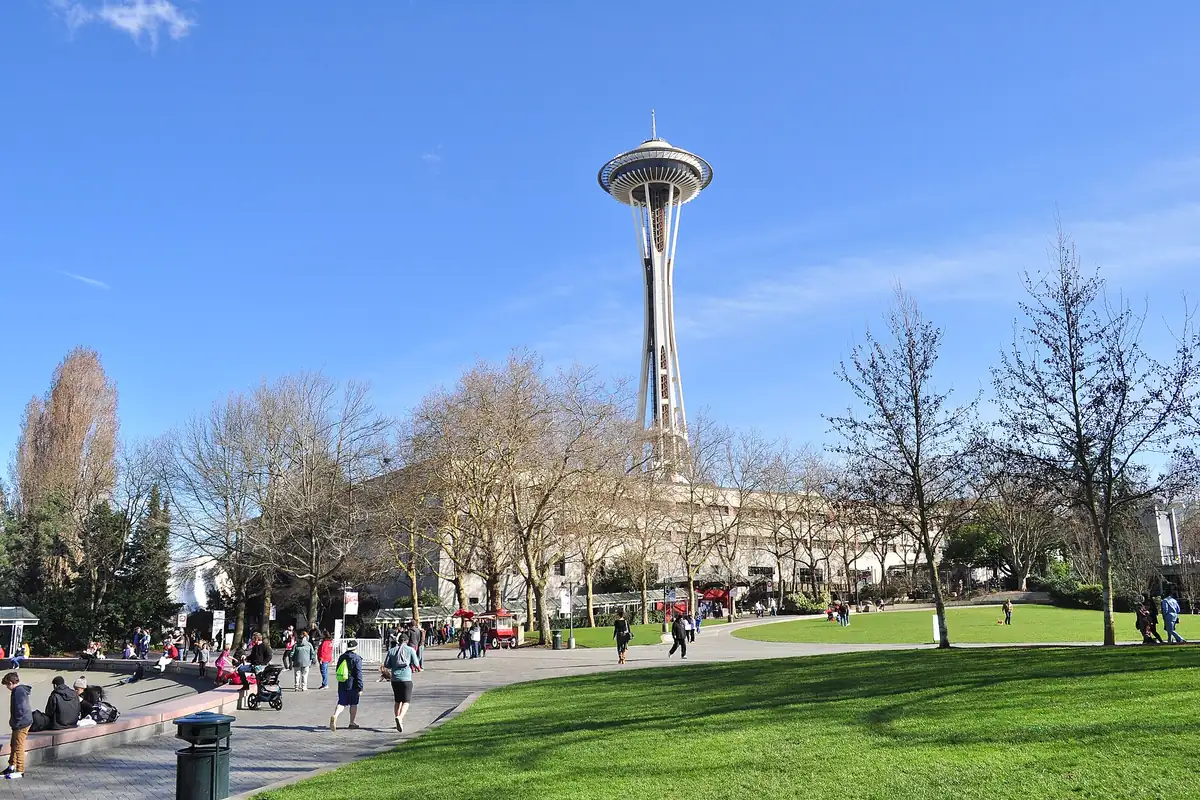
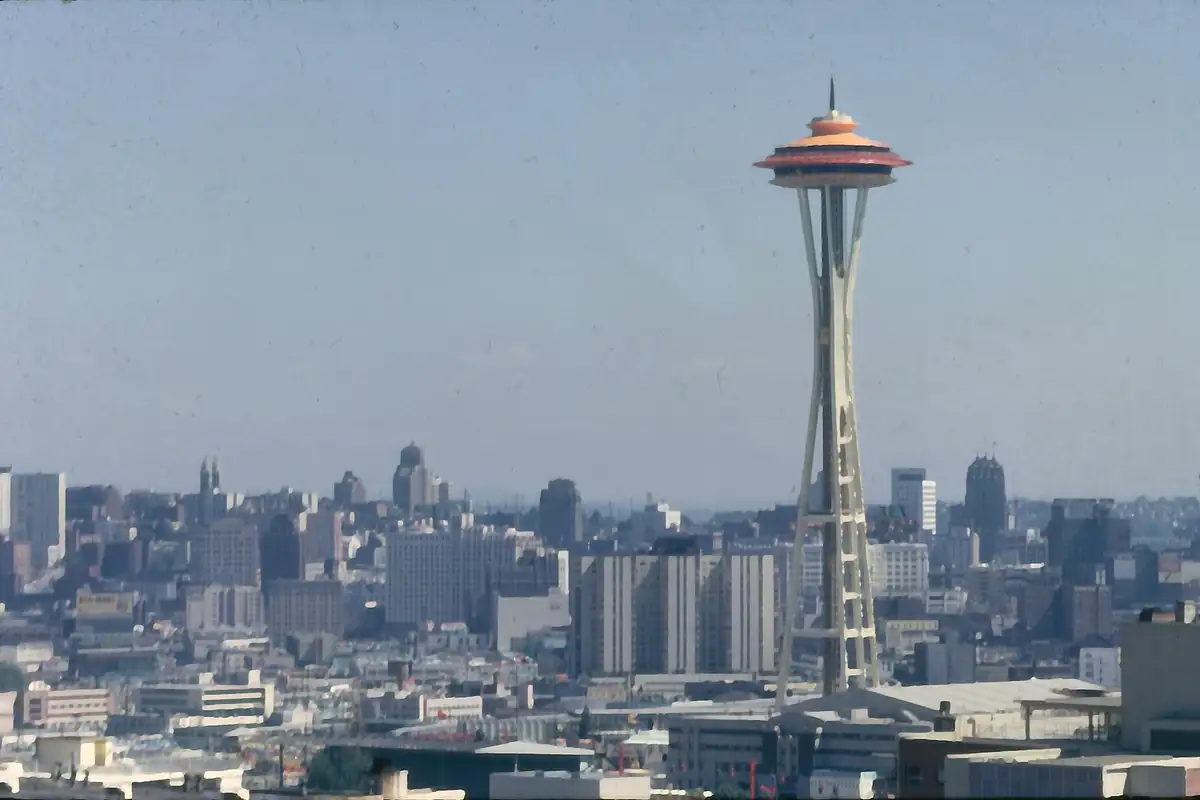
Seattle’s Space Needle looked like a needle with a flying-saucer top—a striking fit for the space-themed 1962 World’s Fair. That design embodied the fair’s space-age ambitions, even if accounts differ on who first said its name.
But there’s a wrinkle to the familiar story: sources don’t quite agree on when those two words were first put together.
A World’s Fair with its eyes on space
Seattle, Washington, wasn’t simply building a tall place to look at the mountains. Its 1962 Century 21 Exposition was supposed to show visitors what the future might look like. The Space Race was already transforming public imagination, and the fair’s organizers wanted architecture that looked ahead rather than back.
A Seattle historical-survey report and a 1962 contemporary account describe a fair that emphasized science, new technology and an optimistic view of the future. The proposed centerpiece needed to make that ambition visible from a distance.
The idea for that centerpiece came from an unlikely place: Stuttgart, Germany.
The Stuttgart tower and Eddie Carlson’s sketch
In 1959, fair organizer Edward “Eddie” Carlson visited Stuttgart and saw a broadcast tower with a restaurant near its top. It suggested that Seattle could build something equally memorable, combining a view of the city with a futuristic silhouette.
The Space Needle’s own history credits Carlson with doodling a tower idea on a napkin in a hotel café and calling it the “Space Needle.”
Yet local historian Walt Crowley, writing for HistoryLink, says Carlson sketched and circulated ideas on postcards to several fair officials. The basic inspiration is consistent; the small details of how it traveled aren’t quite the same.
Carlson wasn’t the only person who shaped the tower you’d recognize today. Architect John Graham Jr. and members of his firm worked through alternatives, while Victor Steinbrueck helped develop its curving supports and John Ridley contributed to the shaft-and-top design.
The name may have arrived with a drawing
A 1982 Seattle architecture magazine, ARCADE, recorded a different moment for the words “Space Needle.” It said the title emerged during a presentation of Earle Duff’s dramatic rendering, with colored lights tracing the proposed structure against a night sky.
The account dates the presentation to late 1959 and draws on a 1962 book by Harold Mansfield. HistoryLink spells the presenter’s given name Erle rather than Earle; neither account establishes who first proposed the words.
A 2013 University of Georgia thesis also says the tower was once called “Space Cage,” citing historian John Findlay. That is a later reported version, not proof of an official former name.
The National Archives also describes the Space Needle as “originally referred to as the Tower of Science.” Its catalog dates an “initial design” drawing to June 22, 1961, after construction had begun in April. That description doesn’t establish that the completed public attraction ever operated under the earlier phrase.
The finished tower opened to the public as the Space Needle, not as the Tower of Science.
A saucer on top of a needle
The completed structure looked futuristic even before the fair began. Its thin steel supports rise to a circular observation and restaurant area that resembles a flying saucer.
Writing before the fair opened, Alice Myers Winther described the structure in words reprinted in the March 12, 1962 Congressional Record, printed page 3831:
“What looks like a flying saucer impaled on the tip of a gigantic candlestick has become the symbol of the Seattle World’s Fair.”
The description is evidence of how the Space Age silhouette struck contemporaries, not who invented the name. You didn’t have to know the names of its architects to see why people associated it with the Space Age.
HistoryLink records the start of construction on April 17, 1961. Its account says a restaurant gala took place on March 24, 1962. A City of Seattle historical survey identifies April 21, the World’s Fair opening day, as the official opening of the tower.
You’ll often see the Space Needle listed as 605 feet (184 meters) tall. But at the 1962 fair, U.S. Coast and Geodetic Survey measurements placed its top at 607.88 feet. As a 2011 Seattle Post-Intelligencer history explains, the original natural-gas flame apparatus atop the structure was later removed and the modern warning beacon is at 605 feet. The earlier measurement and the modern one describe different configurations.
The future became a historic landmark
Seattle designated the Space Needle as an architectural landmark in 1998, with formal city action following in 1999. It was built to evoke a future people had not yet reached, yet it became part of the city’s past.
So why “Space Needle”? The short answer: the name fits its Space Age mission and sharp, soaring shape. The more interesting answer is that nobody can say for certain who said it first.
Quick answers
Why is it called the Space Needle?
Seattle’s Space Needle has a name that fits the Space Age ambitions of the 1962 World’s Fair and its tall tower with a futuristic, saucer-shaped top. A 1982 Seattle architecture account places the name’s coinage at a late-1959 design presentation. The venue’s own account credits fair organizer Edward Carlson, but which person said it first has not been definitively established.
When was the Space Needle built?
Construction began on April 17, 1961, according to HistoryLink. The restaurant hosted a special gala on March 24, 1962, while a City of Seattle historic survey identifies April 21, 1962, as the Space Needle’s official opening day, alongside the World’s Fair. The early gala and public opening were different occasions.
How tall is the Space Needle?
The tower is commonly listed as 605 feet (184 meters). A survey at the 1962 fair recorded 607.88 feet including equipment later removed, so the two measurements describe different configurations.
What was the Space Needle originally called?
A National Archives catalog describes the Space Needle as “originally referred to as the Tower of Science,” while dating an “initial design” to June 22, 1961, after construction started. That doesn’t prove the finished tourist attraction ever opened with that name. The finished tower opened to the public as the Space Needle, not as the Tower of Science.
Key dates
- 1959Carlson draws a tower idea after visiting Stuttgart; an architectural account says the name was coined that year.
- 1961Construction starts April 17; a National Archives drawing of the initial design is dated June 22.
- 1962A restaurant gala takes place March 24 and the tower opens to the public April 21 for the World's Fair.
- 1998Seattle designates the Space Needle as a landmark.
- 1999Formal city action completes the landmark designation.
Getting there
Open Space Needle in Google Maps
Opens in a new tab. The pin is an approximate point for Space Needle.
The closest airports, Amtrak stations and intercity bus stops, measured in a straight line from the center of Space Needle.
Airports
- Boeing Field/King County International (BFI) Seattle 7 mi 11 km
- Seattle-Tacoma International (SEA) 12 mi 19 km
Amtrak trains
- Seattle station (SEA) 2 mi 3 km
- Tukwila station (TUK) 12 mi 20 km
Intercity buses
- Dungeness Line Travel Washington · Virginia Mason 1 mi 2 km
- Northwestern Stage Lines Seattle (Amtrak) 2 mi 3 km
- Amtrak Chartered Vehicle Amtrak Connecting Service · Seattle 2 mi 3 km
Distances are as the crow flies, not by road. We don't list schedules or fares because they change; check with the airline, Amtrak or the bus company before you go. Official data (FAA commercial service airports (2025), FAA airport locations, Amtrak stations and Intercity Bus Atlas) from the FAA and the U.S. Bureau of Transportation Statistics, checked Nov 12, 2026.
Sponsored
Planning a visit?
Compare hotels near Space Needle on Expedia.
See hotels nearbyWe may earn a commission if you buy through this link. It never changes what we write. Read our affiliate disclosure
Sponsored
Want the spooky side of Seattle?
The tower's name has its story above. For ghost stories, US Ghost Adventures runs walking ghost tours in Seattle.
See ghost tours in SeattleWe may earn a commission if you book through this link. It never changes what we write. Read our affiliate disclosure
Historical Sources & References
- City of Seattle Landmarks Preservation Board, “Report on Designation, Space Needle” (1998), pp. 1–4: Architects, structure, site, and city’s assessment of the historic landmark.
- U.S. National Archives, description of an early Space Needle design, ID 343793657: catalog description of a June 22, 1961, initial-design drawing, which it says was “originally referred to as the Tower of Science.”
- Walt Crowley, “Space Needle (Seattle),” HistoryLink.org Essay 1424 (1999): Carlson’s postcard sketches, designers, construction and landmark status.
- ARCADE, “April Anniversary,” Vol. II No. 1 (Apr–May 1982), pp. 1, 6: account of the name emerging at an architectural presentation in late 1959.
- Alice Myers Winther, “World’s Fair in Seattle,” Congressional Record March 12, 1962, p. 3831: contemporary description of Space Needle silhouette.
- Cathy Wickwire, City of Seattle Historic Resources Survey (2001), printed p. 23: official tower opening April 21, 1962.
- Casey McNerthney, Seattle P-I / SFGATE, “How the Space Needle shrunk over time” (2011): 1962 survey height and removal of original torch.
- Space Needle official history: venue’s own account of Carlson’s napkin and its operations.
- Jennifer Kay Bailey, University of Georgia, Preserving World’s Fair Parks: The Case of Knoxville, Tennessee’s 1982 Energy Exposition (master’s thesis, 2013): later reported label “Space Cage,” citing historian John Findlay.
Spot something wrong, or know more? Tell us here. You can also email us or use our contact page. Corrections are noted here with their date, never made silently.