Chico, California: The 'Little' Creek Behind the Name
Chico is a Spanish word meaning "little." The city took it from Chico Creek and the Arroyo Chico land grant, both named before John Bidwell laid out the town in 1860. Old sources disagree on whether the creek or the ranch had the name first, and the ones we found don't say who first called the stream Chico.
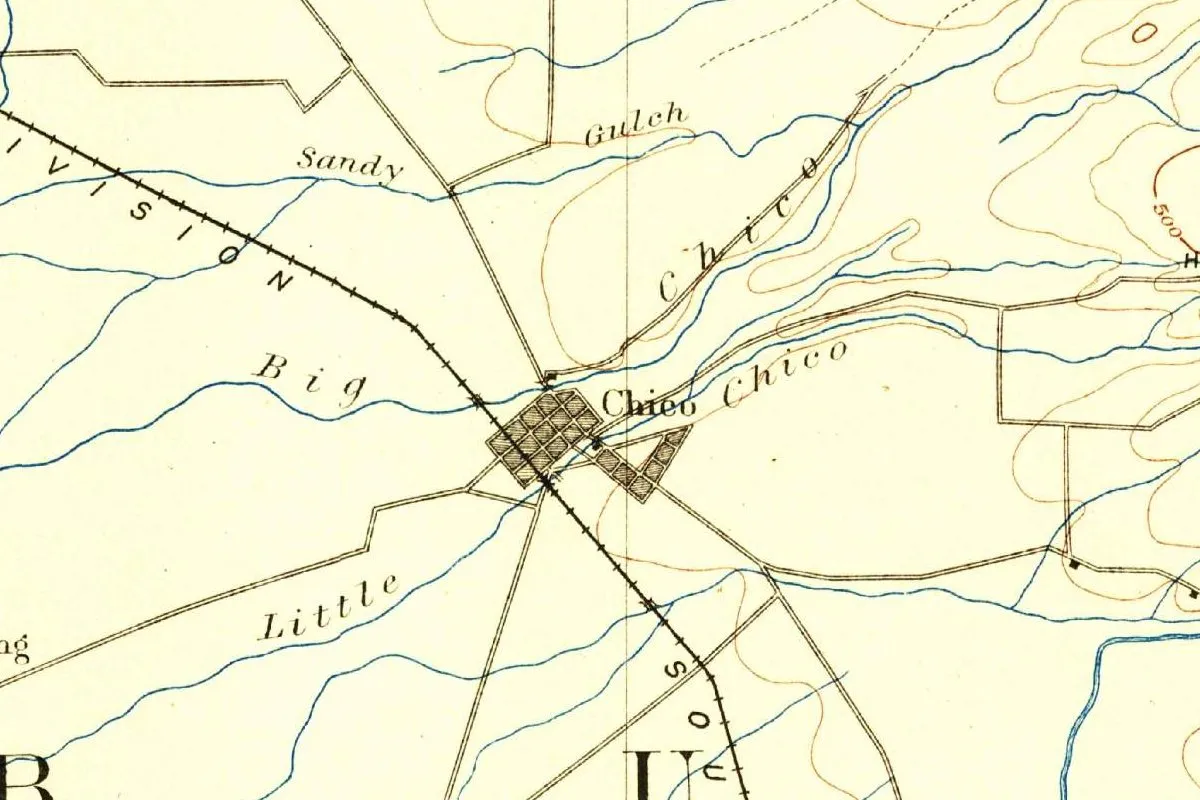
Chico, California, carries a Spanish word for “little” that was on Chico Creek and the Arroyo Chico grant before John Bidwell laid out the town in 1860. Who first called the creek Chico, and whether the creek or the ranch had the name first, depends on which old book you open.
“A Spanish word meaning ‘little’”
The meaning itself isn’t in doubt. Henry Gannett’s federal list of American place names, the 1905 edition, gives Chico one line: “township and city in Butte County, California. A Spanish word meaning ‘little.’” Nellie Van de Grift Sanchez’s 1914 book on California’s Spanish and Indian place names agrees, listing it as “Chico (little).”
Where it gets interesting is the next step. A word meaning “little” isn’t much of a name on its own. It has to be little something, and in this case the something was a creek and the land along it.
The creek Bidwell found in 1843
John Bidwell, the man most people connect with Chico, wrote about his first look at the place more than once. He’d come to the valley in the fall of 1841, arriving at John Sutter’s settlement of New Helvetia, on the site of today’s Sacramento, as he explained in a sketch reprinted in an 1877 Butte County history. In the same sketch he described a trip up the valley in 1843, chasing stolen animals as far as the present town of Red Bluff. Then he added a line that matters here:
“On my return from Red Bluff in March, 1843, I made a map of this Upper Sacramento Valley on which most of the streams were laid down, and they have since borne the names then given them.”
That sounds like a claim to have named the valley’s streams, though he says “most” and doesn’t list them there. He did list some in Echoes of the Past, a memoir the Chico Advertiser published after his death. On the same page where he writes “It was early in March, 1843, when we reached Chico Creek,” he says the streams flowing into the Sacramento, “with the exception of Butte Creek, had at that time, not been named.” Then he tells how his party named four of them: Pine Creek for the pines, Deer Creek for the deer, Mill Creek for its water power and Antelope Creek for the herds on its plain.
Chico isn’t on that list. He calls it “what is now known as Chico Creek, Rancho Chico,” which tells you the name was there by the time he wrote, not who gave it.
The City of Chico, in its history of Bidwell Park, tells it differently. It says Bidwell first saw the area in March 1843, “by which time the place name, Chico Creek, was already in use.” So the sources don’t agree on whether the creek had a name when Bidwell got there, and neither names the person who first used it.
Creek first, or ranch first?
The creek and the ranch went together almost from the start. George Mansfield’s 1919 history of Butte County says the Arroyo Chico grant was made to William Dickey in 1844 by Governor Micheltorena, about 22,214 acres stretching east from the Sacramento River along Chico Creek. The city’s park history gives the same governor and year. California State University, Chico, says 1845. So even the date of the grant depends on who you ask.
Sanchez told the story in the opposite order. Her 1914 entry, credited to a Mr. Charles B. Turrill, says the town “derives its name from the Rancho Chico (the little ranch), of which General John Bidwell was the original grantee,” and that “The Arroyo Chico and the town both took their names from the ranch.” The other sources don’t back her on the grantee. Mansfield and the city both name Dickey, and the city says Bidwell bought the rancho in two purchases, in 1849 and 1851. As for which came first, the sources leave it open. The grant’s own name, Arroyo Chico, is on the record by 1844 in Mansfield and the city, the earliest dated document we found that uses the word.
Either way, the word traveled from the water and the land to the town. Nobody had to invent it for the townsite.
Bidwell’s town
By 1860 Bidwell owned the place outright. The city says his claim to the rancho was confirmed in the 1850s and that President James Buchanan signed the title patent in 1860. That same year, Mansfield writes, “General Bidwell laid off the town of Chico,” with J. S. Henning, then the county surveyor, running the lines. Main Street came first, though it was still knee-deep mud in winter. Bidwell offered a lot to anyone who’d build on it, and by 1864 the town had about 500 people.
Chico State’s history adds who was here before any of this: the Mechoopda people, whom it calls the original inhabitants of the area. Mansfield, in 1919, listed a tribe he spelled Michopdo on Chico Creek.
Little Chico, twice over
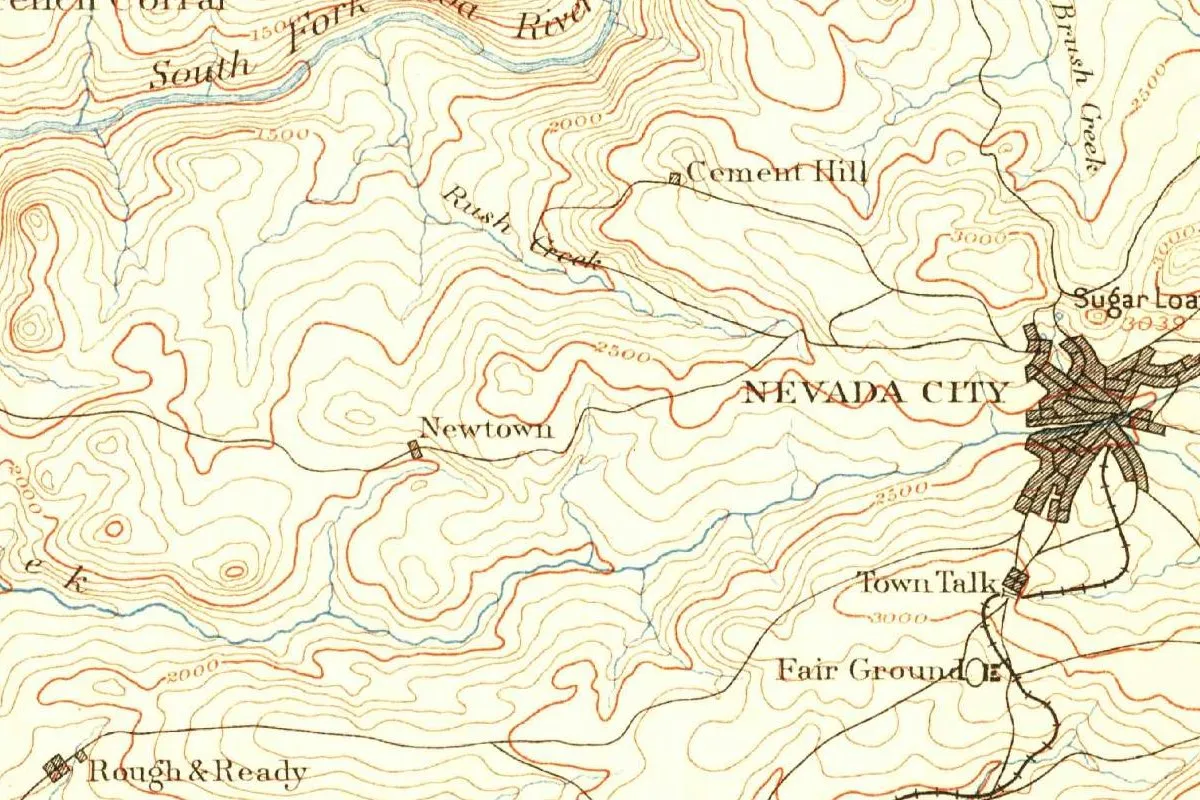
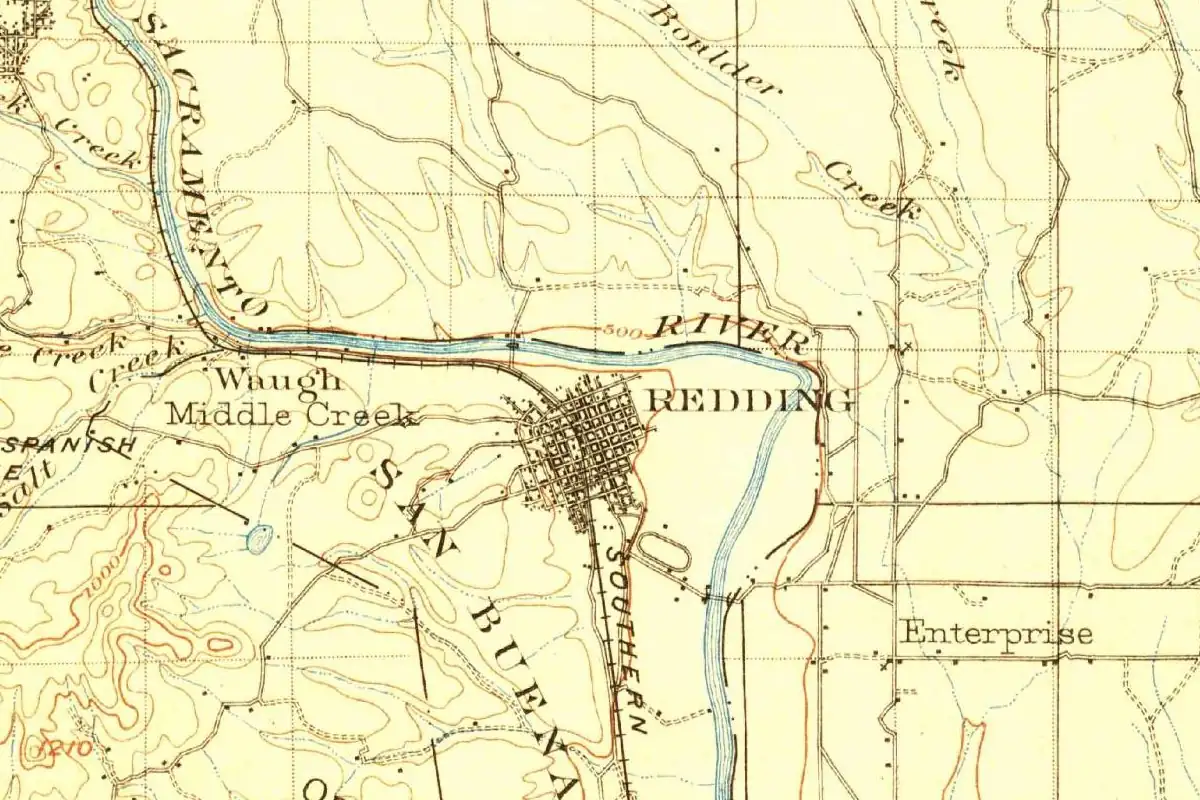
You can see the creeks behind the name on the 1891 federal survey sheet, with a second stream south of town labeled Little. The 1877 county history and Mansfield both call it Little Chico Creek. Put the English and the Spanish together and you get a stream called, more or less, Little Little Creek. Sanchez put the town about 96 miles (154 km) north of Sacramento. For one of the bigger cities in this part of California, it’s a modest name, and a plain description of the water it grew up beside.
Quick answers
What does Chico mean?
Little. Henry Gannett’s 1905 list calls it “A Spanish word meaning ‘little,’” and Sanchez’s 1914 book lists it as “Chico (little).”
Did John Bidwell name Chico?
Not as far as the sources show. Bidwell laid out the town in 1860, but the name was already on the Arroyo Chico grant of 1844. In his memoir he listed the creeks his party named in 1843, Pine, Deer, Mill and Antelope, and Chico isn’t among them.
Who got the Arroyo Chico land grant?
William Dickey, according to Mansfield’s 1919 history and the City of Chico; Bidwell bought it in 1849 and 1851. Sanchez’s 1914 book called Bidwell the original grantee.
Key dates
- 1843Early in March, John Bidwell reaches Chico Creek. He later wrote that the streams there were unnamed; the city says Chico Creek's name was in use.
- 1844The Arroyo Chico grant goes to William Dickey, per a 1919 county history and the city; Chico State gives 1845.
- 1849Bidwell makes the first of two purchases, in 1849 and 1851, that give him Rancho del Arroyo Chico, the city says.
- 1860Bidwell lays off the town of Chico, surveyed by county surveyor J. S. Henning.
- 1905Henry Gannett's federal list of place names defines Chico as "A Spanish word meaning 'little.'"
Getting there
Open Chico in Google Maps
Opens in a new tab. The pin is the center of Chico in the USGS place-name record.
The closest airports, Amtrak stations and intercity bus stops, measured in a straight line from the center of Chico.
Airports
- Redding Regional (RDD) 59 mi 95 km
- Sacramento International (SMF) 73 mi 117 km
Amtrak trains
- Chico station (CIC) under 1 mi 0.9 km
- Orland station (OLD) 19 mi 31 km
Intercity buses
- Gold Runner Chico under 1 mi 0.9 km
- Amtrak Chartered Vehicle Amtrak Connecting Service · Chico Amtrak under 1 mi 0.9 km
- Greyhound Chico Bus Station under 1 mi 0.9 km
Distances are as the crow flies, not by road. We don't list schedules or fares because they change; check with the airline, Amtrak or the bus company before you go. Official data (FAA commercial service airports (2025), FAA airport locations, Amtrak stations and Intercity Bus Atlas) from the FAA and the U.S. Bureau of Transportation Statistics, checked Nov 13, 2026.
Sponsored
Staying in Chico?
Compare hotels in Chico, California, on Expedia.
See hotels in ChicoWe may earn a commission if you buy through this link. It never changes what we write. Read our affiliate disclosure
Historical Sources & References
- John Bidwell, “First Settlement of the Sacramento Valley,” in Butte County, California (1877). New Helvetia, “now Sacramento City,” in 1841, the 1843 trip to Red Bluff, and the map on which the streams “have since borne the names then given them” (unnumbered page).
- A. L. Knowlton, “Geographical and Geological,” in Butte County, California (1877). “Deer, Mud, Chico, Little Chico, Butte and Dry creeks” (unnumbered page).
- John Bidwell, Echoes of the Past about California, p. 77. “What is now known as Chico Creek, Rancho Chico,” “early in March, 1843, when we reached Chico Creek,” the streams that “with the exception of Butte Creek, had at that time, not been named,” and Pine, Deer, Mill and Antelope creeks.
- Henry Gannett, The Origin of Certain Place Names in the United States (1905), p. 80. Chico: “A Spanish word meaning ‘little.’”
- Nellie Van de Grift Sanchez, Spanish and Indian Place Names of California (1914), pp. 282-283. “Chico (little),” the Rancho Chico version credited to Charles B. Turrill, Bidwell as “original grantee,” and the distance from Sacramento.
- George C. Mansfield, Butte: The Story of a California County (1919), pp. 2, 6, 22 and 27. The Michopdo on Chico Creek (p. 2), the Arroyo Chico grant to William Dickey in 1844 (p. 6), Little Chico Creek (p. 22), and the town laid off in 1860, Henning’s survey and the 500 people of 1864 (p. 27).
- City of Chico, A Brief History of Bidwell Park. Chico Creek “already in use” by March 1843, the grant to Dickey the next year, Bidwell’s purchases of 1849 and 1851, and the patent of 1860.
- California State University, Chico, “Chico Facts”. The Mechoopda as the area’s original inhabitants and the grant to William Dickey dated 1845.
- GNIS feature 1655890 (U.S. Geological Survey). Chico’s record number in the federal names system, filed in Butte County.
- U.S. Geological Survey, Chico sheet (1891). Surveyed in 1888 and printed at 1:125,000, it labels the town and the creeks on either side of it.
Spot something wrong, or know more? Tell us here. You can also email us or use our contact page. Corrections are noted here with their date, never made silently.