Huntington Beach, California, Was Once Pacific City
Huntington Beach, California, is named for Henry E. Huntington, whose Pacific Electric Railway reached the town in 1904. Until that spring it was a small resort called Pacific City. A 1923 local history says the town took his name to reward him for buying stock in the company that owned it, to secure his railroad's right of way.
A village called Pacific City
Huntington Beach, California, was a seaside village called Pacific City until 1904, when it took the name of the man bringing in the electric railway. That man was Henry E. Huntington, and a local history from 1923 says the new name was, in plain terms, a thank-you for his money.
The first name came from a land deal. Samuel Armor’s History of Orange County, published in 1921, says that in 1901 Col. S. H. Finley, a Santa Ana surveyor and engineer, went in with P. A. Stanton of Los Angeles and J. N. Anderson of Santa Ana to buy the site and form the West Coast Land and Water Company. “They laid out Huntington Beach,” Armor writes, “which was at first called Pacific City.” The visitor bureau’s walking tour adds that the promoters pictured it as a western Atlantic City, and that people had called the spot Shell Beach, for the little clams in the sand. We didn’t find the Shell Beach name in the older books.
A series on the town’s early history in the Santa Ana Daily Register in 1923 tells it a little differently. It says twenty men, seven of them from Santa Ana, pooled their money in 1902 and bought the old willow and peat lands. “And they named it ‘Pacific City,’” the paper says. So you’ll see 1901 or 1902 depending on where you look; both accounts agree on the name.
Summer 1904: the red cars arrive
Pacific City didn’t take off. The Register says that in 1903 and 1904 a Southern Pacific train came through just twice a week. What changed things was Henry E. Huntington’s interurban line. Armor describes him deciding to “make use of electricity as the motive power” for railroads, and seeing “no more inviting field than Southern California” for his millions. His company was the Pacific Electric.
Armor puts the name change in “the spring of 1904,” when the townsite passed from the Pacific City syndicate, men from Long Beach and Santa Ana, to the Huntington Beach Company of Los Angeles. By the end of June the new owners were selling lots in the Los Angeles Times under a big heading, “Huntington Beach,” with the line “Formerly Pacific City” right below it, and promising:
“The Pacific Electric Ry. is now finished to Huntington Beach, and cars will be running on regular schedule on July 1, making the trip in about 60 minutes, and in less time when the cut-off is completed.”
Both Armor and the Register date the first electric car from Los Angeles to July 4, 1904. If you’ve wondered why a beach town sounds like a railroad, that’s the reason: the cars and the name showed up in the same few months.
Why Huntington got the name
The 1923 Register series is the one source we found that says why. Here’s how it explained it, nineteen years after the fact:
“Indebted to Mr. Huntington of the Pacific Electric for acquiring enough stock in the company owning the city … the town rewarded his investment by changing its official cognomen to Huntington Beach.”
The part cut from that quote is the price. The paper says he paid some of the original owners seventeen cents a share, and that he bought in “to guarantee his railroad’s right of way.” Visit Huntington Beach, the city’s tourism bureau, says the same in fewer words: the town was named “in honor of” Henry E. Huntington, who sponsored the Pacific Electric’s extension to the coast.
The name stayed, the owners didn’t
Here’s the twist the Register added. Huntington’s name went on the town, but the controlling interest in the company stayed with C. W. Gates of Los Angeles and his associates. In 1923 that controlling interest had just been sold to the Standard Oil Company, at a price the paper “repeatedly rumored” to be around $20 million. That was a long way from seventeen cents a share.
The town incorporated in February 1909, Armor says. By the time the Register wrote its series, it was an oil town, and the paper couldn’t resist pointing out that the first owners had worried about the water on their land, not what lay under it.
Quick answers
What was Huntington Beach called before 1904?
Pacific City. Armor’s 1921 county history says Huntington Beach “was at first called Pacific City,” and a 1904 newspaper ad for “Huntington Beach” ran the line “Formerly Pacific City” under the name.
Who is Huntington Beach named after?
Henry E. Huntington, whose Pacific Electric Railway reached the town in July 1904. The Santa Ana Daily Register said in 1923 that the town took his name to reward his investment.
Why did Pacific City change its name?
Because of the railroad. According to the 1923 Register, Huntington bought enough stock in the company that owned the town to secure his line’s right of way, and the town was renamed for him in 1904.
Did Henry Huntington own Huntington Beach?
Not the controlling share. The Register says C. W. Gates and his associates kept the controlling interest in the company and sold it to Standard Oil in 1923.
Key dates
- 1901S. H. Finley, P. A. Stanton and J. N. Anderson buy the site and form the West Coast Land and Water Company, Armor's 1921 history says.
- 1904In the spring, Pacific City is renamed Huntington Beach and its townsite passes to the Huntington Beach Company.
- 1904July 4: the first Pacific Electric car from Los Angeles reaches Huntington Beach.
- 1909February: Huntington Beach is incorporated as a city.
Getting there
Open Huntington Beach in Google Maps
Opens in a new tab. The pin is the center of Huntington Beach in the USGS place-name record.
The closest airports, Amtrak stations and intercity bus stops, measured in a straight line from the center of Huntington Beach.
Airports
- John Wayne/Orange County (SNA) Santa Ana 8 mi 12 km
- Long Beach (Daugherty Field) (LGB) 14 mi 23 km
Amtrak trains
- Santa Ana station (SNA) 10 mi 17 km
- Anaheim station (ANA) 12 mi 20 km
Intercity buses
- FlixBus Irvine West Peltason 9 mi 14 km
- Amtrak Chartered Vehicle Amtrak Connecting Service · Santa Ana 10 mi 17 km
- Greyhound Santa Ana East Santa Ana Boulevard 1000 10 mi 17 km
Distances are as the crow flies, not by road. We don't list schedules or fares because they change; check with the airline, Amtrak or the bus company before you go. Official data (FAA commercial service airports (2025), FAA airport locations, Amtrak stations and Intercity Bus Atlas) from the FAA and the U.S. Bureau of Transportation Statistics, checked Nov 13, 2026.
Sponsored
Staying in Huntington Beach?
Compare hotels in Huntington Beach, California, on Expedia.
See hotels in Huntington BeachWe may earn a commission if you buy through this link. It never changes what we write. Read our affiliate disclosure
Historical Sources & References
- Huntington Beach Co. advertisement, Los Angeles Times, June 30, 1904. The heading “Huntington Beach” with “Formerly Pacific City” below it, a map of the Pacific Electric line from Los Angeles, and the promise of regular cars “on July 1.”
- Samuel Armor, History of Orange County, California (1921), pp. 60-61, 107-108, 778. The name change “in the spring of 1904,” the Huntington Beach Company and the Pacific City syndicate of Long Beach and Santa Ana men, the first electric car on July 4, 1904, incorporation in February 1909, Henry E. Huntington and the Pacific Electric (pp. 107-108), and the 1901 purchase by Finley, Stanton and Anderson of the site “at first called Pacific City” (p. 778).
- “History of Huntington Beach,” Santa Ana Daily Register, March 12, 1923, p. 6. “And they named it ‘Pacific City,’” the twice-weekly train, the first Pacific Electric car on July 4, 1904, the quote on why the town became Huntington Beach, seventeen cents a share, C. W. Gates and the sale to Standard Oil. Also online: the first article of the series, March 8, 1923, with the twenty buyers of 1902, seven from Santa Ana.
- Visit Huntington Beach, “History”. The town named in 1904 “in honor of” Henry E. Huntington, who sponsored the Pacific Electric’s extension to the coast.
- Visit Huntington Beach, “Walk Historic Downtown”. The informal name Shell Beach, Philip Stanton’s purchase in 1901 and Pacific City as a western Atlantic City.
- GNIS feature 1652724 (U.S. Geological Survey). Huntington Beach as the place-name database files it: Orange County, plus the latitude and longitude on this page.
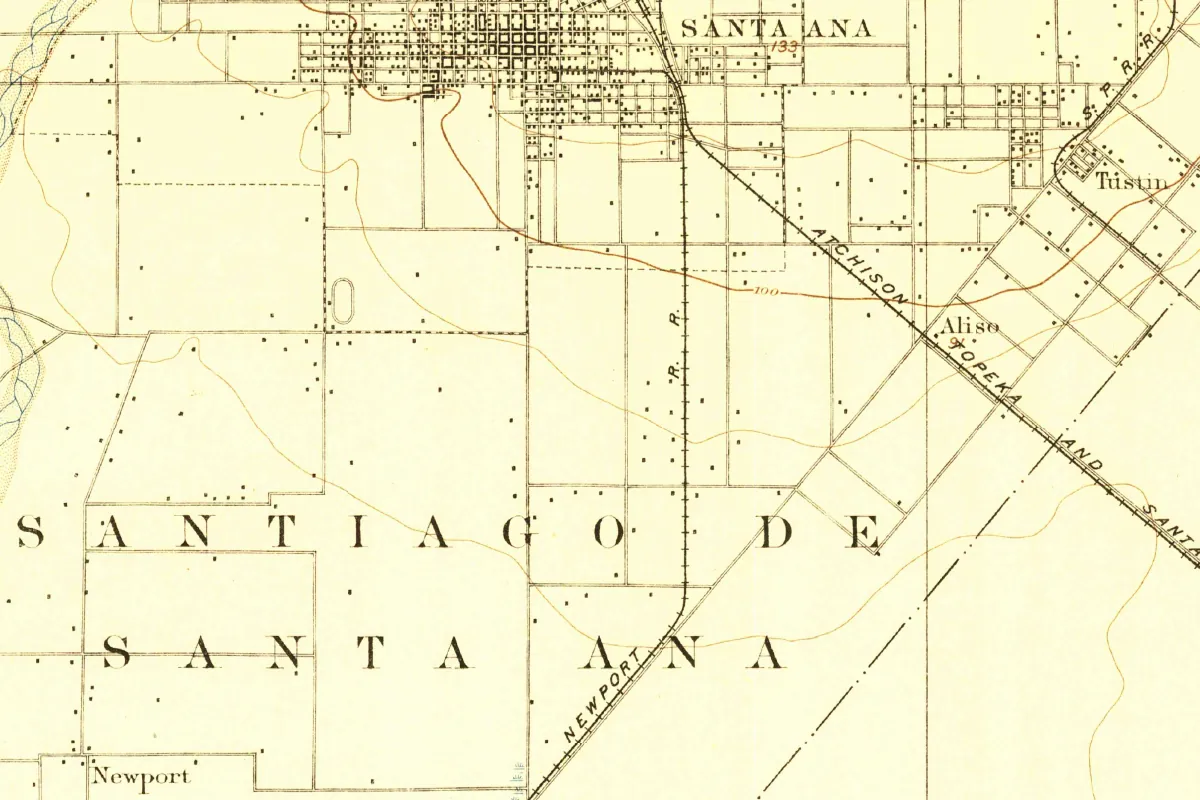
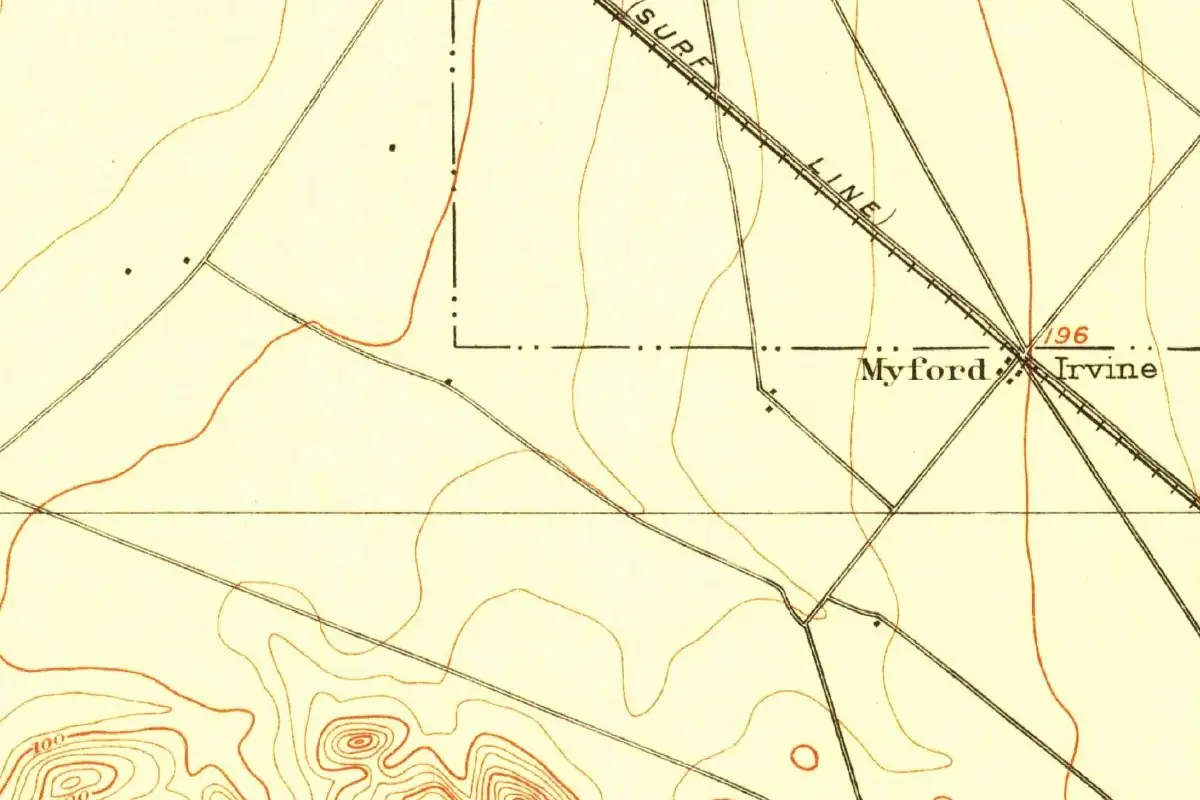
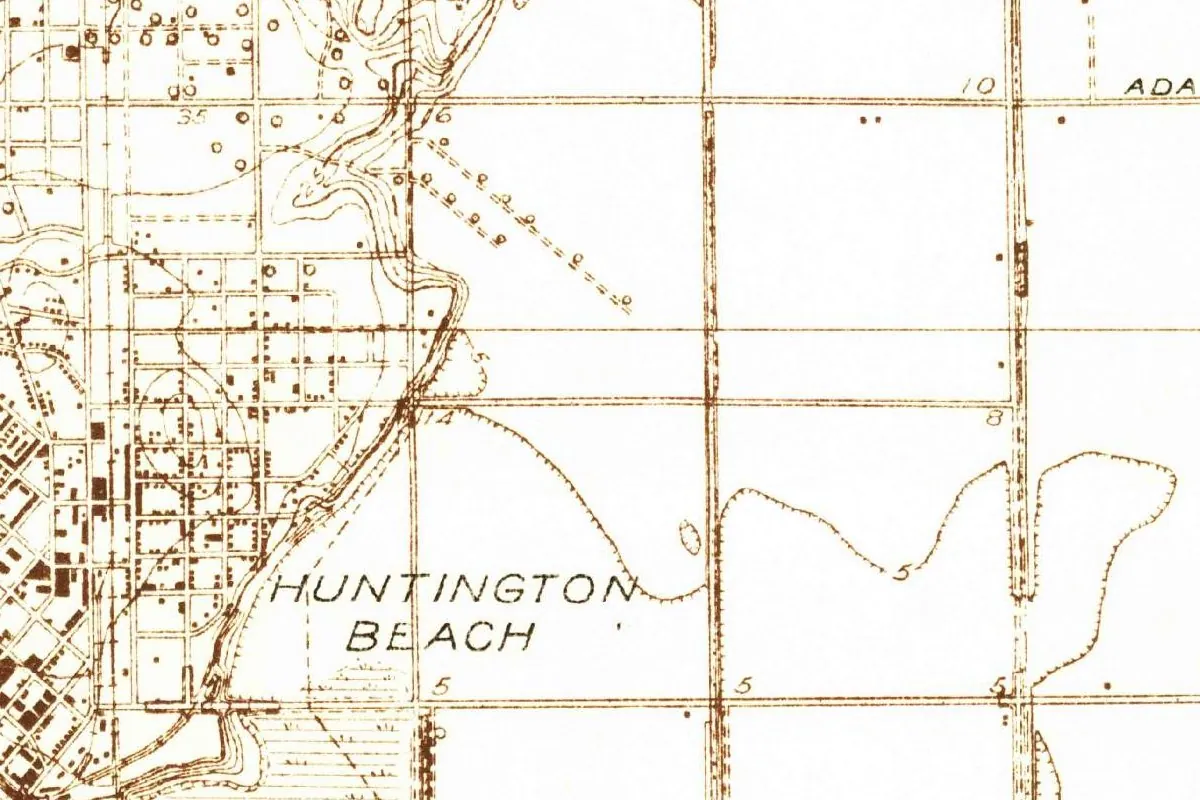
- U.S. Geological Survey, Newport Beach sheet (1932). The source of the map at the top of this page.
Spot something wrong, or know more? Tell us here. You can also email us or use our contact page. Corrections are noted here with their date, never made silently.