Stone Mountain, Georgia: Name, History and the Park
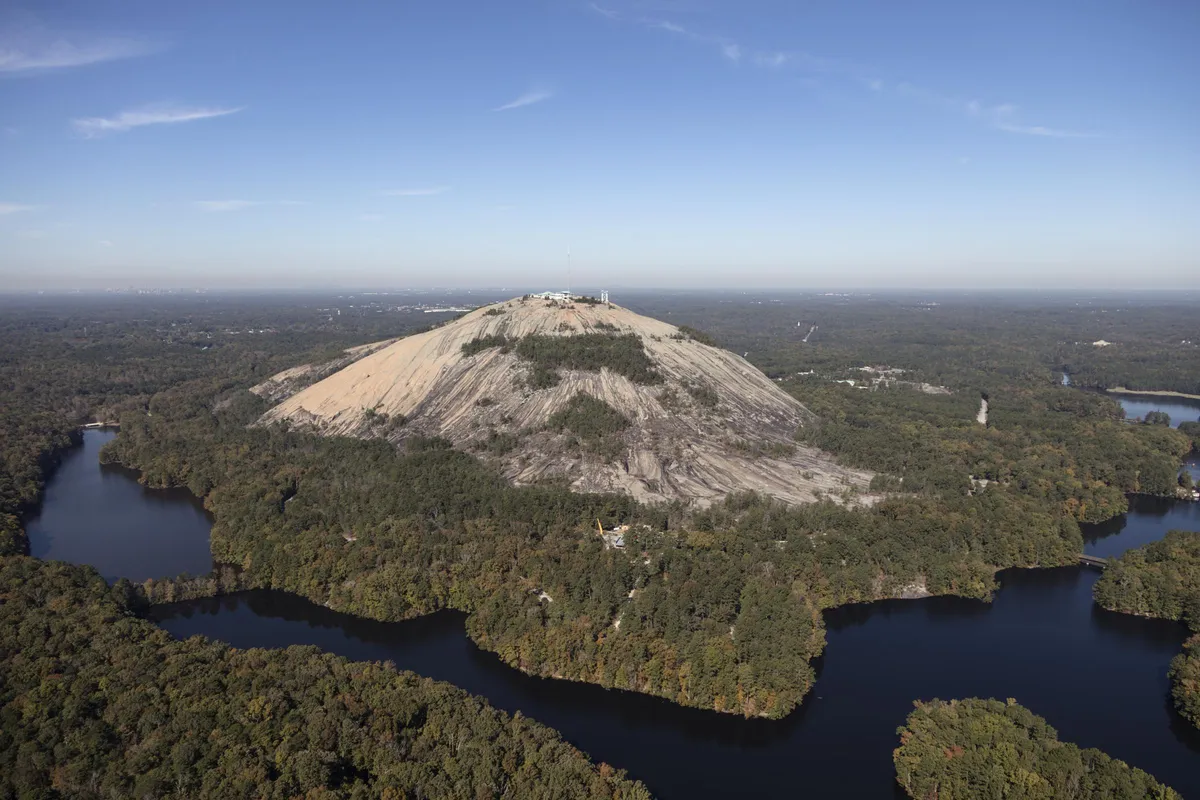
Stone Mountain, Georgia, was called Rock Mountain before 1825, and by the late 1830s the bare granite dome northeast of Atlanta had its plainer name. The name simply describes the rock, and none of the sources we read says who chose it. The hard part of this mountain’s story is what people later carved into it and burned on top of it, and that part comes with sources too.
Stone Mountain History
The Stone Mountain Historical Society, in the town at the mountain’s foot, lays out the names. The mountain was Rock Mountain before 1825, it says, and by the end of the 1830s “Stone Mountain” was the name people accepted. The village went through the same change with one detour. It started out as Rock Mountain too, was incorporated as New Gibraltar by the General Assembly in 1839, and became Stone Mountain by another act of the legislature in 1847. The society quotes the Macon Telegraph of 1830 describing the mountain as a “stupendous pyramid” of “bold, naked rock,” which is about as close to a reason for the name as anyone wrote down.
It’s worth keeping three things apart, because they share one name. Stone Mountain is the granite dome, which the federal place-names record lists as a summit in DeKalb County. Stone Mountain is also the small city at its foot, the one that was New Gibraltar. And Stone Mountain Park is the state-owned park of 3,200 acres (1,295 ha) around the mountain.
People knew the rock long before any of those names. The New Georgia Encyclopedia says the first humans came here about 9,000 years ago, and that the mountain, which stood between the Creek Confederacy and the Cherokee, became an important meeting place where two trails led east. In 1821, the Treaty of Indian Springs pushed the Native people off everything east of the Flint River, and by the late 1820s white settlers lived at the base. The railroads of the 1830s and 1840s tied local farms to bigger markets and made it easy to ship the stone, and the encyclopedia says the mountain’s granite was used for the Capitol’s steps in Washington and for the Panama Canal’s locks.
On Thanksgiving night in 1915, William Simmons and sixteen other men burned a cross on top of Stone Mountain to start a new Ku Klux Klan, the New Georgia Encyclopedia says. Simmons had timed it for a week before The Birth of a Nation opened in Atlanta, a film that, in the encyclopedia’s words, “sanitized the brutality” of the Reconstruction-era Klan. By the early 1920s, the encyclopedia says, the second Klan had about 5 million supporters, and the historical society says it held rallies on the summit after 1915. The state’s purchase of the mountain in 1958 ended those rallies on top, though the society notes that the Klan kept meeting in a field below the mountain’s west side into the 1980s.
The carving began in the same years. Starting in 1914, the United Daughters of the Confederacy’s Atlanta chapter pushed for a memorial on the mountain’s face, and its leader, Helen Plane, set up a group called the Stone Mountain Confederate Monumental Association in 1916 and brought in the sculptor Gutzon Borglum. According to the encyclopedia, Plane’s first wish was for Borglum to carve Robert E. Lee at the head of Confederate soldiers and Klansmen marching over the summit; the final design left the Klansmen out. World War I held the project up until 1923, the encyclopedia says, and in 1925 the association fired Borglum with only Lee’s head carved.
The project sat unfinished for decades. The encyclopedia ties its revival to white Southern resistance to civil rights after the Supreme Court’s Brown v. Board of Education decision of 1954. Georgia bought the mountain in 1958 for about $2 million, and the Stone Mountain Memorial Association became a state authority to run it as a Confederate memorial and a public recreation area. The association dates itself to a 1958 act of the legislature; the encyclopedia says Governor Eugene Talmadge had first formed it in 1941. The carving of Jefferson Davis, Lee and Thomas “Stonewall” Jackson was dedicated in 1970. By the association’s figures, the three men fill a panel 90 by 190 feet (27 by 58 m), cut 42 feet (13 m) deep into the rock, and the work, begun in 1915, was finished in 1972.
Georgia law protects it. The state code says the memorial “graven upon the face of Stone Mountain shall never be altered, removed, concealed, or obscured in any fashion.” The New Georgia Encyclopedia notes that the Southern Poverty Law Center described the mountain in 2017 as “the largest shrine to white supremacy in the history of the world,” and that the carving remains a point of controversy.
Stone Mountain Park
The Memorial Association still runs the park, and it says it oversees the Natural District, about two-thirds of the park, including the mountain itself. If you want the summit, the Walk-Up Trail climbs 786 feet (240 m) in a mile (1.6 km) up the mountain’s gentler west side over bare granite. The association rates it “very strenuous,” notes there’s little shade, and warns that the rock gets “extremely slippery when wet.” Its longest trail, the Cherokee Trail, takes you under the carving and over the mountain, and another trail honors the people who lived here first, a name the association says the Principal Chief of the Muscogee Nation blessed.
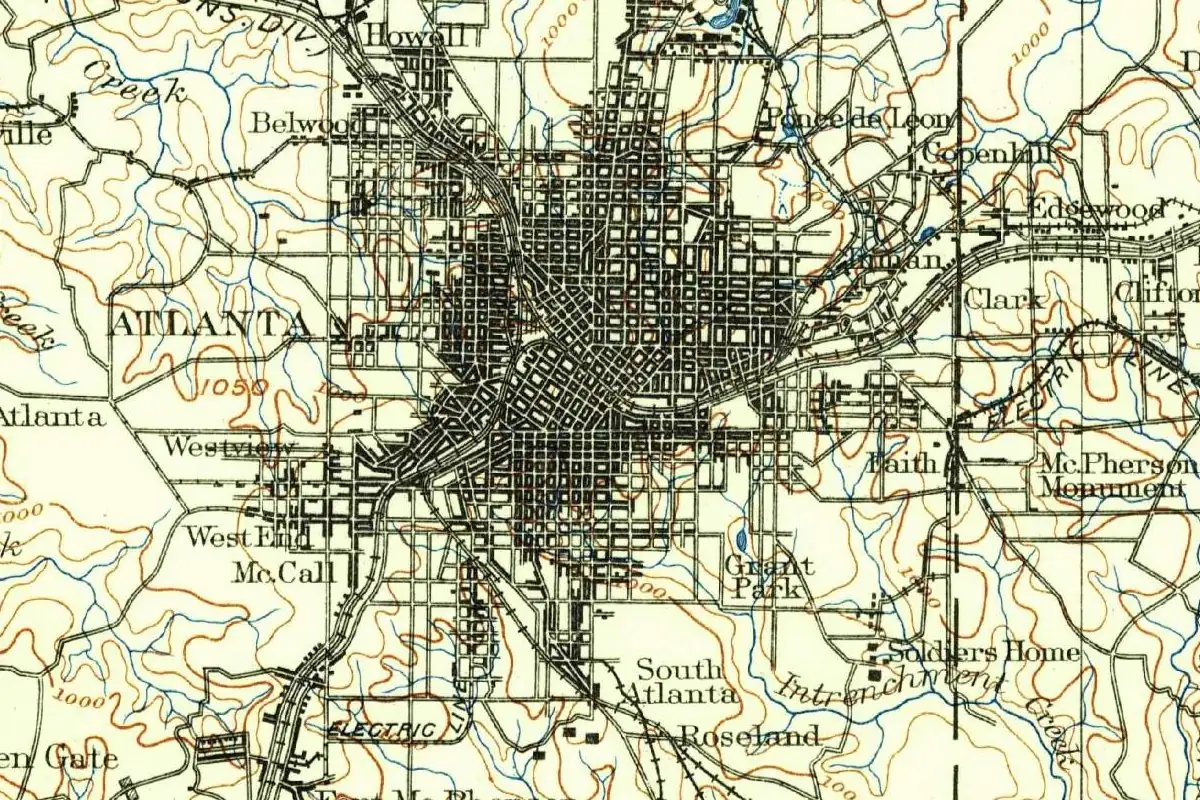
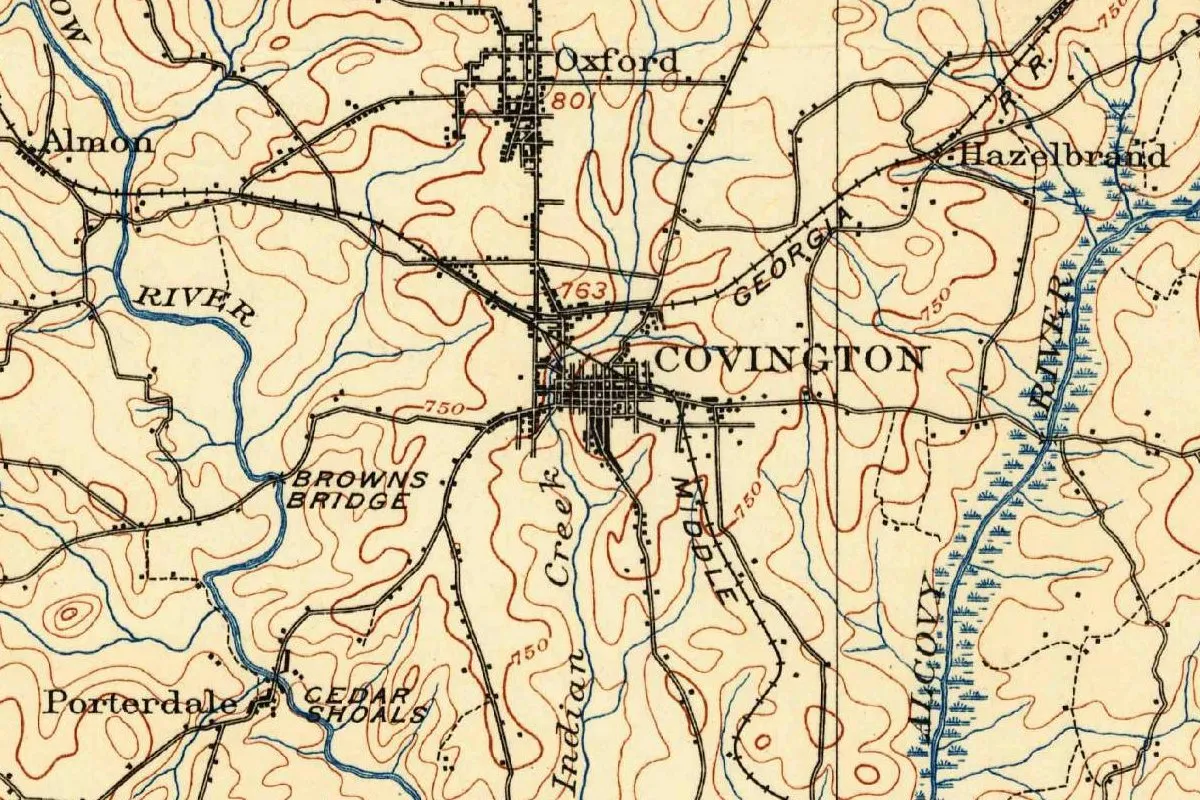
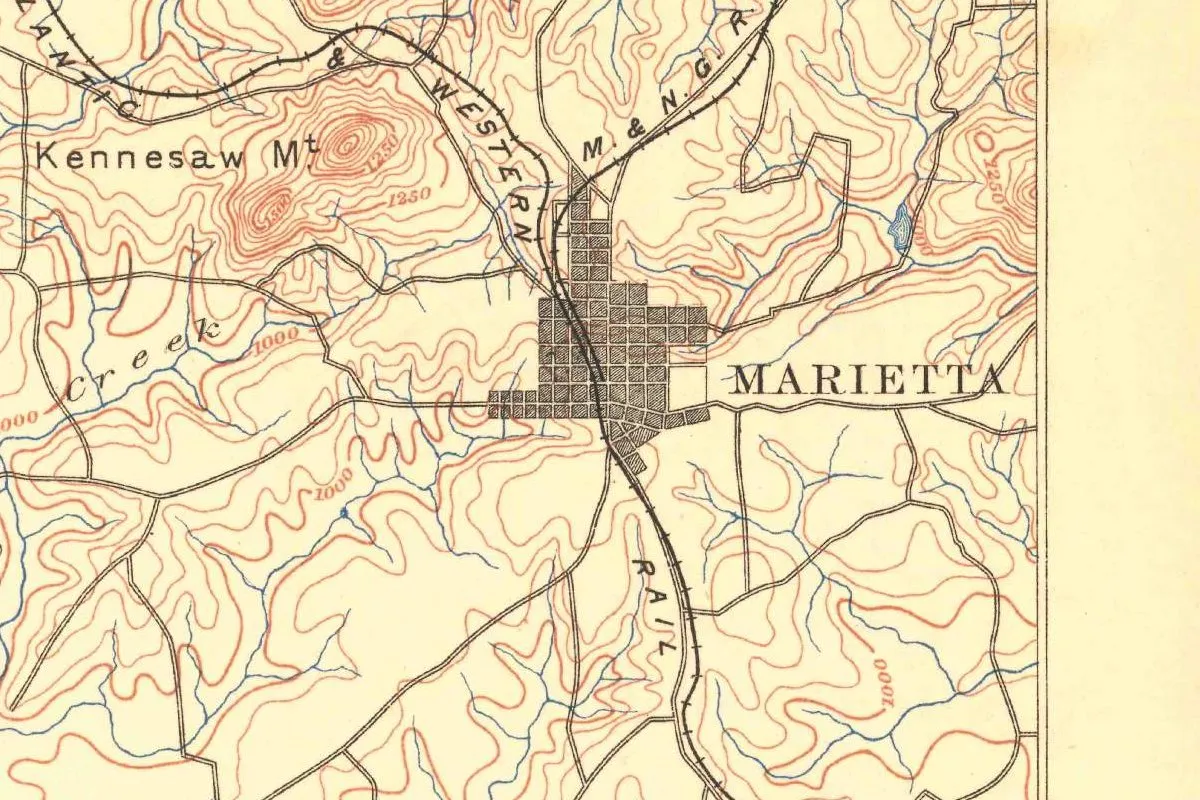
The mountain sits about 10 miles (16 km) northeast of downtown Atlanta, and the two names grew up together. The historical society says the Georgia Railroad bypassed the first village on its way west to the Western & Atlantic’s terminus at Marthasville, so the town moved to the tracks. The same railroad shows up on an 1896 government map of Covington, with that town sitting right on the line. Marthasville was Atlanta’s own former name, and the legislature made the switch to Atlanta at the end of 1847, which was also the year New Gibraltar was renamed Stone Mountain.
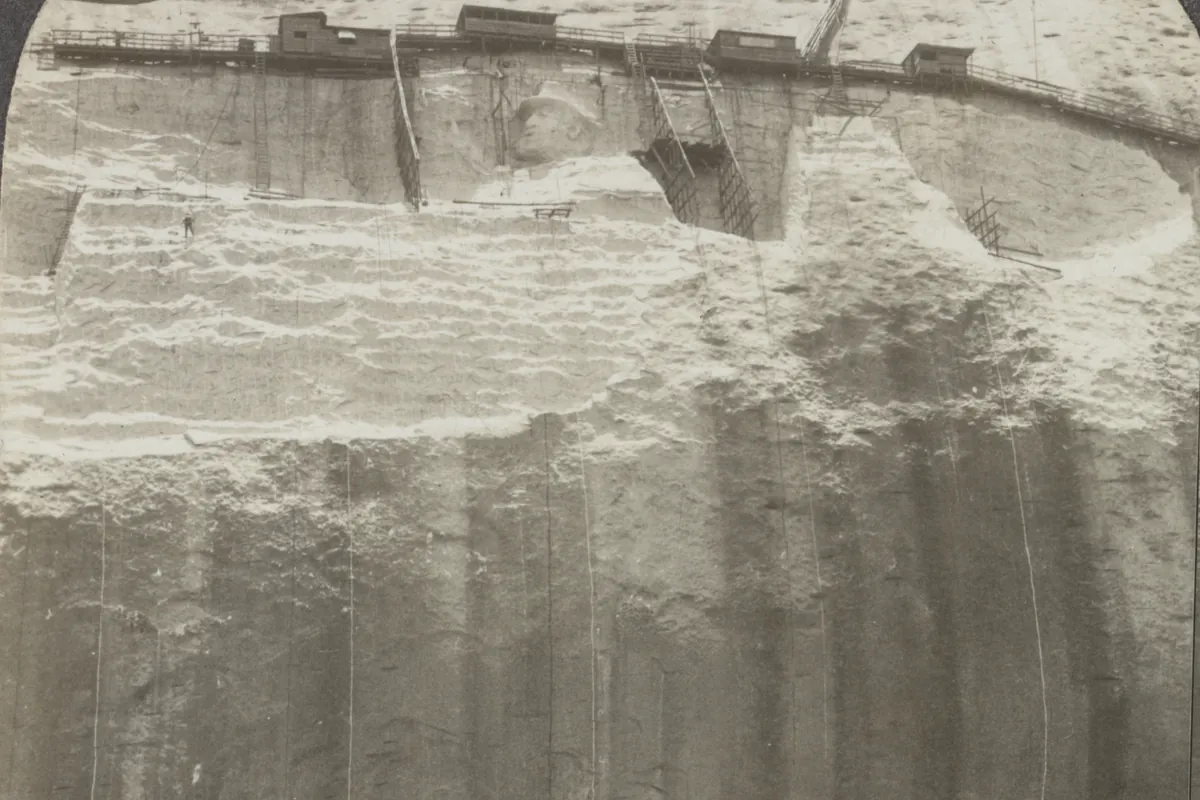
The photo at the bottom of this page shows the unfinished carving around 1928, the date the Library of Congress gives it, with scaffolding along the cliff and a single carved head near the top.
Quick answers
Why is it called Stone Mountain?
For its bare stone. It was called Rock Mountain before 1825, the local historical society says, and “Stone Mountain” was the accepted name by the end of the 1830s. An 1830 newspaper called it a “stupendous pyramid” of “bold, naked rock.”
Is Stone Mountain a mountain, a park or a city?
All three share the name. Stone Mountain is the granite dome, Stone Mountain Park is the 3,200-acre state park around it, and the city of Stone Mountain, once New Gibraltar, sits at its foot.
What does the KKK have to do with Stone Mountain?
On Thanksgiving night in 1915, William Simmons and sixteen others burned a cross on the summit to launch the second Ku Klux Klan, the New Georgia Encyclopedia says. The Klan held rallies on top until the state bought the mountain in 1958.
Can the Stone Mountain carving be removed?
Not under current Georgia law. The state code says the memorial “shall never be altered, removed, concealed, or obscured in any fashion.”
Key dates
- 1821The Treaty of Indian Springs cedes the Native land east of the Flint River for white settlement.
- 1830The Macon Telegraph describes the mountain as a "stupendous pyramid" of "bold, naked rock."
- 1839The village at the foot of the mountain is incorporated as New Gibraltar.
- 1847An act of the legislature renames the village Stone Mountain.
- 1915Thanksgiving night: William Simmons and 16 others burn a cross on the summit to launch the second Ku Klux Klan.
- 1916Helen Plane incorporates the Stone Mountain Confederate Monumental Association.
- 1958Georgia buys the mountain, and the Stone Mountain Memorial Association becomes a state authority.
- 1970The Confederate memorial carving is dedicated.
Find it in Google Maps
Opens in a new tab. The pin is a point from the USGS place-name record, so it may not be the middle of the area.
Sponsored
Planning a visit?
Compare hotels in the area on Expedia.
See hotels nearbyWe may earn a commission if you buy through this link. It never changes what we write. Read our affiliate disclosure
Historical Sources & References
- Stone Mountain Historical Society, “About Our Village”. Rock Mountain before 1825 and Stone Mountain “by the close of the 1830s”; the village as Rock Mountain, New Gibraltar (1839) and Stone Mountain (1847); the 1830 Macon Telegraph and its “stupendous pyramid” of “bold, naked rock”; the Georgia Railroad and Marthasville; Klan rallies on the summit after 1915, ended there by the 1958 purchase, and in a field on the west side into the 1980s.
- Bruce E. Stewart, “Stone Mountain,” New Georgia Encyclopedia. DeKalb County, about ten miles from Atlanta; the first visitors 9,000 years ago and the meeting place between Creek and Cherokee; the 1821 treaty; the Capitol steps and Panama Canal locks; Simmons and the cross of Thanksgiving 1915; the UDC, Helen Plane, Borglum, 1923 and 1925; Brown v. Board and the 1958 purchase; the 1970 dedication; the Southern Poverty Law Center’s 2017 description.
- Stone Mountain Memorial Association, “History of SMMA”. Created by the legislature in 1958 to buy the mountain; Davis, Lee and Jackson, 90 by 190 feet, recessed 42 feet; work from 1915 to 1972.
- Stone Mountain Memorial Association, “What Is SMMA”. A State of Georgia authority (O.C.G.A. § 12-3-190) for the mountain “as a Confederate Memorial and public recreation area”; the Natural District, two-thirds of the park. The park’s 3,200 acres are on the association’s home page.
- Stone Mountain Memorial Association, “Hiking”. The Walk-Up Trail, 786 feet in one mile, “very strenuous,” “extremely slippery when wet”; the Cherokee Trail under the carving; the trail named for the area’s original inhabitants with the blessing of the Muscogee Nation’s Principal Chief.
- Official Code of Georgia Annotated § 50-3-1. The memorial “graven upon the face of Stone Mountain shall never be altered, removed, concealed, or obscured in any fashion.”
- Keystone View Company, “Front View of Section of Stone Mountain, near Atlanta, Ga.” (Library of Congress). The stereograph at the bottom of this page, dated [1928] by the Library, which lists no known restrictions on publication.
- GNIS feature 326088, Stone Mountain (U.S. Geological Survey). The mountain’s entry in the federal place-names database: a summit in DeKalb County, on the Stone Mountain map sheet.
Spot something wrong, or know more? Tell us here. You can also email us or use our contact page. Corrections are noted here with their date, never made silently.