Mammoth Cave: How a Kentucky Cave Got Its Big Name
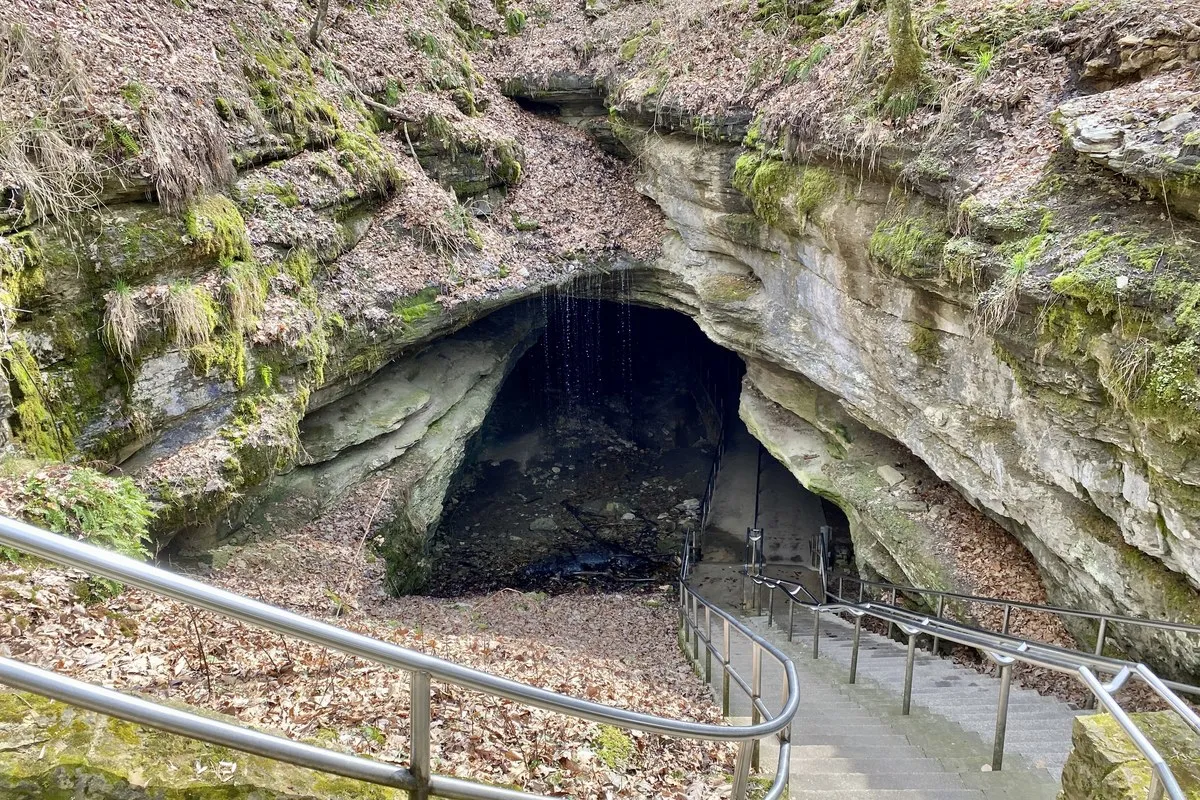
Mammoth Cave was once known as Flatt’s Cave; the name Mammoth Cave first appeared in print in 1810, just before a saltpeter boom worked by enslaved miners. The new name was a boast about size, and it held up: the Park Service now counts more than 400 miles of passages. Some scholars think it may have been a boast about something else, too.
Why Is It Called Mammoth Cave?
The short answer is that it’s huge. The Park Service’s timeline of the cave starts a million years ago, when the large passages that gave “mammoth” cave its name began to form, and it marks 1810 as the year the name Mammoth Cave was first published, in a newspaper in Richmond, Virginia.
The Park Service’s lesson plan on the cave, part of its Teaching with Historic Places series, puts the first use on a map instead: a chart drawn in 1810 to show where the cave’s saltpeter deposits lay. The name obviously points to the cave’s size, the lesson says on page 18. But it adds that some scholars think the name may also have been chosen to cash in on a recent find of Pleistocene elephant bones that had caught the public’s imagination. Mammoth fever, in other words. The lesson doesn’t name those scholars or the fossil find, so you can treat it as a possibility rather than the answer.
What was Mammoth Cave called before?
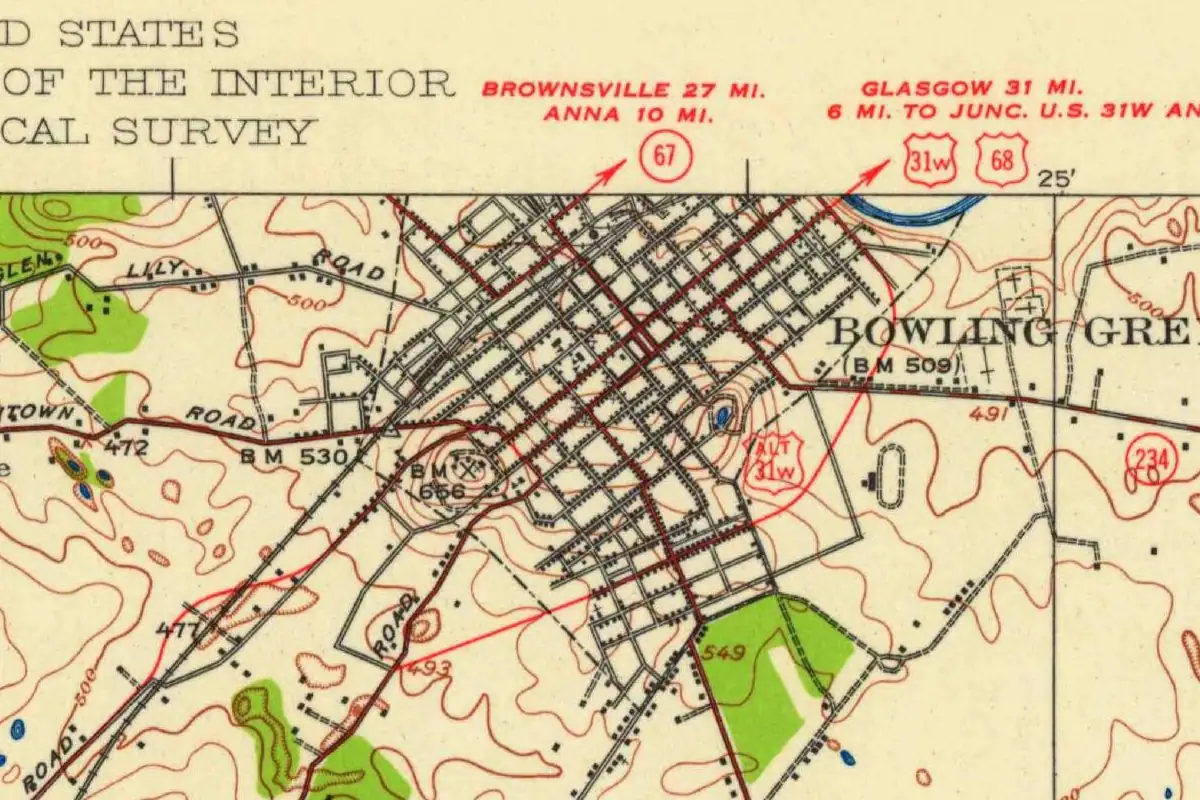
Before it was Mammoth, it was Flatt’s. The timeline says Valentine Simons bought 200 acres with two saltpeter caves in 1798 and sold them the next year to John Flatt, after whom the larger cave became known. Flatt sold to the McLean brothers, and in 1808 they sold to Charles Wilkins and Fleming Gatewood, the owners when the new name turned up. That same year of 1798, the county record a short drive southwest first wrote down the name of Bowling Green, spelled “Bolin Green.”
Who Discovered Mammoth Cave?
People were inside long before anyone named it. The Park Service says Native Americans explored and mined the cave from roughly 5,000 to 2,000 BCE.
The settler stories came much later, and they don’t line up. The timeline says John Houchin settled near the cave, by the Green River, in 1790 and that legend makes him the first European to find it. In 1868 a former owner, Franklin Gorin, wrote to the physician W. Stump Forwood that a man named Houchins found the cave in 1809 while chasing a bear into it. Forwood printed the letter on page 21 of his 1870 book on the cave. Gorin’s date, though, comes after the 1798 land sale the Park Service lists, so the bear story is best read as local legend.
Mammoth Cave History: Saltpeter and the Enslaved Guides
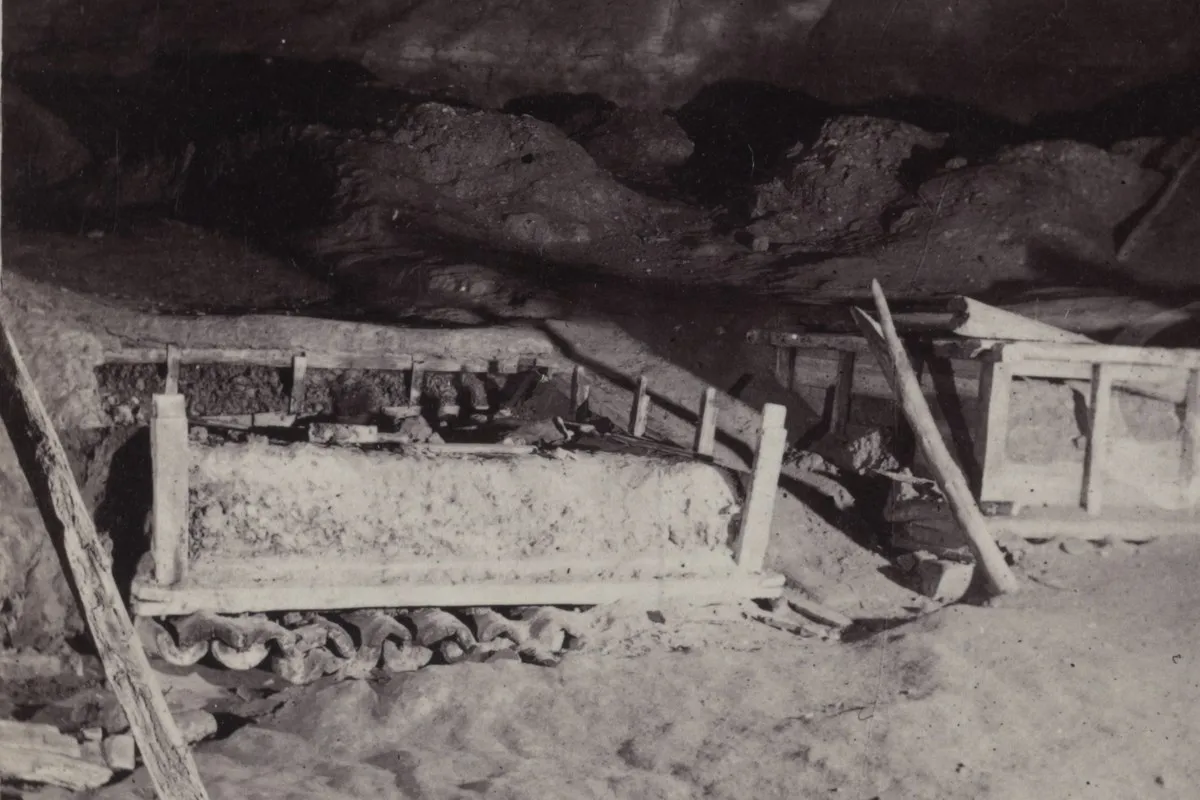
The name took hold during a war. Saltpeter, leached from cave dirt, was a main ingredient of gunpowder, and in the War of 1812 the owners relied on about 70 enslaved African Americans to mine it, the Park Service lesson says. They hauled dirt to wooden leaching vats in the Rotunda and at Booth’s Amphitheater and piped water in through wooden pipes. The photo at the bottom of this page shows vats that Ben Hains labeled “First Saltpeter Vats (1812)” on a stereograph copyrighted in 1892. Once the war was over in 1815, the business stopped paying, but visitors kept coming.
Those visitors were led by enslaved men too. Stephen Bishop arrived in 1838 after Franklin Gorin bought the cave, the Park Service says, and became its best-known guide and explorer. He crossed the Bottomless Pit, which opened miles of new passages, and is credited with finding the Ruins of Karnak and Mammoth Dome. In 1842 he drew a map of the cave from memory, later published in Rambles in the Mammoth Cave, During the Year 1844, which came out in Louisville in 1845. He called the cave “a grand, gloomy and peculiar place.” He was freed in 1856 and died in the summer of 1857.
The guiding continued for generations. Mat Bransford’s son and nephew became guides after the Civil War, and his nephew Will Bransford represented the cave at Chicago’s World’s Fair in 1893. But when the Park Service took over in 1941, it didn’t keep any of the Black guides. That ended a century of Black and white guides working side by side, the agency now says. A Bransford didn’t guide there again until 2004. The Kentucky Historical Society, in a short history it wrote for the state legislature, tells the same story of Bishop and the Black guides and notes their cemetery near the entrance.
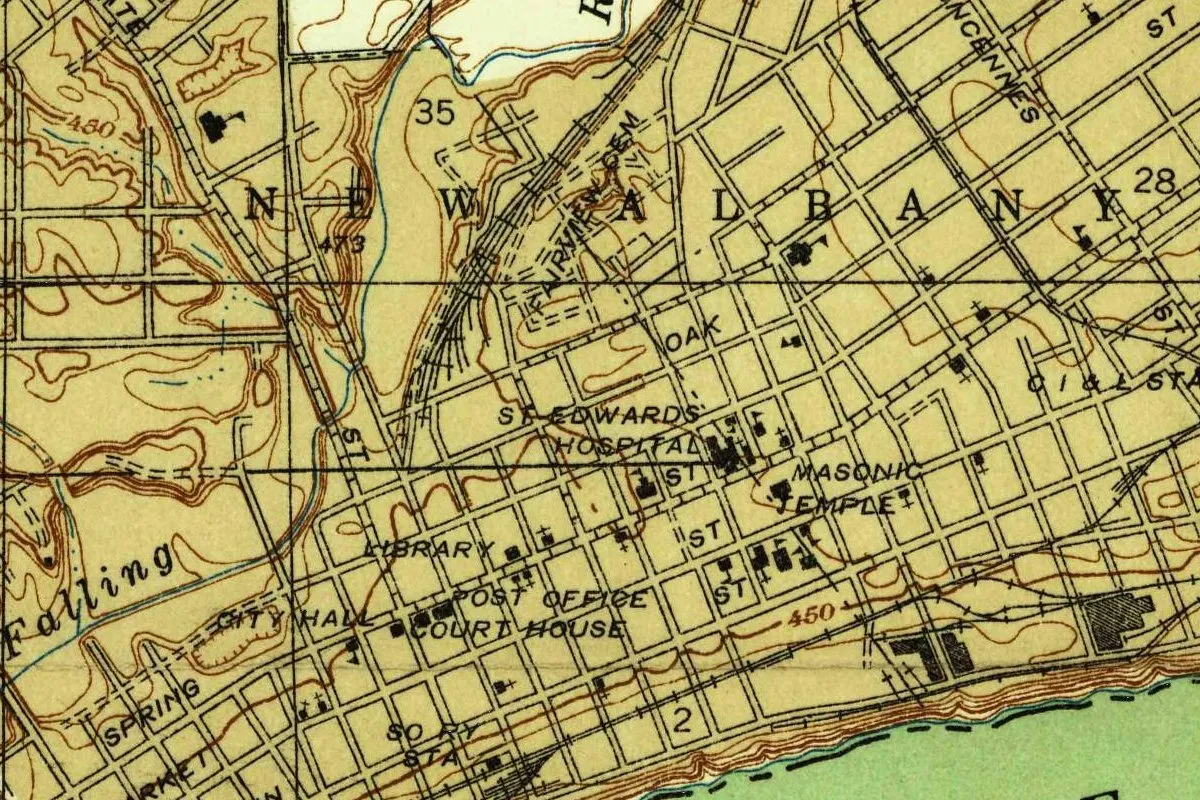
The man who photographed those vats, Ben Hains, worked from New Albany, Indiana, the Ohio River town the Scribner brothers laid out in 1813 and named after Albany, New York. If you go today, you’ll need a ticket to enter the cave, and the Park Service strongly recommends reserving one on Recreation.gov.
Quick answers
Why is Mammoth Cave called Mammoth?
Because of its size. The Park Service ties the name to the cave’s enormous passages and dates its first printed use to 1810. A Park Service lesson plan adds that some scholars think the name may also have played on public excitement over newly found fossils of Pleistocene elephants.
Is Mammoth Cave named after mammoths?
Not directly. No source we found says mammoth bones turned up in the cave, and the Park Service links the name to its huge passages. Its lesson plan says only that some scholars think the word may have been chosen partly to ride the public’s interest in newly found Pleistocene elephant remains.
What was Mammoth Cave’s original name?
Before 1810 the main cave was called Flatt’s Cave, after John Flatt, who bought it in 1799, according to the Park Service timeline. The name Mammoth Cave first appeared in print in 1810, in a Richmond, Virginia, newspaper, while the cave’s owners were mining saltpeter for gunpowder.
Who was Stephen Bishop of Mammoth Cave?
Stephen Bishop was an enslaved guide who came to Mammoth Cave in 1838. He crossed the Bottomless Pit, explored miles of new passages and drew a map of the cave from memory in 1842. The Park Service says he was freed in 1856 and died in 1857.
Key dates
- 1798Valentine Simons buys 200 acres with two saltpeter caves, according to the Park Service timeline.
- 1799Simons sells to John Flatt, and the bigger cave becomes known as Flatt's Cave.
- 1810The name Mammoth Cave first appears in print, in a Richmond, Virginia, newspaper; a saltpeter map of the cave uses it too.
- 1812During the War of 1812, about 70 enslaved African Americans mine saltpeter in the cave for gunpowder.
- 1838Stephen Bishop, an enslaved young man, begins guiding visitors, along with Mat and Nick Bransford and Alfred Croghan.
- 1842Bishop draws a map of the cave from memory; it is published in a book about the cave in 1845.
- 1941July 1: Mammoth Cave becomes a national park; none of the Black guides are kept on.
- 2021Surveyors map the cave at 420 miles long, the Park Service says.
Find it in Google Maps
Opens in a new tab. The pin is a point from the USGS place-name record, so it may not be the middle of the area.
Sponsored
Planning a visit?
Compare hotels in the area on Expedia.
See hotels nearbyWe may earn a commission if you buy through this link. It never changes what we write. Read our affiliate disclosure
Historical Sources & References
- National Park Service, “Timeline of Mammoth Cave History”. The passages that gave “mammoth” cave its name; Native American use from 5,000 to 2,000 BCE; Houchin and the legend (1790); Simons (1798), Flatt and Flatt’s Cave (1799), the McLeans, Gatewood and Wilkins (1808); first published use of the name in a Richmond newspaper (1810); Bishop freed (1856) and his death (1857); the park’s founding on July 1, 1941; 420 miles mapped (2021).
- National Park Service, Teaching with Historic Places, “Mammoth Cave: Its Explorers, Miners, Archeologists, and Visitors”. Page 18 (Reading 2): about 70 enslaved miners in the War of 1812, the vats in the Rotunda and Booth’s Amphitheater, the wooden pipes; the 1810 map and the name, with the scholars’ theory about Pleistocene elephant remains; the end of mining in 1815.
- W. Stump Forwood, An Historical and Descriptive Narrative of the Mammoth Cave of Kentucky (1870). Pages 20-23: Franklin Gorin’s letter of February 9, 1868, with the 1809 date and Houchins chasing a bear (page 21).
- National Park Service, “Stephen Bishop”. “A grand, gloomy and peculiar place”; his arrival in 1838, the Bottomless Pit, the Ruins of Karnak and Mammoth Dome; the 1842 map and Rambles in the Mammoth Cave; 1856 and 1857.
- National Park Service, “African American History at Mammoth Cave”. The enslaved guides of 1838; Will Bransford at Chicago’s fair in 1893; no Black guides kept on in 1941; Jerry Bransford’s return in 2004.
- Kentucky Historical Society, Legislative Moment no. 27 (2014). Bishop and the African American guides after emancipation; their cemetery near the entrance. It doesn’t discuss the name.
- Rambles in the Mammoth Cave, During the Year 1844, by a Visiter (1845). The title page: Louisville, Morton & Griswold, 1845, the book in which Bishop’s map was published.
- National Park Service, Mammoth Cave “Frequently Asked Questions”. Tickets required; reservations strongly recommended through Recreation.gov.
- Library of Congress, Ben Hains, “First Saltpeter Vats (1812)” (1892). The stereograph at the bottom of this page, from the series “Views of Mammoth Cave and Vicinity.”
Spot something wrong, or know more? Tell us here. You can also email us or use our contact page. Corrections are noted here with their date, never made silently.