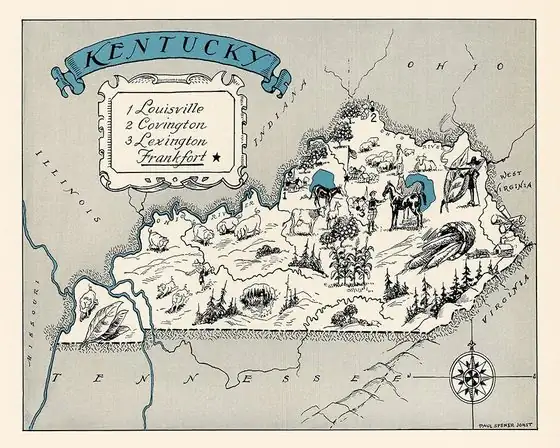
Bowling Green, Kentucky: First Written as "Bolin Green"
The sources disagree. The City of Bowling Green says the name, written "Bolin Green" at the first county commissioners' meeting in 1798, came from Bowling Green in New York City, where patriots toppled a statue of King George III. A state historical marker says it was traditionally named for bowling grounds on the site.
“Bolin Green” in the county record
When Bowling Green, Kentucky, first went into the county record in 1798, it was spelled “Bolin Green,” and two stories still compete over why. One points to a famous little park in New York City. The other points to a bowling ground right here.
The City of Bowling Green tells it this way. At the first county commissioners’ meeting in early 1798, its history says, the pioneers decided the new town would be “called and known by the name of Bolin Green.” That’s the wording of the order as the city quotes it, odd spelling and all.
Robert Moore’s spring
Before the name, there was a spring. The Kentucky Historical Society’s roadside marker in Bowling Green says the town was founded in 1796 by Robert Moore, who built his cabin at the Big Spring. The water, the marker says, “was nucleus around which the town grew.”
The city’s history, written by Lena Sweeten for Bowling Green Magazine and reprinted on the city’s website, fills in the rest. The General Assembly created Warren County by an act of December 1796 that took effect in March 1797, and named it for Dr. Joseph Warren, a hero of the Battle of Bunker Hill. Robert Moore and his brother George gave two acres for a log courthouse and jail. The next year the Moores offered more than 30 acres for a town around the public buildings.
The marker adds that the Moores and James Stewart posted a bond of 1,000 English pounds to establish the town in 1797, and that the first courts met in Moore’s home. So the town had a spring, a county, a courthouse lot and a bond before it had a name. The name came at that first commissioners’ meeting.
The New York story
The city’s answer goes back to the Revolution. It says the name was “after the Bowling Green Square in New York City, where patriots had pulled down a statue of King George III and used the lead to make bullets during the American Revolution.”
That event in New York is solid history. The National Park Service says Bowling Green is New York City’s oldest public park, at the foot of what’s now Broadway. A statue of George III went up there in 1770. On July 9, 1776, after the Declaration of Independence was read to Washington’s troops, the Sons of Liberty ran down Broadway and toppled it. The NPS says it was melted into two tons of metal and turned into 42,088 musket balls.
What the NPS can’t tell you is what was on the minds of Warren County’s commissioners 22 years later. The city’s page connects the two, but the four words it quotes from the order say nothing about New York. The link is the city’s explanation, not the order’s.
It would fit the county, though. A county named for a Bunker Hill hero, with a seat named for the place where New Yorkers melted down the king, makes a tidy Revolutionary pair. Kentucky has done that before: Lexington took its name in 1775 from the first battle of the war.
The bowling ground story
The state’s marker tells a different story, and tells it carefully. The town was “Named ‘Bolin Green,’ 1798,” it says, “traditionally because of bowling grounds located on site.”
That word “traditionally” matters. The marker doesn’t claim a record of a lawn or a game, only a local story that there was one where the town was laid out. It doesn’t mention New York at all.
The idea isn’t far-fetched, because that’s what the words meant. Henry Gannett, in a 1905 Geological Survey bulletin on how the country’s towns got their names, counted Bowling Green as “the name of seven places in the country,” and said the word “is said to be derived from a term denoting ornamental gardening, or a plat of turf for bowling.” He added that the name “is found in Yorkshire, England.” He didn’t say which explanation fits Kentucky, and he didn’t pick one.
Which one?
You get to weigh it yourself. The New York version has the city’s backing and a famous event behind it. The bowling ground version has the state’s marker and the plain meaning of the words, but the marker itself calls it a tradition. None of these sources points to a 1798 document that gives the reason. The order the city quotes names the town and stops there.
The spelling doesn’t settle it either. “Bolin Green” leans toward neither the park nor the lawn; it’s just the way the order wrote it.
From Bolin Green to county seat
The name settled down to Bowling Green, and the town grew around the Moores’ two acres. The city says it beat out Jeffersonville and New Town, two small settlements along the Barren River, to become the official county seat in 1809, and was incorporated in 1812. By the late 1830s a turnpike tied it to Louisville and Nashville, and steamboats ran on the Barren.
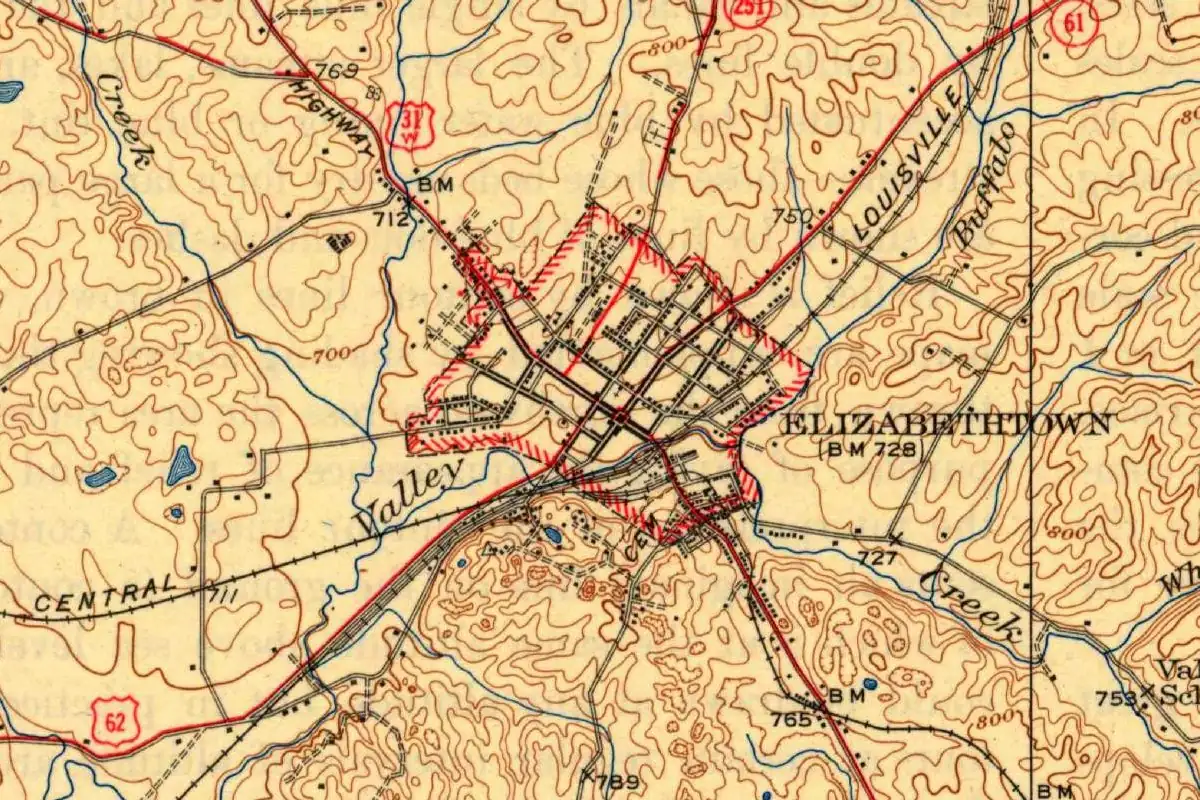
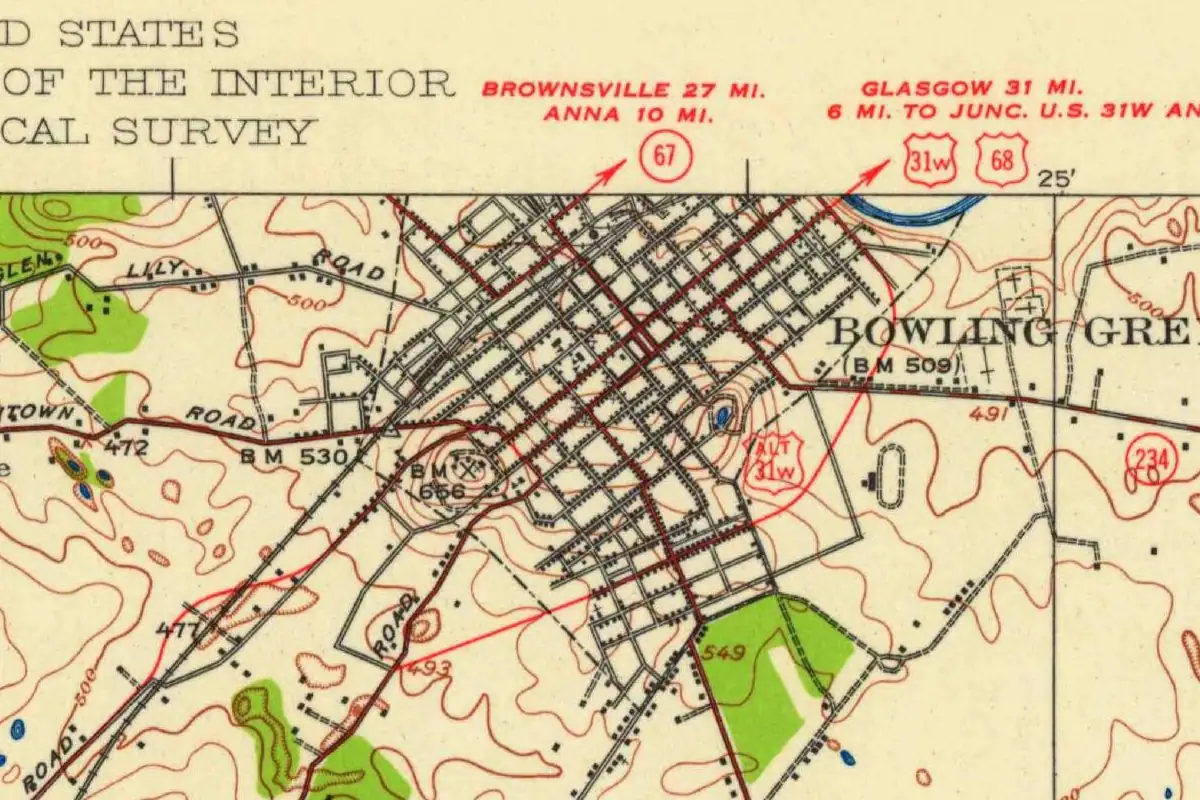
The map up top is the 1921 Bowling Green sheet in a 1955 printing, which is why it also shows numbered highways in red. It still shows the town’s streets set at an angle around the old public square.
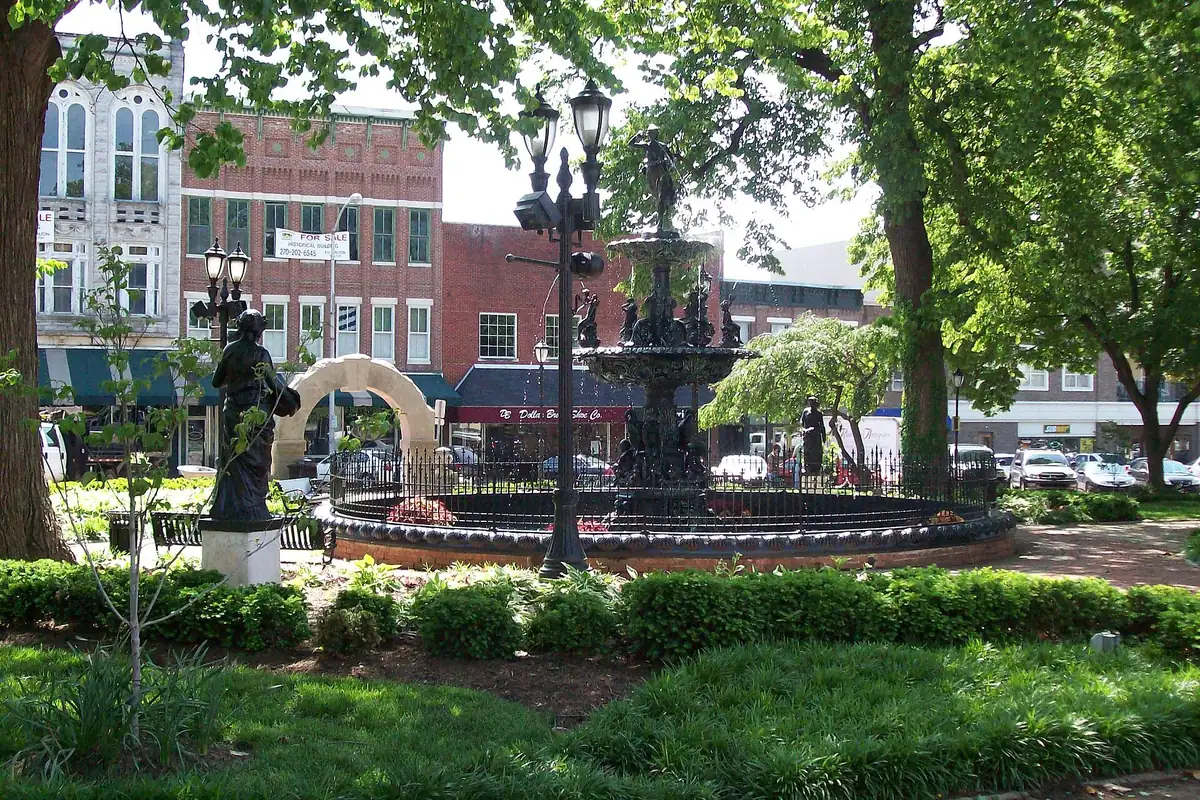
Those two acres are now Fountain Square Park, the city says. If the city is right, Bowling Green has company in borrowing a New York name: across the Ohio River from Louisville, New Albany, Indiana, was named for Albany, according to an 1882 history. Whichever story you believe, the town started as “Bolin Green” on a county order, and Kentucky has been spelling it properly ever since.
Quick answers
Is Bowling Green, Kentucky, named after Bowling Green in New York?
Possibly. The City of Bowling Green says so, pointing to the New York park where patriots toppled George III’s statue. A state historical marker gives a different, traditional explanation.
Was there really a bowling green in Bowling Green, Kentucky?
Tradition says so. Kentucky Historical Society marker 997 says the town was named “Bolin Green” in 1798, “traditionally because of bowling grounds located on site.”
Why was it spelled “Bolin Green”?
The sources don’t explain the spelling. The city quotes the 1798 order as saying the town would be “called and known by the name of Bolin Green.”
Key dates
- 1776On July 9, New York's Sons of Liberty pull down the statue of George III at Bowling Green, the park at the foot of Broadway.
- 1797Warren County, created by an act of December 1796, takes effect in March. The Moore brothers give two acres for a courthouse and jail.
- 1798At the first county commissioners' meeting, the new town is to be "called and known by the name of Bolin Green."
- 1809Bowling Green becomes the official county seat.
- 1812The town is incorporated.
Things to do in Bowling Green, Kentucky
Lost River Cave
An urban 72-acre park with an underground boat tour on a cave river, hiking trails and nature programs, run to connect visitors with the natural world.
National Corvette Museum
A museum devoted to the history of the Corvette, "America's Sports Car," showing famous models, prototypes and landmark cars from its collection.
Kentucky Museum
Western Kentucky University's teaching museum, which grew out of the Kentucky Building of 1939, a place for "Kentuckians to know Kentucky," with collections from South Central Kentucky and changing exhibits.
Historic RailPark & Train Museum
A railroad museum in Bowling Green's historic L&N Depot, where you can see and explore railroad artifacts from the region's heritage.
Mammoth Cave National Park
The national park around the world's longest known cave system, with more than 400 miles (640 km) of cave passages, a UNESCO World Heritage Site and International Biosphere Region.
Getting there
Open Bowling Green in Google Maps
Opens in a new tab. The pin is the center of Bowling Green in the USGS place-name record.
The closest airports, Amtrak stations and intercity bus stops, measured in a straight line from the center of Bowling Green.
Airports
- Nashville International (BNA) 61 mi 99 km
- Louisville Muhammad Ali International (SDF) 90 mi 146 km
Intercity buses
- Greyhound Upton Weldon Loop Rd 45 mi 72 km
- FlixBus Clarksville TN (CRK) 54 mi 86 km
Distances are as the crow flies, not by road. We don't list schedules or fares because they change; check with the airline, Amtrak or the bus company before you go. Official data (FAA commercial service airports (2025), FAA airport locations, Amtrak stations and Intercity Bus Atlas) from the FAA and the U.S. Bureau of Transportation Statistics, checked Nov 14, 2026.
Sponsored
Staying in Bowling Green?
Compare hotels in Bowling Green, Kentucky, on Expedia.
See hotels in Bowling GreenWe may earn a commission if you buy through this link. It never changes what we write. Read our affiliate disclosure
Historical Sources & References
- Lena Sweeten, “Early History of Bowling Green,” City of Bowling Green. Warren County and Joseph Warren; the Moores’ two acres and 30-acre donation; the 1798 order, “called and known by the name of Bolin Green”; the New York explanation; county seat in 1809 and incorporation in 1812; the turnpike and steamboats; Fountain Square Park.
- Kentucky Historical Society, Marker 997: Bowling Green. Robert Moore and the Big Spring; the 1,000-pound bond with George Moore and James Stewart; first courts in Moore’s home; “Named ‘Bolin Green,’ 1798, traditionally because of bowling grounds located on site.”
- National Park Service, “Bowling Green”. New York City’s oldest public park; the 1770 statue of George III, toppled July 9, 1776, and melted into 42,088 musket balls.
- Henry Gannett, The Origin of Certain Place Names in the United States (USGS, 1905), p. 53. Seven places named Bowling Green; the term for “ornamental gardening, or a plat of turf for bowling”; the name in Yorkshire.
- GNIS feature 487744 (U.S. Geological Survey). Official U.S. place-name record for Bowling Green, a populated place in Warren County.
- U.S. Geological Survey, Bowling Green sheet (1921, 1955 printing). The 1:62,500 sheet, surveyed in 1921, in the 1955 printing the map at the top of this page was cut from, with red highway markings.
Spot something wrong, or know more? Tell us here. You can also email us or use our contact page. Corrections are noted here with their date, never made silently.