Oxford, Mississippi: A University Name Before the University
Oxford is named for Oxford, England, the university town. The City of Oxford says the land donated for the town in 1836 was to be named Oxford, and Visit Oxford says T. D. Isom recommended the name in hopes of a university. The legislature picked Oxford for the University of Mississippi in 1841, and it opened in 1848.
Oxford, Mississippi, took the name of England’s university town in the 1830s in the hope that the state’s first university would come there. It did. The University of Mississippi opened in 1848, more than a decade after the town had picked out its name.
Fifty acres and a borrowed name
The City of Oxford dates the Chickasaw cession to February 9, 1836, calling it “a treaty that instigated the removal of most of the Indians in North Mississippi.” Settlers moved in, and that same year the state created Lafayette County, named for the Marquis de Lafayette.
That year three residents, John Chisholm, John D. Martin and John L. Craig, donated fifty acres near its center, the city says, and the land “was to be named Oxford, after the university town of Oxford, England.” The town got its charter almost a year later. Visit Oxford, the local tourism office, puts the incorporation in May 1837.
The sources don’t agree on every detail of that land deal, so you’ll see the names spelled two ways. Visit Oxford lists the three men as John Chisholm, John J. Craig and John D. Martins, and says they had bought the land from two Chickasaw people, HoKa and E Ah Nah Yea. The city’s page names a single earlier owner, Hoka, calling her a princess, and notes that no pictures of her survive. Locally, the city adds, she’s remembered as the namesake of the old Hoka Theatre.
Who picked “Oxford”
Visit Oxford gives the idea to one man. “Oxford resident, T.D. Isom had recommended naming the City after Oxford, England in hopes that this would one day become a University town,” it says. That’s the only source here that names him, so treat it as the tourism office’s account.
Isom does turn up in an older book. Dunbar Rowland’s Encyclopedia of Mississippi History, published in 1907, calls “Dr. Thomas D. Isom” the first settler on the site of Oxford. He “built a log cabin here and opened a store and soon a small settlement grew up at this point,” Rowland says, and he went on to serve in the state’s Constitutional Convention of 1890. Rowland says nothing about the name, though.
The town grew fast once it was laid out. Rowland quotes a writer named Besancon, describing Oxford in 1838: “It is only one year and a half since Oxford was laid out into town lots, and yet it now numbers four hundred inhabitants.” Besancon counted a brick courthouse and a jail, two hotels, six stores and two “seminaries of education,” but no churches yet.
The bet pays off
Naming the town was the easy part. Winning the university took a vote of the legislature, and Oxford wasn’t the only town that wanted it. Rowland calls the contest “a spirited one.” Oxford won “in joint session on the sixth ballot,” he writes, “thereby defeating the other contestants, Mississippi City, Brandon, Monroe Missionary Station, Louisville, Kosciusko and Middleton.” The choice was made on January 26, 1841.
The citizens of Oxford and Lafayette County had already bought a section of land next to the town and offered it to the university, Rowland says. The school was chartered in 1844, and according to Visit Oxford it opened its doors in 1848 to 80 students. The federal Advisory Council on Historic Preservation sums up the whole story in one line: Oxford “was named after the British university, in the hope that Mississippi’s first public university would be located there, and the University of Mississippi did indeed open there in 1848.”
As the city puts it, “The original dream became a reality in 1841.”
Gannett told it backward
By 1905, at least one federal bulletin had the story flipped. Henry Gannett, sorting the country’s Oxfords for a 1905 Geological Survey bulletin, said the city was “so named from the university city in England because it is the location of the State University.”
That’s the right Oxford and the wrong order. Gannett had plenty of Oxfords to sort through: on the same page he lists a town in Alabama “named from the city in England,” and a county and town in Maine plus places in Massachusetts, New York, Ohio and Pennsylvania, all “named from the university in England.” Only the Mississippi entry ties the name to a university of its own. The name came first, in 1836 and 1837, and the university came after. Massachusetts went the other direction with Cambridge, which took its English university town’s name after the colony decided to put a college there. Oxford named itself first and then went out and won the school.
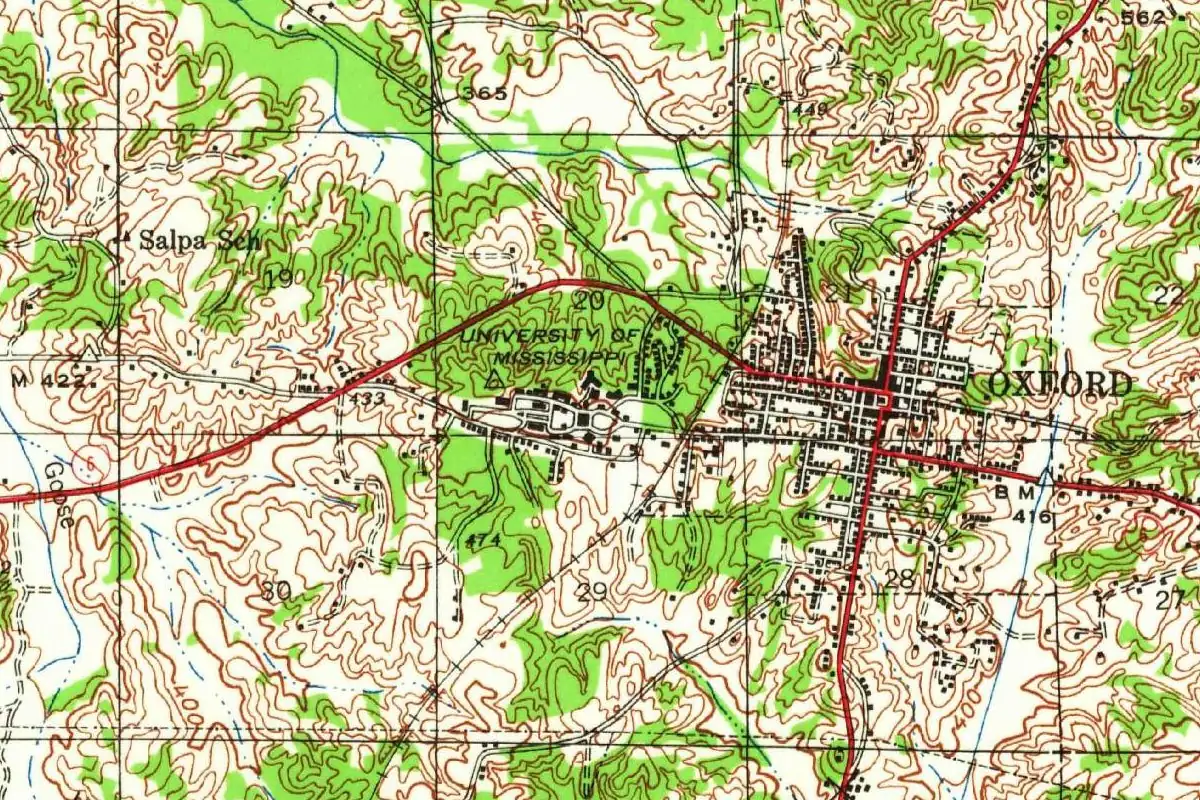
You can see the two side by side on the 1940 map at the top of this page. The words “University of Mississippi” sit on the campus just west of the grid of streets labeled OXFORD.
A house that got a new name
Oxford has another naming story, and it’s a literary one. In 1930, William Faulkner bought an old house in town known as “The Bailey Place.” A year later, the University of Mississippi’s Rowan Oak site says, he renamed it “Rowan Oak,” after two trees: the rowan tree of Scotland, a symbol of peace and security, and the American live oak, a symbol of strength and solitude. So the town that took its name from an English university became home to a writer who renamed his own house after a Scottish tree and an American one.
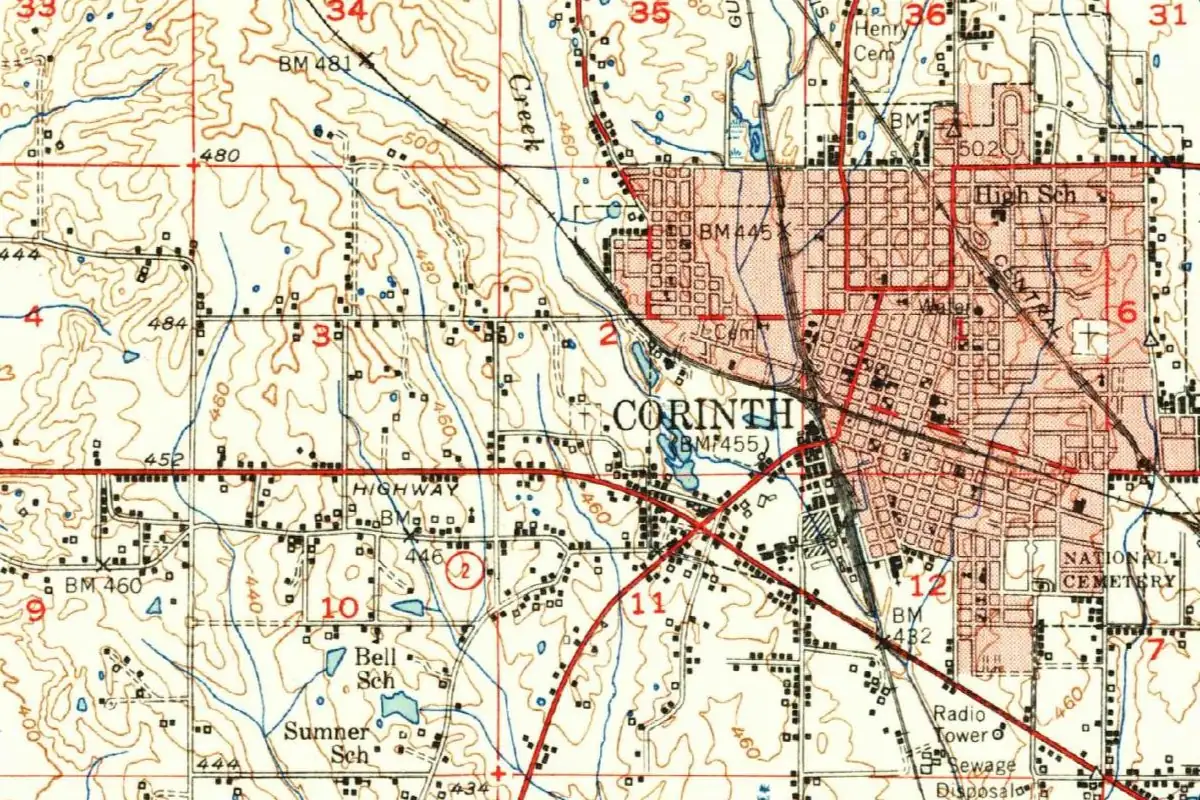
Elsewhere in the state, Corinth also took a name from the Old World, from the ancient Greek city. For more name stories, head to our Mississippi page.
Quick answers
Why is Oxford, Mississippi, called Oxford?
It’s named for Oxford, England, the university town. The City of Oxford, Visit Oxford and the Advisory Council on Historic Preservation all say the name was chosen in the hope that Mississippi’s state university would be built there.
Who named Oxford, Mississippi?
Visit Oxford says Oxford resident T. D. Isom recommended the name. The City of Oxford says the fifty acres donated in 1836 were to be named Oxford, without naming who suggested it.
Did Oxford have the university before it got its name?
No. The town was named in 1836 and incorporated in 1837. The legislature chose Oxford for the university on January 26, 1841, and the University of Mississippi opened in 1848.
What towns did Oxford beat for the University of Mississippi?
Mississippi City, Brandon, Monroe Missionary Station, Louisville, Kosciusko and Middleton, according to Rowland’s 1907 encyclopedia. Oxford won on the sixth ballot.
Key dates
- 1836Lafayette County is created, and fifty acres are donated for a town to be named Oxford.
- 1837Oxford is incorporated.
- 1841On January 26, the legislature picks Oxford for the state university on the sixth ballot.
- 1848The University of Mississippi opens its doors to 80 students.
- 1930William Faulkner buys the house he renames Rowan Oak the next year.
Things to do in Oxford, Mississippi
The Square
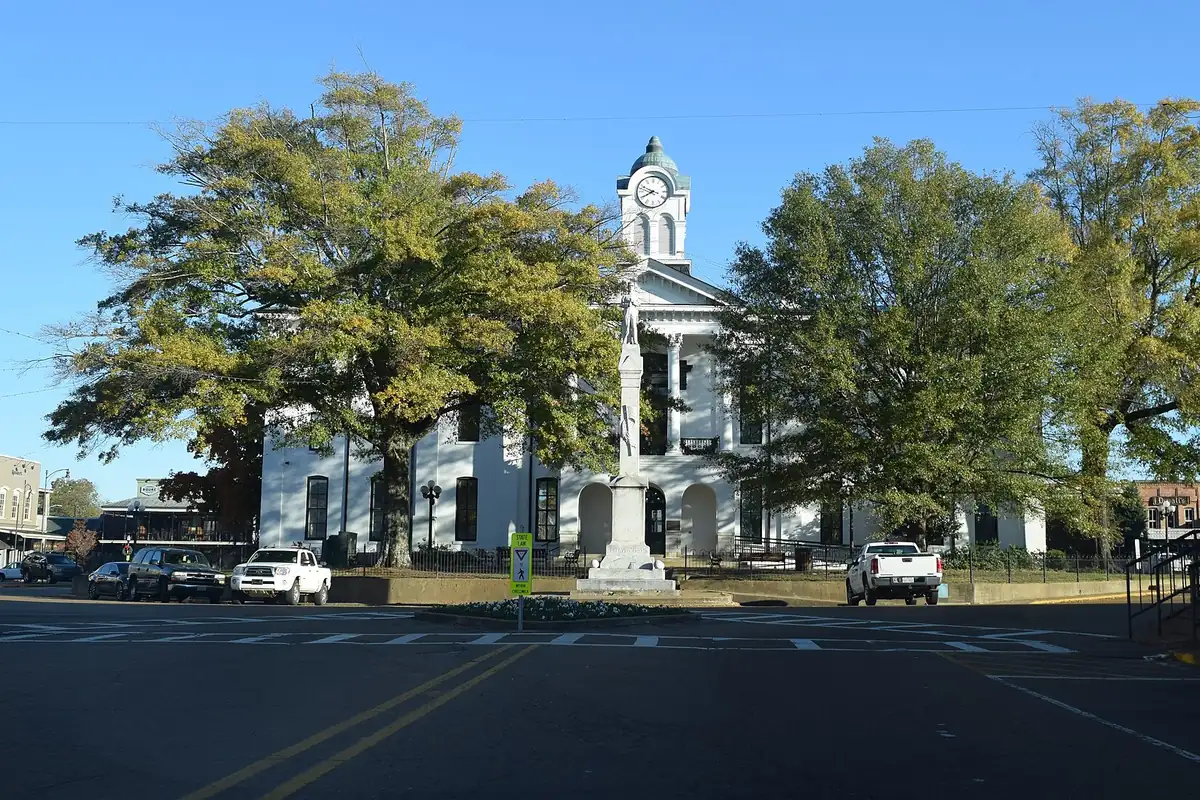
The cultural and economic hub of Oxford since the town was incorporated in 1837, with restaurants, shops, one of the country's best-known independent bookstores and an art gallery.
University of Mississippi
Ole Miss, the state's flagship university, founded in 1848, with red-brick buildings and landmarks such as the Lyceum and the Grove.
Rowan Oak
William Faulkner's home, built in 1844 and bought by the writer in 1930. He renamed it Rowan Oak for two trees: the rowan of Scotland and the American live oak.
University of Mississippi Museum
Founded in 1939 as the Mary Buie Museum, it holds the largest collection of fine arts and artifacts at an academic museum in Mississippi, from Southern folk art to Greek and Roman antiquities.
L.Q.C. Lamar House Museum
Lamar's Greek Revival home, with exhibits on the politics of slavery, secession and reunion and what it took to reunite the nation.
Getting there
Open Oxford in Google Maps
Opens in a new tab. The pin is the center of Oxford in the USGS place-name record.
The closest airports, Amtrak stations and intercity bus stops, measured in a straight line from the center of Oxford.
Airports
- Tupelo Regional (TUP) 43 mi 70 km
- Frederick W Smith International/Memphis (MEM) 53 mi 86 km
Amtrak trains
- Marks station (MKS) 44 mi 70 km
- Memphis station (MEM) 61 mi 98 km
Intercity buses
- Greyhound Batesville Terza One Stop Shop 19 mi 30 km
- Delta Bus Lines Inc. Tunica Junction 54 mi 86 km
- Jefferson Lines Memphis (MATA Airways Transit Center) 55 mi 89 km
Distances are as the crow flies, not by road. We don't list schedules or fares because they change; check with the airline, Amtrak or the bus company before you go. Official data (FAA commercial service airports (2025), FAA airport locations, Amtrak stations and Intercity Bus Atlas) from the FAA and the U.S. Bureau of Transportation Statistics, checked Nov 14, 2026.
Sponsored
Staying in Oxford?
Compare hotels in Oxford, Mississippi, on Expedia.
See hotels in OxfordWe may earn a commission if you buy through this link. It never changes what we write. Read our affiliate disclosure
Historical Sources & References
- City of Oxford, “History”. The Chickasaw cession of 1836, Lafayette County, the fifty acres “to be named Oxford, after the university town of Oxford, England,” the donors, Hoka, the charter and “the original dream” of 1841.
- Visit Oxford, “About Oxford”. Incorporation in May 1837, the donors and the earlier Chickasaw owners as Visit Oxford gives them, T. D. Isom’s recommendation, the vote of 1841 and the opening in 1848 with 80 students.
- Advisory Council on Historic Preservation, “Oxford, Mississippi”. The name chosen “in the hope that Mississippi’s first public university would be located there,” and the university’s opening in 1848.
- Henry Gannett, The Origin of Certain Place Names in the United States (1905), p. 235. Oxford, “so named from the university city in England because it is the location of the State University.”
- Dunbar Rowland, ed., Encyclopedia of Mississippi History, vol. 2 (1907), p. 368. Dr. Thomas D. Isom as first settler, incorporation in 1837, Besancon’s description of 1838, and the sixth-ballot win of January 26, 1841, with the rival towns; the charter of 1844 and the start of classes in 1848 continue on p. 369.
- Rowan Oak, “History”. Faulkner’s purchase of “The Bailey Place” in 1930 and why he renamed it Rowan Oak.
- GNIS feature 691644 (U.S. Geological Survey). The federal gazetteer listing for Oxford in Lafayette County, with its coordinates.
- U.S. Geological Survey, Oxford sheet (1940). The 1:62,500 map that the image at the top of this page was cropped from, with the University of Mississippi labeled beside the town.
Spot something wrong, or know more? Tell us here. You can also email us or use our contact page. Corrections are noted here with their date, never made silently.