Banner Elk, North Carolina: The Banners on the Elk River
Banner Elk is named for the Banners, a big family that settled along the Elk River starting in 1849. Neighbors called the place Banner's Elk, and so did its post office in 1875. The legislature chartered the town in 1891 as Shawneehaw, the name of the creek that meets the Elk there, and again in 1911 as Banner Elk.
Banner Elk, North Carolina, takes its name from the Banner family and the Elk River they settled on, but its first charter, in 1891, called it Shawneehaw. The family name and the river name were joined long before that, in the name neighbors gave the place.
Why is it called Banner Elk, North Carolina?
The North Carolina Gazetteer, first compiled by William S. Powell, says the town was “named for the Banner family, early settlers on the Elk River.” The town sits where Shawneehaw Creek flows into the Elk, the Gazetteer says, and the Elk flows west from there into Tennessee.
The Banner Elk Hotel’s National Register nomination, written by Sybil Argintar Bowers in 2000, fills in the family. Martin Luther Banner (1808-1895), from Surry County, came in 1849 and was the first white settler to stay for good, it says. In the 1850s four of his brothers, Lewis B., Anthony E., Edwin H. and John William, followed him. The Banners were most of the early population, so for years the settlement went by Banner’s Elk. A footnote explains the second word: the “Elk” came from where those Banner homes stood, on the Elk River.
The Greater Banner Elk Heritage Foundation tells it the same way. Meredith Olan, quoted in the town’s walking tour article, says that by the 1860 census the Banners counted “more than 30 men and 20 women,” and that people began calling the area “where the Banners live on the Elk River” or “Banner’s Elk.”
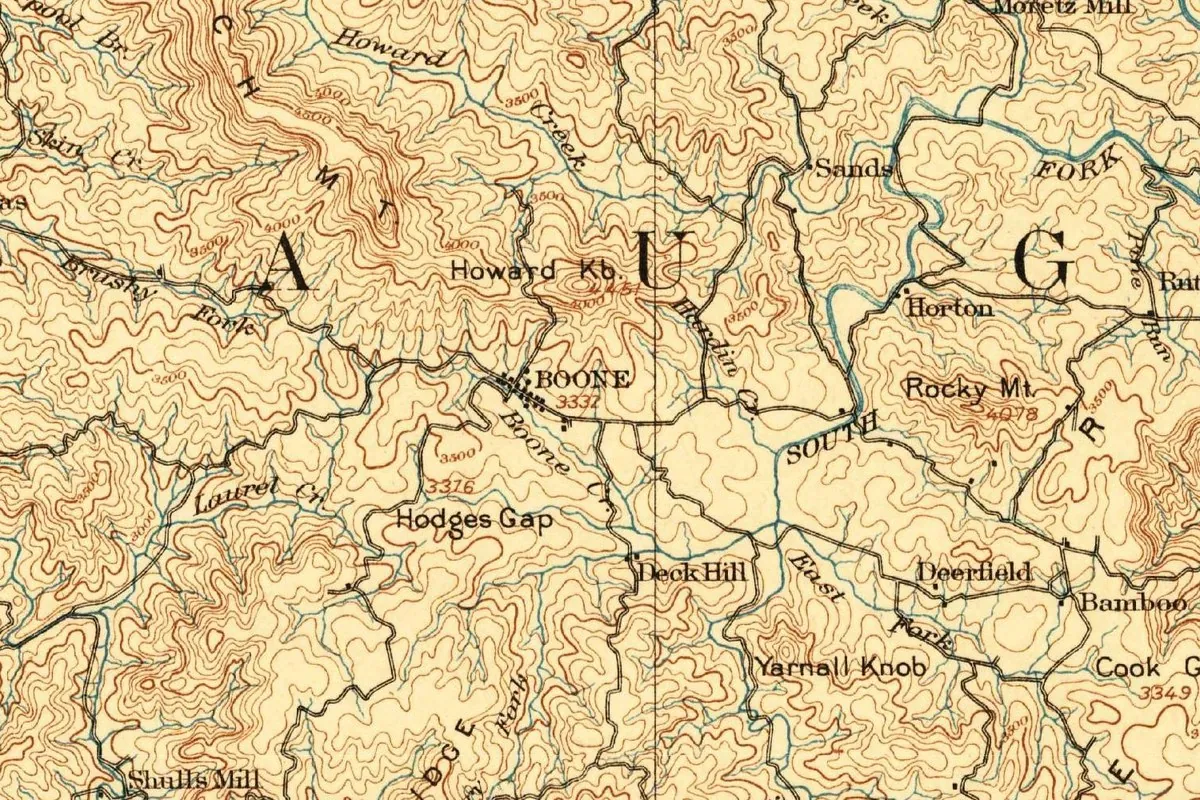
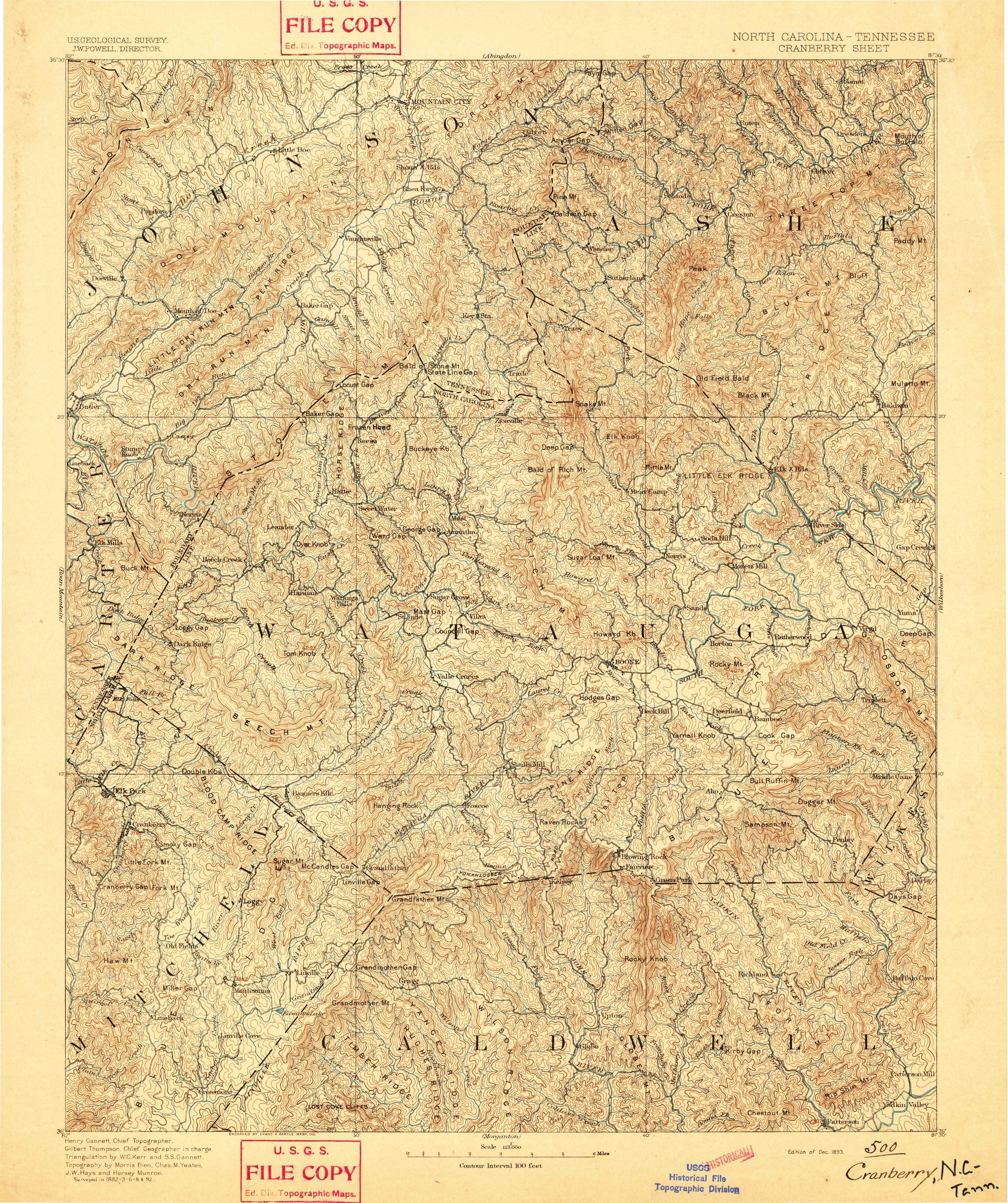
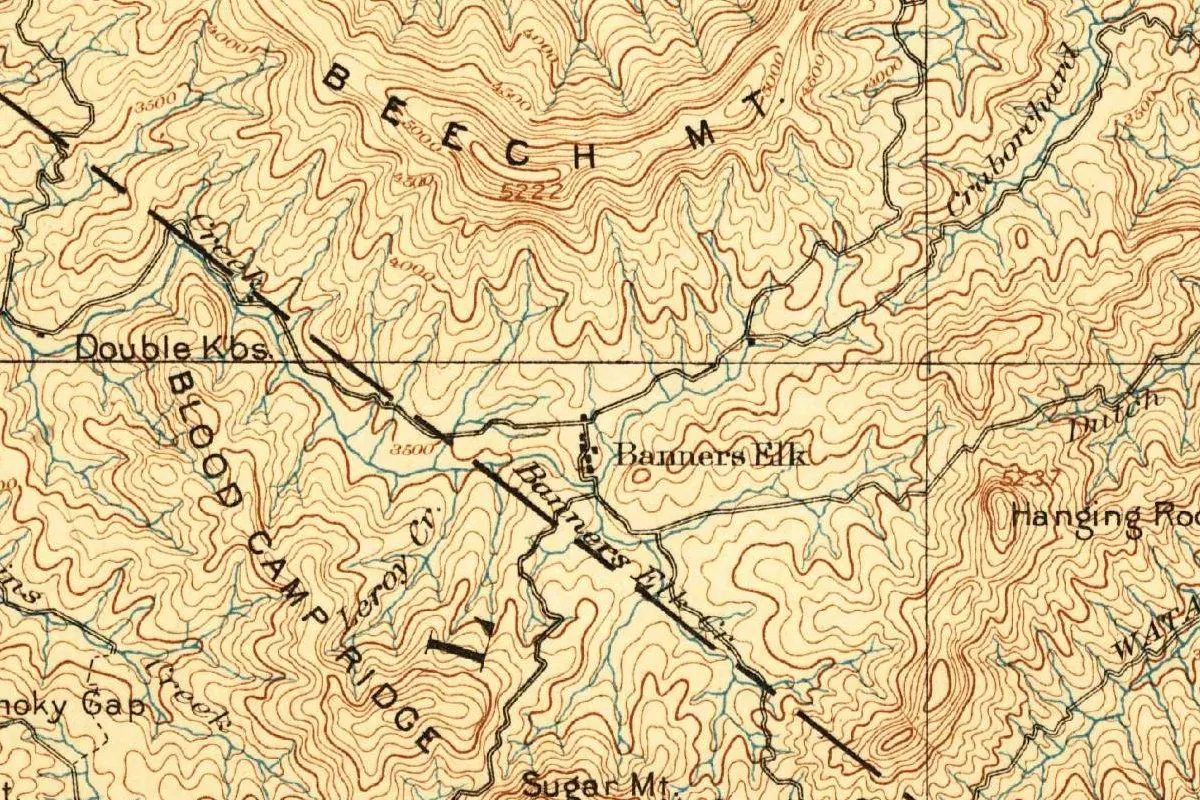
The apostrophe lasted a long time. The post office at Banner’s Elk was established on June 16, 1875, the nomination says. A state trout law of 1891 still lists the “Banners Elk” among the rivers it protects, and the Geological Survey’s map of 1893, at the top of this page, shows the town as “Banners Elk.” The nomination says the name didn’t become Banner Elk until the twentieth century.
Banner Elk history
The first town charter didn’t use the family name at all. Chapter 241 of the Private Laws of 1891, ratified on March 6, 1891, incorporated “the town of Shawneehaw in the county of Watauga.” Its limits started on the bank of the Elk River, near the head of S. H. Banner’s mill pond, and ran to Shawneehaw Creek. The act named S. M. Dugger mayor, with Wilson Kime, J. W. Banner and R. L. Lowe as commissioners.
Twenty years later the legislature started over. Chapter 158 of the Private Laws of 1911, ratified on February 27, 1911, incorporated “the Town of Banner Elk” and named L. D. Lowe mayor. That act still placed the town in Watauga County, though Avery County had been formed four days earlier, on February 23, 1911, the nomination says. The Gazetteer calls the 1911 charter a reincorporation of the 1891 town.
People were here before the Banners. The federal Advisory Council on Historic Preservation writes that the Cherokee were the area’s first inhabitants and that non-native settlers came in 1825, which matches the Gazetteer’s date for the first settlers. The council dates Martin Banner’s arrival to 1848, a year earlier than the nomination.
Roads and rails shaped the town’s ties to its neighbors. In the 1880s, the nomination says, the developer S. T. Kelsey, who had founded Highlands, built a turnpike road to Blowing Rock. A footnote adds that Banner Elk wanted the Tweetsie railroad line to make a stop in town, but the line went on to Boone. State marker N-43 records the founding of Lees-McRae College by Edgar Tufts in 1900.
Elk turns up in place names far from here. A different Elk River runs into the Kanawha at Charleston, West Virginia, where George Clendenin settled at its mouth in 1788. And Elko, Nevada, might just be the word elk plus an o, though a 1905 government book already called that uncertain.
Banners Elk on the 1893 map
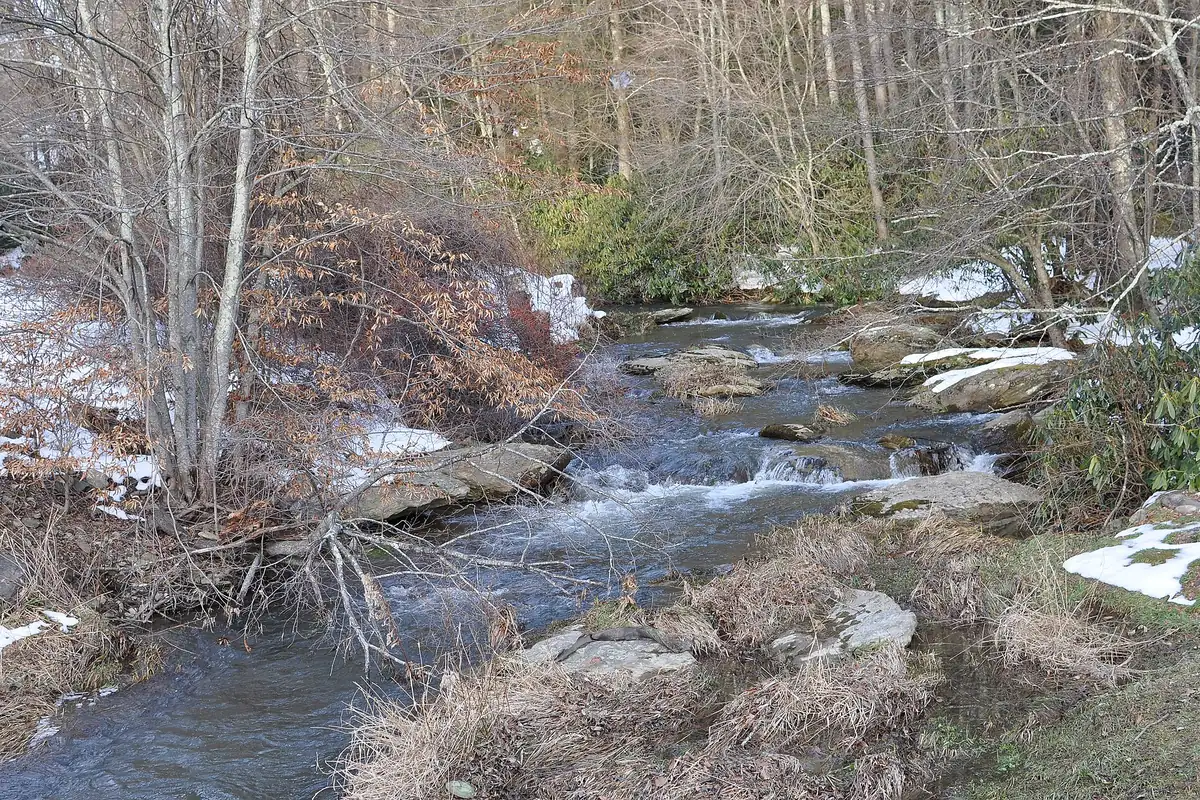
The map at the top comes from the Geological Survey’s Cranberry sheet, “Edition of Dec. 1893,” a 1:125,000 map of the North Carolina-Tennessee line. The margin gives survey years of 1882, 1883, 1886, 1888 and 1892, with topography by Morris Bien, Chas. M. Yeates, J. W. Hays and Hersey Munroe. Banners Elk is the small cluster of buildings in the middle, with Banners Elk Creek lettered along the stream beside it. Beech Mountain rises to 5,222 feet across the top, with Sugar Mountain below. The photo farther down shows Shawneehaw Creek in town, whose name the town carried in its 1891 charter.
Quick answers
Who is Banner Elk, North Carolina, named for?
The Banner family. Martin Luther Banner settled on the Elk River in 1849, four of his brothers followed in the 1850s, and the place came to be called Banner’s Elk.
What was Banner Elk, North Carolina, called before?
Banner’s Elk, with an apostrophe, the name of its 1875 post office. The town’s first charter, in 1891, incorporated it as Shawneehaw.
When did Banner Elk, North Carolina, become a town?
In 1891 as Shawneehaw, and again in 1911 as Banner Elk. The legislature ratified the second act on February 27, 1911.
Key dates
- 1825The first settlers are said to reach the site, by the Gazetteer's date; the federal preservation council gives the same year.
- 1849Martin Luther Banner, from Surry County, settles on the Elk River with his family.
- 1875June 16: The post office at Banner's Elk is established.
- 1891March 6: The legislature ratifies the act that incorporates the Town of Shawneehaw, in Watauga County.
- 1900Edgar Tufts founds Lees-McRae College in Banner Elk, according to state historical marker N-43.
- 1911February 27: The legislature ratifies an act that incorporates the Town of Banner Elk.
Things to do in Banner Elk, North Carolina
Historic Downtown Banner Elk Walking Tour
A 1.5-mile self-guided route with an app, past the Banner House, the Mill Pond, the 1917 Cheese House of the Shawneehaw Cheese Cooperative and the old school. Since Hurricane Helene, the town's tourism office suggests starting at the Historic Banner Elk School, stop 8.
Tate-Evans Park and the Banner Elk Greenway
A park of several acres at 210 Park Avenue, in the middle of town, with two playgrounds and a picnic shelter. The paved greenway, 1.1 miles (1.8 km) long, loops through the park and on into town.
Wildcat Lake
A 13-acre (5 ha) lake owned by Lees-McRae College, with a white sand beach and a fishing dock. The state Wildlife Resources Commission stocks it with bluegill, largemouth bass and trout, and a North Carolina fishing license is required.
Lees-McRae College
The college Edgar Tufts founded in 1900, named for the teacher Elizabeth McRae and the donor Mrs. S. P. Lees, according to state historical marker N-43 on NC 184/194 in town.
Getting there
Open Banner Elk in Google Maps
Opens in a new tab. The pin is the center of Banner Elk in the USGS place-name record.
The closest airports, Amtrak stations and intercity bus stops, measured in a straight line from the center of Banner Elk.
Airports
- Tri-Cities (TRI) Bristol/Johnson/Kingsport 37 mi 59 km
- Asheville Regional (AVL) 63 mi 101 km
- Charlotte/Douglas International (CLT) 84 mi 134 km
Amtrak trains
- Gastonia station (GAS) 73 mi 118 km
- Spartanburg station (SPB) 84 mi 135 km
Intercity buses
- Sunway Charters Boone 11 mi 18 km
- Virginia Breeze, Operated by Dillon's Virginia Breeze · Bristol (Park & Ride) 36 mi 57 km
- Greyhound Newton 47 mi 75 km
Distances are as the crow flies, not by road. We don't list schedules or fares because they change; check with the airline, Amtrak or the bus company before you go. Official data (FAA commercial service airports (2025), FAA airport locations, Amtrak stations and Intercity Bus Atlas) from the FAA and the U.S. Bureau of Transportation Statistics, checked Nov 27, 2026.
Sponsored
Staying in Banner Elk?
Compare hotels in Banner Elk, North Carolina, on Expedia.
See hotels in Banner ElkWe may earn a commission if you buy through this link. It never changes what we write. Read our affiliate disclosure
Historical Sources & References
- The North Carolina Gazetteer, “Banner Elk,” via NCpedia. The Banner family on the Elk River, Shawneehaw in 1891, the reincorporation of 1911 and the first settlers of about 1825.
- Private Laws of 1891, chapter 241, pp. 1169-1171. The Town of Shawneehaw, its limits and first officers. The same volume’s trout law (Public Laws, chapter 196) names the “Banners Elk.”
- Private Laws of 1911, chapter 158, pp. 381-383. The Town of Banner Elk, ratified February 27, 1911.
- National Register nomination, Banner Elk Hotel (2000). Martin Luther Banner and his brothers, Banner’s Elk, the post office of 1875, Avery County in 1911, Kelsey’s turnpike and the railroad.
- Advisory Council on Historic Preservation, Banner Elk. The Cherokee, the settlers of 1825 and Banner’s arrival in 1848.
- Banner Elk walking tour article. Meredith Olan on the 1860 census and the name, and the tour in the things-to-do list.
- North Carolina Highway Historical Marker Program, Guide (2019), marker N-43, p. 16. Lees-McRae College.
- Tate-Evans Park and Wildcat Lake. The details in the things-to-do list.
- GNIS feature 1018956 (U.S. Geological Survey). Banner Elk in Avery County, with the coordinates for this page.
- U.S. Geological Survey, Cranberry sheet (1893). The sheet the map at the top was cropped from.
Sponsored
Put this 1893 map on your wall
The Geological Survey's Cranberry sheet of December 1893, which still spells the town Banners Elk, under Beech Mountain on the Tennessee line. It is in the public domain: download the full-size scan for free, then have it printed on canvas with CanvasOnTheCheap.
Print a map on canvasDownload the full-size mapWe may earn a commission if you buy through this link. It never changes what we write. Read our affiliate disclosure
Spot something wrong, or know more? Tell us here. You can also email us or use our contact page. Corrections are noted here with their date, never made silently.