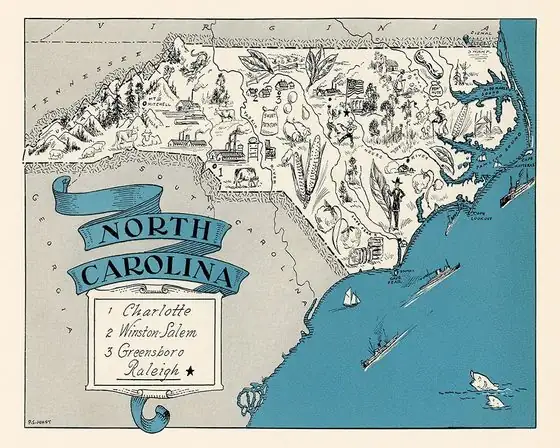
Spencer, North Carolina: Named for the Railroad's President
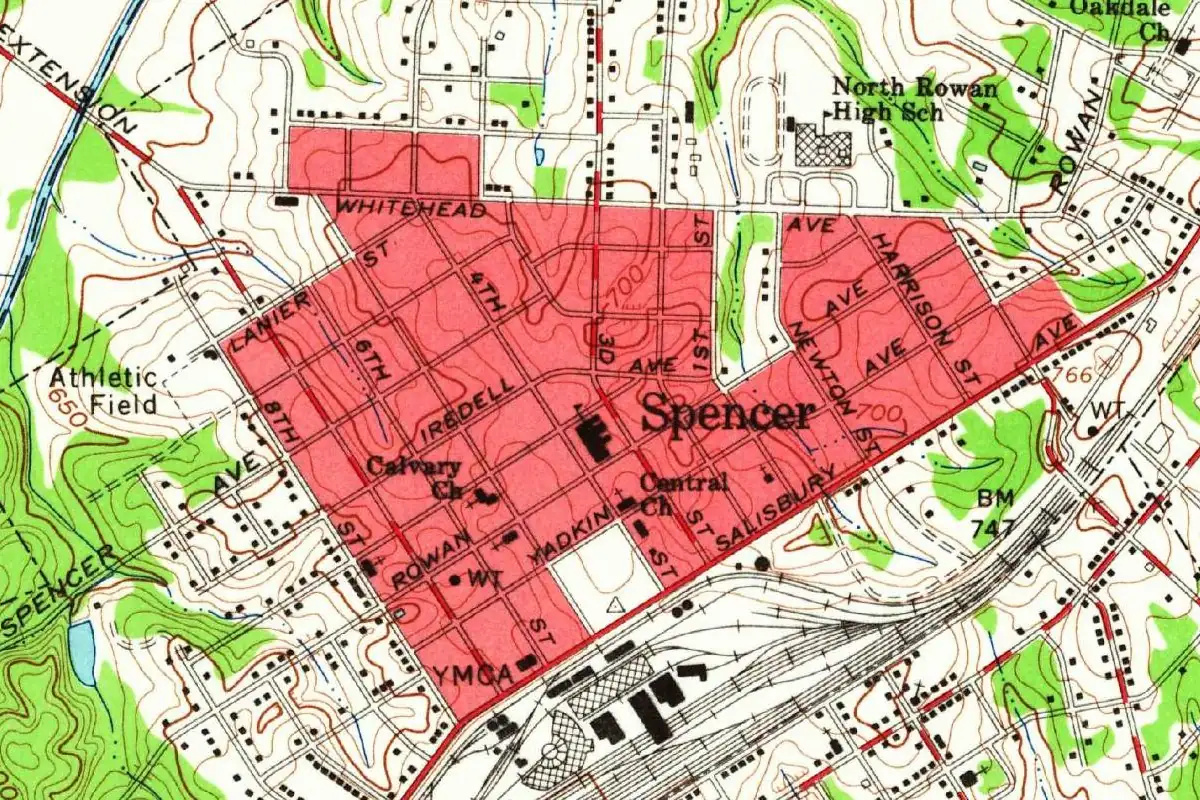
Spencer, North Carolina, is named for Samuel Spencer, the first president of the Southern Railway, whose repair shops were built here starting in 1896. The shops got his name first, and the town picked it up from them.
Halfway between Washington and Atlanta
Spencer was a Georgian. Walter R. Turner, historian at the North Carolina Transportation Museum, wrote a short piece for the state’s Tar Heel Junior Historian in 2005 called “The Naming of a North Carolina Railroad Town.” He says Spencer was born in 1847 near Columbus, Georgia, trained as an engineer, worked his way up to president of the Baltimore and Ohio, and in 1894 agreed to run the new Southern Railway that J. P. Morgan financed.
The Southern made Washington, D.C., its headquarters. It “needed a facility halfway on its main line between Washington and Atlanta to maintain and repair steam locomotives and rail cars,” Turner writes, and built one quickly on open land outside Salisbury. The state’s Department of Natural and Cultural Resources gives the start date: the company broke ground on March 23, 1896, and chose the Rowan County site “because it was halfway between Atlanta and Washington, D.C.”
Shops first, then a town
The sources don’t say exactly who picked the name. In Turner’s words, “Someone in the company suggested that the complex be named Spencer Shops, in honor of Samuel Spencer.” The state’s account says only that “the shops were named in honor of Southern’s first president.”
The town followed. “When a town for the white railroad workers and their families developed across the street and was incorporated in 1905,” Turner writes, “it seemed only natural that it would be named Spencer.” Many Black workers and their families, he adds, lived across the main line, in an area that became the separate town of East Spencer.
Turner asks why Spencer is “the only one of the state’s ‘railroad towns’ named for a railroad man.” That’s his way of putting it. If you read the story of Goldsboro, you’ll find a town named for the civil engineer who worked on the railroad from Wilmington, though he wasn’t a company president.
The shops on the map
In 1939, the North Carolina guide written by the Federal Writers’ Project called Spencer “a division point of the Southern Ry.” with 1,500 people working in its offices, roundhouses and shop. Turner says the giant Back Shop, two football fields long, opened in 1905, that a new roundhouse of 37 stalls followed in the mid-1920s, and that the shops employed up to 3,000 people by the 1930s and during World War II.
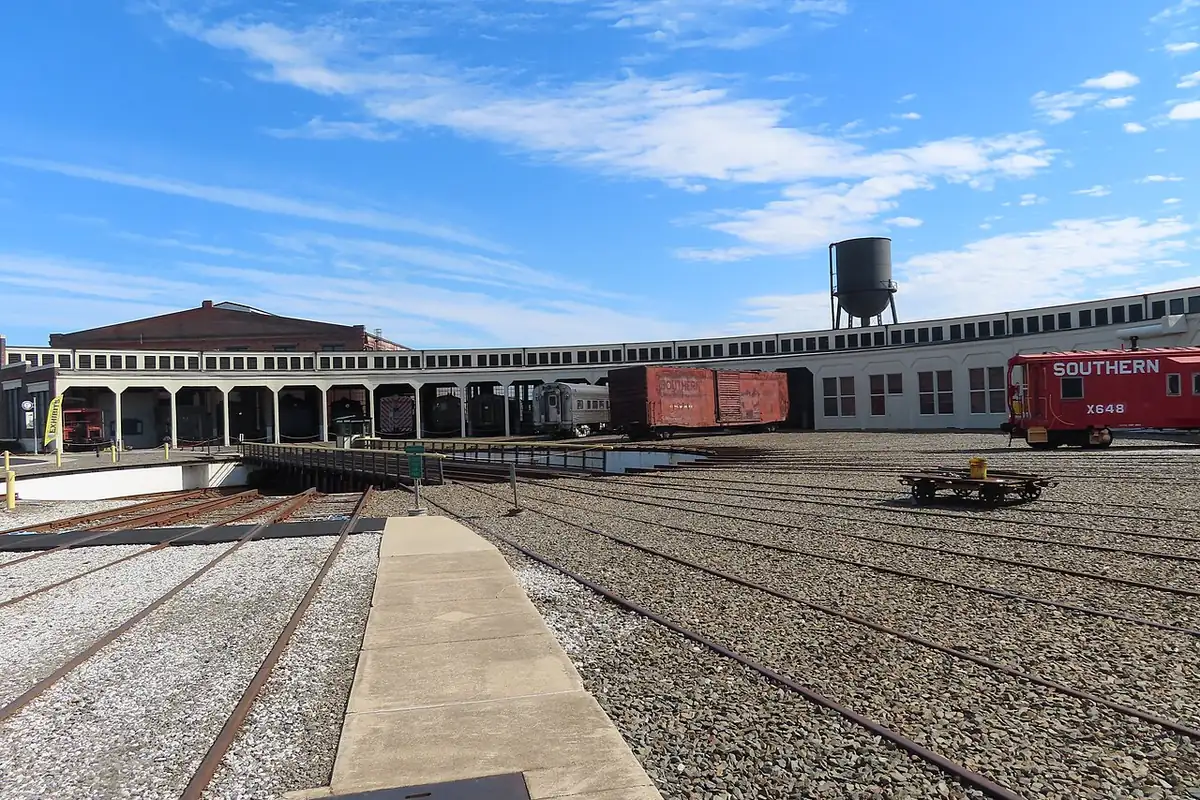
Samuel Spencer didn’t see most of that. He died in a railway wreck in 1906, Turner writes. After the Southern switched to diesels, Turner says, the shops “practically closed by 1960”; the state’s account has them closing for good in the late 1960s. The company gave the land and buildings to the state for what’s now the North Carolina Transportation Museum. The big yard and shop buildings still fill the town’s southern edge on the 1962 survey map.
Quick answers
Who was Spencer, North Carolina, named after?
Samuel Spencer, the first president of the Southern Railway, who held the job from 1894 to 1906. The town took its name from the company’s Spencer Shops, Turner writes.
Why did the Southern Railway build shops in Spencer?
It wanted a repair facility halfway along its main line between Washington and Atlanta. Ground was broken on March 23, 1896, according to the state’s Department of Natural and Cultural Resources.
What is East Spencer?
A separate town across the main line, where many Black railroad workers and their families lived, according to Turner.
Key dates
- 1894Samuel Spencer becomes the first president of the new Southern Railway.
- 1896March 23: the Southern breaks ground on its repair shops here, named Spencer Shops.
- 1905The town beside the shops is incorporated as Spencer, and the Back Shop opens.
- 1906Samuel Spencer dies in a railway wreck.
Getting there
Open Spencer in Google Maps
Opens in a new tab. The pin is the center of Spencer in the USGS place-name record.
The closest airports, Amtrak stations and intercity bus stops, measured in a straight line from the center of Spencer.
Airports
- Concord-Padgett Regional (JQF) 26 mi 42 km
- Piedmont Triad International (GSO) Greensboro 40 mi 64 km
- Charlotte/Douglas International (CLT) 44 mi 71 km
Amtrak trains
- Salisbury station (SAL) 2 mi 4 km
- Lexington Barbeque Festival station (LEX) 14 mi 22 km
Intercity buses
- Greyhound Salisbury Citgo under 1 mi 1 km
- Barons Bus Lines Statesville 26 mi 42 km
- Sunway Charters Albemarle (Vac & Dash) 27 mi 44 km
Distances are as the crow flies, not by road. We don't list schedules or fares because they change; check with the airline, Amtrak or the bus company before you go. Official data (FAA commercial service airports (2025), FAA airport locations, Amtrak stations and Intercity Bus Atlas) from the FAA and the U.S. Bureau of Transportation Statistics, checked Nov 6, 2026.
Sponsored
Staying in Spencer?
Compare hotels in Spencer, North Carolina, on Expedia.
See hotels in SpencerWe may earn a commission if you buy through this link. It never changes what we write. Read our affiliate disclosure
Historical Sources & References
- Walter R. Turner, “The Naming of a North Carolina Railroad Town,” Tar Heel Junior Historian 44, no. 2 (Spring 2005), pp. 30-33. Samuel Spencer’s life, the halfway facility outside Salisbury, “Someone in the company suggested” the name, the town incorporated in 1905, East Spencer, the Back Shop, the 37-stall roundhouse, the 3,000 workers and Spencer’s death in 1906.
- NC Department of Natural and Cultural Resources, “Beginnings of Spencer Shops”. Ground broken on March 23, 1896, the halfway site and the shops “named in honor of Southern’s first president, Samuel Spencer.”
- Federal Writers’ Project, North Carolina: A Guide to the Old North State (1939), p. 376. Spencer as “a division point of the Southern Ry.” with 1,500 workers.
- GNIS feature 995290 (U.S. Geological Survey). Spencer’s listing with the Geological Survey’s names program, Rowan County, without a history note.
Spot something wrong, or know more? Tell us here. You can also email us or use our contact page. Corrections are noted here with their date, never made silently.