Cuyahoga Falls, Ohio: The Town That Gave Up Manchester
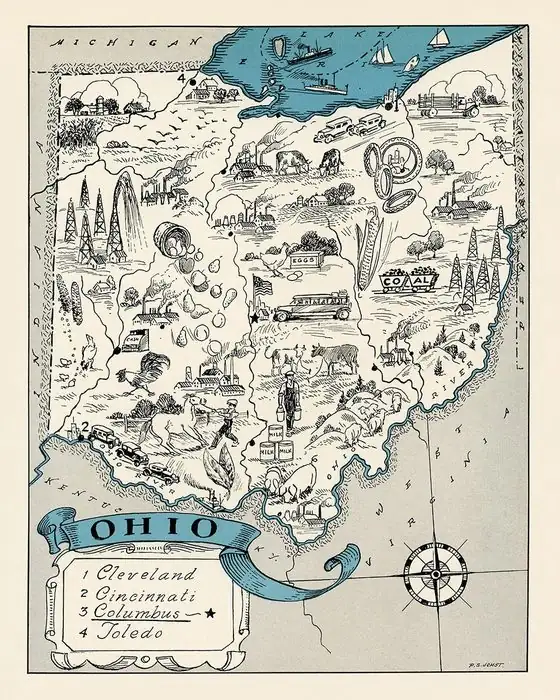
Cuyahoga Falls, Ohio, is named for the falls of the Cuyahoga River, which run through the town. It was first called Manchester. Around 1826, when the village asked for a post office, there were already several Manchesters in Ohio, and at the postmaster general's suggestion it took the name Cuyahoga Falls instead.
A mill town’s name for a mill town
Cuyahoga Falls, Ohio, started out as Manchester and switched to the name of the falls on its river when the post office found too many Manchesters. The new name pointed straight at the falls and rapids of the Cuyahoga River, which run right through the middle of town.
The City of Cuyahoga Falls dates the place to 1812, when William Wetmore set out to develop land owned by Judge Joshua Stow of Middletown, Connecticut. What drew people was the water. Samuel A. Lane’s 1892 history of Akron and Summit County says Francis Kelsey and Isaac Wilcox dammed the river as early as 1815 and built a sawmill to supply lumber to the “navy yard” at Old Portage, and that a gristmill and a linseed oil mill went up at the same spot. The houses that went up nearby became known as the “Old Village.”
Lane is also the one who explains the first name, and he hedges it:
“This village was at first called ‘Manchester,’ probably after the great English manufacturing town of that name, in view of the manufacturing possibilities of the locality.”
Note the “probably.” Nobody left a record saying why, but Lane’s guess fits what the settlers were doing there: building mills on falling water.
Too many Manchesters
The trouble came with the mail. Lane says that “when postal facilities were asked for, in about 1826, it being found that there were several other Manchesters in the State, at the suggestion of the postmaster general, the name of Cuyahoga Falls was adopted.” Henry Newberry became the village’s first postmaster.
Older and newer sources tell the same story with small differences. William Henry Perrin’s 1881 county history says there were “many towns of that name in the Union,” not just in the state, and adds that “the falls of the river were seen to be of great value and importance.” The city’s website says the change came “at the request of the Ohio Postmaster General,” and the Cuyahoga Falls Historical Society says there were “several other Manchesters in Ohio.” So if you’re wondering which other Ohio Manchesters were in the way, none of these sources names them.
The falls in the name
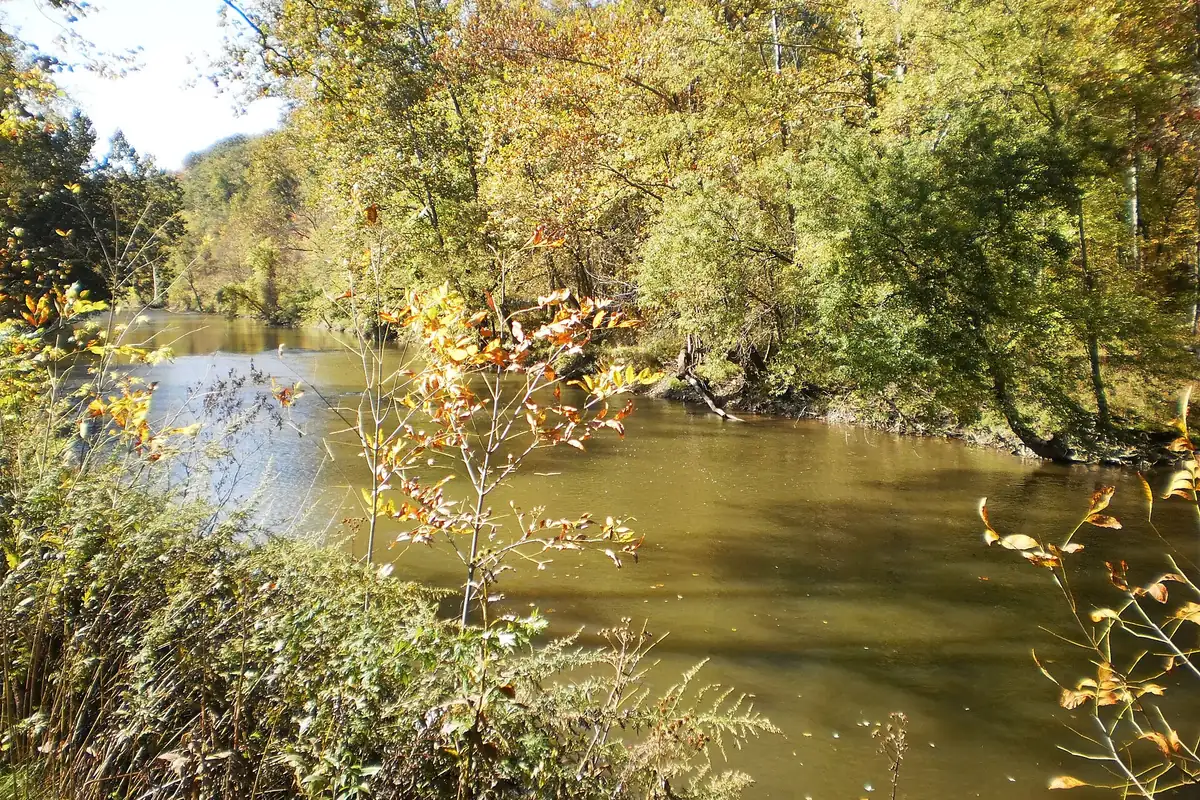
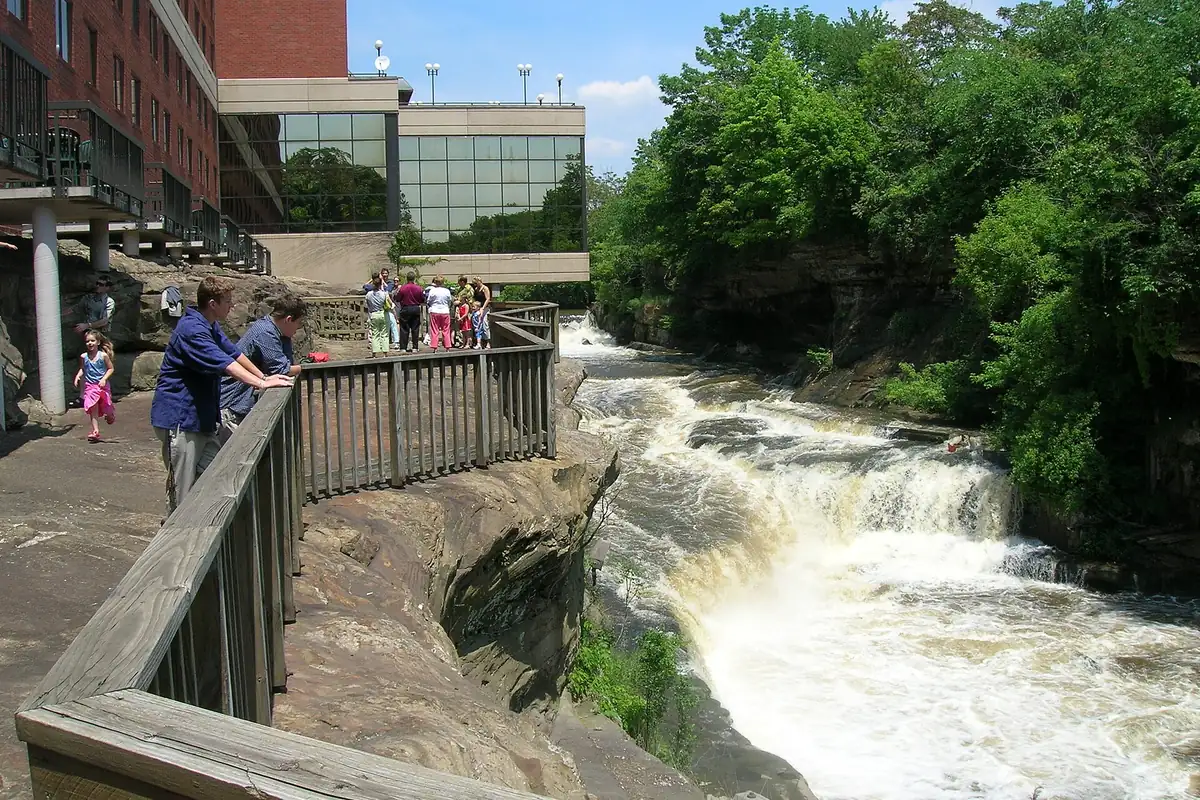
Perrin, writing in 1881, described what the name points to. The river has cut a channel into the sandstone “from eighty to one hundred feet in depth,” he wrote, running over two miles (3 km), and “in it are the falls.” The city puts the stretch of falls at about two miles (3 km) too. It also says the rough water is why Native Americans traveling between the Great Lakes and the Mississippi left the river there and walked what’s now Portage Trail.
The paperwork caught up with the new name fast. Perrin says Elkanah Richardson first laid out the town of Cuyahoga Falls in 1825, and that an act of the state’s General Assembly passed March 5, 1836, made it “a town corporate, by the name of Cuyahoga Falls.” By then, Manchester was already part of the past.
What “Cuyahoga” means, or might
The “Falls” half is easy. The “Cuyahoga” half isn’t. Henry Gannett, the federal geographer, offered three answers in a row in 1905: some say it comes from “cayahaga,” meaning “crooked,” a writer named Atwater derived it from “cuyahogan-uk,” meaning “lake river,” and “another authority gives carrihoga, meaning ‘news carrier.’”
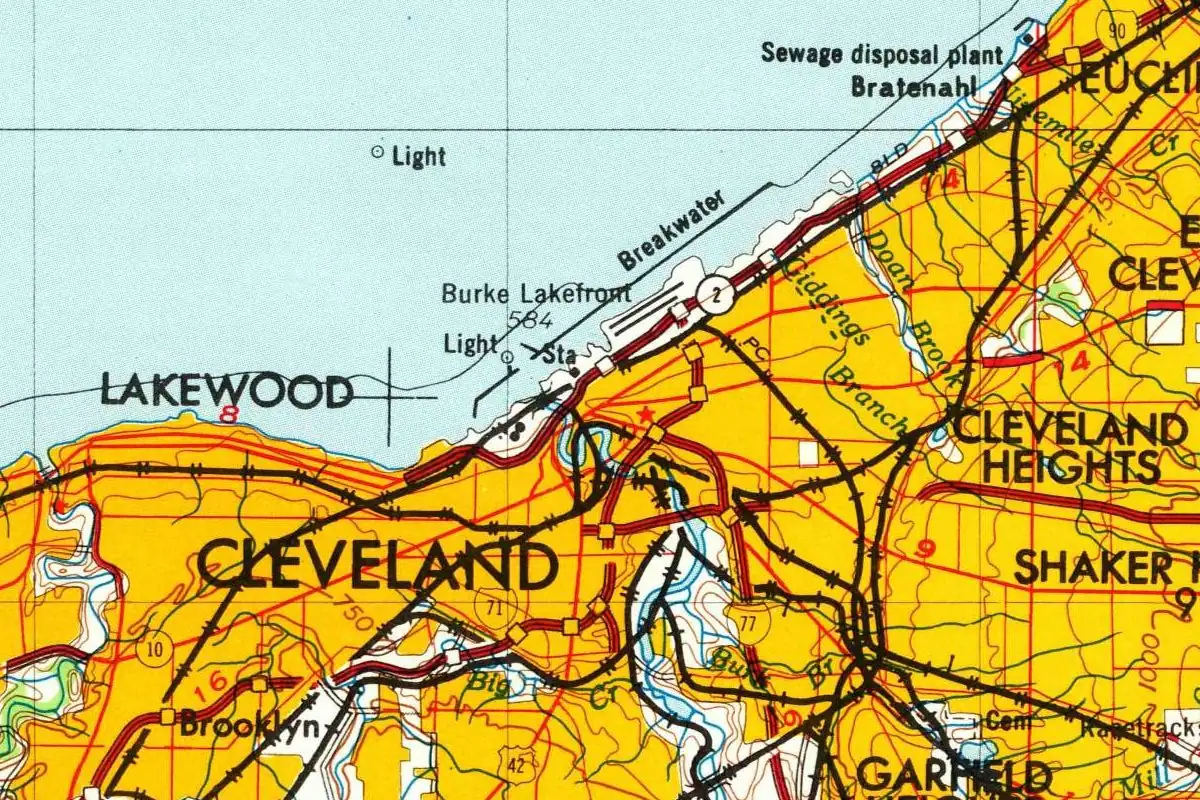
Lane knew the “crooked” version as the common one. He tied it to the river’s twisting course, which runs southwest, swings north near Akron and empties into Lake Erie at Cleveland. Then he printed a challenge to it from D. E. Shongo of Salamanca, New York, whom he described as an educated Seneca and a civil engineer. Shongo told him the word was Seneca and meant the place of a “jaw-bone,” after a huge jawbone found along the river near Cleveland. Lane quoted him at length, but no source here settles the question, and you’ll want to treat any one-word translation of Cuyahoga with caution.
The town that gave up Manchester didn’t get everything it wanted, either. A 2016 survey for the city says Cuyahoga Falls campaigned to become the Summit County seat and lost the vote to Akron in 1842. But the falls that replaced an English factory town’s name are still right there downtown, doing what the name says.
Quick answers
What was Cuyahoga Falls originally called?
Manchester. The city says it was founded under that name in 1812, and Lane’s 1892 history says it was “probably” named for the English manufacturing town.
Why did Manchester become Cuyahoga Falls?
Because of the post office. When the village asked for one, in about 1826, there were already several Manchesters in the state, and the postmaster general suggested the new name, Lane says.
What does Cuyahoga mean?
Nobody agrees. The 1905 USGS bulletin lists “crooked,” “lake river” and “news carrier,” and Lane printed a Seneca engineer’s view that it refers to a jawbone.
Are there really falls in Cuyahoga Falls?
Yes. Perrin described them in 1881 inside a sandstone channel 80 to 100 feet (24 to 30 m) deep that runs more than two miles (3 km), and the city puts the falls at about two miles (3 km) long.
Key dates
- 1812William Wetmore founds the settlement, then called Manchester, to develop land owned by Judge Joshua Stow.
- 1825Elkanah Richardson first lays out the town of Cuyahoga Falls.
- 1826About this year the village asks for a post office, and Manchester gives way to Cuyahoga Falls.
- 1836March 5: an act of the Ohio General Assembly incorporates the town 'by the name of Cuyahoga Falls.'
- 1842Cuyahoga Falls loses a vote for the Summit County seat to Akron.
Getting there
Open Cuyahoga Falls in Google Maps
Opens in a new tab. The pin is the center of Cuyahoga Falls in the USGS place-name record.
The closest airports, Amtrak stations and intercity bus stops, measured in a straight line from the center of Cuyahoga Falls.
Airports
- Akron-Canton Regional (CAK) 15 mi 25 km
- Cleveland-Hopkins International (CLE) 27 mi 44 km
Amtrak trains
- Alliance station (ALC) 25 mi 40 km
- Cleveland station (CLE) 28 mi 45 km
Intercity buses
- FlixBus Akron Bus Station 5 mi 8 km
- GoBus Akron, OH 5 mi 8 km
- Barons Bus Lines Akron 5 mi 8 km
Distances are as the crow flies, not by road. We don't list schedules or fares because they change; check with the airline, Amtrak or the bus company before you go. Official data (FAA commercial service airports (2025), FAA airport locations, Amtrak stations and Intercity Bus Atlas) from the FAA and the U.S. Bureau of Transportation Statistics, checked Nov 13, 2026.
Sponsored
Staying in Cuyahoga Falls?
Compare hotels in Cuyahoga Falls, Ohio, on Expedia.
See hotels in Cuyahoga FallsWe may earn a commission if you buy through this link. It never changes what we write. Read our affiliate disclosure
Historical Sources & References
- Samuel A. Lane, Fifty Years and Over of Akron and Summit County (1892), pp. 725-726. The Kelsey and Wilcox dam and mills of 1815 and the “Old Village”; Manchester, “probably after the great English manufacturing town”; the post office of about 1826, the “several other Manchesters in the State” and the postmaster general’s suggestion; Henry Newberry as first postmaster; the “crooked” meaning and D. E. Shongo’s Seneca “jaw-bone” version.
- William Henry Perrin, ed., History of Summit County (1881), p. 468. The name “derived from the falls in the Cuyahoga River,” the sandstone channel 80 to 100 feet (24 to 30 m) deep and over two miles (3 km) long, “many towns of that name in the Union,” Elkanah Richardson’s plat of 1825 and the act of March 5, 1836.
- Henry Gannett, The Origin of Certain Place Names in the United States (USGS, 1905), p. 98. Cuyahoga Falls “situated at falls on the Cuyahoga River,” with three proposed meanings of Cuyahoga: “crooked,” “lake river” and “news carrier.”
- City of Cuyahoga Falls, “History & Societies”. The founding in 1812 by William Wetmore for Judge Joshua Stow, the first name Manchester, the change “at the request of the Ohio Postmaster General,” the two miles (3 km) of falls and the portage around them.
- Cuyahoga Falls Historical Society, “Local History”. The “several other Manchesters in Ohio.”
- Naylor Wellman, Historic Architectural Survey for the City of Cuyahoga Falls (2016). Founded in 1812 “as the town of Manchester,” and the county-seat vote lost to Akron in 1842.
- GNIS feature 1048646 (U.S. Geological Survey). Lists the city in Summit County and gives the coordinates our map is drawn from.
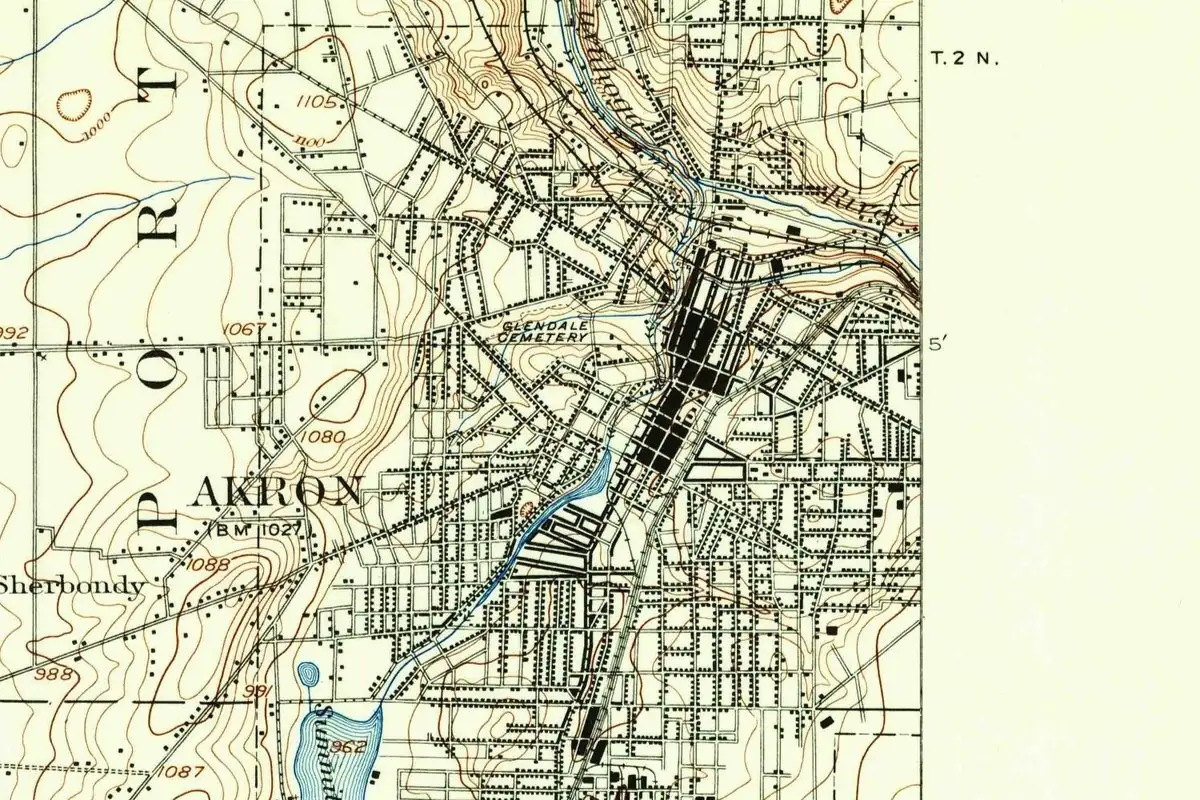
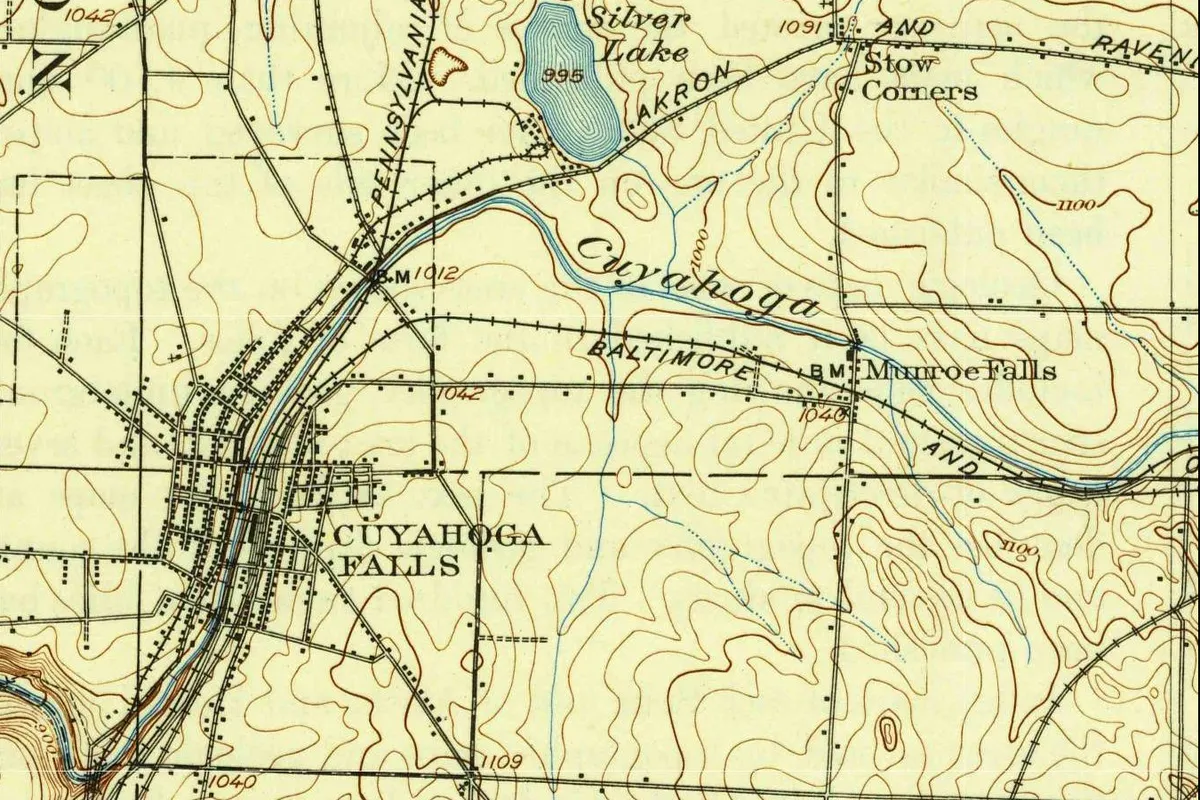
- U.S. Geological Survey, Kent sheet (1906). The source of the map at the top of this page.
Spot something wrong, or know more? Tell us here. You can also email us or use our contact page. Corrections are noted here with their date, never made silently.