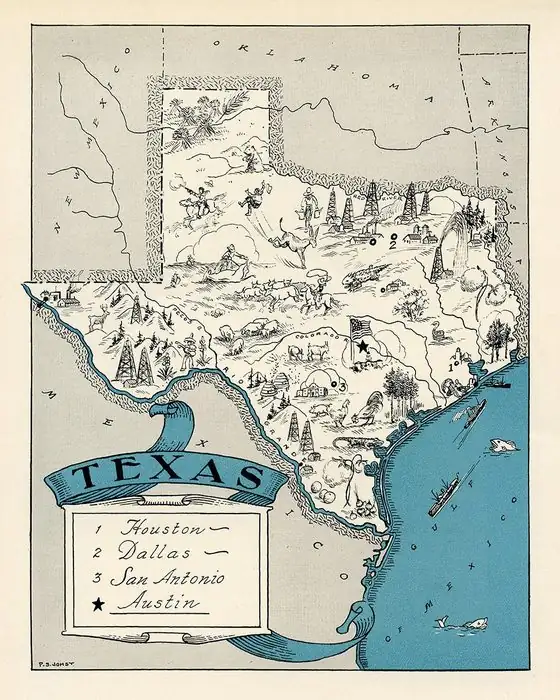
Beaumont, Texas: Named for a Founder's Late Wife
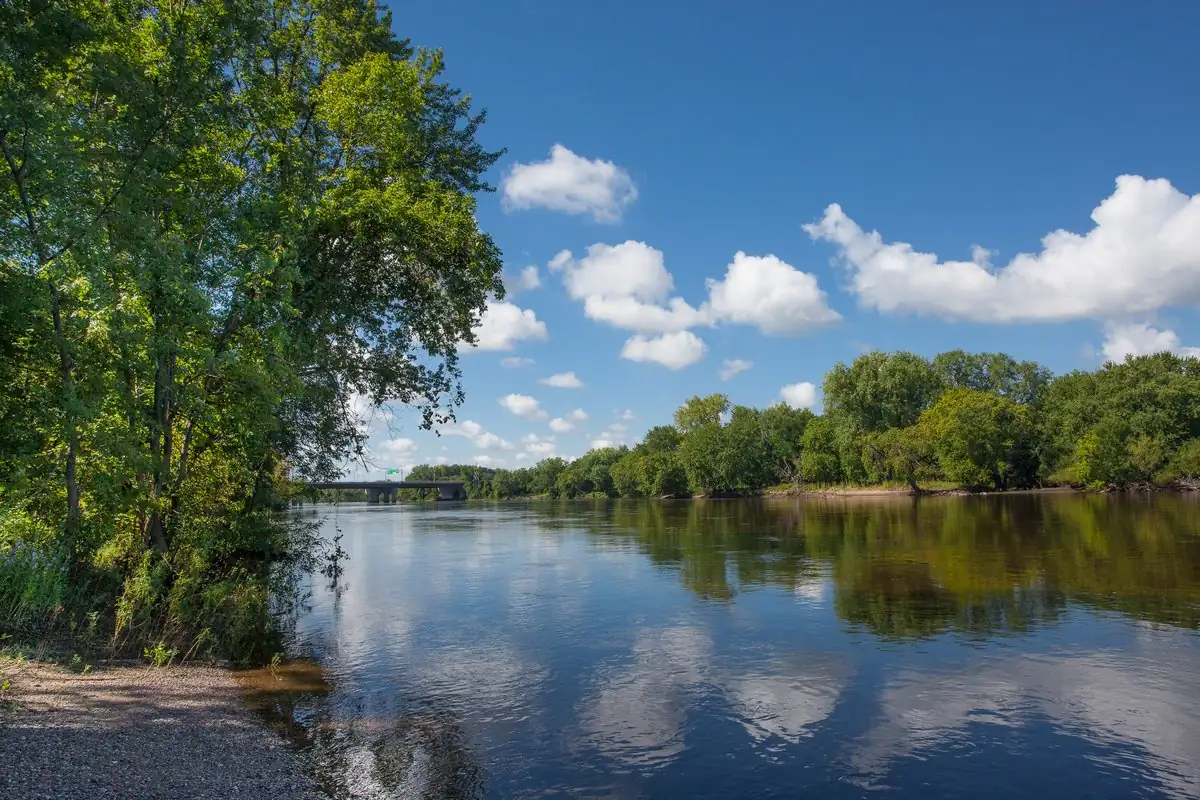
Henry Millard most likely named Beaumont for his wife, Mary Dewburleigh Barlace Warren Beaumont, who had died in 1834. In September 1835 Millard and his partners bought 50 acres on the Neches River and laid out the town. The Handbook of Texas calls Mary's maiden name the most credible explanation of the name.
Mary Beaumont of Natchez
Beaumont, Texas, carries a woman’s maiden name: Henry Millard most likely named the town for his late wife, Mary, who was born a Beaumont. She never lived to see it. Mary died in 1834, more than a year before her husband helped lay out the town on the Neches River.
Her full name was a mouthful. The Handbook of Texas biography of Millard, written by Judith Walker Linsley and Ellen Walker Rienstra, gives it as Mary Dewburleigh Barlace Warren Beaumont, “the daughter of a prosperous Natchez merchant family.” Henry Millard, born in Stillwater, New York, probably in 1796, married her in Natchez, Mississippi, on August 24, 1826.
They had two sons there. In 1827 Millard opened a drug, medicine, book and stationery store with his brother-in-law, Franklin Beaumont. Then the family moved to New Orleans in 1832, and things went badly. His business partner, Samuel Mason, died in September 1833, the firm ran into money trouble, and Mary died on May 30, 1834.
So when you say “Beaumont,” you’re saying the family name of a Natchez merchant’s daughter. Whatever the word means in French, in this story it’s simply her surname.
Fifty acres between two settlements
Millard didn’t start over alone. He went into business with Joseph P. Pulsifer and Thomas B. Huling, left his boys to be raised in New Orleans, and moved to Texas in August 1835. He and Pulsifer opened a store in Santa Anna, a small settlement on the Neches.
There was already a community nearby. Paul E. Isaac’s Handbook history of the city says Beaumont grew up around the farm of Noah and Nancy Tevis, who settled on the Neches in 1824. People called that spot Tevis Bluff or Neches River Settlement. Together with Santa Anna, it became the townsite.
The deal itself is precise. On September 4, 1835, the partnership, doing business as J. P. Pulsifer and Company, bought fifty acres along the Neches between Santa Anna and Tevis Bluff. The biography’s next sentence is the one this whole page hangs on: “There the company laid out the town of Beaumont, named after Millard’s late wife.”
Isaac is a little more careful. “The most credible account of how the town was named,” he writes, “is that Millard gave it his wife’s maiden name, Beaumont.” That’s a historian choosing his words: not a certainty, but the explanation he trusts most. Millard’s biographers, writing in the same reference, state it flatly.
The other Beaumont, and a county called Jefferson
Here’s where it gets tangled. Mary wasn’t the only Beaumont in Millard’s life. Her brother was named Jefferson Beaumont, and his name is attached to a different argument.
That fall Millard went to the Consultation, the assembly that set up Texas’s revolutionary government, as a delegate from the Liberty District. On November 13, 1835, he voted for a new municipality called Jefferson. Millard family tradition says he named it for his brother-in-law in Natchez, Jefferson Beaumont. His biographers don’t buy it, or at least don’t think it can be shown: “there is insufficient evidence to prove this story.”
Not everybody was that cautious. Henry Gannett, the U.S. Geological Survey’s geographer, put the brother-in-law version straight into his 1905 dictionary of American place names, on page 168:
“Jefferson; county in Texas, named for Jefferson Beaumont, an early settler and prominent citizen.”
The modern Handbook entry on Jefferson County, by Diana J. Kleiner, says something else: the county was named for the municipality before it, “which was in turn named for Thomas Jefferson.” Gannett didn’t give the town of Beaumont an entry at all. So the family name shows up twice in 1835, once on a town and maybe once on a county, and only the town’s version has historians behind it. If you’ve ever mixed up the coastal county with the river town in northeast Texas, our story of Jefferson, Texas sorts that one out.
A county seat, then a long wait
Beaumont didn’t stay small for lack of a title. At Millard’s urging, Isaac writes, the First Congress of the Republic of Texas made Beaumont the seat of the newly formed Jefferson County and gave it a charter in 1838. Kleiner adds that the first seat, Old Jefferson on Cow Bayou, was replaced by Beaumont that year and had disappeared by 1845.
Millard had a busy few years in between. He served as a lieutenant colonel in the Texas Revolution and led infantry at San Jacinto on April 21, 1836. Back in Beaumont, he was chief justice of Jefferson County from 1838 to 1840 and an alderman in 1840. In 1842 he moved to Galveston, where he died in August 1844 and was buried.
The town he named had a rocky start as a government. A second charter set up a city government in 1840 that was soon abandoned, and another try in 1860 didn’t last either. Continuous city government only dates from 1881. Through all of it the name stayed put.
The name came first, the oil came later
Beaumont’s best-known chapter came much later, and it has nothing to do with Mary. In 1901 the Spindletop gusher came in. Isaac’s history says the boom left Beaumont with a doubled population, 20,640 by 1910, along with great wealth and an oil economy. The Texas Company, Gulf Oil and Humble were all formed in Beaumont during the boom’s first year.
Before that, it was a lumber and rice-milling town with a busy river port, about 85 miles (137 km) east of Houston, in the Gulf Coast corner of Texas that Isaac calls the Golden Triangle, and 25 air miles (40 km) north of the Gulf. The Beaumont Rice Mill, founded in 1892, was the first commercial rice mill in Texas.
By the time the derricks went up, the town had been carrying Mary’s surname for 66 years. You could spend a whole day in Beaumont’s oil museums and never hear her name. It’s on every road sign anyway. Her husband’s partnership bought fifty acres of riverbank, and the name of a woman who’d died in New Orleans the year before is what stuck to them.
Quick answers
Who is Beaumont, Texas, named after?
Mary Beaumont, most likely. The Handbook of Texas calls it the most credible account that Henry Millard gave the town his late wife’s maiden name, and his biography says the town was “named after Millard’s late wife.”
Is Beaumont named after Jefferson Beaumont?
No evidence says so. Jefferson Beaumont, Mary’s brother, comes up in a family tradition about the name of the Jefferson municipality, which his biographers say can’t be proved. Gannett, writing in 1905, credits Jefferson County to him; the Handbook says Thomas Jefferson.
What was Beaumont called before it was Beaumont?
It wasn’t one place yet. The townsite took in Tevis Bluff, also called Neches River Settlement, and the nearby settlement of Santa Anna, according to the Handbook of Texas.
When was Beaumont founded?
In 1835. Millard’s partnership bought the land on September 4, 1835, and laid out the town; the Republic of Texas made it the county seat and granted a charter in 1838.
Key dates
- 1824Noah and Nancy Tevis settle on the Neches River. The community around their farm becomes known as Tevis Bluff.
- 1826Henry Millard marries Mary Dewburleigh Barlace Warren Beaumont in Natchez, Mississippi, on August 24.
- 1834Mary Millard, born a Beaumont, dies on May 30.
- 1835On September 4, J. P. Pulsifer and Company buys 50 acres on the Neches and lays out the town of Beaumont.
- 1838The First Congress of the Republic of Texas makes Beaumont the seat of Jefferson County and grants it a charter.
- 1901The Spindletop gusher sets off the oil boom that doubles Beaumont's population by 1910.
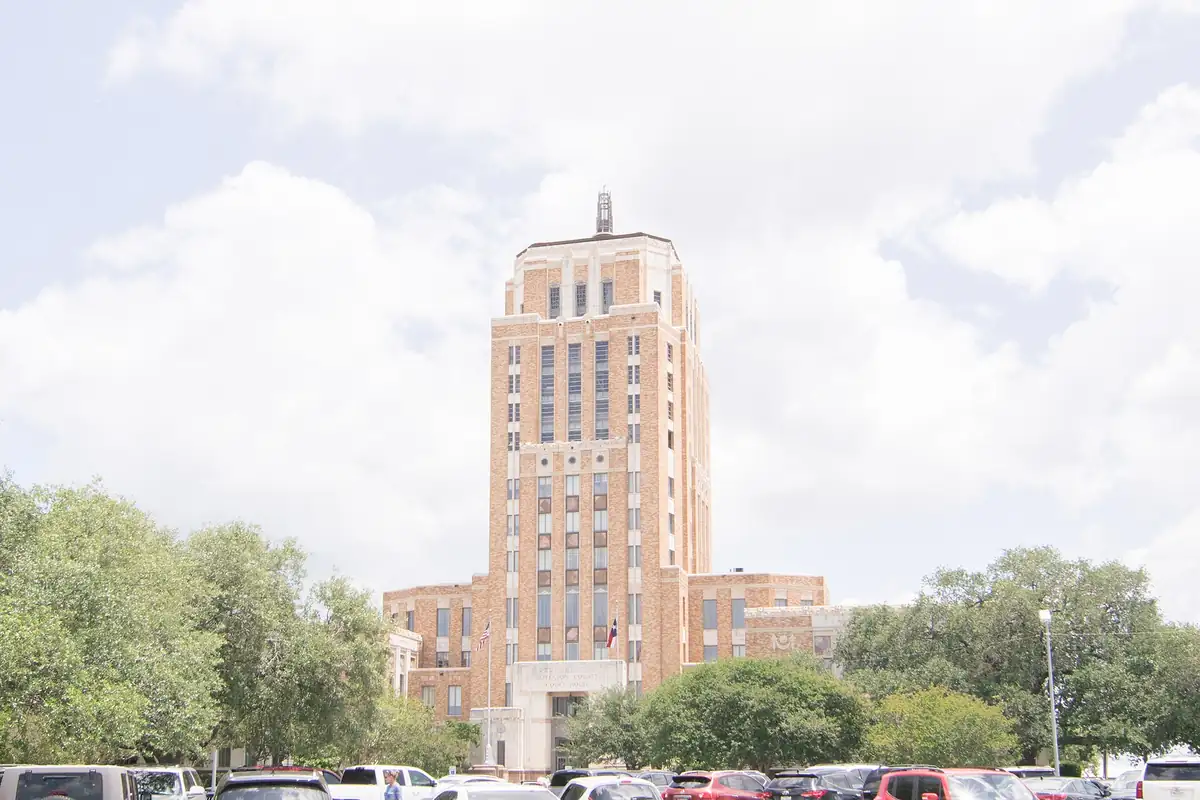
Things to do in Beaumont, Texas
Spindletop-Gladys City Boomtown Museum
A replica oil boomtown of clapboard buildings, including a post office, saloon, general store and working print shop, plus a replica gusher that shoots water 100 feet (30 m), the height of the 1901 Lucas Gusher.
John Jay French House Museum
Built in 1845 by John Jay French, a tanner and merchant, it's one of the oldest surviving houses in Beaumont, with pioneer furnishings and a blacksmith shop, tannery and smokehouse on the grounds.
McFaddin-Ward House
A Beaux-Arts Colonial Revival mansion completed in 1906, shown with its original furnishings, carriage house and gardens on guided tours.
Texas Energy Museum
A museum in historic downtown Beaumont, at 600 Main Street, devoted to the story of Texas oil.
Fire Museum of Texas and the Dalmatian hydrant
At the museum stands a 24-foot (7 m), Dalmatian-spotted fire hydrant that Disney gave the city in 1999 for the re-release of 101 Dalmatians. It weighs over 4,500 pounds.
Getting there
Open Beaumont in Google Maps
Opens in a new tab. The pin is the center of Beaumont in the USGS place-name record.
The closest airports, Amtrak stations and intercity bus stops, measured in a straight line from the center of Beaumont.
Airports
- Jack Brooks Regional (BPT) Beaumont 11 mi 17 km
- Lake Charles Regional (LCH) 53 mi 85 km
- George Bush Intcntl/Houston (IAH) 74 mi 120 km
Amtrak trains
- Beaumont station (BMT) 2 mi 3 km
- Lake Charles station (LCH) 54 mi 87 km
Intercity buses
- FlixBus Vidor Gateway Travel Plaza 4 mi 6 km
- Greyhound Orange Exxon 17 mi 27 km
Distances are as the crow flies, not by road. We don't list schedules or fares because they change; check with the airline, Amtrak or the bus company before you go. Official data (FAA commercial service airports (2025), FAA airport locations, Amtrak stations and Intercity Bus Atlas) from the FAA and the U.S. Bureau of Transportation Statistics, checked Nov 13, 2026.
Sponsored
Staying in Beaumont?
Compare hotels in Beaumont, Texas, on Expedia.
See hotels in BeaumontWe may earn a commission if you buy through this link. It never changes what we write. Read our affiliate disclosure
Historical Sources & References
- Paul E. Isaac, “Beaumont, TX,” Handbook of Texas Online. The Tevis farm of 1824, Tevis Bluff or Neches River Settlement, Santa Anna, Millard’s partners, the line “the most credible account of how the town was named,” the 1838 county seat and charter, later charters, the 1892 rice mill, Spindletop and the population figures. Also the distances to Houston and the Gulf.
- Judith Walker Linsley and Ellen Walker Rienstra, “Millard, Henry,” Handbook of Texas Online. Mary Dewburleigh Barlace Warren Beaumont, the 1826 marriage in Natchez, her death on May 30, 1834, the purchase of September 4, 1835, the town “named after Millard’s late wife,” the unproven family tradition about Jefferson Beaumont, San Jacinto, his offices in Beaumont and his death in Galveston in 1844.
- Diana J. Kleiner, “Jefferson County,” Handbook of Texas Online. The county named for the earlier municipality, “in turn named for Thomas Jefferson,” and Old Jefferson replaced by Beaumont as county seat in 1838.
- Henry Gannett, The Origin of Certain Place Names in the United States (USGS, 1905), p. 168. The entry crediting Jefferson County, Texas, to “Jefferson Beaumont, an early settler and prominent citizen.” Gannett has no entry for the town of Beaumont.
- GNIS feature 1330268 (U.S. Geological Survey). Where the federal names database puts Beaumont: a populated place in Jefferson County, record 1330268.
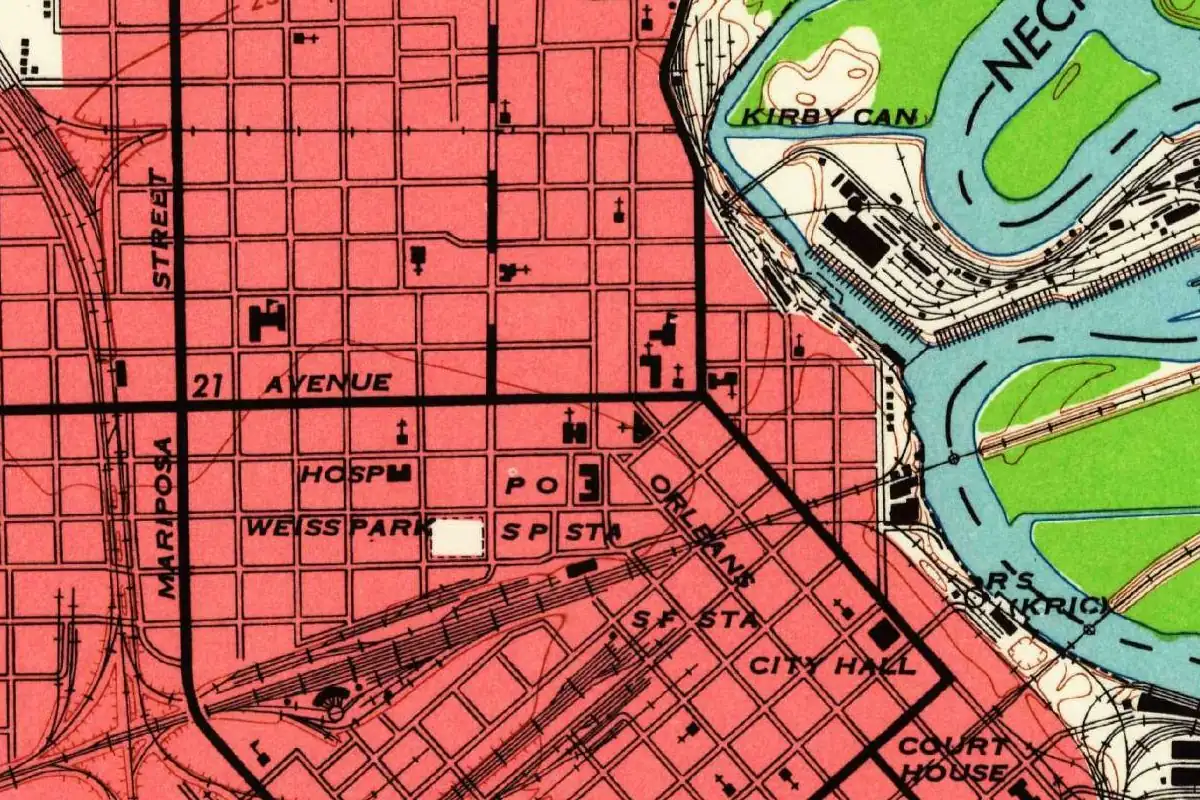
- U.S. Geological Survey, Beaumont East sheet (1943). The 1:24,000 quadrangle that the old map of downtown Beaumont was cut from.
Spot something wrong, or know more? Tell us here. You can also email us or use our contact page. Corrections are noted here with their date, never made silently.