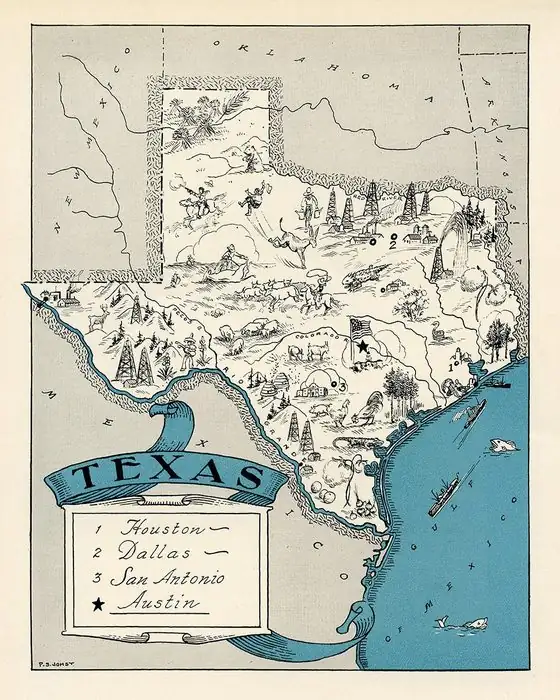
Denton, Texas: Named for the Captain Buried on Its Square
The city carries the name of John B. Denton, a Methodist preacher, lawyer and militia captain killed at the battle of Village Creek in 1841. Denton County was named for him when it was created in 1846, and when the county seat moved to a new site in 1857, the new town took the same name.
Preacher, lawyer, captain
John B. Denton, the preacher and lawyer Denton, Texas, is named for, has been buried on its courthouse lawn since 1901, sixty years after he was killed. His name went on the county first, in 1846, and reached the town in 1857, when the county seat moved to a new site and, as a 1918 county history put it, its “name changed from Alton to Denton.”
So who was he? W. Stanley Hoole’s entry on him in the Handbook of Texas says he was born in Tennessee in 1806, was orphaned young and spent about ten years as a traveling Methodist preacher in Arkansas and southern Missouri. In the fall of 1836 or early in 1837 he crossed the Red River into Texas. Preaching didn’t pay enough for a growing family, so he studied law and went into practice at Clarksville.
He also served as a captain in the militia. In May 1841 his unit attacked the villages along Village Creek, about 6 miles (10 km) east of where Fort Worth now stands, and Denton was shot and killed. Henry Gannett’s 1905 federal guide to American place names covers it in one line: the river, county and city in Texas were “named for Capt. John B. Denton, who was killed in battle with the Indians.”
Go easy on the dramatic versions, though. Denton County’s own biography of him warns, “Few verified accounts of John B. Denton exist. Most of the written accounts are highly romanticized.” Even the date moves around: the Handbook says May 22, the county says May 24.
The county first, then the town
The legislature created Denton County out of Fannin County on April 11, 1846, and named it for him, the county says. The town of Denton didn’t exist yet. The first county seat was Pinckneyville, on Pecan Creek, and there wasn’t much to it. Ed. F. Bates, whose History and Reminiscences of Denton County came out in 1918, wrote that there were “no improvements” there, so Judge John T. Mills held court “under the shade of a large post oak tree.”
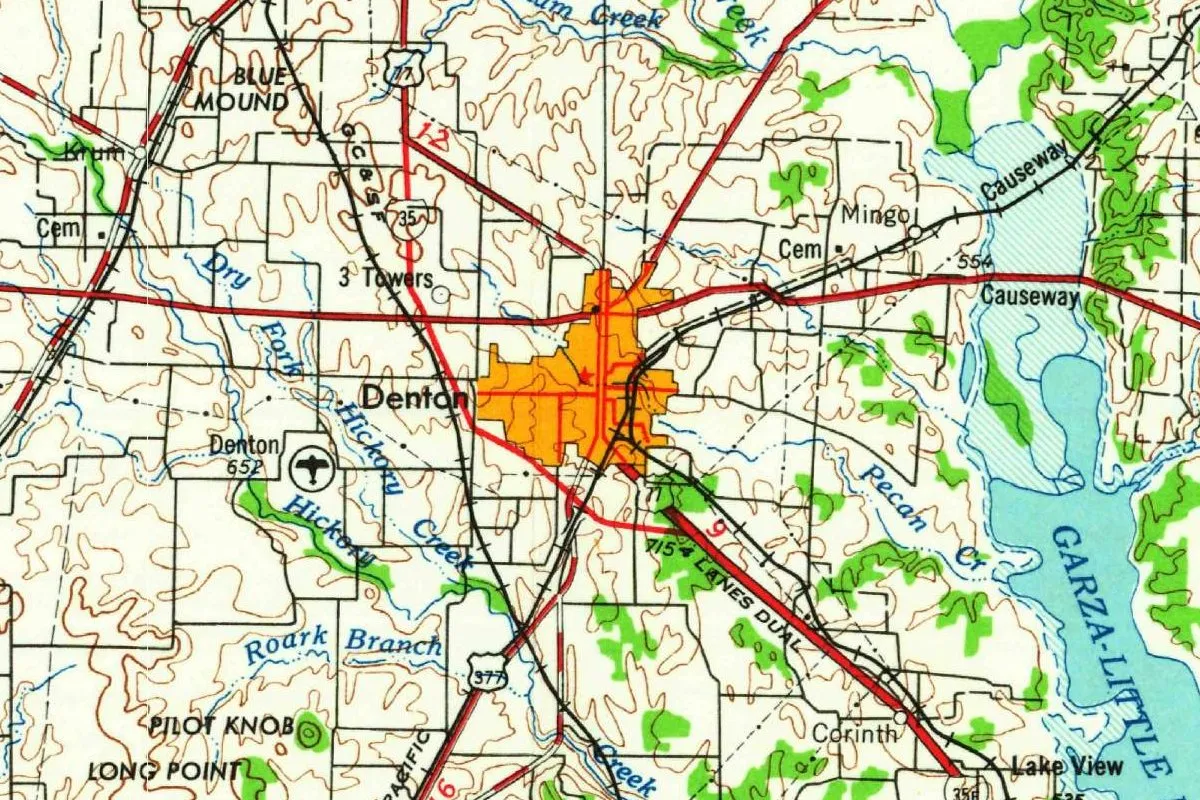
An act of February 4, 1848, moved the seat to a new spot that “shall be known and called ‘Alton,’” near today’s Corinth, about 4 miles (6 km) southeast of Denton. They dug a well and found no water. So the seat moved again, to Hickory Creek about 5 miles (8 km) south of Denton, and the act of 1850 that Bates prints called that place Alton too. (The county’s own history has both moves happening in 1848.) If you’re reading old deeds or family letters that mention Alton, check which one they mean.
By the mid-1850s, people wanted a seat closer to the middle of the county. In November 1856, voters chose between two offers of free land. One man offered 50 acres; Hiram Cisco, Bill Loving and William Woodruff together offered 100. Bates tells what happened next:
“The latter proposition received the largest vote, and was selected as the county seat and its name changed from Alton to Denton.”
Read that carefully. It wasn’t Alton getting a new sign. The seat of government moved to a new piece of land, and the name that came with it was the one the county had carried for ten years. Lots were sold at a public sale on January 10, 1857, and Otis G. Welch, whom the Handbook says was sometimes called the “Father of Denton,” helped lay out the town. Denton was incorporated in 1866.
A grave on the courthouse lawn
John B. Denton’s body took a long road to get there. The Handbook says he was first buried in an unmarked grave on Oliver Creek, near a stream now called Denton Creek. Years later, John S. Chisum dug up the remains and reburied them in a box in a corner of his own yard on Clear Creek.
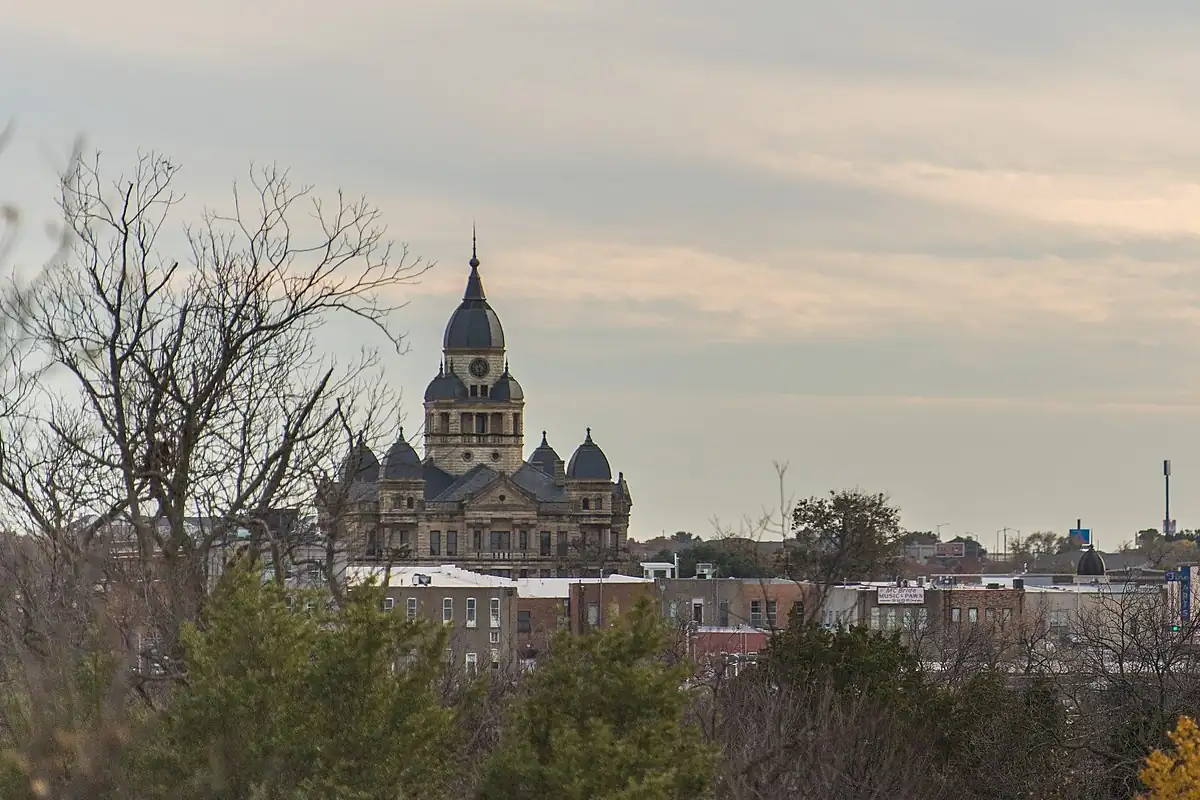
In 1900, the Old Settlers’ Association of Denton County went looking for him. On November 21, 1901, the county says, he was buried again in the southeast corner of the courthouse lawn. Bates reprinted the local paper’s report of that day, which describes him as “pioneer and border hero, for whom this county and city are named.” The courthouse in the photo at the bottom of this page had been dedicated in 1897, so it was only four years old when he arrived. If you walk around it today, you’re walking past the man the whole county is named for.
Not the only Denton
Gannett’s 1905 guide lists two Dentons side by side, and they have nothing to do with each other. The one in Caroline County, Maryland, was named for Sir Robert Eden, governor of the province from 1769 to 1776, and “was first called Eden Town.” The Texas one got its name from a preacher who never saw it.
Quick answers
Who is Denton, Texas, named after?
John B. Denton, a Methodist preacher, lawyer and militia captain who was killed at Village Creek in 1841. Denton County was named for him in 1846, and the town took the same name when it became the county seat in 1857.
Where is John B. Denton buried?
On the Denton County Courthouse lawn, in the southeast corner. He was reburied there on November 21, 1901, after two earlier graves, one near Oliver Creek and one in John S. Chisum’s yard.
Was Denton, Texas, ever called Alton?
Not quite. Alton was the name of two earlier county seats a few miles south and southeast. When voters moved the seat to new land in 1856, Bates wrote that its “name changed from Alton to Denton,” but the town of Denton was laid out fresh in 1857.
Is Denton named after the county or the man?
The man, by way of the county. The county got his name in 1846, and the county seat that was laid out in 1857 took the county’s name.
Key dates
- 1841May: John B. Denton is killed in the battle of Village Creek, about 6 miles (10 km) east of the site of Fort Worth.
- 1846April 11: the legislature creates Denton County out of Fannin County and names it for him.
- 1848February 4: an act moves the county seat from Pinckneyville to a site to be "known and called 'Alton.'"
- 1856November: voters pick 100 acres donated by Hiram Cisco, William Loving and William Woodruff for a new county seat.
- 1857January 10: lots in the new county seat, Denton, are sold at a public sale.
- 1866Denton is incorporated, with J. B. Sawyer as its first mayor.
- 1901November 21: John B. Denton's remains are reburied on the courthouse lawn.
Getting there
Open Denton in Google Maps
Opens in a new tab. The pin is the center of Denton in the USGS place-name record.
The closest airports, Amtrak stations and intercity bus stops, measured in a straight line from the center of Denton.
Airports
- Dallas-Fort Worth International (DFW) 23 mi 36 km
- Dallas Love Field (DAL) 30 mi 49 km
Amtrak trains
- Gainesville station (GLE) 28 mi 46 km
- Fort Worth station (FTW) 34 mi 54 km
Intercity buses
- FlixBus Denton 1 mi 2 km
- Greyhound Lewisville Chevron 14 mi 23 km
Distances are as the crow flies, not by road. We don't list schedules or fares because they change; check with the airline, Amtrak or the bus company before you go. Official data (FAA commercial service airports (2025), FAA airport locations, Amtrak stations and Intercity Bus Atlas) from the FAA and the U.S. Bureau of Transportation Statistics, checked Nov 13, 2026.
Sponsored
Staying in Denton?
Compare hotels in Denton, Texas, on Expedia.
See hotels in DentonWe may earn a commission if you buy through this link. It never changes what we write. Read our affiliate disclosure
Historical Sources & References
- Ed. F. Bates, History and Reminiscences of Denton County (1918), pp. 15-16, 24, 63-64. Pinckneyville (spelled Pinkneyville) with “no improvements” (p. 15); the acts of 1848 and 1850 that named both later seats Alton, near Corinth and on Hickory Creek (p. 16); the 1901 newspaper report on “Captain John B. Denton, pioneer and border hero, for whom this county and city are named” (p. 24); the 1856 vote, “its name changed from Alton to Denton,” and the lot sale of January 10, 1857 (pp. 63-64).
- Henry Gannett, The Origin of Certain Place Names in the United States (USGS, 1905), p. 104. The Texas river, county and city “named for Capt. John B. Denton, who was killed in battle with the Indians,” and Denton, Maryland, first called Eden Town.
- W. Stanley Hoole, “Denton, John Bunyan,” Handbook of Texas Online. His life as preacher, lawyer and captain, his death at Village Creek on May 22, 1841, the graves on Oliver Creek and in Chisum’s yard, and the 1901 reburial on the courthouse lawn.
- E. Dale Odom, “Denton, TX (Denton County),” Handbook of Texas Online. The town founded in 1857 to be the county seat, named like the county for John B. Denton; the 100 acres from Cisco, Woodruff and Loving; Otis G. Welch as “Father of Denton”; incorporation in 1866.
- Denton County, “John B. Denton”. The warning that most accounts of him are “highly romanticized,” the date of May 24, 1841, and the reburial on November 21, 1901.
- Denton County, “Denton County History”. The county created on April 11, 1846, Pinckneyville, the two sites called Alton, the move of the seat and the courthouse dedicated in 1897.
- GNIS feature 1334260 (U.S. Geological Survey). Feature 1334260 puts the city in Denton County at the spot we used for the map.
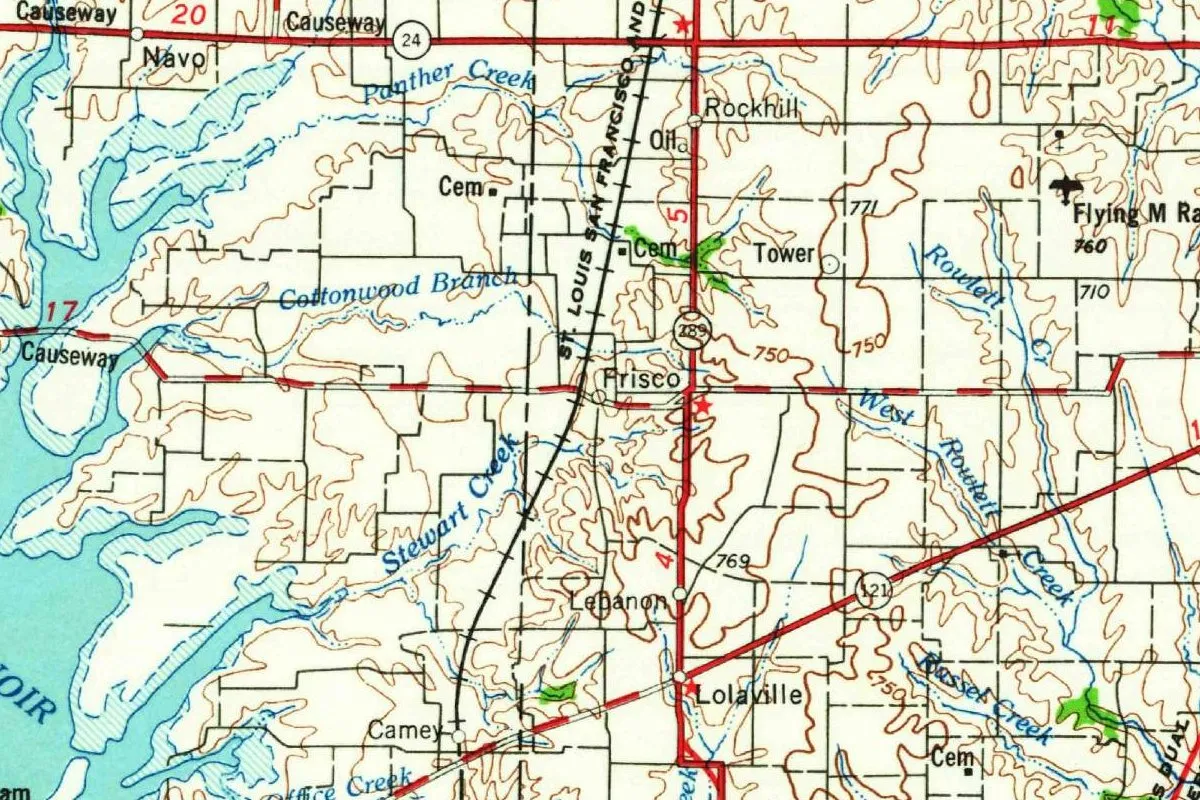
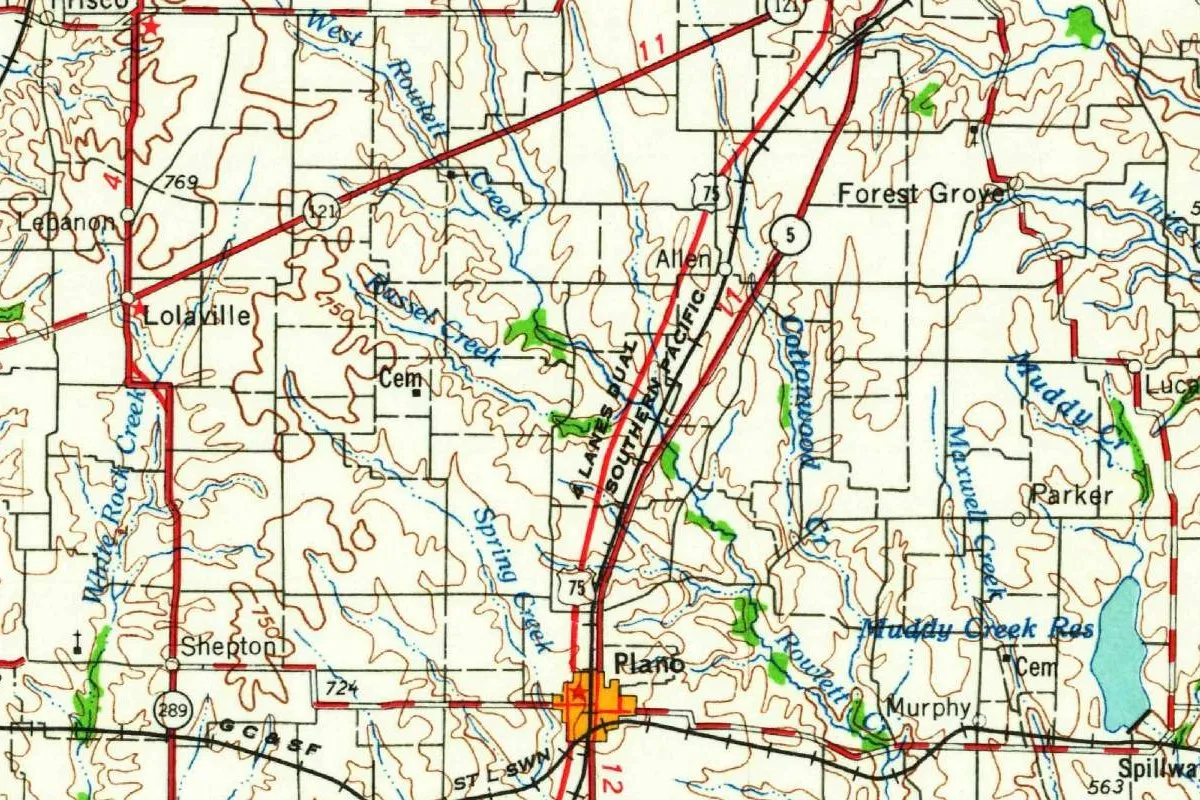
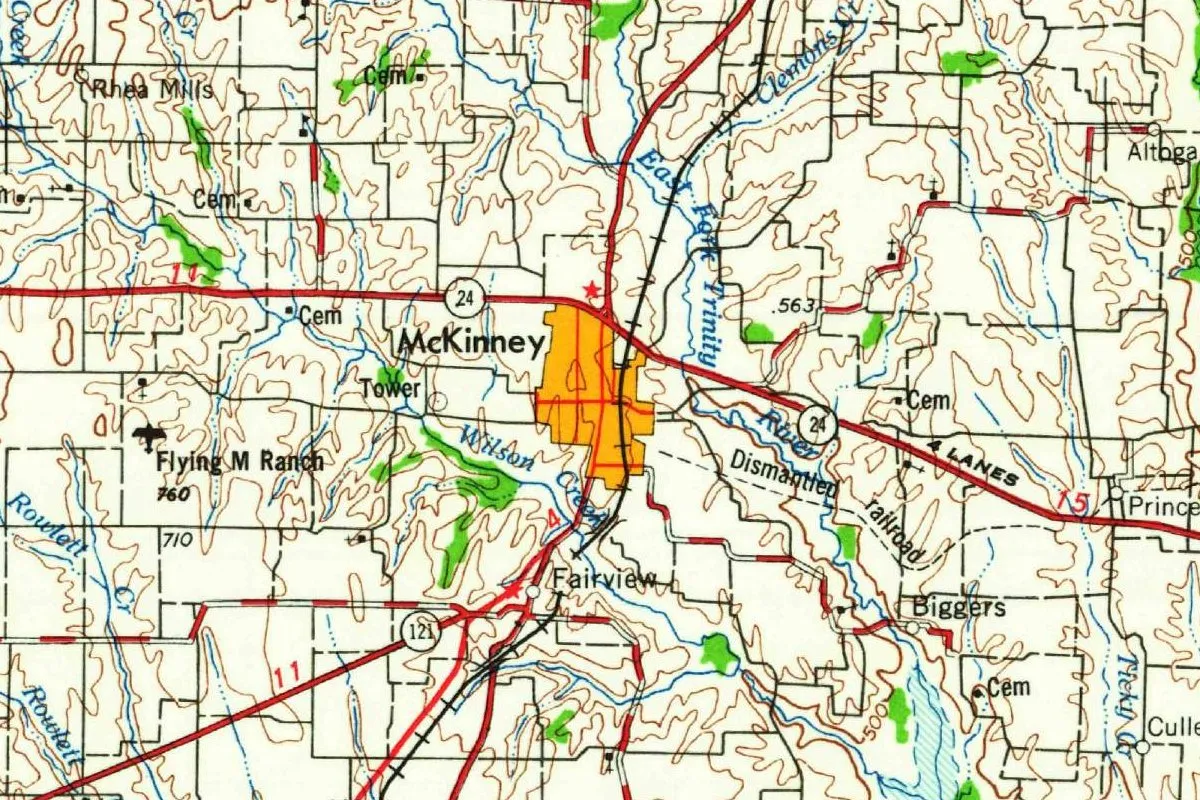
- U.S. Geological Survey, Sherman sheet (1954). The map at the top of this page.
Spot something wrong, or know more? Tell us here. You can also email us or use our contact page. Corrections are noted here with their date, never made silently.