St. George, Utah: Named for an Apostle Who Never Lived There
St. George is named for George A. Smith, a Latter-day Saint apostle known as the father of the southern Utah settlements. He selected most of the 1861 Cotton Mission pioneers but didn't settle there himself. A Utah Tech archives note says the origin isn't certain and mentions two other theories.
St. George, Utah, is named for George A. Smith, the Latter-day Saint apostle who picked most of its first settlers in 1861 but never lived there himself. That’s what Jenson’s 1901 encyclopedia, the Utah History Encyclopedia and the Salt Lake Tribune say, though one archive note in town says nobody really knows.
Before the town had a name
People were here long before the name. The Utah History Encyclopedia mentions the rock art and archaeological sites left by the Virgin River Anasazi, the Domínguez-Escalante party, the first recorded Euro-American visitors, in 1776, and then fur trappers and government survey parties. By 1854, it says, the Latter-day Saint church had an Indian mission at Santa Clara, two miles (3 km) north of the St. George Valley, and in 1857 and 1858 experimental farms went in east and west of where the town would stand.
Brigham Young toured those farms in May 1861. The Utah Tech archives note says he had visited the area in the fall and prophesied that “There would be between the volcanic ridges, a city with spires, towers and steeples and with homes containing many inhabitants.” The same note dates the settlement of St. George to December 6, 1861.
George A. Smith and the Cotton Mission
The town began as a church assignment. The Utah History Encyclopedia says that in October 1861, 309 families were called by church authorities to what was called the Cotton Mission. With the Civil War breaking out, Brigham Young thought it would be necessary to raise cotton, and many of the people sent south had come from the southern states. They brought a nickname with them, and the area has been “Utah’s Dixie” ever since.
The encyclopedia is direct about the name: “St. George itself was named in honor of George A. Smith, who, although he did not participate in the town’s settlement, had personally selected most of the company of the pioneers of 1861.”
Smith was already a big name in that part of the territory. A 2026 Salt Lake Tribune profile by Mark Eddington describes him as Joseph Smith’s first cousin, called as an apostle at 21. According to Steven Snow, a former church historian quoted in the piece, Smith also helped found Cedar City, New Harmony and the Santa Clara Indian Mission. “He was,” Snow told the paper, “considered the father of the southern Utah settlements.”
The Utah History Encyclopedia adds that St. George became the seat of Washington County in 1863, the same year work began on the tabernacle, and that the St. George Temple was dedicated on April 6, 1877.
What the 1901 encyclopedia said
That “father of the southern settlements” label is old. Andrew Jenson’s Latter-day Saint Biographical Encyclopedia, published in 1901, used nearly the same words in its long sketch of Smith’s life:
“He was recognized as the father of the southern settlements, the chief of which, St. George, was named in his honor.”
So the Smith explanation was in print within 40 years of the founding. Jenson doesn’t say who chose the name.
Who put the name on the map?
The Tribune fills in that part. Smith’s earlier settlements, it says, “paved the way for the October 1861 colonization of St. George, leading Young to instruct apostle Erastus Snow to name the city after Smith.” The paper also says Smith “never resided in St. George” and helped build up the mission by choosing the families who’d settle there.
You’ll notice that none of these sources explain the “Saint.” Jenson and the encyclopedia just say the town was named for Smith and leave it there. We haven’t found a source that says why the town got a saint’s title in front, so we won’t guess.
“It is not known”
Not every source in St. George is so sure. Utah Tech University’s special collections keep the records of the town’s 50th and 75th settlement celebrations, and the historical note on that collection, credited to Mary Phoenix, starts plainly: “It is not known how St. George received its name.”
The note gives three opinions. First, “The Smith family have often insisted that it was named for their ancestor George Albert Smith.” Second, some hold that the town was named for Philip St. George Cooke, “the army officer who had been kind to the members of the Mormon Battalion on their march across the country.” The note adds that Cooke was then in charge of Fort Douglas in Salt Lake City and was present at the meeting where Brigham Young made the call to Dixie. Third, some think it was named for St. George, the national hero of England, since Brigham Young was a descendant of English yeomen and had served a church mission in England.
The note doesn’t offer evidence for the second or third ideas, and no other source we read repeats them. Every source we found for the Smith story was written decades after 1861.
Legends about the namesake
Part of the trouble is Smith himself. The Tribune says no full biography of him exists, and historian Barbara Jones Brown told the paper that sparse records, plus a tangle of legends and even AI-generated stories, make it hard to know which tales to trust.
The Tribune also repeats a story about Smith taking off his wig, false teeth and glasses while preaching in the heat, which led a Paiute observer to nickname him “non-choko-wicher,” meaning “takes himself apart.” Brown also told the paper that his documented conduct raises concerns, including false claims he made after the Mountain Meadows Massacre of 1857 that blamed the victims.
One story touches the town directly. Smith is sometimes called the “potato saint” of St. George. Independent historian Amy Tanner Thiriot calls that a canard: she told the Tribune the nickname arose earlier, at Winter Quarters in Nebraska, where Smith urged hungry Latter-day Saint refugees to eat potatoes to fight scurvy.
The 1885 map
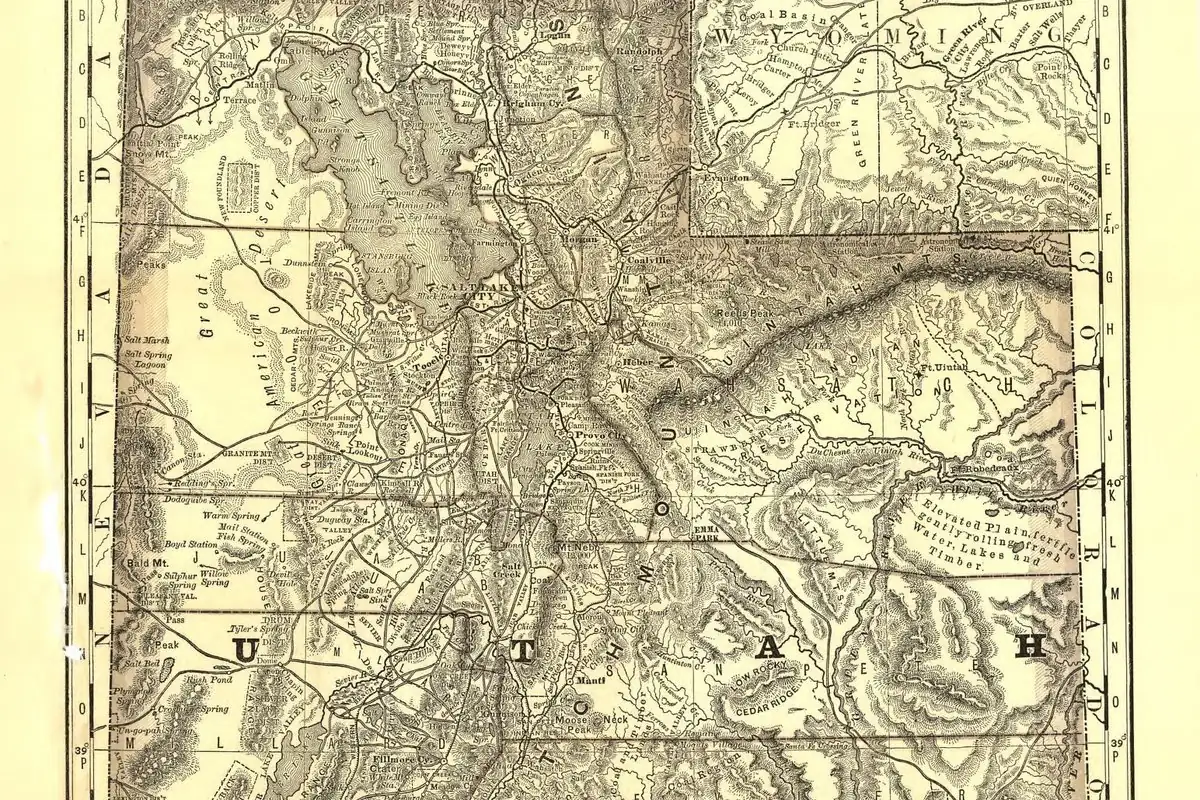
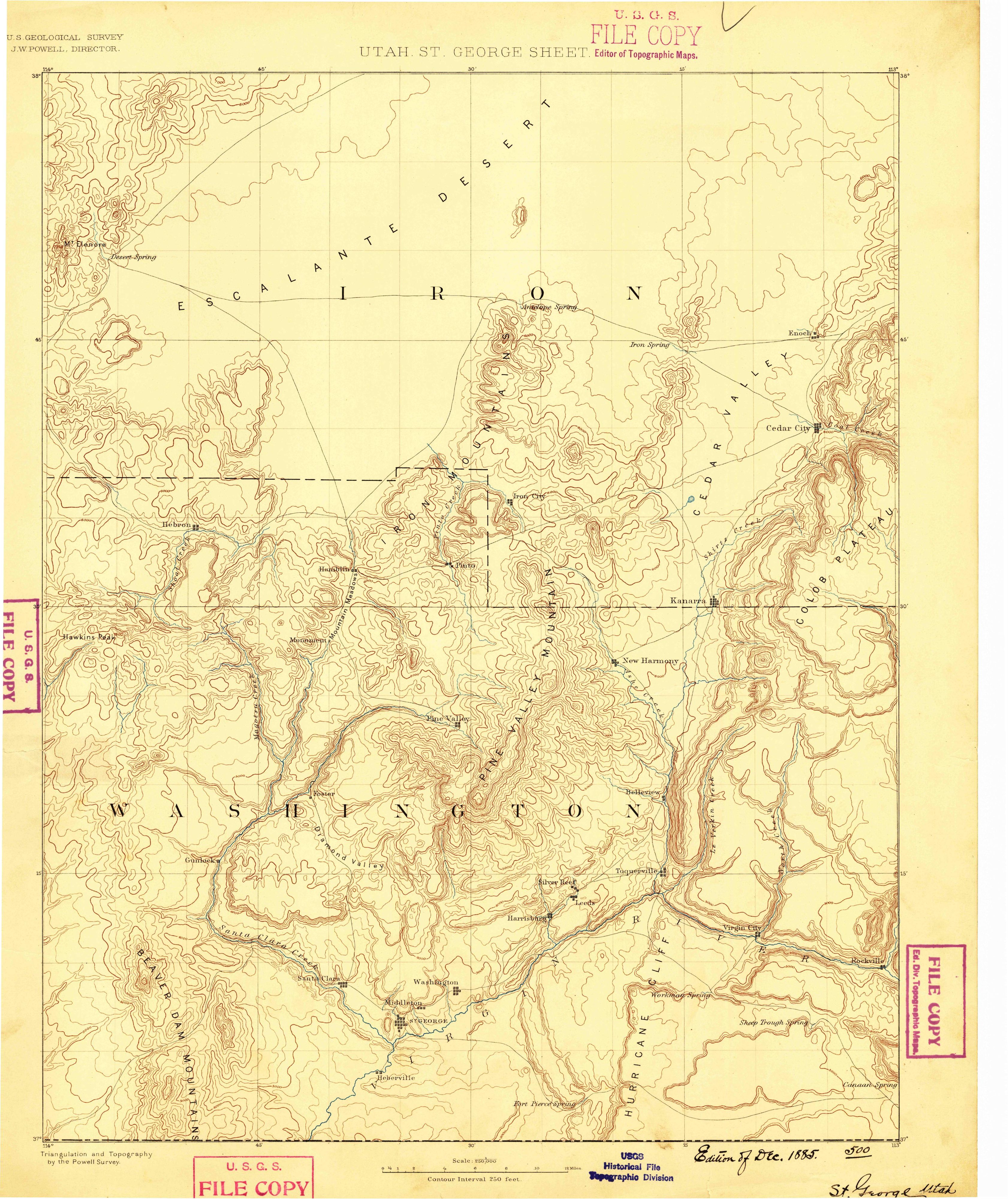
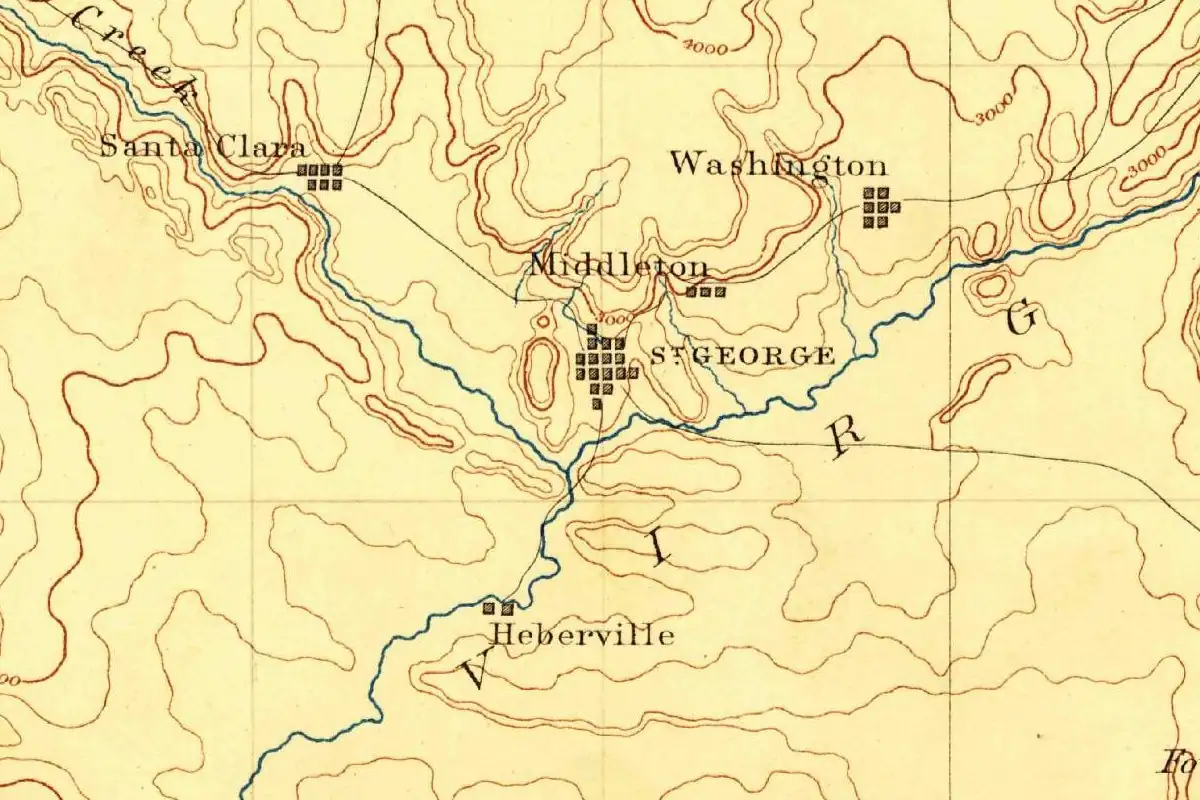
The map at the top of this page is the U.S. Geological Survey’s St. George sheet, printed when John Wesley Powell ran the Survey. Its bottom margin credits the “Triangulation and Topography” to “the Powell Survey,” and someone wrote “Edition of Dec. 1885” by hand on this file copy. St. George sits in the middle with its block grid, with other small settlements around it: Washington, Middleton, Santa Clara and Heberville.
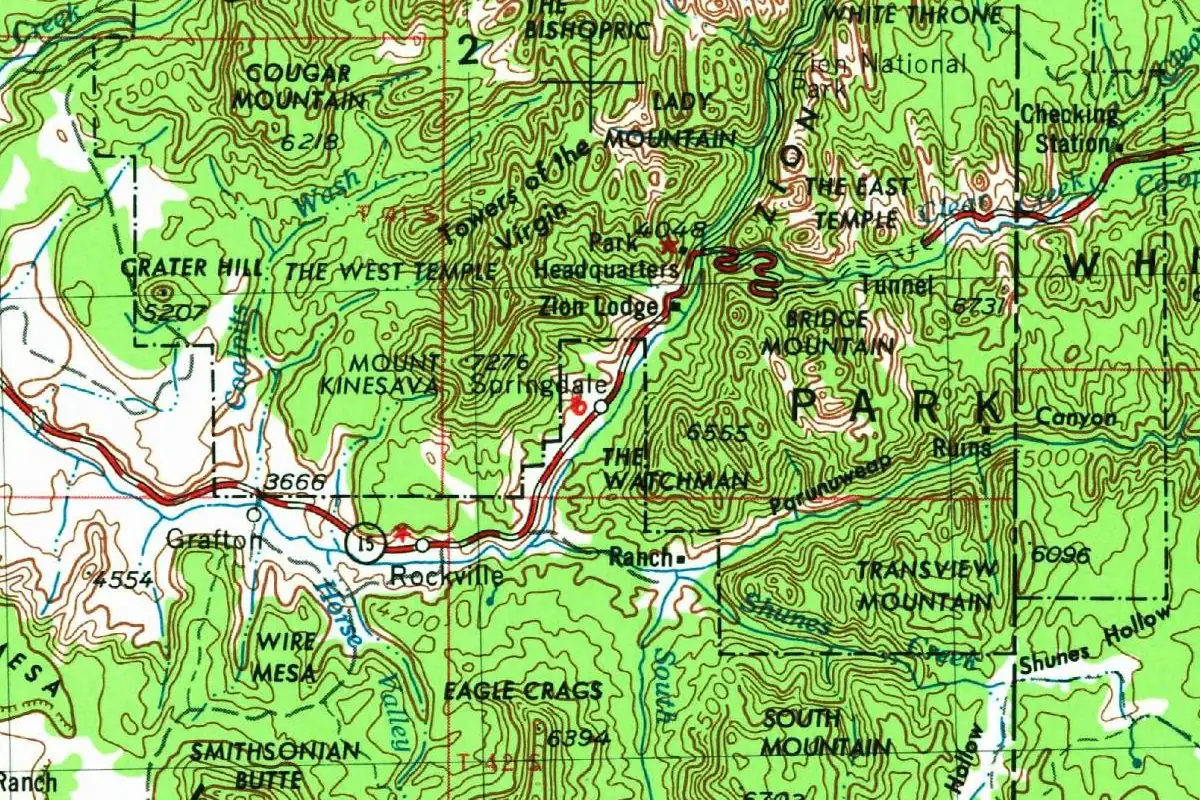
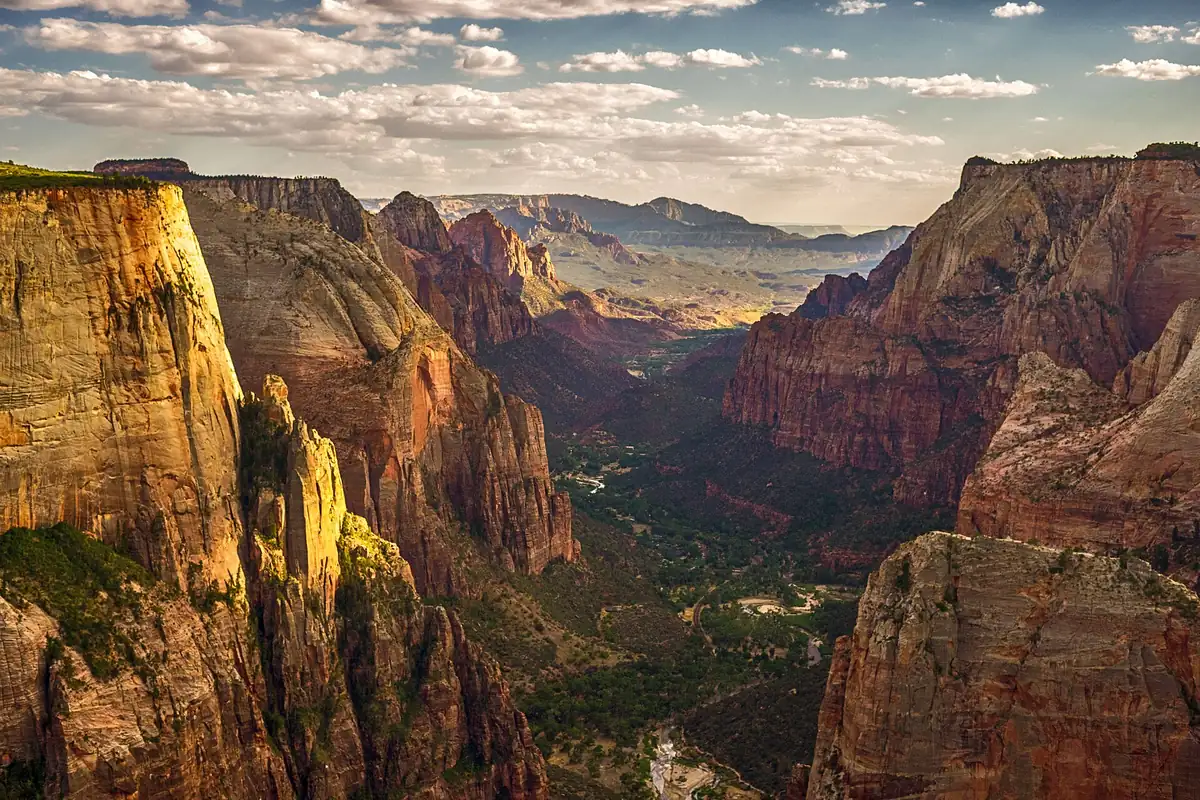
Springdale, near Zion, was settled in the early 1860s by families answering the same call to grow cotton in southern Utah. For the rest of the state’s town names, see our Utah page.
Quick answers
How did St. George, Utah, get its name?
It was named for George A. Smith, a Latter-day Saint apostle, according to Jenson’s 1901 encyclopedia and the Utah History Encyclopedia. The Salt Lake Tribune says Brigham Young told Erastus Snow to name the city after him.
Did George A. Smith live in St. George?
No. The Utah History Encyclopedia says he “did not participate in the town’s settlement,” though he selected most of the 1861 pioneers, and the Tribune says he never lived there.
Is St. George, Utah, named after Saint George?
Jenson, the Utah History Encyclopedia and the Tribune say it’s named for George A. Smith. A historical note at Utah Tech’s archives says the origin “is not known” and lists St. George, England’s national hero, as one opinion, along with Philip St. George Cooke.
Why is St. George called Utah’s Dixie?
Because many of the Cotton Mission settlers sent in 1861 came from the southern states, the Utah History Encyclopedia says, and they brought the name “Utah’s Dixie” with them.
Key dates
- 1854The Latter-day Saint church has an Indian mission at Santa Clara, two miles north of the St. George Valley.
- 1861In October, 309 families are called to the Cotton Mission; St. George is settled on December 6.
- 1863St. George becomes the seat of Washington County, and work on the tabernacle begins.
- 1877The St. George Temple is dedicated on April 6.
- 1885The U.S. Geological Survey's St. George sheet is issued, in an edition dated December 1885.
- 1901Andrew Jenson's biographical encyclopedia says St. George was named in George A. Smith's honor.
Things to do in St. George, Utah
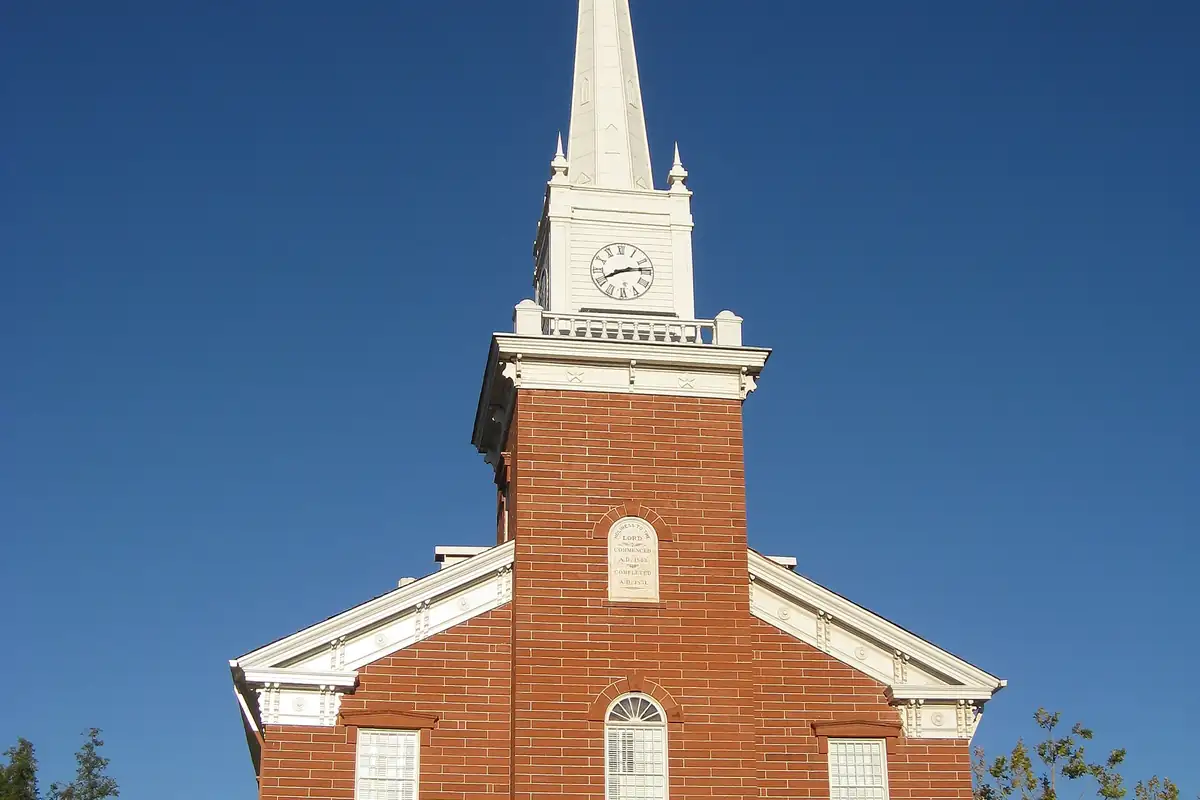
St. George Tabernacle
The tabernacle on Main Street was begun in 1863, the year St. George became the county seat, and finished in 1875.
St. George Temple
Work began in 1871 as a cooperative effort of many southern Utah communities, and Apostle Daniel H. Wells dedicated the temple on April 6, 1877. Greater Zion calls it the first temple built west of the Mississippi River.
Dixie Academy building
Built in 1911 to mark the 50th anniversary of St. George's settling. The church ran the academy until 1933, when it became a two-year college in Utah's higher education system.
Snow Canyon State Park
A 7,400-acre (about 3,000 ha) park among ancient lava flows and red Navajo sandstone cliffs, inside the 62,000-acre (about 25,000 ha) Red Cliffs Desert Reserve set up to protect the desert tortoise. Trails and dunes are open to hikers, bikers and riders.
Getting there
Open St. George in Google Maps
Opens in a new tab. The pin is the center of St. George in the USGS place-name record.
The closest airports, Amtrak stations and intercity bus stops, measured in a straight line from the center of St. George.
Airports
- St George Regional (SGU) St. George 6 mi 10 km
- Cedar City Regional (CDC) 49 mi 79 km
- Harry Reid International (LAS) Las Vegas 112 mi 180 km
Intercity buses
- Salt Lake Express Saint George (Bluff St Office) 1 mi 2 km
- Greyhound Cedar City Sunoco 48 mi 78 km
Distances are as the crow flies, not by road. We don't list schedules or fares because they change; check with the airline, Amtrak or the bus company before you go. Official data (FAA commercial service airports (2025), FAA airport locations, Amtrak stations and Intercity Bus Atlas) from the FAA and the U.S. Bureau of Transportation Statistics, checked Nov 14, 2026.
Sponsored
Staying in St. George?
Compare hotels in St. George, Utah, on Expedia.
See hotels in St. GeorgeWe may earn a commission if you buy through this link. It never changes what we write. Read our affiliate disclosure
Historical Sources & References
- Andrew Jenson, Latter-day Saint Biographical Encyclopedia, vol. 1 (1901), p. 41. The quoted line calling Smith “the father of the southern settlements” and saying St. George “was named in his honor.” Checked against the page image.
- Utah History Encyclopedia, “St. George”. The 309 families of the Cotton Mission in October 1861, the cotton and Civil War background, “Utah’s Dixie,” the name “in honor of George A. Smith,” the Santa Clara mission, the county seat and the start of the tabernacle in 1863, and the temple dedication on April 6, 1877. The same text is reprinted in Utah Tech’s archives (collection 94).
- Utah Tech University Special Collections & Archives, Dixie Homecoming celebration records. The settlement date of December 6, 1861, and the note saying “It is not known how St. George received its name,” with the Smith, Cooke and St. George of England opinions.
- Mark Eddington, Salt Lake Tribune (2026). Smith’s background, the Tribune’s account of Young instructing Erastus Snow to name the city after Smith, Smith never living there, the lack of a biography, and Thiriot on the “potato saint” nickname.
- Greater Zion, “Historic Sites”. The tabernacle, temple and Dixie Academy dates used in the things-to-do list.
- GNIS feature 1455098 (U.S. Geological Survey). The USGS gazetteer record for Saint George, Washington County, with its coordinates.
- U.S. Geological Survey, St. George sheet (1885). The 1:250,000 map, edition of December 1885, that the image at the top of this page was cropped from.
Sponsored
Put this 1885 map on your wall
The 1885 USGS St. George sheet is in the public domain. Download the full-size scan for free, then have it printed on canvas with CanvasOnTheCheap.
Print a map on canvasDownload the full-size mapWe may earn a commission if you buy through this link. It never changes what we write. Read our affiliate disclosure
Spot something wrong, or know more? Tell us here. You can also email us or use our contact page. Corrections are noted here with their date, never made silently.