Racine, Wisconsin: How the Root River Named a Port
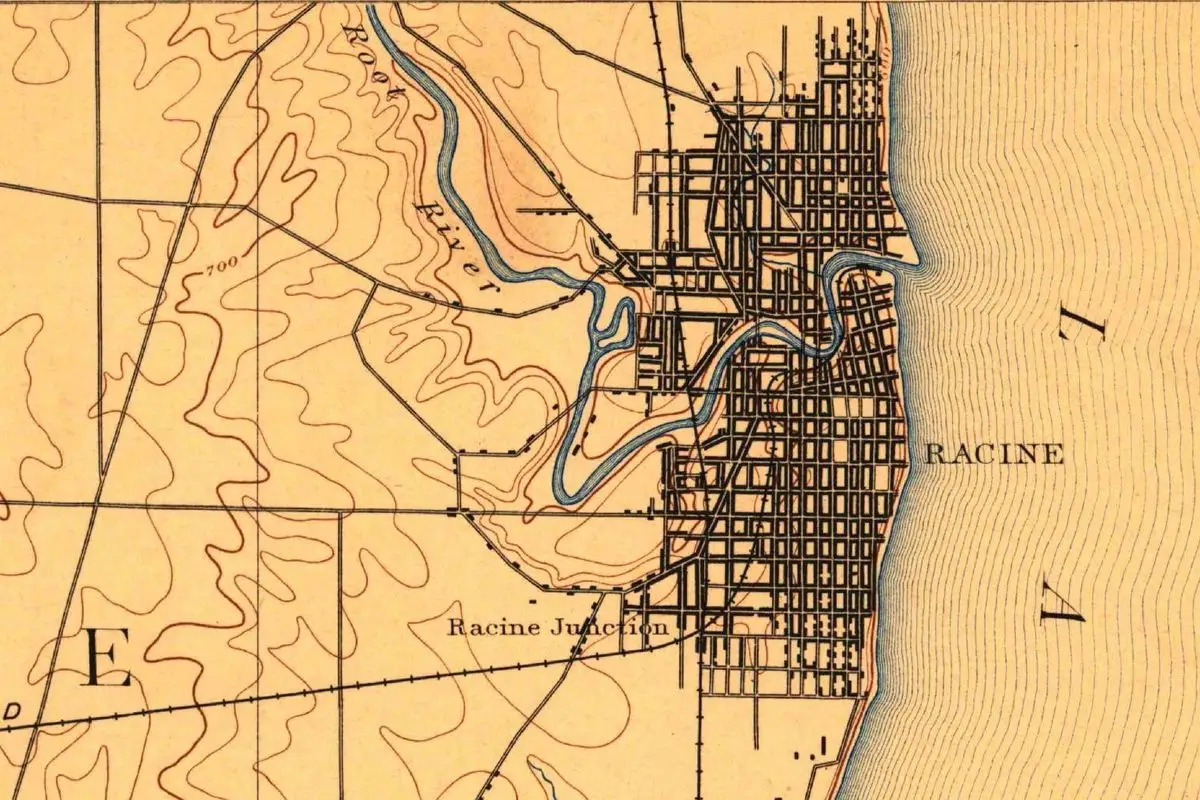
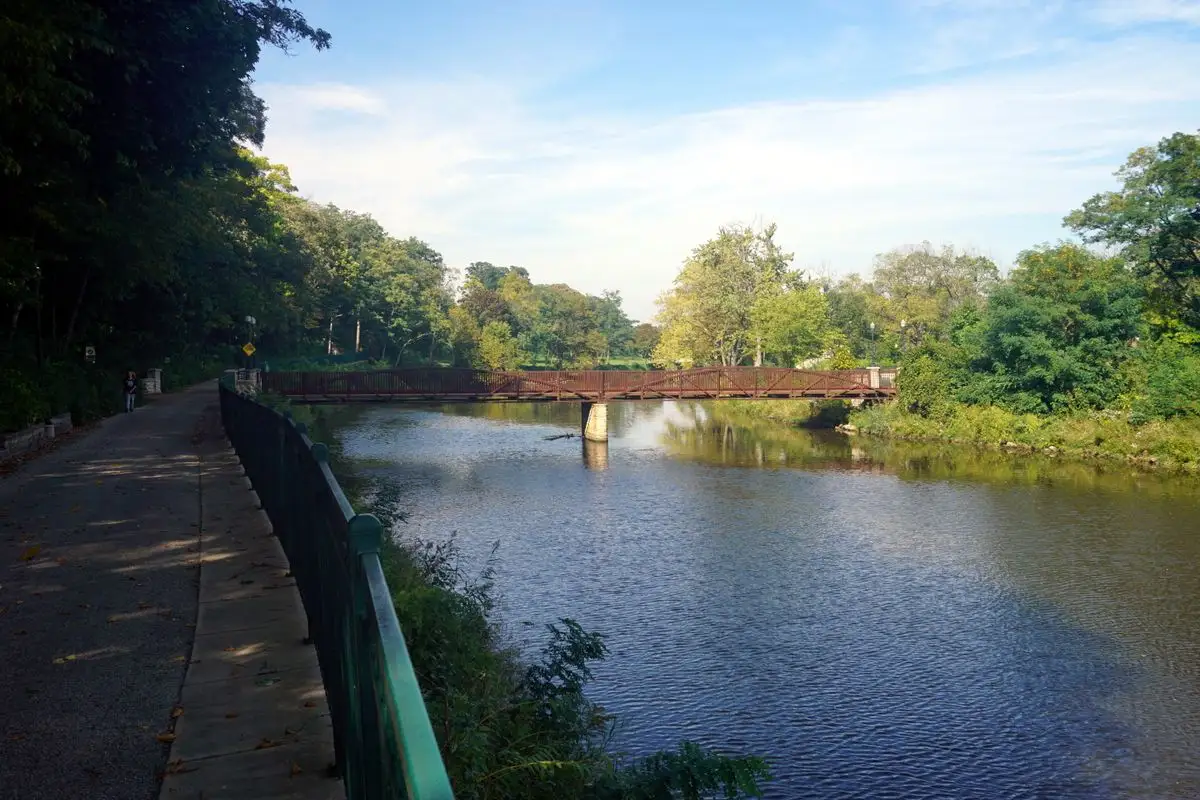
Racine, Wisconsin, takes its name from the French word for root, the English name of the river that meets Lake Michigan here. Before Racine appeared on people’s mail, the settlement went by Root River in English and Port Gilbert after the captain who staked a claim there.
A captain’s name on the lakeshore
If you walk to the lake end of Second Street, you’re close to the spot where Captain Gilbert Knapp built his cabin in November 1834. He chose the high south bank at the river mouth. The Potawatomi and other Native peoples already knew this stretch of shore. The city records Kipikawi as a Potawatomi name for the river.
Port Gilbert was a name for Knapp’s enterprise. Speaking to the Old Settlers Society in 1871, Charles Dyer said he had a letter Knapp wrote to Jacob Barker in March 1835, inviting him to invest in the claim. Dyer called it Port Gilbert on Root River. The captain’s name and the river’s name could fit in the same address.
Three miles between two post offices
For a few months in 1836, an address on the Root River didn’t necessarily send you to the settlement on the lake. Mark Miller’s 1850 Racine Register places the Root River post office three miles (about 5 km) west of the city. It opened in January. The directory goes on to describe what happened that spring:
“This post office was discontinued on the 8th of May, of the same year, and the Racine Office established in the settlement…”
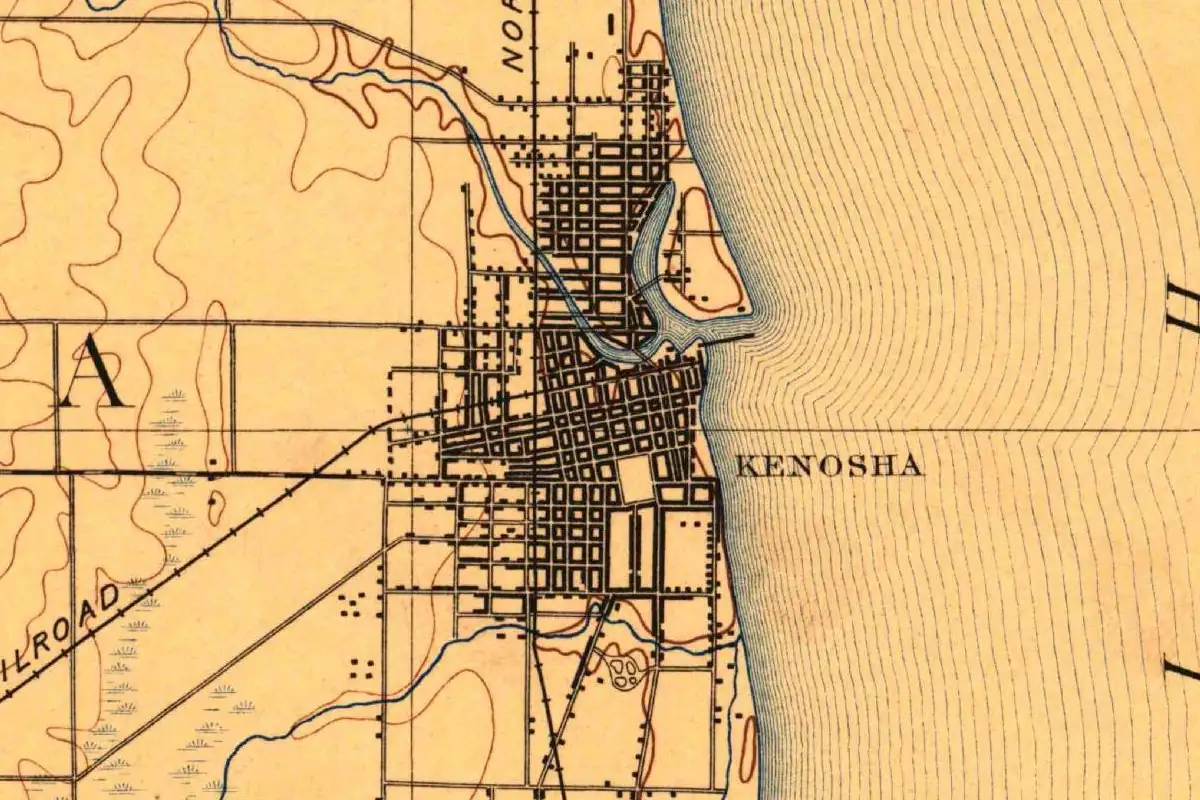
The mail came by horseback once a week on its way from Chicago to Green Bay. By the time the village incorporated in 1841, the settlement’s mail had been going to an office called Racine for five years. Down the lakeshore, Kenosha still went by Southport.
Where a French playwright enters the story
French speakers would recognize racine as the everyday word for a root. In 1840 a traveler named Buckingham heard that a French settler had named the town for the dramatist Racine. Buckingham introduced that explanation as something he’d heard along the way.
Geographer Ray Hughes Whitbeck printed the traveler’s account in 1921. Whitbeck thought the French river name gradually displaced the English one. He left open the question of whether the writer had anything to do with it.
Local historian E. W. Leach told a different story about how the settlers chose. According to the Racine Journal-News in 1931, Leach credited Knapp with proposing Racine at a meeting in the spring of 1836. In Leach’s telling, people liked both the river translation and the association with a poet. He referred to a record in Madison. The newspaper doesn’t reproduce it. You can trace the name to the river with more confidence than you can put the suggestion in any one person’s mouth.
Quick answers
What does Racine mean in French?
Root. The city stands where the Root River enters Lake Michigan.
Who was Port Gilbert named for?
Captain Gilbert Knapp. He claimed land on both sides of the river mouth in 1834 and sought partners for a settlement there.
Did Racine get its name when it became a village?
No. Its post office already used Racine in 1836. Incorporation followed in 1841.
Was the city named for the playwright Racine?
Possibly in part. An early visitor heard that explanation, and Leach later described the literary association as an extra reason for choosing the French river name.
Key dates
- 1834Gilbert Knapp claims land at the mouth of the Root River in November.
- 1836The Racine Register dates the switch from the Root River post office to the Racine office to May 8.
- 1841Racine incorporates as a village under the name its post office already uses.
Getting there
Open Racine in Google Maps
Opens in a new tab. The pin is the center of Racine in the USGS place-name record.
The closest airports, Amtrak stations and intercity bus stops, measured in a straight line from the center of Racine.
Airports
- General Mitchell International (MKE) Milwaukee 16 mi 26 km
- Chicago O'Hare International (ORD) 52 mi 84 km
Amtrak trains
- Sturtevant station (SVT) 6 mi 10 km
- Milwaukee Airport-Trains station (MKA) 16 mi 26 km
Intercity buses
- Wisconsin Coach Lines Marquette and 6th under 1 mi 0.8 km
- FlixBus Milwaukee WI - General Mitchell Airport Terminal Bus (MKB) 16 mi 26 km
- Indian Trails Milwaukee (Amtrak Intermodal) 22 mi 36 km
Distances are as the crow flies, not by road. We don't list schedules or fares because they change; check with the airline, Amtrak or the bus company before you go. Official data (FAA commercial service airports (2025), FAA airport locations, Amtrak stations and Intercity Bus Atlas) from the FAA and the U.S. Bureau of Transportation Statistics, checked Nov 10, 2026.
Sponsored
Staying in Racine?
Compare hotels in Racine, Wisconsin, on Expedia.
See hotels in RacineWe may earn a commission if you buy through this link. It never changes what we write. Read our affiliate disclosure
Historical Sources & References
- The Racine Register, Business Directory, and Advertiser (1850), pp. 7–9. Land claim, postal service and village incorporation in the city’s first directory.
- Ray Hughes Whitbeck, The Geography and Economic Development of Southeastern Wisconsin (1921), pp. 142–144. The river translation, early place names and the traveler’s account.
- Racine Journal-News, E. W. Leach Tells About Pioneer Days (April 7, 1931). A newspaper report of Leach’s explanation of the settlers’ choice.
- Charles E. Dyer, historical address to the Old Settlers Society (1871), p. 20. Knapp’s claim and the letter Dyer said he had in hand.
- City of Racine, Racine History. The river mouth, Knapp’s cabin and the county’s creation.
- USGS, Geographic Names Information System, Racine (1572015). The city’s location and federal identifier.
Spot something wrong, or know more? Tell us here. You can also email us or use our contact page. Corrections are noted here with their date, never made silently.