How Did Cedarburg Get Its Name? A Creek and a German Burg
No known record names who chose Cedarburg. A 2007 town history says it probably joined Cedar Creek, the stream named in 1837 survey notes, to the German burg, while another town page credits the area's forests. The village was founded in 1844-45 by Frederick Hilgen and William Schroeder, who built a grist mill on the creek.
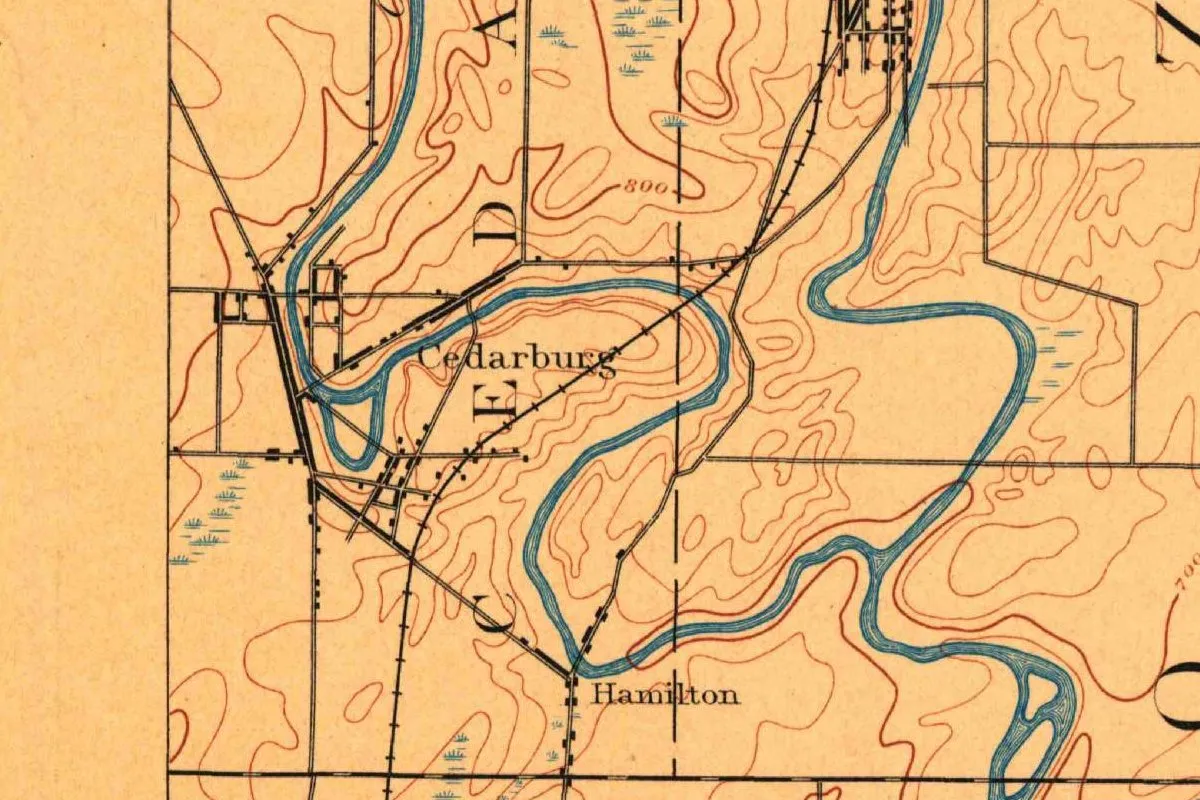
No known record says who named Cedarburg, Wisconsin, and a history compiled for the town says the origin of the name “has been lost to the ages.” What the old records do show is a creek called Cedar Creek, a pair of mill builders from Milwaukee, and a German ending that a 2007 history of the town credits to its German settlers.
A creek first
The water had its name before the village did. A history of the town compiled in 2007 by Carol Boettcher, a member of the Town Landmark Commission, and printed in the Town of Cedarburg’s Comprehensive Plan: 2050, says that when the area was surveyed in March 1837, “the surveyor of record, in his notes, referred to ‘Cedar Creek’” in his description of a section in Township 10, Range 21 East.
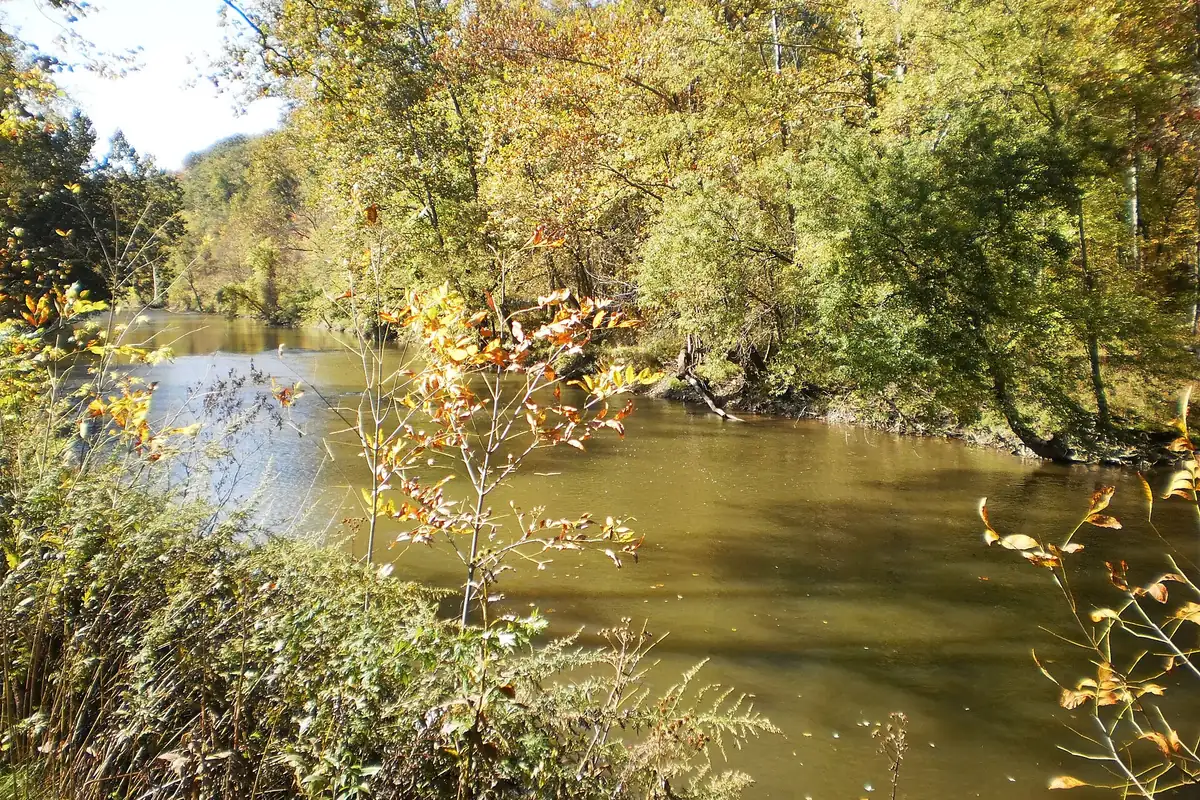
The stream was worth naming. The 1881 History of Washington and Ozaukee Counties calls Cedar Creek the largest tributary of the Milwaukee River and traces it to Cedar Lake and Little Cedar Lake, from where it “runs a very tortuous course” through several towns before meeting the river at Grafton. The same book describes the trees the first settlers found, and it is the oldest text we found that puts cedar in the local landscape:
“The immediate creeks, streams and ponds were bordered with alders, willows and creeping watervines, while the lowlands and swamps were kept in endless shade by a dense growth of tamarack and cedar.”
That passage is about the two counties in general, not about Cedarburg, and we found no explanation of the village’s name anywhere in the 1881 book. Henry Legler’s 1903 paper on Wisconsin place names and the 1905 edition of The Origin of Certain Place Names in the United States skip Cedarburg altogether.
Two men from Milwaukee
The village itself started with a mill. According to the 1881 history, in 1844 Frederick Hilgen, “the father and founder of Cedarburg,” and William Schroeder came out from Milwaukee to Hamilton on the Green Bay road and cut a new road through the timber to the creek. Hilgen’s biography in the same book puts that stretch at “a distance of one mile,” about 1.6 km.
They found the four Kroth brothers and a few other settlers already living there in “rude huts,” bought 35 acres from the Kroths at $35 an acre, and started hewing timber for a grist mill. Hilgen’s biography says the two men were “favorably impressed with the facilities afforded by the creek at this place for water-power.”
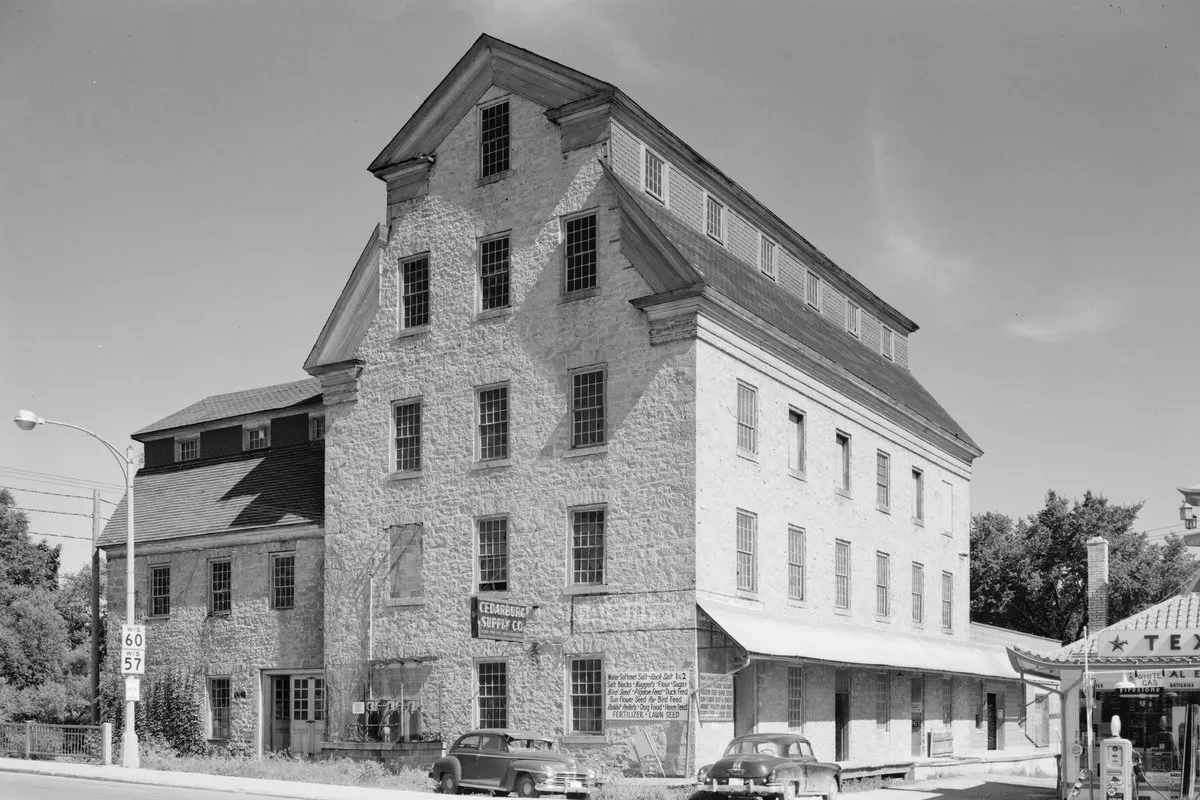
The book isn’t consistent about the dates. Its village history says the mill was completed in 1844, “the same year,” while Hilgen’s biography says it was finished “the following year.” A third line, opening the section on the village, says Cedarburg “was founded by Frederick Hilgen and William Schroeder in the year 1845.” Schroeder became the first storekeeper. In 1855 the frame mill came down and a stone one, “six stories high,” went up in its place. The Historic American Buildings Survey later photographed a stone mill at 215 East Columbia Avenue and filed it under the names of Hilgen and Schroeder.
Cedar plus burg
So where does the burg come from, if you take the name apart? Boettcher’s history makes the case plainly: “The spelling of ‘burg’ is definitely of German extraction. A ‘burg’, in German, refers to a ‘fortress’, which the area could have resembled in the 1840’s.” Since the area filled with German settlers, she concludes that “it appears the name was derived from the combination of the name of the dominant feature ‘Cedar Creek’ and the German ‘burg.’” She adds that the German berg, a mountain or hill, wouldn’t fit, because the area “definitely was not” one.
The Town of Cedarburg’s website offers a different reason. Its Town History page says “the name Cedarburg most likely was given due to the abundant forests in the area.” Both explanations come from the same town government, and neither cites a document from the 1840s in which someone chose the name. That’s why the origin stays disputed: the creek and the trees both fit, and no settler’s letter or deed in the sources we read settles which one the namer had in mind.
The town and the village
The name was on the map early. The 1881 history says the town of Cedarburg was set off from Grafton on March 2, 1849, and that its supervisors met at George Fisher’s house “in the village of Cedarburg” on April 23, 1849. Boettcher’s history, citing the town’s first minute book, gives April 3, 1849, for the first meeting. The town page says the town was set off to Ozaukee County on March 7, 1853.
Today the Wisconsin Historical Society places Cedarburg about 20 miles (32 km) north of Milwaukee, and says the first permanent white settlers arrived in the 1840s along the banks of Cedar Creek, whose water power ran the mills. If Boettcher is right, the name came out of the same creek as the mills did, though you won’t find that said outright in any of the Wisconsin records from the 1840s that we read.
Quick answers
What does Cedarburg mean?
No known record says. A 2007 town history says the name probably combines Cedar Creek with the German burg, a fortress or stronghold; the town’s website credits the area’s forests instead.
Who founded Cedarburg?
Frederick Hilgen and William Schroeder, according to the 1881 county history. They came from Milwaukee in 1844 and built a grist mill on Cedar Creek. The book dates the village’s founding to 1845.
Why burg and not berg?
The 2007 town history says burg is German for a fortress, while berg means a mountain or hill, which the area “definitely was not.”
Key dates
- 1837March: surveyors' notes for the township refer to "Cedar Creek," according to the town history compiled in 2007.
- 1844Frederick Hilgen and William Schroeder cut a road from Hamilton to the creek and buy 35 acres from the Kroth brothers.
- 1845The 1881 county history dates the founding of the village of Cedarburg by Hilgen and Schroeder to this year.
- 1849March 2: the town of Cedarburg is set off from Grafton; its supervisors meet that April.
- 1853March 7: the town is set off to the new Ozaukee County, according to the Town of Cedarburg.
- 1855Hilgen and Schroeder's frame mill is taken down and a stone mill six stories high goes up in its place.
Getting there
Open Cedarburg in Google Maps
Opens in a new tab. The pin is the center of Cedarburg in the USGS place-name record.
The closest airports, Amtrak stations and intercity bus stops, measured in a straight line from the center of Cedarburg.
Airports
- General Mitchell International (MKE) Milwaukee 25 mi 40 km
- Dane County Regional/Truax Field (MSN) Madison 69 mi 111 km
Amtrak trains
- Milwaukee-Downtown station (MKE) 18 mi 30 km
- Milwaukee Airport-Trains station (MKA) 25 mi 40 km
Intercity buses
- Wisconsin Coach Lines Michigan Avenue and 2nd Street 18 mi 29 km
- FlixBus Milwaukee Intermodal Station 18 mi 30 km
- Jefferson Lines Milwaukee (Amtrak Intermodal) 18 mi 30 km
Distances are as the crow flies, not by road. We don't list schedules or fares because they change; check with the airline, Amtrak or the bus company before you go. Official data (FAA commercial service airports (2025), FAA airport locations, Amtrak stations and Intercity Bus Atlas) from the FAA and the U.S. Bureau of Transportation Statistics, checked Nov 13, 2026.
Sponsored
Staying in Cedarburg?
Compare hotels in Cedarburg, Wisconsin, on Expedia.
See hotels in CedarburgWe may earn a commission if you buy through this link. It never changes what we write. Read our affiliate disclosure
Sponsored
Want the spooky side of Cedarburg?
The name has its story above. For the ghost stories, US Ghost Adventures runs walking ghost tours in Cedarburg.
See ghost tours in CedarburgWe may earn a commission if you book through this link. It never changes what we write. Read our affiliate disclosure
Historical Sources & References
- History of Washington and Ozaukee Counties, Wisconsin (1881), pp. 309-311, 322, 531-534. The “dense growth of tamarack and cedar” (p. 309); Cedar Creek as the largest tributary of the Milwaukee River (pp. 310-311); the town set off from Grafton on March 2, 1849 (p. 322) and the supervisors’ meeting of April 23, 1849 (p. 531); Hilgen, Schroeder, the Kroth brothers and the mills of 1844 and 1855 (pp. 532-533); the village “founded by Frederick Hilgen and William Schroeder in the year 1845” (p. 534).
- Town of Cedarburg, Comprehensive Plan: 2050, p. 9. Carol Boettcher’s 2007 history: the name “lost to the ages,” the 1837 survey notes, the reading of Cedar Creek plus burg, and the first meeting of April 3, 1849.
- Henry E. Legler, “Origin and Meaning of Wisconsin Place-Names” (1903) and Henry Gannett, The Origin of Certain Place Names in the United States (1905). Neither list has an entry for Cedarburg.
- Town of Cedarburg, “Town History”. The name “most likely” taken from the forests, and the move to Ozaukee County on March 7, 1853.
- Wisconsin Historical Society, “Cedarburg, Wisconsin - A Brief History”. The distance from Milwaukee, the 1840s settlers along Cedar Creek and its mills.
- Historic American Buildings Survey, Cedarburg Mill (Wikimedia Commons). The survey photograph of the stone mill at 215 East Columbia Avenue, catalogued with the names of Hilgen and Schroeder.
- GNIS feature 1562869 (U.S. Geological Survey). Cedarburg’s place record, number 1562869, with Ozaukee County given as its county.
- U.S. Geological Survey, Port Washington sheet (1892). The 1892 Port Washington quadrangle at 1:62,500, which prints Cedarburg and Hamilton close to its western edge.
Spot something wrong, or know more? Tell us here. You can also email us or use our contact page. Corrections are noted here with their date, never made silently.