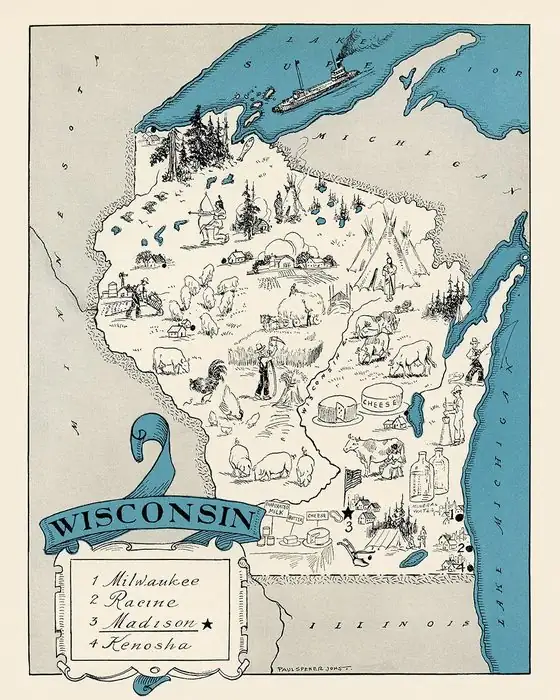
What Does Milwaukee Mean? A Name With Many Translations
Milwaukee comes from a Native American name for the place and its river, written down by French and British visitors from 1679 on. What it means is disputed. Early writers recorded "good land," "rich or beautiful land" and "council place," and one account traced it to an aromatic root. The kee spelling won out in 1844.
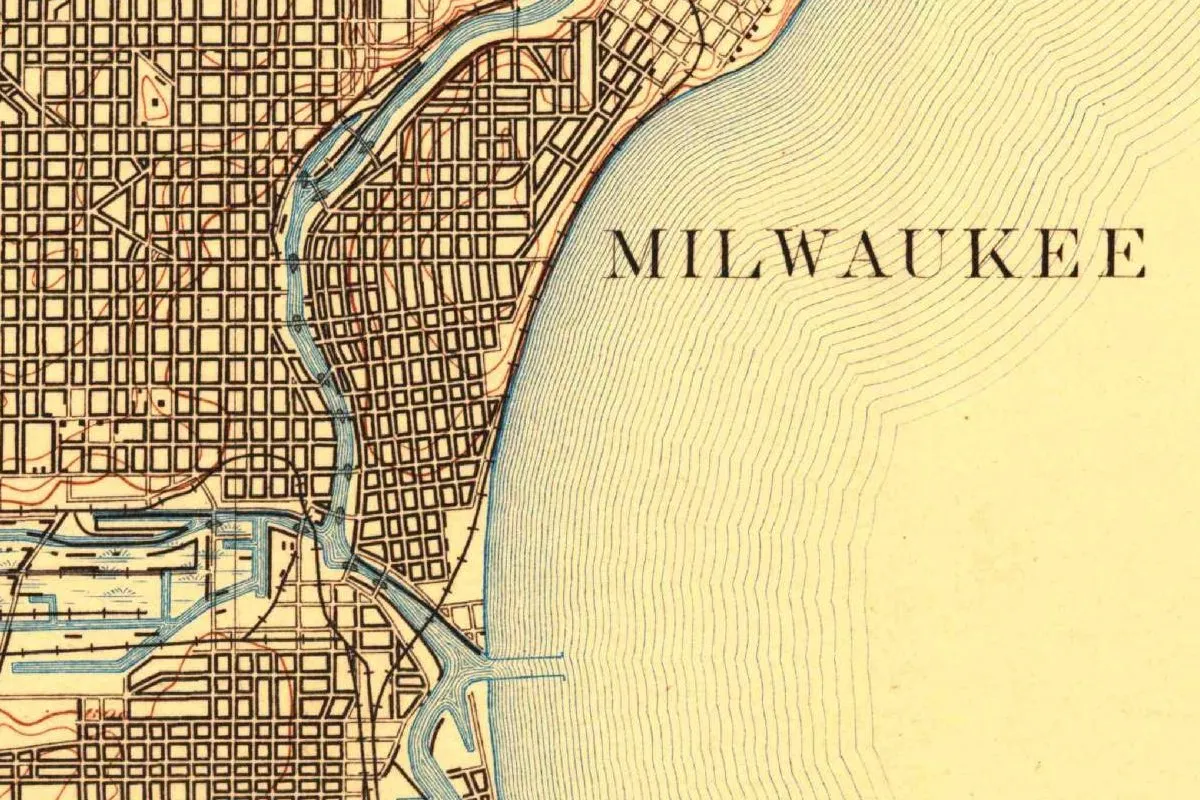
A 1903 list of the ways Milwaukee, Wisconsin, had been spelled since 1679 runs to 11 versions, and the meanings offered for the word vary just as much. The name is Native American and older than the city, but what it originally meant has never been settled.
Eleven ways to write one word
Henry Legler, in his 1903 survey of Wisconsin place names for the state’s Academy of Sciences, Arts, and Letters, put it plainly: “As many meanings have been ascribed to the word as there are modes of spelling — and these have been many.” Then he printed a list, compiled by Henry W. Bleyer, of who wrote it which way.
It starts with two priests in 1679, Father Hennepin with “Melleoki” and Father Zénobe Membré with “Millioki.” A French map of 1684 has “Meleki.” John Buisson de St. Cosme wrote “Milwarik” in 1699. British and American visitors kept going: “Milwakie,” “Millewackie,” “Milwahkie,” “Milwalky.” Then came “Milwaukie,” the form in the headline of the Sentinel, a local paper, until 1844, and the last line of the list is the one you know.
Legler wrote that the name “is regarded as of Pottawatomie origin,” and the Wisconsin Historical Society’s dictionary calls it “probably a Potawatomi word.” It also says Milwaukee takes its name from the river, where there had been a Native village since Europeans first knew the region.
The British lieutenant who wrote “Milwacky”
The spelling on Legler’s list with the best paper trail is the British one. In October 1761 Lieutenant James Gorrell arrived with a detachment at La Bay, the old French post on what’s now Green Bay, and kept a journal there. The journal, printed in the first volume of the state historical society’s Collections, has the name more than once: in his list of nations that depended on his post for trade (“Taways, etc., 100 Little Detroit and Milwacky”), and in an entry dated August 21, 1762:
“A party of Indians came from Milwacky, and demanded credit, which was refused, as they properly belonged to Mishamakinak.”
The editor’s note calls this “the earliest notice, it is believed, of Milwaukee,” though Legler’s list has French spellings from 1679. Legler’s list and the 1861 Chronicles of Milwaukee date Gorrell’s mention to September 1761. The journal as printed puts it in 1762.
Good land, council place or a root
The real dispute is about meaning, and the old sources give four different answers.
Good land. A statement from Sac and Fox chiefs, appended to Dr. Jedidiah Morse’s report of his 1820 tour, says “Mil-wah-kie” was settled by their people and that the name comes from “Man-na-wah-kie,” good land. Henry Gannett repeated a version of it in 1905 for the U.S. Geological Survey: the name “is said to have been derived from the Indian word milioke, which means ‘good earth’ or ‘good country.’”
Rich or beautiful land. The Chronicles of Milwaukee, published in 1861 by Andrew C. Wheeler, cite Louis M. Moran, an interpreter for the Chippewa, who said the word was pronounced “Me-ne-aw-kee” and meant “rich or beautiful land.”
Council place. Legler wrote that “the most generally accepted version” in his day was that the word “signified council place, and that here was neutral ground.” Old residents, he wrote, said the Indians met on a hill on the east side of the river, where the St. Charles hotel later stood.
A root. Augustine Grignon, a grandson of Charles de Langlade, whom Legler calls Wisconsin’s first permanent settler, said an old Indian told him the name came from an aromatic root called “manwau,” so “Man-a-waukee” was the place of the manwau. Grignon himself added that he’d also heard it meant simply “good land.” Both Wheeler and Legler doubted the root, since nobody had found such a plant near the city.
Early settler Joshua Hathaway had yet another idea, according to the Historical Society: that the final name blended “Mellioke,” the old name of the river, with “Mahn-a-waukke,” the gathering place. No source among them settles it, so the origin stays disputed.
Kee or kie
Once the town existed, the fight moved to the last syllable. Wheeler wrote that it “proved a source of much perplexity” from the beginning. Byron Kilbourn, among others, held out for “kie.” For several years, Wheeler says, one side of town spelled and printed “kee” and the other “kie,” so the spelling you saw depended on which side of town you were on.
When voters approved a city charter on January 5, 1846, by a majority of 311, Wheeler still called the place “Milwaukie.” The question, he says, was settled by laws printed with “kee,” and by one stubborn publisher whose office was entered at night and the offending “i” stolen from his newspaper’s heading. Legler gives a firmer date: the Sentinel’s headline read “Milwaukie” until November 30, 1844, and “Milwaukee” after that.
So the Wisconsin city that kept a Native name chose its own spelling by argument, newspaper headline and, if Wheeler’s story is right, a little burglary.
Quick answers
What does Milwaukee mean?
There’s no agreement. Sources from 1820 to 1905 give “good land” or “good earth,” the 1861 Chronicles give “rich or beautiful land,” and Legler in 1903 called “council place” the most generally accepted meaning.
Is Milwaukee a Native American name?
Yes. Legler and the Wisconsin Historical Society treat it as most likely Potawatomi, while the 1820 statement in Morse’s report attributes the village to the Sac and Fox.
Why is it spelled Milwaukee and not Milwaukie?
Legler dates the switch to November 30, 1844, when the Sentinel changed its headline, and Wheeler says laws printed with “kee” settled it.
When was the name first written down?
The earliest entry on Legler’s 1903 list is “Melleoki,” from Father Hennepin in 1679. The earliest English mention, Gorrell’s “Milwacky,” dates from 1761 or 1762, depending on the source.
Key dates
- 1679Father Hennepin writes the name as Melleoki and Father Membré as Millioki, the first two entries on Legler's 1903 list of spellings.
- 1762August 21: Lieutenant James Gorrell, at the British post of La Bay, records a party of Indians who came from "Milwacky."
- 1820Dr. Jedidiah Morse's report gives the form Mil-wah-kie and a derivation from Man-na-wah-kie, "good land."
- 1844November 30: the Sentinel's headline changes from Milwaukie to Milwaukee, the date Legler gives for the modern spelling.
- 1846January 5: voters approve a city charter for Milwaukie by 311 votes; the legislature passes the act of incorporation that month.
Getting there
Open Milwaukee in Google Maps
Opens in a new tab. The pin is the center of Milwaukee in the USGS place-name record.
The closest airports, Amtrak stations and intercity bus stops, measured in a straight line from the center of Milwaukee.
Airports
- General Mitchell International (MKE) Milwaukee 6 mi 10 km
- Dane County Regional/Truax Field (MSN) Madison 73 mi 117 km
Amtrak trains
- Milwaukee-Downtown station (MKE) under 1 mi 1 km
- Milwaukee Airport-Trains station (MKA) 7 mi 11 km
Intercity buses
- Wisconsin Coach Lines Michigan and Milwaukee under 1 mi 0.1 km
- Jefferson Lines Milwaukee (Amtrak Intermodal) under 1 mi 1 km
- Indian Trails Milwaukee (Amtrak Intermodal) under 1 mi 1 km
Distances are as the crow flies, not by road. We don't list schedules or fares because they change; check with the airline, Amtrak or the bus company before you go. Official data (FAA commercial service airports (2025), FAA airport locations, Amtrak stations and Intercity Bus Atlas) from the FAA and the U.S. Bureau of Transportation Statistics, checked Nov 13, 2026.
Sponsored
Staying in Milwaukee?
Compare hotels in Milwaukee, Wisconsin, on Expedia.
See hotels in MilwaukeeWe may earn a commission if you buy through this link. It never changes what we write. Read our affiliate disclosure
Sponsored
Want the spooky side of Milwaukee?
The name has its story above. For the ghost stories, US Ghost Adventures runs walking ghost tours in Milwaukee.
See ghost tours in MilwaukeeWe may earn a commission if you book through this link. It never changes what we write. Read our affiliate disclosure
Historical Sources & References
- Henry E. Legler, “Origin and Meaning of Wisconsin Place-Names” (1903), pp. 24-25. “As many meanings have been ascribed to the word as there are modes of spelling,” the name as “of Pottawatomie origin,” Bleyer’s list of 11 spellings from Melleoki (1679) to Milwaukee (November 30, 1844) and “council place” as the most accepted meaning (p. 24); Grignon’s aromatic root, his “good land,” and Legler’s doubts (p. 25).
- Lieut. James Gorrell’s Journal, in Collections of the State Historical Society of Wisconsin, vol. 1, pp. 25, 32, 35, 37. The British arrival at La Bay on October 12, 1761 (p. 25), the list of nations with “Little Detroit and Milwacky” (p. 32), and the entry of August 21, 1762, with the editor’s note on Morse’s 1820 report and “Man-na-wah-kie good land” (p. 35), and the “Milwacky Indians” of March 25, 1763 (p. 37).
- Andrew C. Wheeler, The Chronicles of Milwaukee (1861), pp. 16-17, 179-180, 194-195. Gorrell’s spelling dated to 1761, Morse’s “good land,” Grignon’s root and Moran’s “rich or beautiful land” (pp. 16-17); the charter vote of January 5, 1846, and the act of incorporation (pp. 179-180); the “kee” and “kie” quarrel, Kilbourn’s side and the stolen “i” (pp. 194-195).
- Henry Gannett, The Origin of Certain Place Names in the United States (USGS, 1905), p. 209. The name “said to have been derived from the Indian word milioke,” meaning “good earth” or “good country.”
- Wisconsin Historical Society, “Milwaukee County [origin of place name]”. The name taken from the river, “probably a Potawatomi word,” Hathaway’s blending of “Mellioke” and “Mahn-a-waukke,” and the official spelling of 1844.
- GNIS feature 1577901 (U.S. Geological Survey). Record 1577901 covers the city and places it in Milwaukee County.
- U.S. Geological Survey, Milwaukee sheet (1892). The 1892 Milwaukee quadrangle, the earliest edition the USGS historical topographic collection holds for the city.
Spot something wrong, or know more? Tell us here. You can also email us or use our contact page. Corrections are noted here with their date, never made silently.