Brooklyn Bridge: Name, History and Visiting
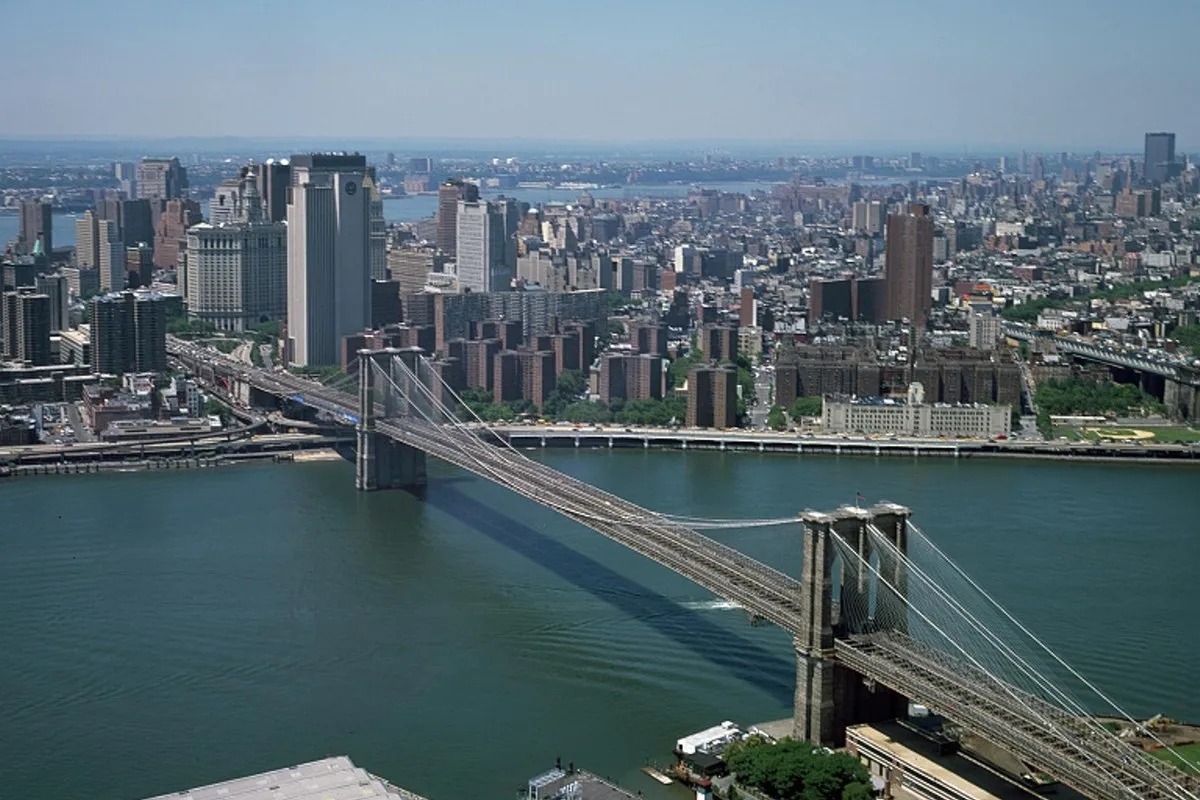
The Brooklyn Bridge opened in 1883 as the New York and Brooklyn Bridge, and its short, familiar name didn’t become official until 1915. In between, people also called it the East River Bridge, after the water it crosses.
The name points east, to Brooklyn, which was still a separate city from New York when the bridge opened. Brooklyn itself goes back to Breuckelen, a Dutch settlement that took its name from a village in the Netherlands, as our New York City name guide explains.
Brooklyn Bridge History
The bridge began as a fix for crowded ferries. The NYC Municipal Archives says a commission was formed in February 1864 to study a crossing of the East River, after the ferries running between Brooklyn and New York, then two separate cities, couldn’t keep up. In 1867, legislators approved John Augustus Roebling’s design for a suspension bridge with a span of 1,600 feet (488 m) from tower to tower.
The short name was around from the start. The Municipal Archives guide lists the New York and Brooklyn Bridge as the first name, then the East River Bridge, and traces “Brooklyn Bridge” to a letter to the Brooklyn Daily Eagle in January 1867. Its list of sources gives the letter as signed “E.P.D.” and printed January 25, 1867. We haven’t seen that page of the Eagle ourselves, so the credit rests on the archive’s word.
The official paperwork kept the long version. The program for the opening day, Thursday, May 24, 1883, was printed as Opening Ceremonies of the New York and Brooklyn Bridge, and the body in charge was the Board of Trustees of the New York and Brooklyn Bridge. Two archive guides don’t quite agree on the order of the old names: the Center for Brooklyn History simply says it “was called both” names, East River Bridge and New York and Brooklyn Bridge, until 1915, “when the name was officially changed to the Brooklyn Bridge.”
Building it cost lives and health. Roebling’s foot was crushed by a ferry while he was surveying the site, and he died of tetanus in 1869. His son, Washington A. Roebling, whom he had already put in charge as chief engineer, was left paralyzed by “caisson disease,” what we now call the bends. The Municipal Archives says he ran the job from his apartment with the help of Emily Warren Roebling, his wife, who studied higher math, cable construction and catenary curves and spent 11 years helping supervise the work.
The bridge opened on May 24, 1883, and no suspension bridge anywhere was longer at the time. Six days later, the Library of Congress notes, a panic after a woman tripped set off a stampede that killed 12 people and seriously hurt 36. The federal government named it a National Historic Landmark in 1964, and the city followed with landmark status in 1967, according to the city’s Department of Transportation.
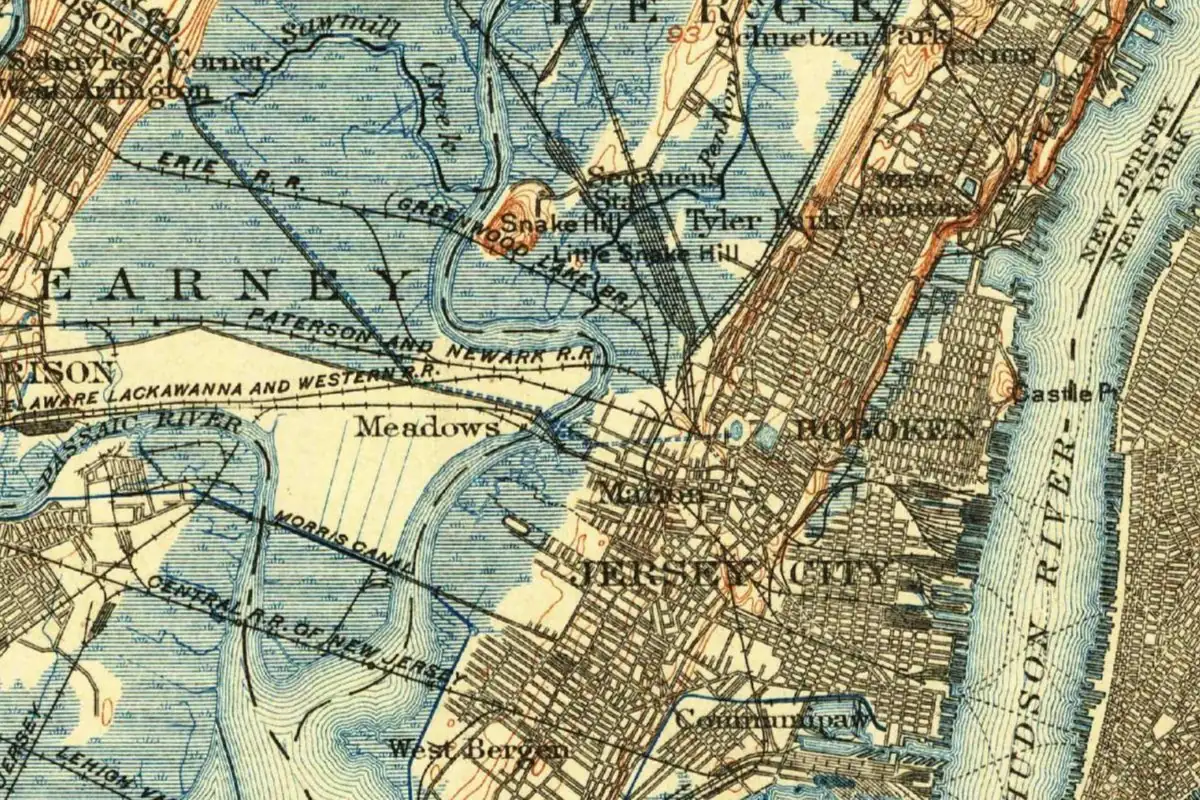
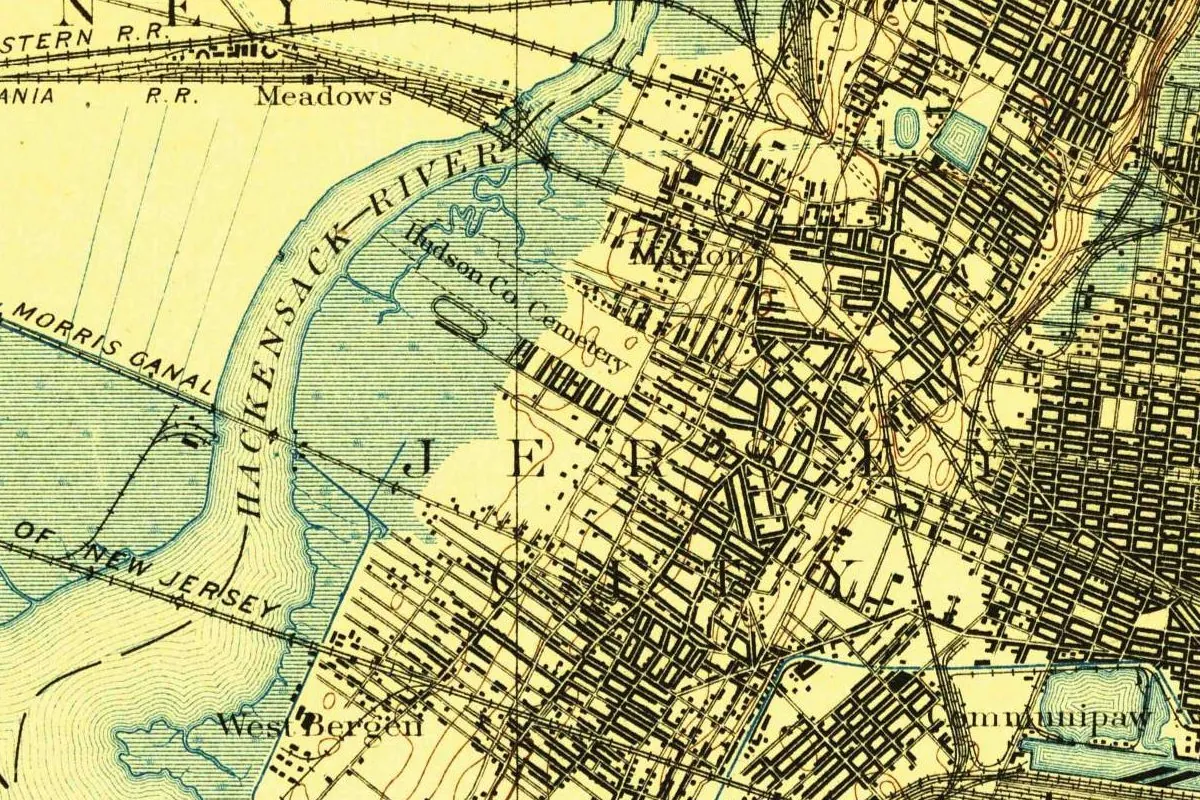
Across the Hudson, Jersey City had a two-name start of its own: an 1820 law used City of Jersey in its title but Jersey City in section one.
Visiting Brooklyn Bridge
The bridge links Lower Manhattan and Brooklyn Heights. The Department of Transportation says it carries five lanes of cars, with trucks barred, plus a walkway for pedestrians and a protected bike path. In 2024, it counted an average of 28,845 people walking across each day, along with 103,051 vehicles and 5,504 cyclists.
If you’re walking, you’ll share the promenade with other walkers, not with bikes. In September 2021, the city moved bikes onto a two-way protected lane on the roadway, taking one lane away from cars. In March 2026, the mayor’s office announced a redesign of the Manhattan entrance that adds a dedicated bike connection along Centre Street, meant to give walkers and cyclists fully separate ways onto the bridge for the first time.
Look up at the towers as you cross. Their Gothic arches were built to let the roadways pass through, and each tower stands on a caisson of southern yellow pine that was sunk to the riverbed, the Municipal Archives says. The whole bridge still rests on that wood.
Quick answers
What Was the Brooklyn Bridge Originally Called?
The New York and Brooklyn Bridge, and it was also known as the East River Bridge. The opening-day program in 1883 used the longer name.
Why Is It Called Brooklyn Bridge?
It’s named for Brooklyn, the city at its eastern end. The NYC Municipal Archives traces the short name to a letter in the Brooklyn Daily Eagle in January 1867.
When Did Brooklyn Bridge Become Official?
In 1915. That’s the year, the Center for Brooklyn History says, “the name was officially changed to the Brooklyn Bridge.”
Can You Walk Across the Brooklyn Bridge?
Yes. The city’s Department of Transportation says the bridge has a pedestrian promenade, and bikes have had their own protected lane on the roadway since 2021.
Key dates
- 1864A commission is formed in February to study a bridge over the East River.
- 1867Legislators approve John A. Roebling's plan; a January letter to the Brooklyn Daily Eagle uses the name Brooklyn Bridge.
- 1869Construction begins. John A. Roebling dies; his son Washington is already chief engineer.
- 1883The bridge opens on May 24; a stampede on May 30 kills 12 people.
- 1915The name is officially changed to Brooklyn Bridge.
- 1964The bridge is designated a National Historic Landmark.
- 2021A two-way protected bike lane opens on the bridge in September.
Getting there
Open Brooklyn Bridge in Google Maps
Opens in a new tab. The pin is an approximate point for Brooklyn Bridge.
The closest airports, Amtrak stations and intercity bus stops, measured in a straight line from the center of Brooklyn Bridge.
Airports
- Laguardia (LGA) New York 8 mi 13 km
- Newark Liberty International (EWR) 9 mi 15 km
Amtrak trains
- New York station (NYP) 3 mi 5 km
- Newark station (NWK) 9 mi 15 km
Intercity buses
- OurBus New York, NY (Chinatown, 9 Chatham Square) under 1 mi 0.9 km
- FlixBus NYC Chinatown 28 Allen St under 1 mi 1 km
- Suburban Transit Broadway Between Fulton & Dey St under 1 mi 1 km
Distances are as the crow flies, not by road. We don't list schedules or fares because they change; check with the airline, Amtrak or the bus company before you go. Official data (FAA commercial service airports (2025), FAA airport locations, Amtrak stations and Intercity Bus Atlas) from the FAA and the U.S. Bureau of Transportation Statistics, checked Nov 20, 2026.
Sponsored
Planning a visit?
Compare hotels near Brooklyn Bridge on Expedia.
See hotels nearbyWe may earn a commission if you buy through this link. It never changes what we write. Read our affiliate disclosure
Historical Sources & References
- Center for Brooklyn History, Guide to the Brooklyn Bridge construction records. The old names and the official change to Brooklyn Bridge in 1915.
- NYC Municipal Archives, Guide to the drawings and plans of the Brooklyn Bridge, 1869-1981. The 1864 commission, the 1867 approval, the Eagle letter of January 1867, the Roeblings, the caissons and the 1883 opening program.
- Library of Congress, “Brooklyn Bridge, Fanfare and Fatalities”. The May 24, 1883, opening and the May 30 stampede.
- NYC Department of Transportation, “Brooklyn Bridge”. Construction dates, lanes, daily traffic, landmark designations and the 2021 bike lane.
- NYC Mayor’s Office, Brooklyn Bridge bike and pedestrian connection (March 2026). The redesign of the Manhattan entrance.
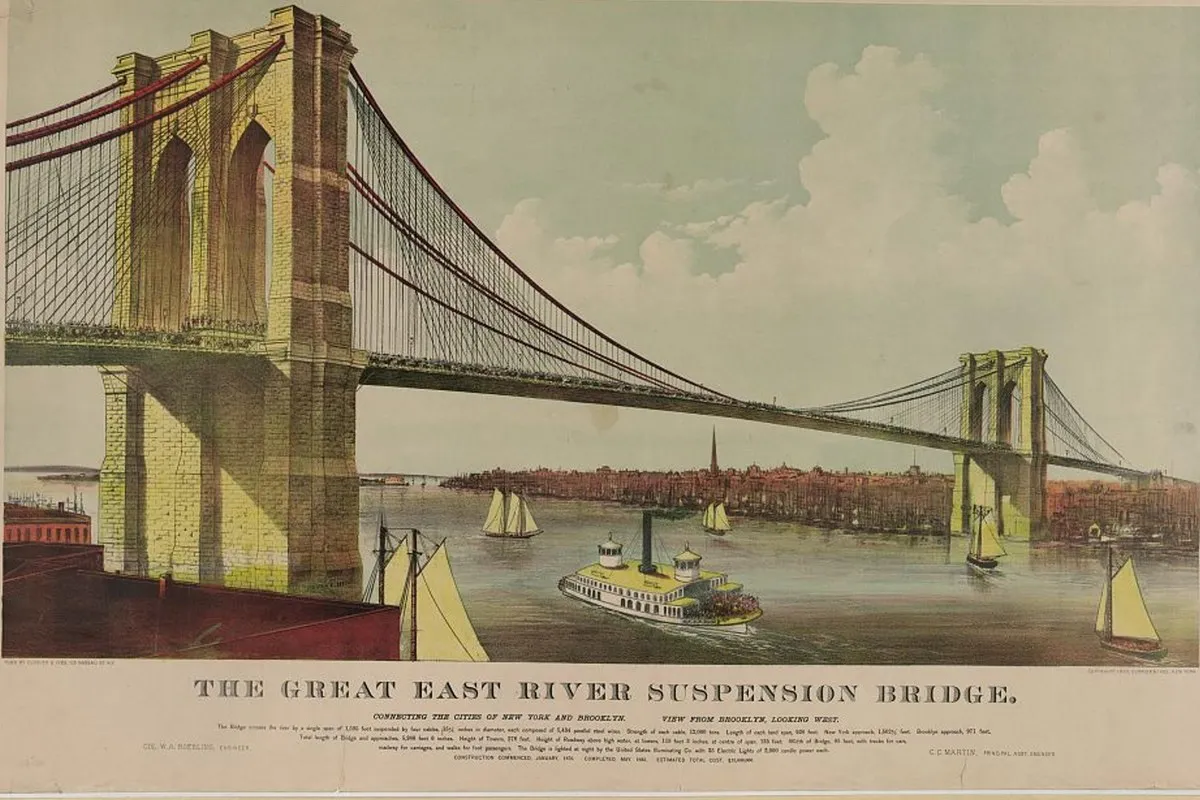
- Library of Congress, Currier & Ives, The Great East River Suspension Bridge (1883), via Wikimedia Commons. The 1883 print on this page, titled with the East River name.
- U.S. Geological Survey, Geographic Names Information System, “Brooklyn Bridge”. Official federal record of the name and location.
Spot something wrong, or know more? Tell us here. You can also email us or use our contact page. Corrections are noted here with their date, never made silently.