Eastern State Penitentiary: Why It's Called 'Eastern'
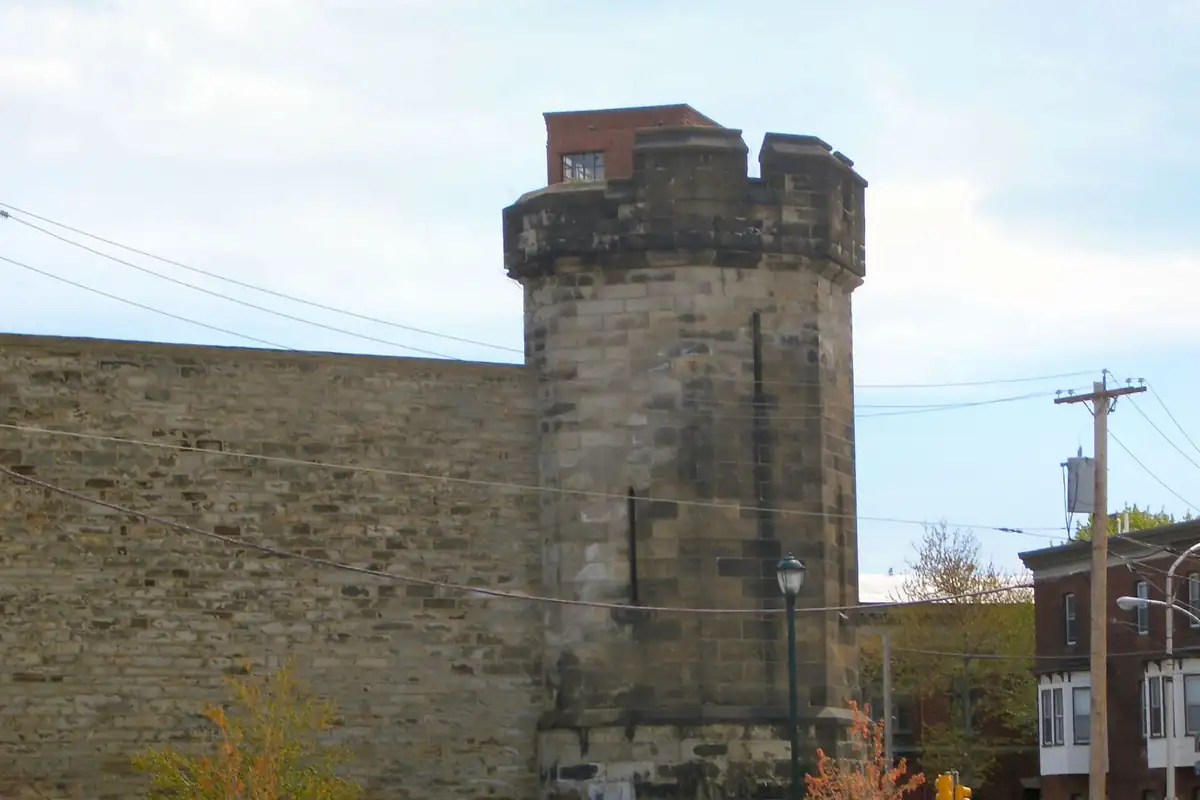
Eastern State Penitentiary is in Philadelphia, but its name points to half a state: it was Pennsylvania’s prison for the eastern district. The “eastern” has nothing to do with which way the gate faces. It’s about the part of the state it was built to serve.
A prison for each end of the state
By the early 1800s, Pennsylvania had decided to build state prisons where convicts would be kept apart, one to a cell, instead of crowded together in a county jail. A booklet published in 1830 by the Philadelphia Society for Alleviating the Miseries of Public Prisons sums up what happened next: the legislature, “in 1817, to authorize the construction of a prison at Pittsburg, and in 1821, another at Philadelphia.”
So the state ended up with two new prisons: one at Pittsburgh, for the western part of the state, and one at Philadelphia, for the eastern part.
The 1821 request that named it
You can see the name forming in the society’s own paperwork. In 1821 it sent the legislature what the reformer Roberts Vaux called “another and the last effort” to get a new prison built in Philadelphia. Vaux printed the whole memorial in 1826. It pointed to the solitary-cell prison already going up in Pittsburgh and hoped the lawmakers would do the same on the other side of the state:
“the same enlightened policy which dictated the erection of a state prison in the western, will provide for the establishment of a similar one in the eastern part of the state.”
Then it asked, plainly, for “a law, for the erection of a penitentiary for the eastern district of the state.” The legislature authorized the prison that same year. That request is where the “eastern” comes from.
By 1830, the society’s booklet was already calling it by the shorter name you’ll see on the signs today: “The Eastern State Penitentiary.”
Why “penitentiary”
The second word was a choice too. The reformers wanted prisoners alone in their cells with time to think, and work to do, so that they’d come out changed. The 1830 booklet calls the prevention of crime and “the reformation of criminals” the only legitimate goals of punishment. The historic site puts it simply: the prison was designed to encourage regret, or “penitence.”
Whether it worked is another story, and the historic site tells that part honestly. Eastern State took its first prisoner in 1829, while construction was still going on. Pennsylvania stopped running it in 1970, and in 1994 it opened to visitors for hard hat tours.
So when you walk up to that long stone wall, the name over the door is a leftover from the way Pennsylvania planned two new prisons, one for the west and one for the east. The east’s just kept its half of the name.
Quick answers
Why is it called Eastern State Penitentiary?
Because it was Pennsylvania’s state prison for the eastern district. In 1821 Philadelphia’s prison society asked for “a penitentiary for the eastern district of the state,” and the legislature authorized one at Philadelphia.
Was there a western prison too?
Yes. Pennsylvania authorized a state prison at Pittsburgh in 1817, and the 1821 request described it as the state prison “in the western” part of the state. The Philadelphia prison was meant to be the eastern match.
When did Eastern State Penitentiary open?
It admitted its first prisoner in 1829, according to the historic site, while the building was still under construction.
Is Eastern State Penitentiary still a prison?
No. Pennsylvania stopped operating it in 1970, and it opened for tours in 1994.
Key dates
- 1817Pennsylvania authorizes a state prison at Pittsburgh, for the western part of the state.
- 1821The prison society asks for a penitentiary for the eastern district, and the legislature authorizes one at Philadelphia.
- 1829Eastern State admits its first prisoner while construction is still going on.
- 1970Pennsylvania stops operating the prison.
- 1994The historic site opens its first season of hard hat tours.
Getting there
Open Eastern State Penitentiary in Google Maps
Opens in a new tab. The pin is an approximate point for Eastern State Penitentiary.
The closest airports, Amtrak stations and intercity bus stops, measured in a straight line from the center of Eastern State Penitentiary.
Airports
- Philadelphia International (PHL) 8 mi 12 km
- Trenton Mercer (TTN) 29 mi 46 km
Amtrak trains
- Philadelphia station (PHL) 1 mi 2 km
- North Philadelphia station (PHN) 2 mi 3 km
Intercity buses
- OurBus Philadelphia, PA (1200 Market Street Center City 19102 By Loews Hotel. (Service is provided with a Van)) 1 mi 2 km
- FlixBus Philadelphia 1 mi 2 km
- Peter Pan Bus Lines Philadelphia (Bus Terminal) 1 mi 2 km
Distances are as the crow flies, not by road. We don't list schedules or fares because they change; check with the airline, Amtrak or the bus company before you go. Official data (FAA commercial service airports (2025), FAA airport locations, Amtrak stations and Intercity Bus Atlas) from the FAA and the U.S. Bureau of Transportation Statistics, checked Nov 8, 2026.
Sponsored
Planning a visit?
Compare hotels near Eastern State Penitentiary on Expedia.
See hotels nearbyWe may earn a commission if you buy through this link. It never changes what we write. Read our affiliate disclosure
Sponsored
Want the spooky side of Philadelphia?
The prison's name has its story above. For ghost stories, US Ghost Adventures runs walking ghost tours in Philadelphia.
See ghost tours in PhiladelphiaWe may earn a commission if you book through this link. It never changes what we write. Read our affiliate disclosure
Historical Sources & References
- Roberts Vaux, Notices of the Original, and Successive Efforts, to Improve the Discipline of the Prison at Philadelphia (1826), pp. 43-46. The full text of the society’s 1821 memorial asking for “a penitentiary for the eastern district of the state,” next to the prison at Pittsburgh for “the western” part.
- A View and Description of the Eastern Penitentiary of Pennsylvania (1830), pp. 1-3. Published by the Philadelphia prison society: the 1817 and 1821 laws for prisons at Pittsburgh and Philadelphia, the goal of “the reformation of criminals,” and the early use of the name “The Eastern State Penitentiary.” Attributed to George Washington Smith.
- Eastern State Penitentiary Historic Site, “History of Eastern State Penitentiary”. The first prisoner in 1829, the end of state operation in 1970, the first hard hat tours in 1994, and the idea of “penitence.”
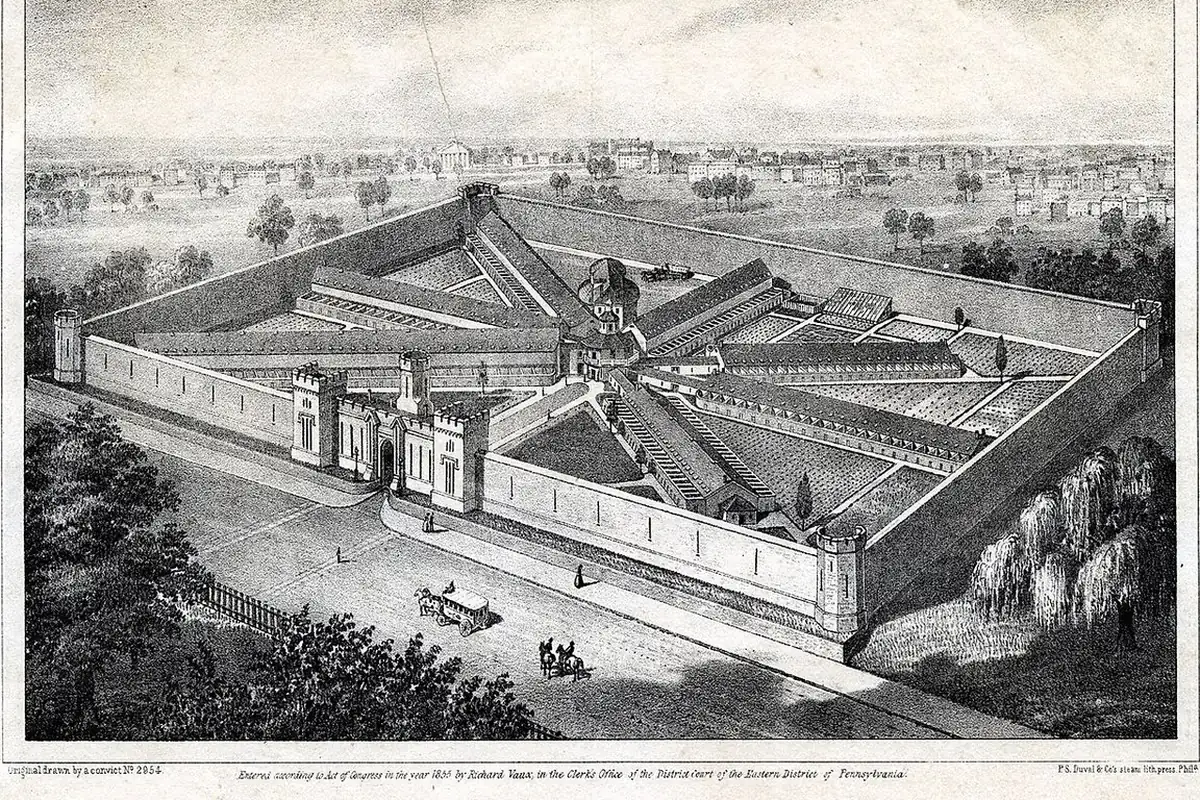
- Bird’s-eye view of the prison, 1855 (Library Company of Philadelphia). The print on this page, entered for copyright in 1855 by Richard Vaux and “Original drawn by a convict No 2954.”
Spot something wrong, or know more? Tell us here. You can also email us or use our contact page. Corrections are noted here with their date, never made silently.