What Does Philadelphia Mean? Penn's City of Brotherly Love
Philadelphia comes from a Greek word translated as brotherly love. William Penn chose it for his new city by 1682, when it shows up in a land warrant dated July 10. He apparently took it from a biblical city in Asia Minor, though Espenshade says that city's name really meant the city of Philadelphus, a king's nickname.
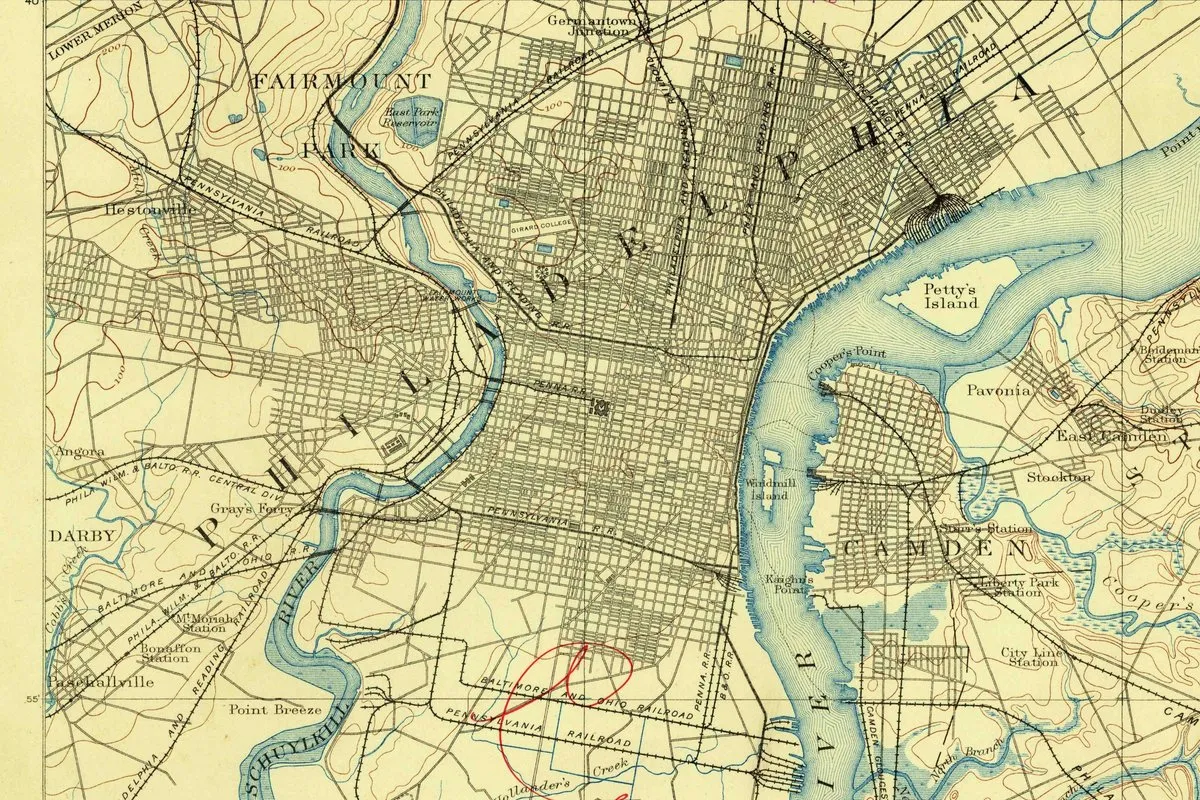
Penn’s “great towne”
William Penn chose the name Philadelphia, Greek for brotherly love, for the “great towne” he planned on the Delaware, though no one knows exactly when. He probably got it from an old city in Asia Minor mentioned in the Bible, and that city’s name didn’t quite mean what he thought it did.
A. Howry Espenshade’s Pennsylvania Place Names, from 1925, is blunt about the timing: “Exactly when Penn selected the name Philadelphia for his ‘great towne’ is not known. There can be no doubt that Penn himself chose the name,” he adds, though Penn didn’t mention it in the proposals he sent out to attract settlers.
What you can pin down is the planning. Espenshade says Penn sent three commissioners in September 1681 with orders to find a spot on the Delaware where the river was “most navigable, high, dry, and healthy.” They passed over Upland, now Chester, and chose the site of an Indian camp whose name Espenshade translates as “the grove of tall pines.” In July 1682 the surveyor-general, Thomas Holme, laid out the city. By then the name was already on paper: it appears in a land warrant dated July 10, 1682.
“Named before thou wert born”
Penn himself confirmed that the name came first. In an address dated August 12, 1684, which Espenshade says he sent from England to the Quaker meetings in Pennsylvania, he spoke to the town directly. Robert Proud’s History of Pennsylvania, printed in Philadelphia in 1797, gives the passage like this:
“And, thou, Philadelphia, the virgin settlement of this province, named before thou wert born, what love, what care, what service, and what travail has there been, to bring thee forth . . .”
“Named before thou wert born” is the closest thing you’ll get to Penn’s own word on it. It tells you he named the town before there was really a town. It doesn’t tell you the day.
Brotherly love, or a king’s nickname?
Henry Gannett’s 1905 place-name bulletin gives the classic version. Penn named the city, it says, so that “the principle of the Quakers,” brotherly love, “might be identified with their city, the name being that of the city in Asia Minor.” The bulletin traces it to the Greek philadelphos, “loving one’s brother.”
Espenshade adds a twist. The word philadelphia shows up five times in the Greek text of the New Testament epistles, and in three of those the King James Bible translates it as “brotherly love.” Penn was “a close student of the Bible,” Espenshade writes, so he must have been drawn to the Philadelphia in Lydia, home of one of the seven early churches in the Book of Revelation. Espenshade thinks Penn assumed the city’s name meant the same thing as the word.
It didn’t, quite. According to Espenshade, the Lydian city was founded and named by Attalus II, king of Pergamum from 159 to 138 BC, who was nicknamed Philadelphus, “brother-loving,” for his loyalty to his brother Eumenes, whom he followed on the throne. In his reading, the old city’s name really meant “the city of Philadelphus.” That’s Espenshade’s account. The University of Pennsylvania’s PHILAMONUMENTS project calls the founding story folkloric: it links the city to the brothers Eumenes II and Attalus II, but notes that one scholar thinks it isn’t possible to know whether either of them founded it.
Espenshade’s conclusion is that Penn “evidently thought” the name meant “the city of brotherly love” and picked it because that idea was dear to him. Either way, the brotherly love part is right there in the Greek root, whoever first put it on a city.
The capital that had to leave
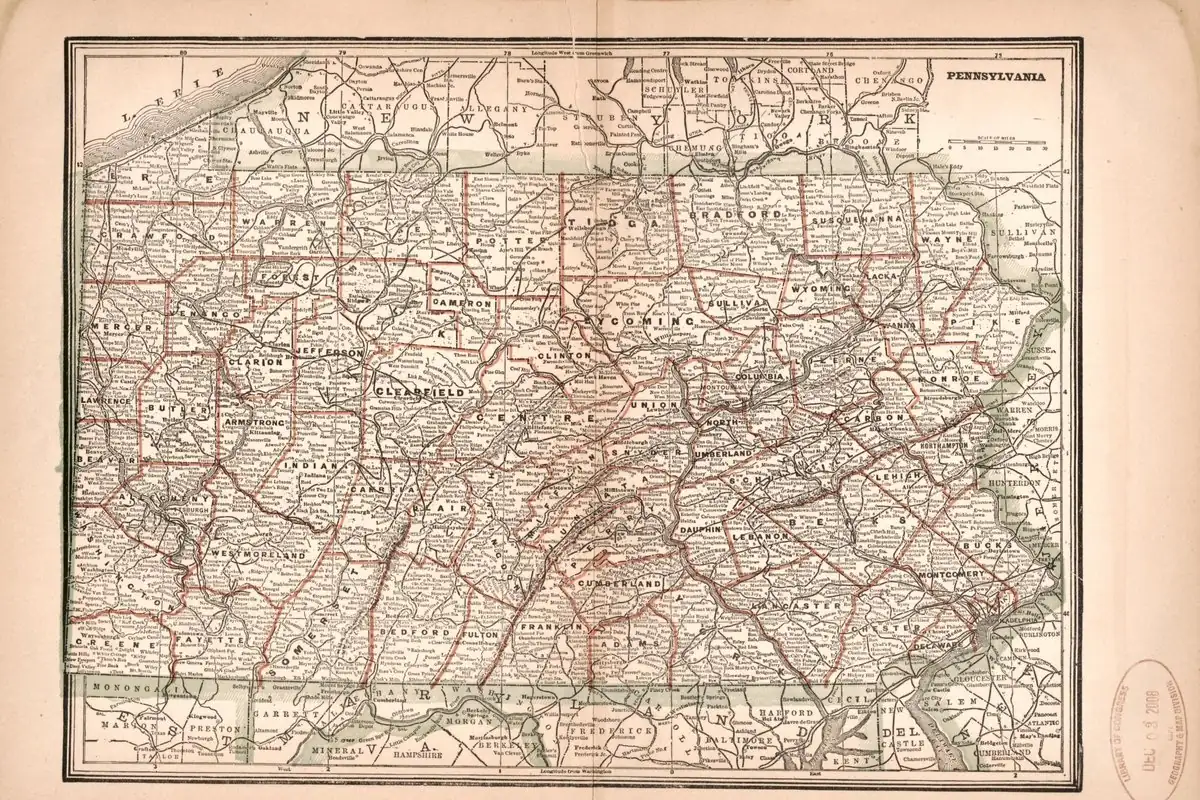
Penn meant the town to be the capital of his Quaker colony, and Espenshade notes that Philadelphia County was named for it as its chief town and county seat. The capital didn’t always stay put, though. British troops under Howe took the city in the fall of 1777, and for a time Pennsylvania’s government ran its business from Lancaster, out along the main highway west into Pennsylvania, as Espenshade tells it.
Quick answers
What does Philadelphia mean?
Brotherly love. Gannett’s 1905 bulletin traces it to the Greek philadelphos, “loving one’s brother,” and Espenshade notes the King James Bible translates philadelphia as “brotherly love” in three places.
Who named Philadelphia?
William Penn. Espenshade says “there can be no doubt that Penn himself chose the name,” and Penn’s 1684 address calls the city “named before thou wert born.”
When was Philadelphia named?
The exact date isn’t known. The name is on record by July 10, 1682, in a land warrant, the same month Thomas Holme laid out the city.
Key dates
- 159-138 BCAttalus II, nicknamed Philadelphus for his love of his brother Eumenes, rules Pergamum. Espenshade says he founded and named Philadelphia in Lydia.
- 1681September: Penn sends commissioners to pick a site for a city on the Delaware where it is "most navigable, high, dry, and healthy."
- 1682July 10: the name Philadelphia appears in a land warrant. That month Thomas Holme lays out the city, according to Espenshade.
- 1684August 12: Penn's address to the Quaker meetings in Pennsylvania calls Philadelphia "named before thou wert born."
- 1777September: General Howe occupies Philadelphia, and the state government moves to Lancaster for a time.
Getting there
Open Philadelphia in Google Maps
Opens in a new tab. The pin is the center of Philadelphia in the USGS place-name record.
The closest airports, Amtrak stations and intercity bus stops, measured in a straight line from the center of Philadelphia.
Airports
- Philadelphia International (PHL) 7 mi 11 km
- Trenton Mercer (TTN) 29 mi 47 km
Amtrak trains
- Philadelphia station (PHL) under 1 mi 2 km
- North Philadelphia station (PHN) 3 mi 5 km
Intercity buses
- OurBus Philadelphia, PA (1200 Market Street Center City 19102, by Loews Hotel) under 1 mi 0.3 km
- Fullington Trailways Philadelphia (Bus Terminal) under 1 mi 0.6 km
- Peter Pan Bus Lines Philadelphia (Bus Terminal) under 1 mi 0.6 km
Distances are as the crow flies, not by road. We don't list schedules or fares because they change; check with the airline, Amtrak or the bus company before you go. Official data (FAA commercial service airports (2025), FAA airport locations, Amtrak stations and Intercity Bus Atlas) from the FAA and the U.S. Bureau of Transportation Statistics, checked Nov 13, 2026.
Sponsored
Staying in Philadelphia?
Compare hotels in Philadelphia, Pennsylvania, on Expedia.
See hotels in PhiladelphiaWe may earn a commission if you buy through this link. It never changes what we write. Read our affiliate disclosure
Sponsored
Want the spooky side of Philadelphia?
The name has its story above. For the ghost stories, US Ghost Adventures runs walking ghost tours in Philadelphia.
See ghost tours in PhiladelphiaWe may earn a commission if you book through this link. It never changes what we write. Read our affiliate disclosure
Historical Sources & References
- Robert Proud, The History of Pennsylvania, vol. I (1797), p. 289. The text of Penn’s 1684 farewell to Philadelphia, “named before thou wert born.”
- A. Howry Espenshade, Pennsylvania Place Names (1925), pp. 29-32, 43. Penn’s commissioners of September 1681 and their instructions (p. 29); the site called “the grove of tall pines,” Holme’s survey of July 1682 and the line that the date of the naming “is not known” (p. 30); the five New Testament uses of philadelphia, the land warrant of July 10, 1682, the address of August 12, 1684, and “the city of Philadelphus” (p. 31); Attalus II Philadelphus and his brother Eumenes, and Philadelphia County named for the city (p. 32); the 1777 move of the state government to Lancaster (p. 43).
- Henry Gannett, The Origin of Certain Place Names in the United States (USGS, 1905), p. 244. Penn naming the city so that “brotherly love” would be identified with it, the city in Asia Minor and the Greek philadelphos.
- University of Pennsylvania, PHILAMONUMENTS, “Philadelphia’s Linguistic Infrastructure”. The founding story linking the ancient city to the brothers Eumenes II and Attalus II, which the project calls folkloric, and the scholarly doubt over whether either founded it.
- GNIS feature 1209052 (U.S. Geological Survey). Entry 1209052, which spells the name and puts the city in Philadelphia County.
- U.S. Geological Survey, Philadelphia sheet (1891). The 1891 Philadelphia quadrangle; it spreads the city’s name across the ground between the Schuylkill and the Delaware.
Spot something wrong, or know more? Tell us here. You can also email us or use our contact page. Corrections are noted here with their date, never made silently.