Times Square: Name, History and the Old Longacre
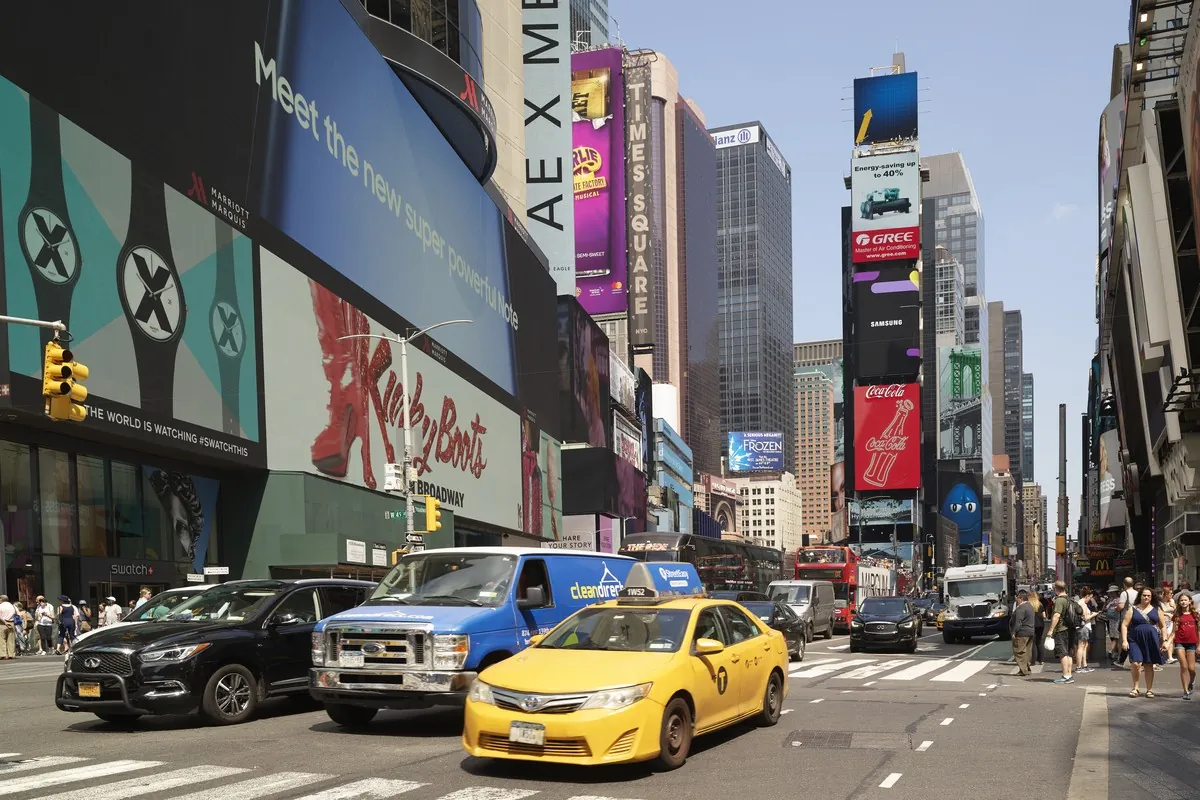
Times Square was Long Acre Square until April 1904, when New York renamed it for The New York Times and the tower the paper was building there. The old name came from London, and the new one came from a newspaper that, by its publisher’s own account, never asked for it.
Why Is It Called Times Square?
Because of a building. Adolph S. Ochs, who was in charge of The New York Times between 1896 and 1935, picked a very visible spot for the paper’s new headquarters: the block between Broadway and Seventh Avenue, from 42nd to 43rd Street. The Museum of the City of New York says only one building in the city stood taller than the Times Tower when it went up, and that the paper moved in during January 1905.
The name came first. The museum says Mayor George B. McClellan put his name to a resolution the spring before the move, and with it Long Acre Square, the crossing of Broadway and Seventh Avenue, became Times Square. Joyce K. Schiller, writing for the Norman Rockwell Museum’s research center, gives the date as April 8, 1904. The city’s Landmarks Preservation Commission ties the change to two things happening that year: the new subway, whose big 42nd Street and Broadway stop opened that year, and the Times Building, which the area was renamed “in honor of.”
Who thought of it? Here the sources split. Schiller writes that Ochs suggested the name. Ochs himself said otherwise. The museum quotes him: “I am pleased to say that Times Square was named without any effort or suggestion on the part of The Times.” You’ll have to weigh a publisher’s word about his own paper against a later essay that doesn’t cite a document, and we haven’t found the city’s resolution itself.
Longacre Square: Times Square’s Old Name
Before 1904, the crossroads was Long Acre Square, also written Longacre. Both the Museum of the City of New York and Schiller say it was named after Long Acre in London, a street known for building carriages. The New York version fit. The commission’s 1987 report on the Longacre Theater says that at the end of the 19th century the square held Manhattan’s harness and carriage businesses, and that it saw so little use at night that it seems to have turned into a “thieves’ lair.”
It hadn’t always been a business district. The same report says the area was farms and country summer places in the early 1800s, and that a horsecar line already ran across 42nd Street in the 1860s. The museum adds that the square was an early home of William H. Vanderbilt’s American Horse Exchange, which fits a neighborhood of horses and carriages.
The old name didn’t vanish. Broadway producer Harry H. Frazee built the Longacre Theater on West 48th Street in 1912 and 1913, to a design by Henry B. Herts, and it still carries the name. If you’re walking the theater blocks north of the square, that marquee still carries the square’s first name.
Times Square History After 1904
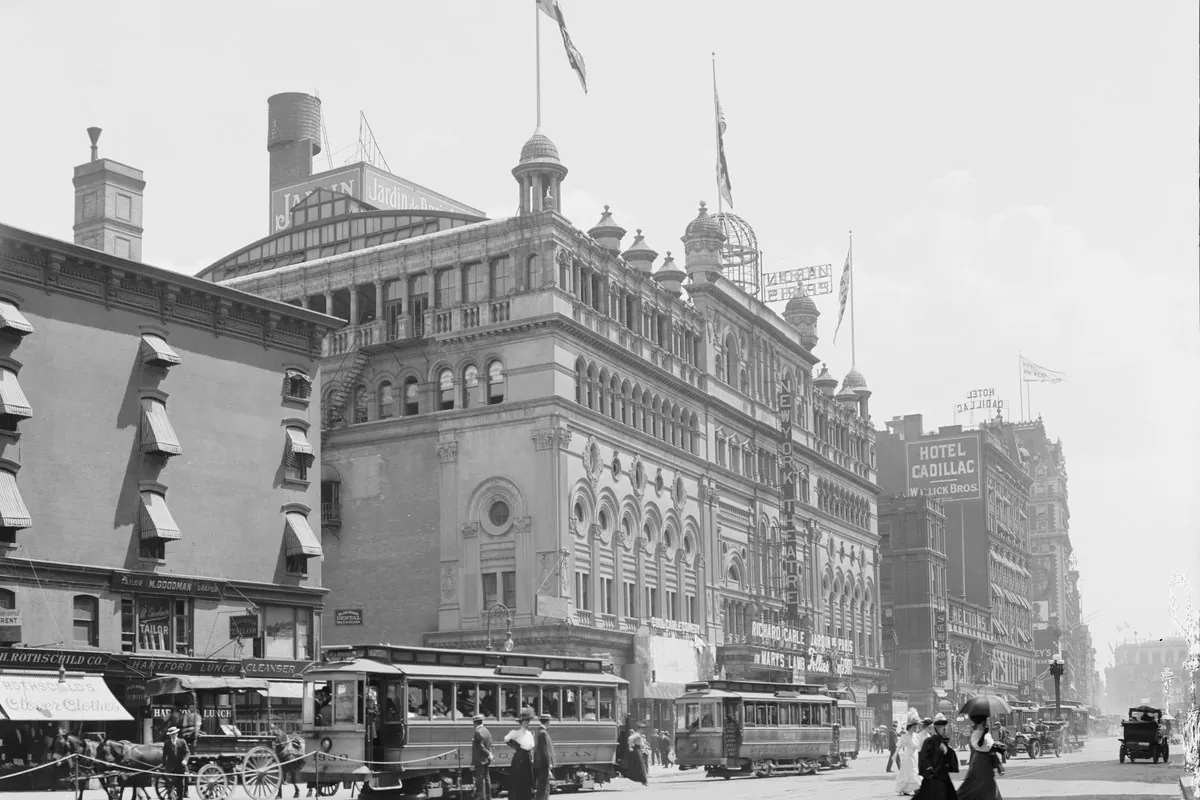
By 1904 the neighborhood was already changing. The commission’s report describes theater managers moving north along Broadway through the late 1800s until they reached Long Acre Square, and Oscar Hammerstein I building his huge Olympia theater there in 1895. Our New York City street names guide makes the same point from the commission’s Lyceum Theater report. The old photo at the bottom of this page, which the Library of Congress captions “Long Acre Square (Times),” shows that mix of streetcars, horses and theaters.
The Times didn’t stay long. The museum says it outgrew the tower within a decade and moved, but not before Ochs had started the New Year’s Eve celebration, staged to mark the new building. Crowds still come every December 31. The museum also tells how the tower’s electric news sign, running since 1928, first went dark in May 1942, when Mayor La Guardia ordered a wartime dimout and lights across the city were turned off or pointed down.
It’s not the only big Manhattan place that took a name from a company or a person. Rockefeller Center began as Metropolitan Square, named for an opera company that never moved in, and didn’t get Rockefeller’s name until the end of 1931.
The space you walk through today is laid out by the city. New York’s event office says the pedestrian areas known as Times Square run along Broadway from 41st to 47th Street and are split into six plazas, with Duffy Square handled separately. Most of them have fixed benches and tables and chairs you can move.
Quick answers
Was Times Square Once Called Longacre Square?
Yes. It was Long Acre Square, often written Longacre Square. The Museum of the City of New York and the Norman Rockwell Museum’s research center both say the name was borrowed from Long Acre, a carriage-building street in London, which matched the harness and carriage shops that filled the New York square in the late 1800s.
When Did Longacre Square Become Times Square?
In the spring of 1904. Schiller’s essay for the Norman Rockwell Museum gives the date as April 8, 1904, when the city renamed the square for The New York Times. The paper didn’t actually move into its new tower there until January 1905, according to the Museum of the City of New York.
Did The New York Times Name Times Square?
Not by its own account. The city did, with a resolution signed by Mayor George B. McClellan. One essay says Adolph Ochs suggested the name, but the Museum of the City of New York quotes Ochs saying the square was named “without any effort or suggestion on the part of The Times.”
Key dates
- 1904April 8: Long Acre Square is renamed Times Square, the year the city's first subway opens with a station at 42nd Street and Broadway.
- 1905January: The New York Times moves into its new tower between Broadway and Seventh Avenue.
- 1912-1913The Longacre Theater goes up on West 48th Street, keeping the old name alive on a Broadway marquee.
- 1928The electric news sign that wraps around the Times Tower lights up for the first time.
- 1942May: A wartime dimout darkens the square, and the news sign goes dark for the first time.
Getting there
Open Times Square in Google Maps
Opens in a new tab. The pin is an approximate point for Times Square.
The closest airports, Amtrak stations and intercity bus stops, measured in a straight line from the center of Times Square.
Airports
- Laguardia (LGA) New York 6 mi 10 km
- Newark Liberty International (EWR) 11 mi 17 km
Amtrak trains
- New York station (NYP) under 1 mi 1 km
- Newark station (NWK) 9 mi 15 km
Intercity buses
- Suburban Transit W 42nd St & 7th Ave under 1 mi 0.2 km
- ShortLine Hudson 42nd St & 7th Ave under 1 mi 0.2 km
- Monsey Trails W 42nd St & 7th Ave under 1 mi 0.2 km
Distances are as the crow flies, not by road. We don't list schedules or fares because they change; check with the airline, Amtrak or the bus company before you go. Official data (FAA commercial service airports (2025), FAA airport locations, Amtrak stations and Intercity Bus Atlas) from the FAA and the U.S. Bureau of Transportation Statistics, checked Nov 21, 2026.
Sponsored
Planning a visit?
Compare hotels near Times Square on Expedia.
See hotels nearbyWe may earn a commission if you buy through this link. It never changes what we write. Read our affiliate disclosure
Historical Sources & References
- Museum of the City of New York, “Dazzling, Dirty, and Back Again: A Brief History of Times Square”: Long Acre Square named for London’s carriage district, the American Horse Exchange, Ochs and the Times Tower, the move in January 1905, McClellan’s resolution the spring before, Ochs’s statement that the paper didn’t seek the name, the first New Year’s Eve event, the 1928 news sign and the 1942 dimout.
- Joyce K. Schiller, “The Street That Knows No Night,” Rockwell Center for American Visual Studies: the carriage trade, the London origin of the name and the renaming on April 8, 1904, which the essay says the Times publisher suggested.
- New York City Landmarks Preservation Commission, Longacre Theater designation report (1987): farmland in the early 1800s, the 42nd Street horsecar line, the 1904 subway station and the renaming for the Times Building, the harness and carriage businesses, the “thieves’ lair,” Hammerstein’s Olympia of 1895, and the Longacre Theater built in 1912-13 for Harry H. Frazee to plans by Henry B. Herts.
- City of New York, Citywide Event Coordination and Management, “Times Square”: the pedestrian plazas on Broadway between 41st and 47th Streets, Duffy Square and the benches, tables and chairs (as of November 2026).
- “Long Acre Square (Times), New York, N.Y.,” Library of Congress: the Detroit Publishing Co. photo at the bottom of this page, dated between 1900 and 1915.
- GNIS feature 967537, Times Square (U.S. Geological Survey): the federal place-name record for the square.
Spot something wrong, or know more? Tell us here. You can also email us or use our contact page. Corrections are noted here with their date, never made silently.