Rockefeller Center: History, Name and Visiting
Rockefeller Center started out as Metropolitan Square, named for the Metropolitan Opera, which never moved there; it took the Rockefeller name in late 1931. By then the opera had backed out, and John D. Rockefeller Jr. was carrying the whole project on his own.
Rockefeller Center History: From Metropolitan Square
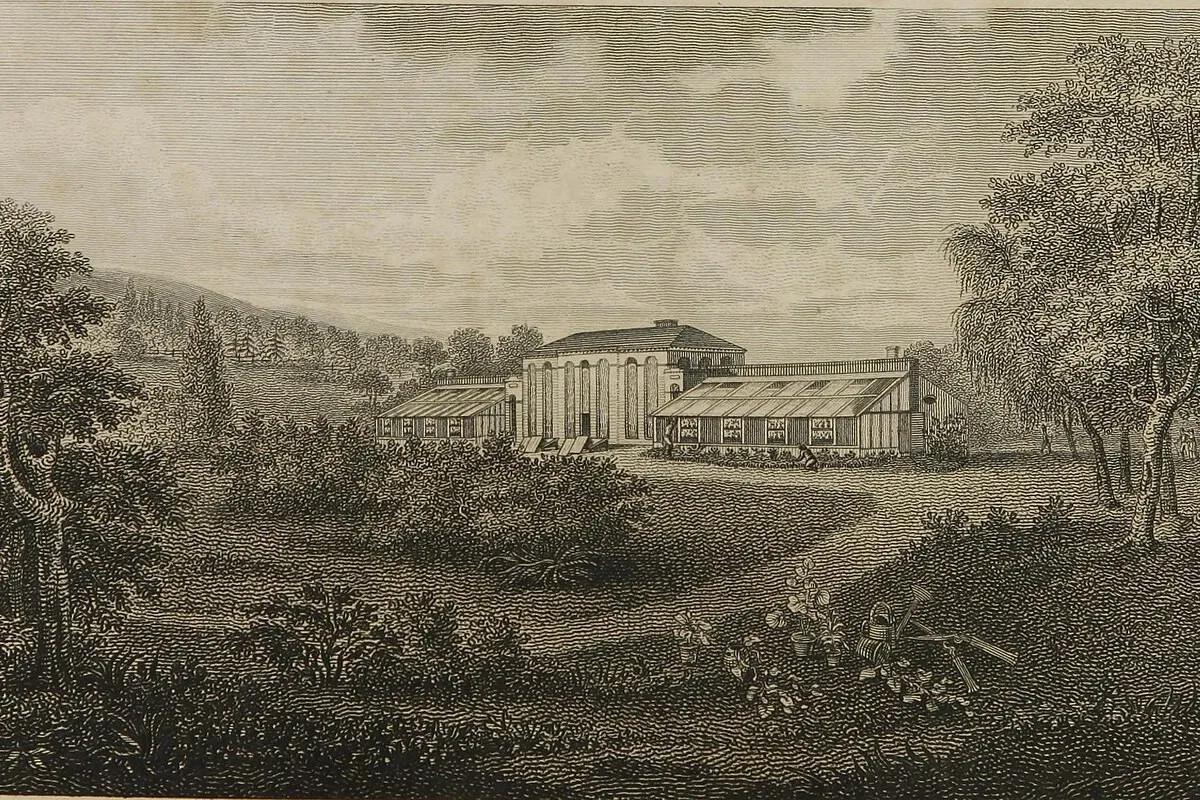
The land has a garden in its past. New York City’s Landmarks Preservation Commission says Dr. David Hosack ran his Elgin Gardens on the property from 1804 to 1811, then sold it to New York State, which in 1814 handed the nearly 12-acre (about 5-hectare) plot to Columbia College, which leased it for row houses.
By the 1920s the Metropolitan Opera wanted out of its aging home at 39th Street and Broadway, and the midtown blocks between 48th and 51st streets looked like a new site. Rockefeller, who lived a few blocks north, got interested. According to the commission’s 1985 report, he committed on October 1, 1928, to lease Columbia’s three blocks and signed the contract on December 31, 1928.
Earlier that same month, on December 6, a holding company called the Metropolitan Square Corporation was set up, and the report says it “took its name” from the opera company that was supposed to anchor the site. That’s the Metropolitan in Metropolitan Square. Even the company buying lots near Sixth Avenue, under the old elevated railway, got a name: “Underel.”
Then the plan fell apart. On December 5, 1929, a few weeks after the stock market crash, the opera decided not to move, the commission says. The New Yorker’s Herbert Warren Wind, writing in 1954, blamed it mostly on clashes of personality. Either way, Rockefeller was left holding a lease that, by the report’s count, was losing him more than $3 million a year.
He went ahead without the opera. RCA and its companies signed on as anchor tenants, and the deal turned a planned cultural center into a hub for radio, movies and offices. In late December 1931, according to the commission, the enterprise dropped Metropolitan Square and became Rockefeller Center. The report cites a New York Times story of December 21 headlined “Radio City to Bear Name of Rockefeller.” The sources we read don’t say who first suggested the new name.
That headline points to a second name. RCA’s deal let it name the entertainment section and its two theaters, including Radio City Music Hall. For years people called the whole complex “Radio City,” which the commission calls popular but inaccurate: the name properly belongs to the part along Sixth Avenue. It’s a name borrowed from a tenant, a bit like Times Square, which took its name in 1904 from the newly built Times Building.
Construction started in 1931 and the fourteenth building of the original complex was finished in 1939. The city designated Rockefeller Center a landmark on April 23, 1985.
Rockefeller Center Observation Deck
The deck sits on top of 30 Rockefeller Plaza, which the 1985 report lists as the RCA Building; the 1987 National Register nomination calls it the tallest structure in the complex. A 2005 travel story in The Vindicator of Youngstown, Ohio, says the deck opened in 1933, “when Rockefeller Center was new,” and that the public couldn’t go up for 20 years before it reopened on November 1, 2005, as Top of the Rock.
The same story describes three levels of indoor and outdoor viewing starting at the 67th floor. Looking north, its writer could pick out Central Park and the George Washington Bridge; looking south, the Empire State and Chrysler buildings and the Statue of Liberty.
Rockefeller Center Tickets: Which Experiences Need One?
In 2005, The Vindicator listed adult admission to Top of the Rock at $14, a price that’s long out of date. In the same piece, guided walking tours of the complex and NBC studio tours left from 30 Rockefeller Plaza, and Radio City Music Hall ran its own tours.
We couldn’t open the current official ticket pages, so check prices, hours and what each ticket covers with the operator before you go.
Visiting Rockefeller Center
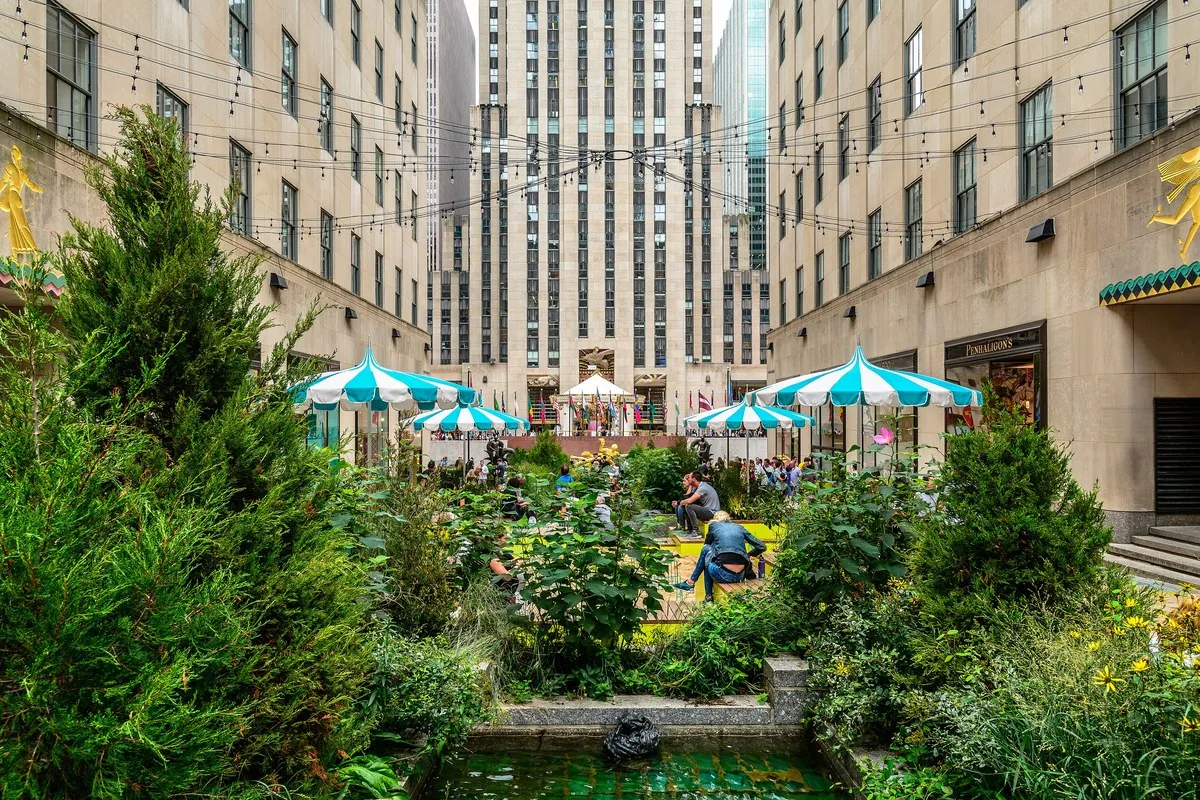
The commission’s report walks you in from Fifth Avenue the way the architects planned it: down the Promenade and Channel Gardens, a sloping pedestrian path that, Wind wrote, runs with the French building on one side and the British building on the other, to the sunken plaza, home to the skating rink and the Prometheus statue, with 30 Rockefeller Plaza rising behind. The report calls the sunken plaza “the center of the Center.”
That rink was an accident. Wind’s 1954 article says the lower plaza sat empty while the shops around it struggled, and the skating rink was tried “as a desperate means” of using the space. To almost everyone’s surprise, it caught on right away. Architect Harvey Wiley Corbett once said planning “had nothing to do with it.”
The name on the complex, by the way, works differently from its famous neighbor’s. The Empire State Building, which opened in 1931, was named for New York State, not for John J. Raskob or Al Smith, the men behind it. Rockefeller Center went the other way and put its backer’s name on the door.
Quick answers
Why Is It Called Rockefeller Center?
After John D. Rockefeller Jr. When the Metropolitan Opera pulled out in 1929, the project became his private commercial enterprise, and in late December 1931 its name changed from Metropolitan Square to Rockefeller Center, according to New York City’s Landmarks Preservation Commission.
What Was Rockefeller Center Originally Called?
Metropolitan Square. The holding company formed in December 1928 was the Metropolitan Square Corporation, named for the Metropolitan Opera, which was supposed to have its new house on the site.
Is Rockefeller Center the Same as 30 Rockefeller Plaza?
No. 30 Rockefeller Plaza, listed in the 1985 landmark report as the RCA Building, is one building in the complex, the one with the Top of the Rock deck. The original Rockefeller Center had 14 buildings when it was finished in 1939.
Do You Need Tickets to Visit Rockefeller Center?
Top of the Rock charged admission when it reopened in 2005 ($14 for adults then). We couldn’t open the current ticket pages, so check with the operator before you go.
Key dates
- 1811David Hosack sells his Elgin Gardens, on the future Rockefeller Center site, to New York State.
- 1928Rockefeller agrees to lease Columbia's midtown blocks; the Metropolitan Square Corporation is formed.
- 1929On December 5, the Metropolitan Opera decides not to move to the site.
- 1931Construction begins; in late December the project is renamed Rockefeller Center.
- 1933The observation deck at 30 Rockefeller Plaza opens.
- 1939The fourteenth building of the original complex is completed.
- 1985New York City designates Rockefeller Center a landmark on April 23.
- 2005The renovated observation deck reopens on November 1 as Top of the Rock.
Getting there
Open Rockefeller Center in Google Maps
Opens in a new tab. The pin is an approximate point for Rockefeller Center.
The closest airports, Amtrak stations and intercity bus stops, measured in a straight line from the center of Rockefeller Center.
Airports
- Laguardia (LGA) New York 6 mi 9 km
- Newark Liberty International (EWR) 11 mi 18 km
Amtrak trains
- New York station (NYP) 1 mi 2 km
- Newark station (NWK) 10 mi 16 km
Intercity buses
- ShortLine Hudson 5th Ave & W 47th St under 1 mi 0.2 km
- Monsey Trails 5th Ave & 47th St under 1 mi 0.2 km
- Newark Airport Express Bryant Park (to EWR) under 1 mi 0.6 km
Distances are as the crow flies, not by road. We don't list schedules or fares because they change; check with the airline, Amtrak or the bus company before you go. Official data (FAA commercial service airports (2025), FAA airport locations, Amtrak stations and Intercity Bus Atlas) from the FAA and the U.S. Bureau of Transportation Statistics, checked Nov 20, 2026.
Sponsored
Planning a visit?
Compare hotels near Rockefeller Center on Expedia.
See hotels nearbyWe may earn a commission if you buy through this link. It never changes what we write. Read our affiliate disclosure
Historical Sources & References
- Landmarks Preservation Commission, Rockefeller Center designation report LP-1446 (1985). Elgin Gardens and Columbia, the Opera plan, the Metropolitan Square Corporation, “Underel,” the opera’s withdrawal, the late-1931 name change (citing the New York Times, December 21, 1931), RCA and the “Radio City” name, the Channel Gardens and sunken plaza, the 1939 completion.
- National Register of Historic Places nomination, Rockefeller Center (1987). Repeats the Metropolitan Square name and the late-1931 change, in largely the same words as the city report, so it’s not an independent second source.
- Herbert Warren Wind, “The Square That Became a Center,” The New Yorker (1954). The opera’s change of heart and how the skating rink began.
- Peter H. Milliken, “A new way to see Manhattan,” The Vindicator (2005). The deck’s 1933 opening, its 2005 reopening as Top of the Rock, and tours in 2005.
- David Hosack, Hortus Elginensis (1811), via Wikimedia Commons. The engraving of the Elgin Botanic Garden on this page.
- U.S. Geological Survey, Geographic Names Information System, “Rockefeller Center”. Official federal record of the name and location.
Spot something wrong, or know more? Tell us here. You can also email us or use our contact page. Corrections are noted here with their date, never made silently.