Fullerton, California: The Town That Wasn't Called Amerige
George H. Fullerton, president of the Santa Fe railroad's Pacific Land and Improvement Company, is the namesake. When the railroad was surveyed through, founders George and Edward Amerige were offered the name Amerige, but a 1921 county history says they declined and suggested Fullerton, after the railroad official.
The brothers who laid out Fullerton, California, in 1887 could have put their own name on it, and a 1921 county history says they turned the offer down. The name went instead to George H. Fullerton, who ran the Santa Fe railroad’s land company, the outfit that could bring the tracks to their townsite.
Two brothers from Massachusetts and a field of mustard
George H. and Edward R. Amerige were hay and grain dealers from Malden, Massachusetts. Samuel Armor’s History of Orange County, published in 1921, says they sold out back east and reached California in May 1886, during the land boom. The federal Advisory Council on Historic Preservation adds a detail Armor doesn’t: they were duck hunting in the area when they decided to build a town.
The spot they picked lay between Anaheim and the Placentia district, on land from the Miles estate. Armor gives two sizes for the purchase in two places, 500 acres in the town chapter and 430 acres in Edward’s biography, and two dates for the first survey stake, July 6 and July 5, 1887. Both versions agree on the setting, though: a field of wild mustard.
Why a railroad man got the name
The whole bet rested on the Santa Fe. According to Armor’s town chapter, the Ameriges had “inside information” that the railroad would build toward San Diego. They negotiated with the Pacific Land and Improvement Company, the Santa Fe’s land arm, to shift the surveys so the line would hit their townsite, and they gave the company railroad rights to make sure the road and a depot came through. Edward’s biography puts it more bluntly: they gave the Santa Fe an interest in the town site.
Then came the question of what to call the place. Edward’s biography in the same book tells it this way:
“Mr. Fuller, president of the Pacific Land and Improvement Company, a subsidiary of the Santa Fe Railroad Company, as well as others, wished to name the town Amerige, but the brothers modestly requested that some other name be given…”
They suggested that it be named Fullerton, “after the aforesaid official, which was done.” You’ll notice the book calls him “Mr. Fuller,” and the town chapter says “G. H. Fuller” too. The Advisory Council names him as George H. Fullerton, president of the Santa Fe’s land and development arm, and that’s the name the town carries.
The La Habra detour
Armor’s town chapter adds a twist. It says the man the town was named for “soon was deposed from office,” and that the name was then changed to La Habra, to match the valley next door. People pushed back hard enough that the town was “re-christened Fullerton,” although the first railroad tickets were issued to La Habra. That story appears only in this one source, so take it as Armor tells it.
The railroad didn’t actually arrive until the fall of 1888, held up by trouble securing the right-of-way. By then the great Southern California boom was over, and Armor says the hamlet had “only a conservative growth from the beginning.”
Founders without a namesake
The brothers stayed and built the place anyway. Edward became Fullerton’s first mayor and served in the Legislature before his death on May 3, 1915, Armor says. When the town incorporated on January 22, 1904, it did so as a city of the sixth class. The national place-name record notes the same year. Armor says most of the streets were named by the Ameriges after streets in or near their Massachusetts hometown, which is why you’ll find a Commonwealth Avenue, named for Boston’s, in Orange County. Other streets went to officials of the land company and the Santa Fe.
Armor also records how the “old-time citizens” felt about it: they thought it “an injustice that the town should not have borne the name of its founders.” The founders did get a street: Amerige Avenue, which Armor says “perpetuates the name of the town’s founders.” The city itself, though, carries the name of a railroad executive, by the brothers’ own choice. So when you find Fullerton on a map of California, you’re looking at the railroad man’s name, picked by the men who could have used their own.
Quick answers
Who was Fullerton, California, named after?
George H. Fullerton, president of the Pacific Land and Improvement Company, the Santa Fe railroad’s land company. A 1921 county history spells him “Fuller” but says the town was named Fullerton after him.
Why isn’t Fullerton named Amerige?
Because the founders said no. Armor’s 1921 history says the land company’s president and others wanted to call the town Amerige, and George and Edward Amerige asked for another name and suggested Fullerton.
Was Fullerton ever called La Habra?
Briefly, according to Armor. He says the town was renamed La Habra after the man it honored was deposed from office, and then re-christened Fullerton after strong opposition, though the first railroad tickets were issued to La Habra.
Key dates
- 1886George and Edward Amerige, hay and grain dealers from Malden, Massachusetts, arrive in California in May.
- 1887The brothers buy land from the Miles estate and drive the first stake of the town survey in July, in a field of wild mustard.
- 1888In the fall, the first train reaches the town, according to Armor's 1921 history.
- 1904January 22: Fullerton is incorporated as a city.
- 1915May 3: Edward R. Amerige, the town's first mayor, dies.
Getting there
Open Fullerton in Google Maps
Opens in a new tab. The pin is the center of Fullerton in the USGS place-name record.
The closest airports, Amtrak stations and intercity bus stops, measured in a straight line from the center of Fullerton.
Airports
- Long Beach (Daugherty Field) (LGB) 13 mi 22 km
- John Wayne/Orange County (SNA) Santa Ana 14 mi 22 km
Amtrak trains
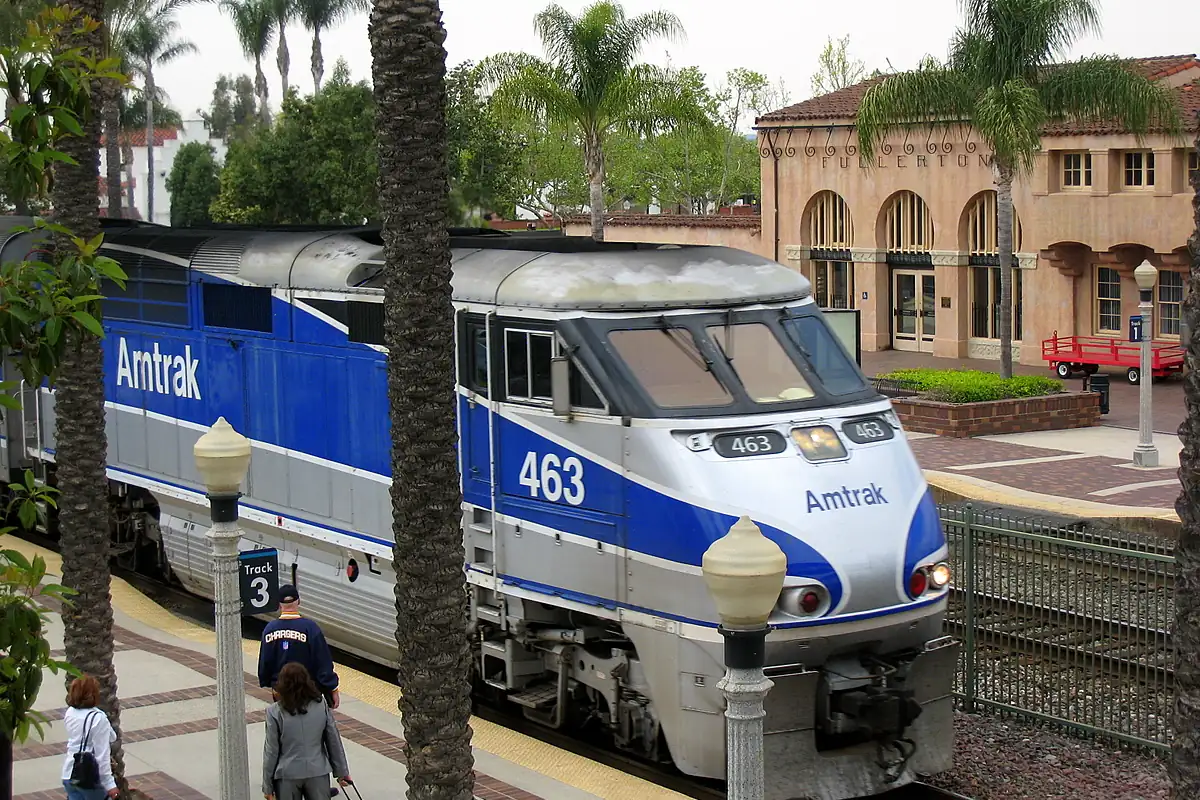
- Fullerton station (FUL) under 1 mi 0.3 km
- Anaheim station (ANA) 5 mi 9 km
Intercity buses
- Gold Runner Fullerton under 1 mi 0.3 km
- Amtrak Chartered Vehicle Amtrak Connecting Service · Fullerton Amtrak Station under 1 mi 0.3 km
- Rapid Connection Anaheim (Marketplace) 4 mi 7 km
Distances are as the crow flies, not by road. We don't list schedules or fares because they change; check with the airline, Amtrak or the bus company before you go. Official data (FAA commercial service airports (2025), FAA airport locations, Amtrak stations and Intercity Bus Atlas) from the FAA and the U.S. Bureau of Transportation Statistics, checked Nov 13, 2026.
Sponsored
Staying in Fullerton?
Compare hotels in Fullerton, California, on Expedia.
See hotels in FullertonWe may earn a commission if you buy through this link. It never changes what we write. Read our affiliate disclosure
Historical Sources & References
- Samuel Armor, History of Orange County, California (1921), pp. 58, 581 and 585. The town chapter (p. 58): the Ameriges’ land from the Miles estate, their “inside information” on the Santa Fe, the first stake on July 6, 1887, the name “in honor of G. H. Fuller,” the switch to La Habra and back, the first train in the fall of 1888 and incorporation on January 22, 1904. Edward R. Amerige’s biography (p. 585): Malden, Massachusetts, arrival in May 1886, 430 acres, the stake on July 5, 1887, the offer of the name Amerige, the suggestion of Fullerton, Edward as first mayor and his death on May 3, 1915. George H. Amerige’s biography (p. 581): the streets named after Massachusetts streets, Commonwealth Avenue for Boston’s, and Amerige Avenue for the founders.
- Advisory Council on Historic Preservation, “Fullerton, California”. The brothers duck hunting in 1887 and George H. Fullerton as president of the Santa Fe’s land and development arm.
- GNIS feature 1660658 (U.S. Geological Survey). Fullerton’s entry in Orange County, with the note “Incorporated in 1904.”
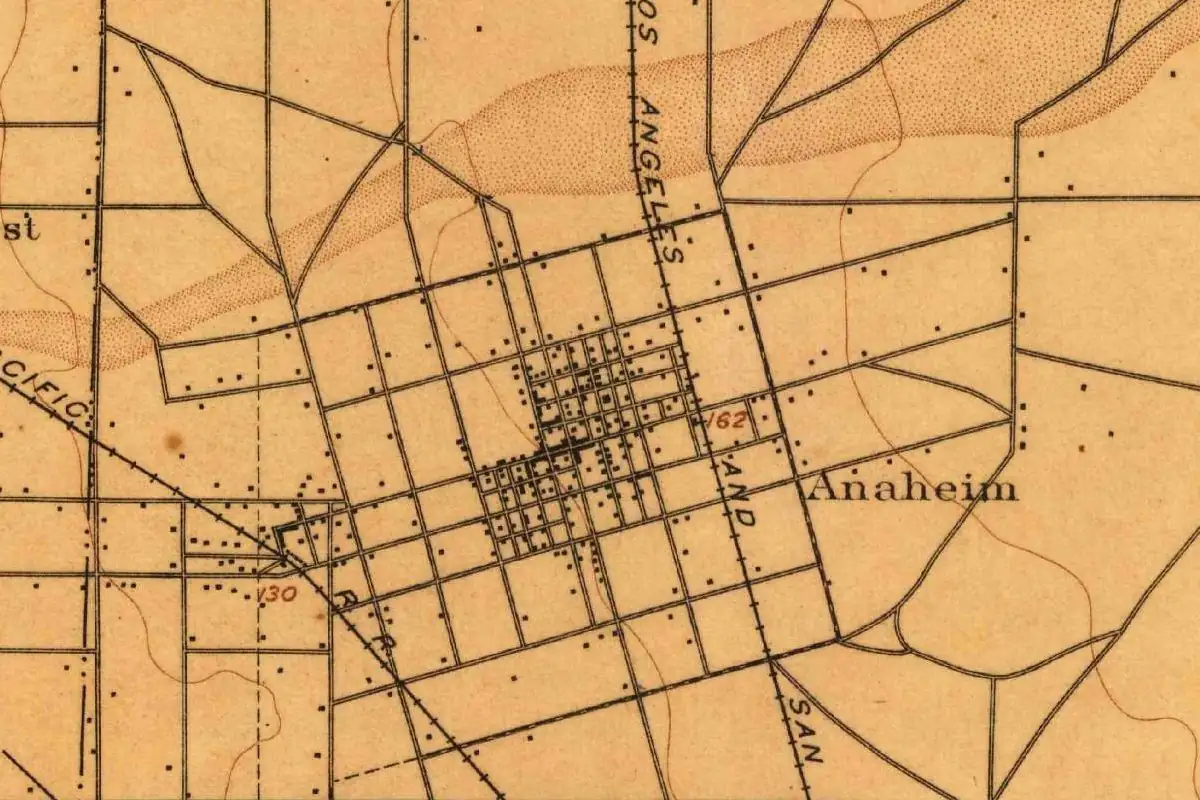
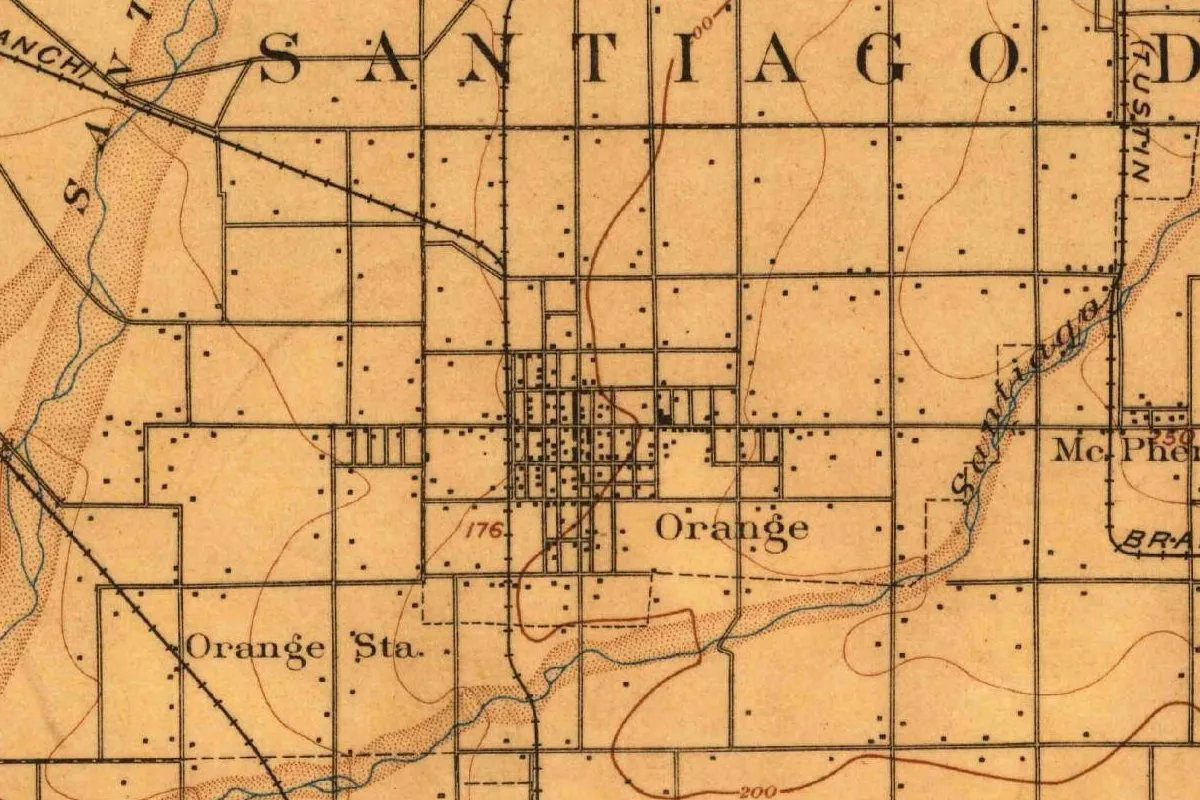
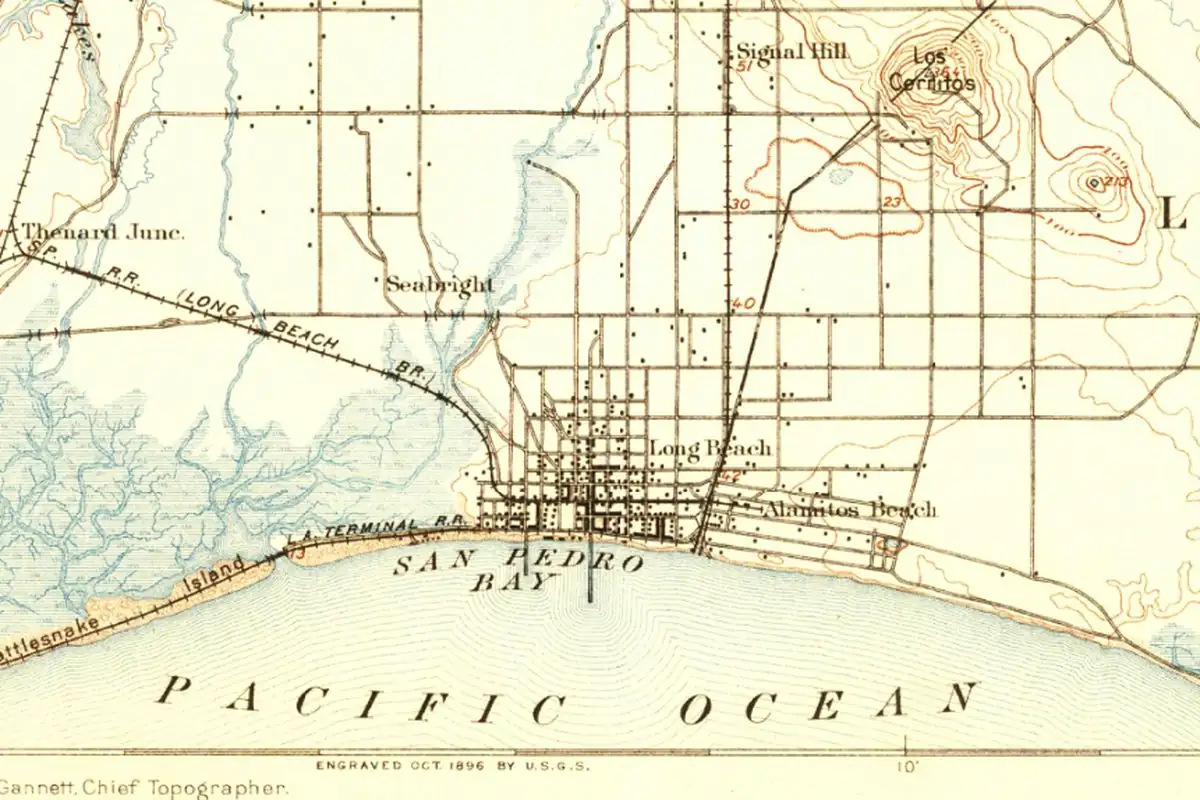
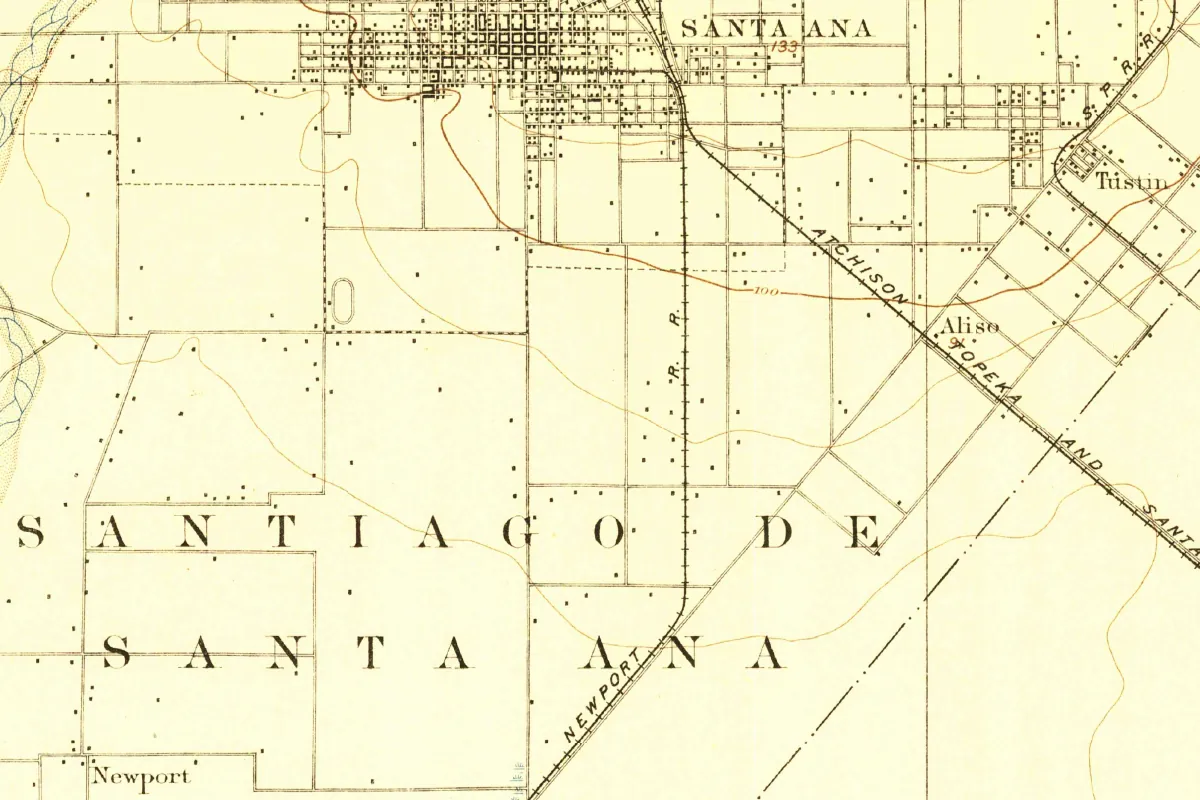
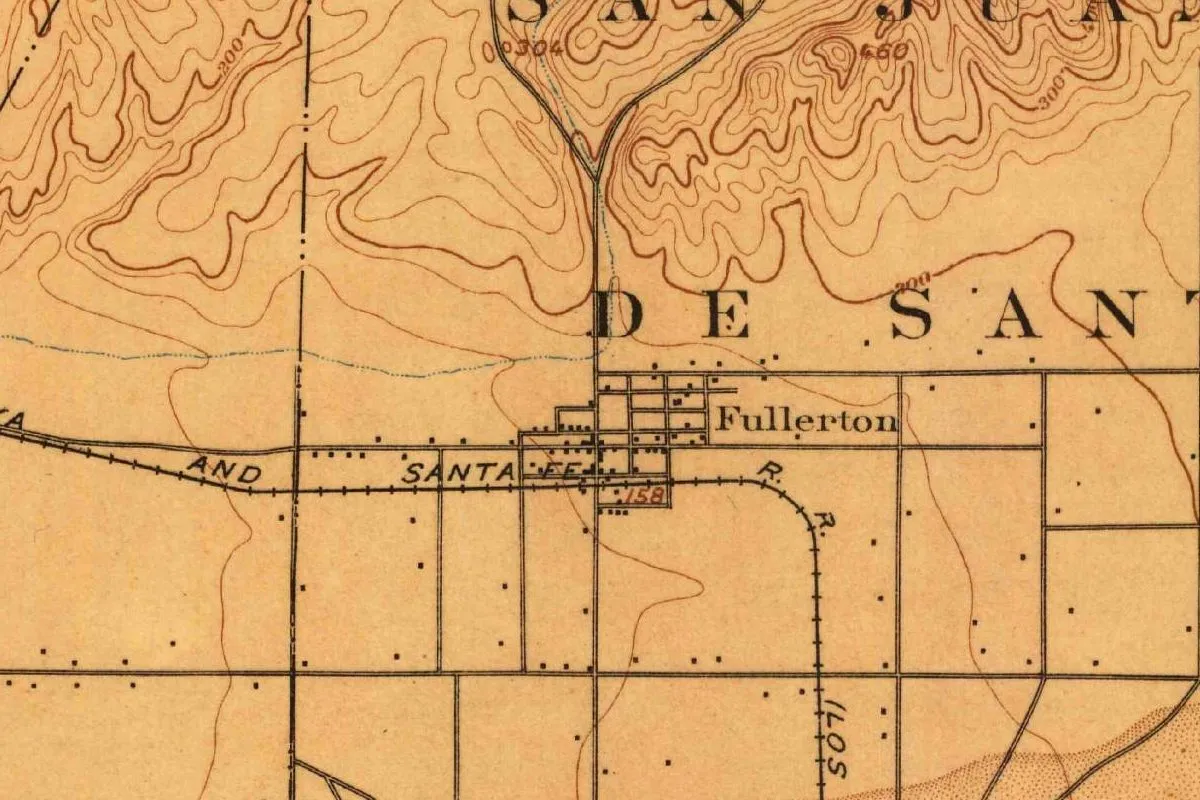
- U.S. Geological Survey, Anaheim sheet (1:62,500), 1896. An 1896 federal survey sheet that already prints Fullerton as a few blocks on the Santa Fe tracks.
Spot something wrong, or know more? Tell us here. You can also email us or use our contact page. Corrections are noted here with their date, never made silently.