Why Is It Called Long Beach? The Willmore City Story
Long Beach, California, is named for its long, wide beaches. The town began in 1881 as Willmore City, the town site of William Willmore's American Colony. When that colony failed in 1884, a San Francisco firm bought it, formed the Long Beach Land and Water Company, and renamed the place after its shore.
Willmore City, a colony that didn’t sell
The town’s first name belonged to a promoter. In 1881 William Erwin Willmore, who had come to the United States from London, made a deal with J. Bixby & Co. to develop the American Colony: 4,000 acres of Rancho Los Cerritos, with a 350-acre town site on the ocean. The town site was named Willmore City. That’s how the city’s 2009 Historic Context Statement, prepared for Long Beach by Sapphos Environmental, tells it.
The plan was big. A main boulevard called American Avenue, now Long Beach Boulevard, would run toward Los Angeles. Resort quarters would line the waterfront, and the rest would be sold as 40-acre farms. When the colony was laid out, the only building on it was an old sheepherder’s shack used by Bixby ranch hands, near today’s First Street and Pine Avenue.
Willmore advertised in 100 newspapers and 35 magazines around the country. Every deed carried a clause that banned the sale of liquor on the property forever. His ads in the Los Angeles Times promised a “magnificent beach” and “good soil.”
It didn’t work. In 1882, sixty people came west to look at Willmore City, agreed it was fit for a colony, and only two bought land. By May 1884 there were just 12 homes, most of the lots were unsold, and Willmore gave up.
Renamed for the shore
The next month, the San Francisco real estate firm Pomeroy and Mills bought the colony and reorganized it as the Long Beach Land and Water Company. The context statement puts the change in one line:
“The American Colony and Willmore City were renamed Long Beach after the area’s long, wide beaches.”
So the new owners dropped the promoter’s name and sold the thing he’d been advertising all along. The Long Beach Post’s local history column agrees on the timing: the place was called Long Beach once it became the property of the Long Beach Land and Water Company in 1884, when it had a bit over 100 people.
The company’s town also got a big hotel. The 70-room Long Beach Hotel opened in September 1884, far larger than the town needed most of the year, but the population could swell in summer, when visitors came from nearby cities and even other states for the seaside. It burned to the ground on November 8, 1888.
A city by 1888
Growth followed the new name. By 1885 there were about 51 houses, a church, a general store, a hotel and a newspaper, the Long Beach Journal. In 1887 a fare war between the Santa Fe and the Southern Pacific brought thousands of families to Southern California. On February 10, 1888, Long Beach incorporated as a city with 800 citizens and about 59 buildings. One of its first ordinances banned saloons and gambling houses, keeping Willmore’s dry rule alive under the new name.
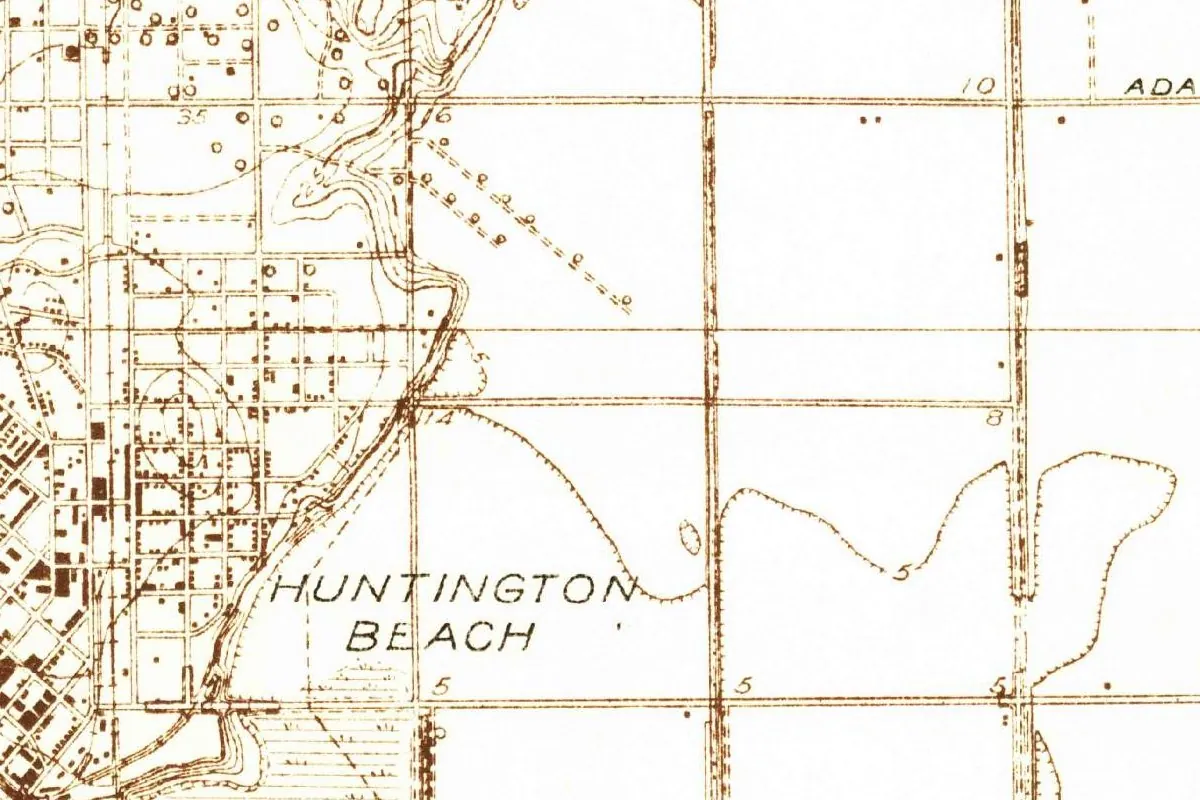
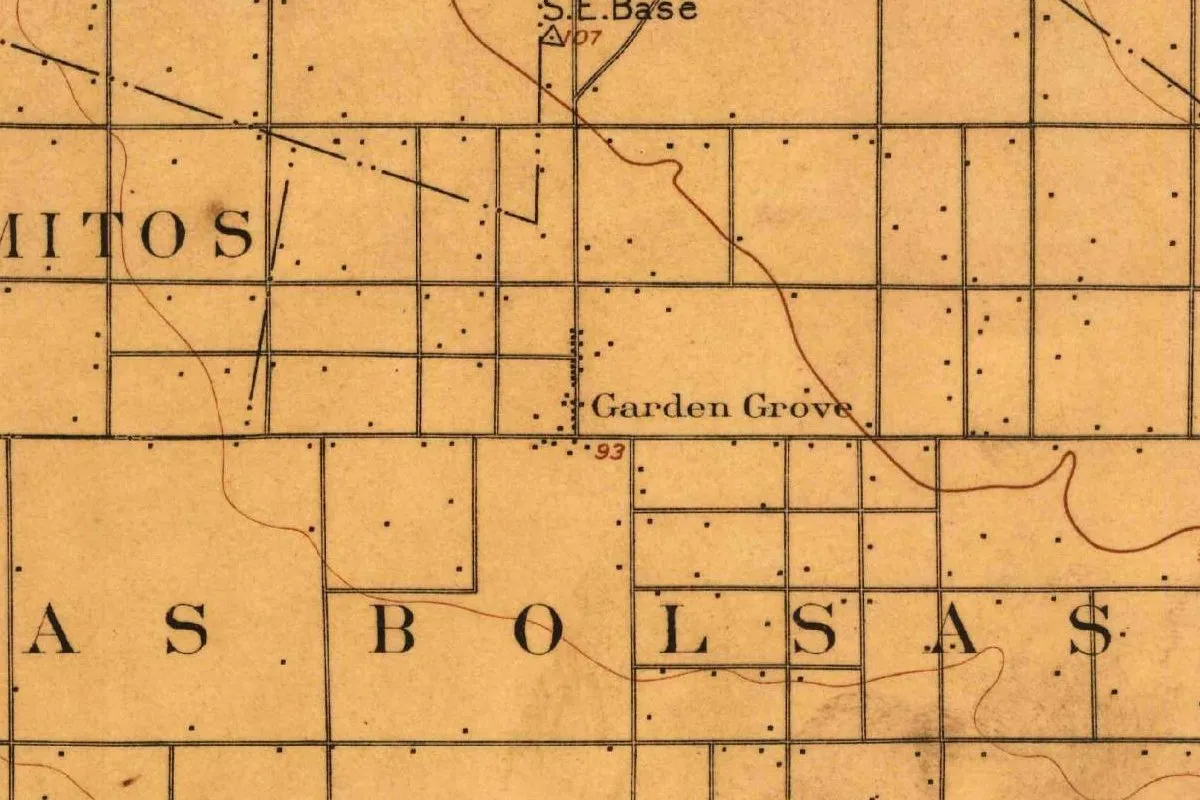
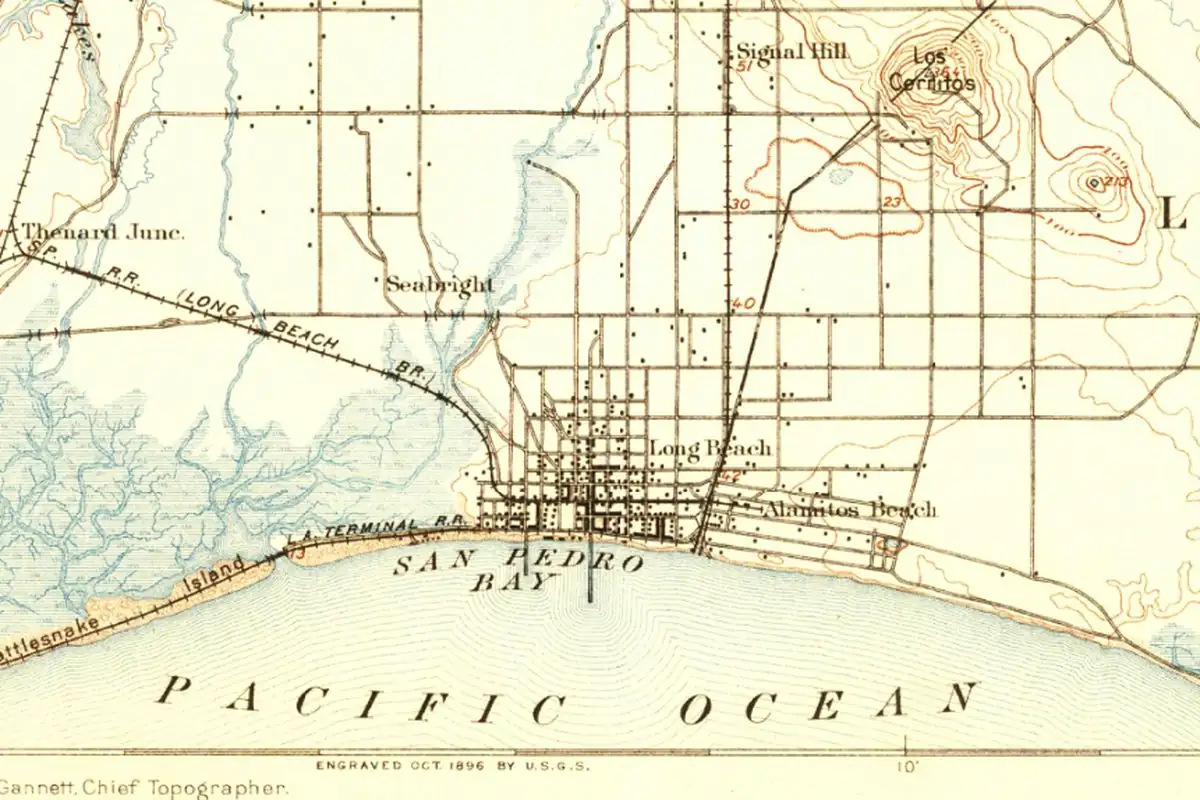
If you look at the 1896 survey map above, you’ll see a small grid of streets on San Pedro Bay, with Alamitos Beach just to the east. Twelve years after the sale, the name the new owners chose was already on the federal map.
Quick answers
Why is it called Long Beach?
The 1884 owners named it after the area’s long, wide beaches. They replaced the old name, Willmore City, when they took over the failed colony.
What was Long Beach originally called?
Willmore City. It was the town site of the American Colony, started in 1881 by William Willmore and named after him.
Who named Long Beach?
The Long Beach Land and Water Company, formed in 1884 by the San Francisco firm Pomeroy and Mills after it bought the colony. The sources don’t name the person who suggested it.
When did Long Beach become a city?
On February 10, 1888, with about 800 residents.
Key dates
- 1881William Willmore and J. Bixby & Co. start the American Colony, with a 350-acre town site named Willmore City.
- 1882Sixty people come to inspect Willmore City; only two buy land.
- 1884May: with only 12 homes built, Willmore abandons the colony.
- 1884June: Pomeroy and Mills buy it, form the Long Beach Land and Water Company and rename the town Long Beach.
- 1884September: the 70-room Long Beach Hotel opens.
- 1888February 10: Long Beach incorporates as a city, with about 800 residents.
Getting there
Open Long Beach in Google Maps
Opens in a new tab. The pin is the center of Long Beach in the USGS place-name record.
The closest airports, Amtrak stations and intercity bus stops, measured in a straight line from the center of Long Beach.
Airports
- Long Beach (Daugherty Field) (LGB) 4 mi 7 km
- Los Angeles International (LAX) 17 mi 28 km
Amtrak trains
- Fullerton station (FUL) 17 mi 27 km
- Anaheim station (ANA) 18 mi 29 km
Intercity buses
- FlixBus Long Beach CA (LBC) under 1 mi 0.4 km
- Limousine Express Huntington Park 14 mi 23 km
- International Bus Lines Huntington Park 14 mi 23 km
Distances are as the crow flies, not by road. We don't list schedules or fares because they change; check with the airline, Amtrak or the bus company before you go. Official data (FAA commercial service airports (2025/2026 cached FAA categories from existing site), FAA airport locations, Amtrak stations and Intercity Bus Atlas) from the FAA and the U.S. Bureau of Transportation Statistics, checked Nov 10, 2026.
Sponsored
Staying in Long Beach?
Compare hotels in Long Beach, California, on Expedia.
See hotels in Long BeachWe may earn a commission if you buy through this link. It never changes what we write. Read our affiliate disclosure
Sponsored
Want the spooky side of Long Beach?
The name has its story above. For the ghost stories, US Ghost Adventures runs walking ghost tours in Long Beach.
See ghost tours in Long BeachWe may earn a commission if you book through this link. It never changes what we write. Read our affiliate disclosure
Historical Sources & References
- Sapphos Environmental, City of Long Beach Historic Context Statement (July 10, 2009), pp. 34-36. The core of this story: Willmore and the American Colony, the ads and the liquor clause, the 1882 visit, the 12 homes of May 1884, the sale to Pomeroy and Mills and the renaming “after the area’s long, wide beaches” (p. 35), the 1887 fare war, and the incorporation of February 10, 1888 (p. 36).
- Long Beach Post, “Local history: The splendid but short life of the Long Beach Hotel”. The 1884 switch from Willmore City to Long Beach, the town of about 100 people, the 70-room hotel opened in September 1884 and the fire of November 8, 1888.
- GNIS feature 1652747 (U.S. Geological Survey). The federal gazetteer’s populated-place entry for Long Beach, in Los Angeles County, with its official coordinates.
- U.S. Geological Survey, Downey sheet (1896). The source of the map at the top of this page.
Sponsored
Sailing from Long Beach?
Compare cruises that leave from the port of Long Beach on CruiseDirect.
See cruises from Long BeachWe may earn a commission if you buy through this link. It never changes what we write. Read our affiliate disclosure
Spot something wrong, or know more? Tell us here. You can also email us or use our contact page. Corrections are noted here with their date, never made silently.