Torrance, California: Named for a Man Who Said No
Torrance, California, is named for Jared Sidney Torrance, the president of the Dominguez Land Company, which built the town as a planned industrial city in 1912. The company's minutes, as summarized by the Torrance Historical Society, say the board chose his name on March 20, 1912, after he protested against it.
The name the post office wouldn’t take
Torrance, California, got its name in 1912 over the objection of the one man it honors: Jared Sidney Torrance, president of the company building the town. His fellow directors adopted it anyway.
It wasn’t their first choice, either. The Torrance Historical Society, drawing on the minutes of the Dominguez Land Company’s board meeting of March 20, 1912, says the company wanted to call its new industrial city Dominguez, the name of the family that had sold it the land. The U.S. Post Office Department said no, because California already had a Dominguez and so did Colorado.
Variations like Dominguez City, San Dominguez and El Dominguez had been suggested too. The company’s general manager, H. H. Sinclair, reported that the Dominguez family didn’t like any of them and wanted to keep the plain name for the railroad station near their adobe. So the board had to start over.
Thirty names and one protest
According to the society’s account, the directors tossed out about 30 names, most of them already taken somewhere else in the country. Southport, Obrador, Coronel, Don Manuel and Industrial did best, but nobody was happy with any of them.
Then someone tried Torrance. The informal vote was unanimous, on one condition: that President Torrance would withdraw his objections. He didn’t. He protested against the use of his name, so Vice President Sinclair took the chair, John S. Cravens moved a resolution, Maurice S. Hellman seconded it, and it passed unanimously.
You’ll want to keep in mind that this is the society’s summary of the minutes, which it took from the book Historic Torrance, not the original page. But it’s specific, it names the people in the room, and it’s the only account of the naming in the sources for this page. If you were expecting a developer who stamped his own name on a map, it’s the other way around.
A town built for factories
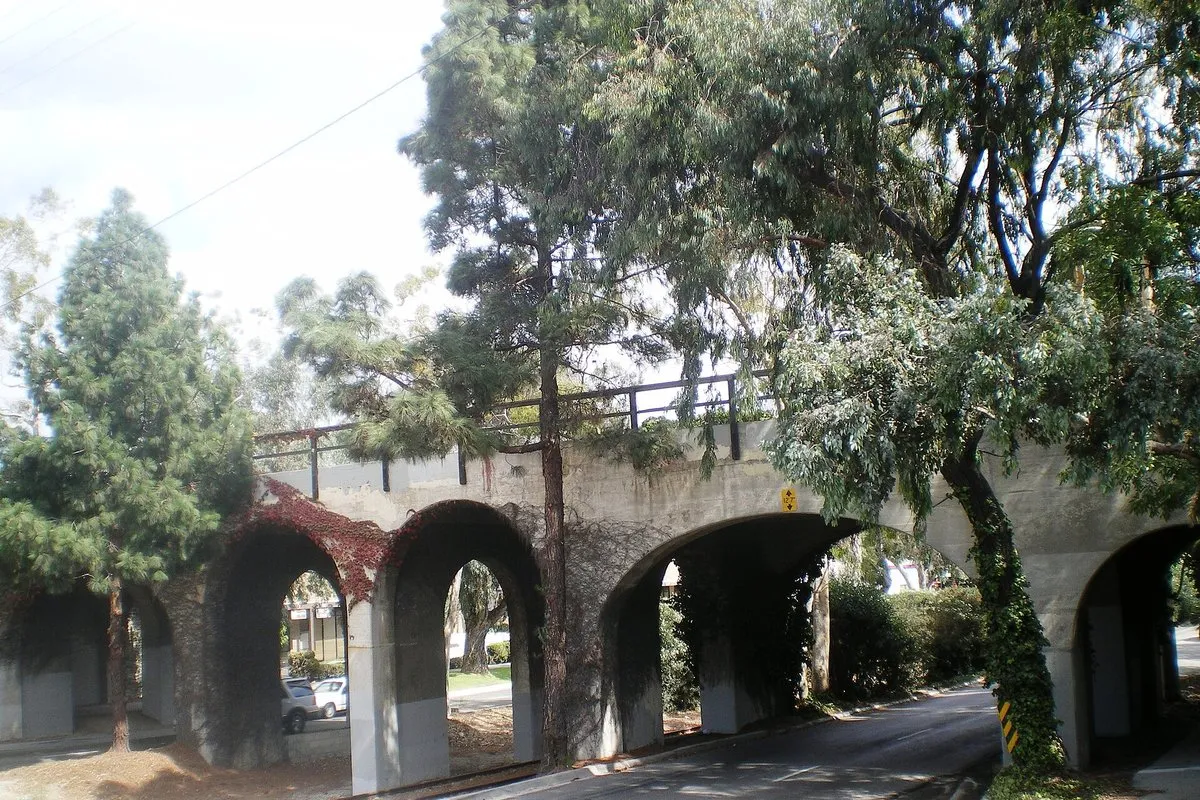
What Torrance wanted was a working town. The historical society says labor trouble in Los Angeles pushed him, in 1910, to plan a model industrial city halfway between Los Angeles and the San Pedro harbor, and that he spent $1 million on 3,522 acres of Dominguez land. The National Park Service dates his purchase of “over three thousand acres” to 1911 and says he hired the Olmsted Brothers that year, with Frederick Law Olmsted Jr. in charge, and that the plan split the town into a business district, an industrial district to the north and east, and homes to the west. Irving J. Gill designed the first buildings, including the railroad bridge in the photo below.
J. M. Guinn’s History of California, published in 1915, three years after the vote, got right to the point:
“Torrance was founded in the summer of 1912. It is seventeen miles from the city hall in Los Angeles. It was founded for a manufacturing center.”
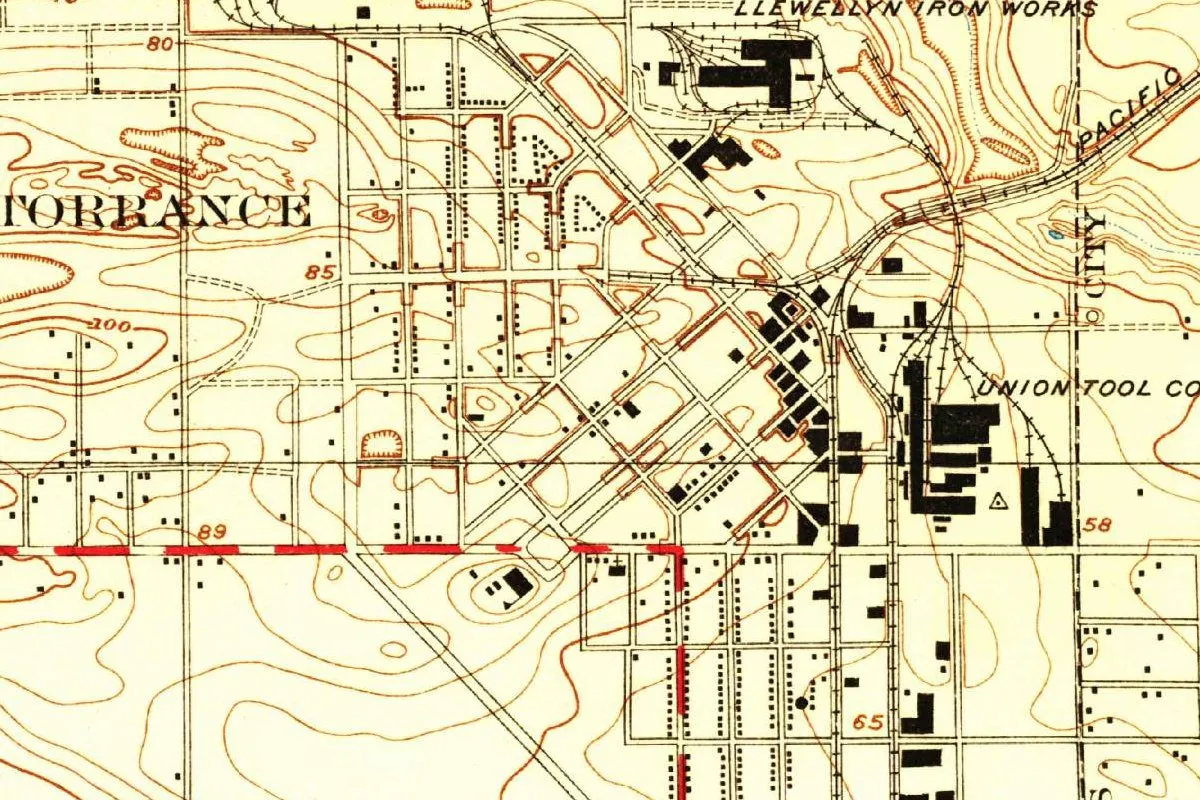
Guinn lists six factories that moved in at the start, from the Union Tool Company, which made oil well tools, to a pearl button maker and the Hendrie Rubber Company. The City of Torrance gives October 24, 1912, as the official founding date, and the map at the top of this page, from 1924, shows how it turned out: the Union Tool works and the Llewellyn Iron Works on the rail lines, and the town’s street grid next to them.
Sidney or Sydney
One small wrinkle: the middle name. The historical society, the City of Torrance and PBS SoCal spell it Sidney. The National Park Service spells it Sydney. It doesn’t change who the town is named for, but if you’re searching old records, try both.
The city itself came later. Torrance incorporated on May 12, 1921, the city’s fire department history says, nearly a decade after the board meeting. By then the name he’d objected to belonged to a California city of its own.
Quick answers
Who was Torrance, California, named after?
Jared Sidney Torrance, president of the Dominguez Land Company, which planned and built the town as an industrial city in 1912.
Why isn’t Torrance called Dominguez?
Because the Post Office Department wouldn’t allow it. According to the historical society’s summary of the 1912 minutes, there was already a Dominguez in California and another in Colorado, and the Dominguez family wanted to keep the name for their railroad station.
Did Jared Torrance want the town named after him?
No. The same account says he protested, and the board adopted his name anyway, with the vice president in the chair.
When was Torrance founded?
In 1912. Guinn’s 1915 history says the summer of 1912, and the city gives October 24, 1912, as the official founding date. Torrance became an incorporated city in 1921.
Key dates
- 1910Jared Sidney Torrance decides to build a model industrial city between Los Angeles and the San Pedro harbor, the historical society says.
- 1911Torrance buys more than 3,000 acres of the old Dominguez lands and hires the Olmsted Brothers to plan the town.
- 1912March 20: the Dominguez Land Company board turns down Dominguez and Southport and votes for Torrance, over his protest.
- 1912October 24: the date the City of Torrance gives for the town's official founding.
- 1921May 12: Torrance incorporates as a city and holds its first council meeting.
- 1924The U.S. Geological Survey's Torrance sheet maps the town, the Llewellyn Iron Works and the Union Tool Company.
Getting there
Open Torrance in Google Maps
Opens in a new tab. The pin is the center of Torrance in the USGS place-name record.
The closest airports, Amtrak stations and intercity bus stops, measured in a straight line from the center of Torrance.
Airports
- Los Angeles International (LAX) 8 mi 13 km
- Long Beach (Daugherty Field) (LGB) 11 mi 18 km
Amtrak trains
- Los Angeles station (LAX) 16 mi 26 km
- Glendale station (GDL) 20 mi 33 km
Intercity buses
- FlixBus Torrance Torrance, CA under 1 mi 1 km
- Limousine Express Huntington Park 12 mi 19 km
- International Bus Lines Huntington Park 12 mi 19 km
Distances are as the crow flies, not by road. We don't list schedules or fares because they change; check with the airline, Amtrak or the bus company before you go. Official data (FAA commercial service airports (2025), FAA airport locations, Amtrak stations and Intercity Bus Atlas) from the FAA and the U.S. Bureau of Transportation Statistics, checked Nov 13, 2026.
Sponsored
Staying in Torrance?
Compare hotels in Torrance, California, on Expedia.
See hotels in TorranceWe may earn a commission if you buy through this link. It never changes what we write. Read our affiliate disclosure
Historical Sources & References
- Torrance Historical Society, “How Torrance Got Its Name”. Its summary, from Historic Torrance (pp. 56-57), of the Dominguez Land Company minutes of March 20, 1912: the post office’s refusal of “Dominguez,” the other names considered, Torrance’s protest and the vote. Also Torrance’s plan of 1910, the 3,522 acres and the incorporation in 1921.
- J. M. Guinn, A History of California and an Extended History of Los Angeles and Environs, vol. 1 (1915), p. 446. The quoted lines on the founding in the summer of 1912 as a manufacturing center, and the six first factories.
- National Park Service, “Dominguez Estate Company”. The land purchase of 1911, the Olmsted Brothers plan and its three districts, Irving Gill and the railroad bridge, and the spelling “Sydney.”
- City of Torrance Fire Department, “History”. The official founding date of October 24, 1912, the first employers (Union Tool Company, Llewellyn Iron Works, Pacific Electric) and incorporation on May 12, 1921.
- PBS SoCal, “Torrance: From Agriculture and Industry to International City”. Jared Sidney Torrance, the town of 1912 and incorporation in 1921.
- GNIS feature 1652802 (U.S. Geological Survey). Used for the city’s feature ID and its listed coordinates.
- U.S. Geological Survey, Torrance sheet (1924). The source of the map at the top of this page.
Spot something wrong, or know more? Tell us here. You can also email us or use our contact page. Corrections are noted here with their date, never made silently.