Who Is Santa Monica, California, Named After? Saint Monica
Santa Monica is named for Saint Monica, the mother of Saint Augustine. How the name got here isn't recorded. A legend says Spanish soldiers named some springs for her tears. The city dates that story to May 4, 1769, but that day the expedition's diarist was in Baja California, naming different pools Santa Mónica.
No early record says who named Santa Monica, California, for Saint Monica, mother of Saint Augustine, and its best-known story has a date problem. The saint is clear enough. It’s the when and the who that nobody wrote down.
A mother who wouldn’t stop crying
Henry Gannett’s 1905 list of American place names puts it in a line: the township and city in Los Angeles County were “named for the Spanish saint, the mother of Saint Augustine.” Spanish is a stretch. Luther Ingersoll, who wrote a big history of the Santa Monica Bay towns in 1908, says that according to tradition Monica was born in Africa around 332 A.D.
Her story is the reason the name gets told the way it does. Ingersoll explains that her son Augustine wouldn’t be baptized and fell into what he calls “an immoral life,” and that Monica spent years praying and weeping over him. A bishop told her to wait and keep praying: “The child of so many tears cannot perish.” Augustine came around in the end and became “the great Saint Augustine.” So when people want to explain why a seaside spot with fresh springs got her name, the tears are right there.
Two soldiers and two springs
Ingersoll was refreshingly honest about what he had. “We have no authentic account of how the name Santa Monica came to be applied,” he wrote, “but the old Spanish settlers have a legend of its origin which may be true.” In that legend, two Spanish soldiers on furlough, exploring around the new pueblo of Los Angeles, come to a pair of clear, bubbling springs near the ocean, drink, and lie down between them. One asks what they should call the place. The other answers:
“We will call it Santa Monica, for the springs resemble the tears of the good Santa Monica shed for her erring son.”
It’s a lovely story, and you’ll notice it has no names and no date. Ingersoll still thought the region was “certainly named for the good Santa Monica, whose day in the calendar was May 4th.” He also says the name doesn’t seem to show up on paper until 1827, when Francisco Sepúlveda and Agustín Machado petitioned for land there. The springs in the legend, he adds, were later called the San Vicente springs and ended up inside that grant.
What Crespí was doing on May 4, 1769
The City of Santa Monica’s historic preservation plan of 2002 gives the legend a date. “On May 4, 1769, legend has it that Spanish soldiers exploring the area stopped at a spring,” it says, at the site of today’s University High School in Los Angeles, and May 4 “happened to be Saint Monica’s Day.” The city is careful to call it a legend.
The date runs into trouble with the diary of Fray Juan Crespí, the Franciscan who kept a diary of the Spanish land expeditions of 1769. On May 4 of that year he was nowhere near Los Angeles. He was marching north toward San Diego, leaving a camp on the Bay of Todos Santos in what’s now Baja California, and at the end of that day’s march he named a campsite:
“It has on its skirt a green hollow, with several pools of fresh good water, and we made camp near it. We called it the Pools of Santa Mónica, and the father president named it Village of San Juan.”
So there was a Santa Mónica named on May 4, 1769. It just wasn’t this one. Whether the legend borrowed that date or simply picked the saint’s day, these papers can’t tell you.
The expedition didn’t reach this part of the coast until August. On August 2 it camped by the river Crespí named the Porciúncula, the river of Los Angeles. On August 4 it stopped at two little springs at the foot of a mesa, in a hollow near the sea. Crespí called the place San Gregorio. The soldiers called it the Springs of El Berrendo, because they’d caught a wounded animal there alive, and the engineer Miguel Costansó used that name in his own diary. Herbert Bolton, who edited Crespí’s diary in 1926, placed the spot “Northwest of Soldiers’ Home,” and noted that the explorers reached the beach west of Santa Monica. Neither diarist wrote “Santa Monica” that week. Five days later, the same party gave a valley to the north the name that Santa Clarita still carries.
A pasture, a rancho, then a town
When the name does turn up, it’s on grazing land. José Antonio Carrillo, alcalde of Los Angeles in 1828, testified that he gave Sepúlveda possession of “the lands known as San Vicente, with a piece of pasture (potrero) named Santa Monica.” On December 20, 1839, a title was issued to “the rancho called San Vicente and Santa Monica.” A neighboring grant along the canyon went by Boca de Santa Monica, the mouth of Santa Monica.
The town came much later, when Senator John P. Jones bought into the San Vicente rancho in 1875 and he and Robert S. Baker laid out a townsite on the bluff. The first lots sold on July 15, 1875. On November 30, 1886, voters approved incorporation, 97 to 71. The city’s own history says the founders of the 1870s “chose the name Santa Monica to reflect this heritage,” and a statue of Saint Monica stands in Palisades Park.
Up the California coast, Santa Cruz goes back to a single line in Crespí’s diary. Santa Monica doesn’t, as far as anyone has shown. It came to the city through a pasture, a rancho and a story nobody signed.
Quick answers
Who is Santa Monica named after?
Saint Monica, the mother of Saint Augustine, according to Gannett’s 1905 list and Ingersoll’s 1908 history. Neither says who first applied her name here.
Did Spanish explorers name Santa Monica on May 4, 1769?
There’s no record of it. The city calls the May 4, 1769, story a legend, and Crespí’s diary puts him in Baja California that day, naming other pools Santa Mónica.
Where does the story about Saint Monica’s tears come from?
From a legend that Ingersoll recorded in 1908, about two Spanish soldiers who thought a pair of springs looked like her tears. He said there was “no authentic account” of the naming.
When was Santa Monica founded?
The first lots in the townsite were sold on July 15, 1875, and the town was incorporated after a vote on November 30, 1886.
Key dates
- 1769May 4: in Baja California, Fray Juan Crespí names a camp by some freshwater pools the Pools of Santa Mónica.
- 1769August 4: the Portolá expedition camps at two springs near the sea that Crespí calls San Gregorio and the soldiers call El Berrendo.
- 1827Francisco Sepúlveda and Agustín Machado petition for land at San Vicente y Santa Monica, where Ingersoll says the name first seems to appear on record.
- 1839December 20: title to the rancho called San Vicente and Santa Monica is issued to Francisco Sepúlveda.
- 1875July 15: the first sale of lots in the new townsite of Santa Monica draws several hundred people to the bluff.
- 1886November 30: voters approve incorporating the town of Santa Monica, 97 to 71.
Getting there
Open Santa Monica in Google Maps
Opens in a new tab. The pin is the center of Santa Monica in the USGS place-name record.
The closest airports, Amtrak stations and intercity bus stops, measured in a straight line from the center of Santa Monica.
Airports
- Los Angeles International (LAX) 7 mi 11 km
- Hollywood Burbank (BUR) 15 mi 24 km
Amtrak trains
- Van Nuys station (VNC) 13 mi 22 km
- Burbank station (BUR) 14 mi 23 km
Intercity buses
- Gold Runner Santa Monica Pier under 1 mi 0.8 km
- Amtrak Chartered Vehicle Amtrak Connecting Service · Santa Monica Pier under 1 mi 0.8 km
- FlixBus West LA - Expo/Sepulveda 3 mi 5 km
Distances are as the crow flies, not by road. We don't list schedules or fares because they change; check with the airline, Amtrak or the bus company before you go. Official data (FAA commercial service airports (2025), FAA airport locations, Amtrak stations and Intercity Bus Atlas) from the FAA and the U.S. Bureau of Transportation Statistics, checked Nov 13, 2026.
Sponsored
Staying in Santa Monica?
Compare hotels in Santa Monica, California, on Expedia.
See hotels in Santa MonicaWe may earn a commission if you buy through this link. It never changes what we write. Read our affiliate disclosure
Sponsored
Want the spooky side of Santa Monica?
The name has its story above. For the ghost stories, US Ghost Adventures runs walking ghost tours in Santa Monica.
See ghost tours in Santa MonicaWe may earn a commission if you book through this link. It never changes what we write. Read our affiliate disclosure
Historical Sources & References
- Luther A. Ingersoll, Ingersoll’s Century History, Santa Monica Bay Cities (1908), pp. 123-124, 132, 145, 169. “We have no authentic account,” the legend of the two soldiers and the springs, Saint Monica’s story and her day on May 4, and the 1827 petition as the first record of the name (pp. 123-124); the potrero named Santa Monica and the 1839 title (p. 132); Jones and Baker’s townsite and the sale of July 15, 1875 (p. 145); the incorporation vote of November 30, 1886 (p. 169).
- Francisco Palóu, Historical Memoirs of New California, ed. Herbert E. Bolton, vol. 2 (1926), pp. 83, 134, 137, 203. Crespí’s diary: the “Pools of Santa Mónica” of May 4, 1769, the day after camp on the Bay of Todos Santos (p. 83); the river named Porciúncula on August 2 (p. 134); the springs called San Gregorio and Springs of El Berrendo on August 4, with Bolton’s note “Northwest of Soldiers’ Home” (p. 137); the creek “named Santa Cruz” on October 18 (p. 203).
- The Portolá Expedition of 1769-1770: Diary of Miguel Costansó (1911), p. 23. Costansó’s entry for August 4, 1769, at the Ojos de Agua del Berrendo, named for an animal the soldiers caught alive.
- Henry Gannett, The Origin of Certain Place Names in the United States (USGS, 1905), p. 275. Santa Monica “named for the Spanish saint, the mother of Saint Augustine.”
- City of Santa Monica, Historic Preservation Element (2002), p. 8. The legend dated May 4, 1769, at the site of University High School, the founders of the 1870s choosing the name, and the statue in Palisades Park.
- GNIS feature 1652792 (U.S. Geological Survey). Record 1652792, which puts the city in Los Angeles County.
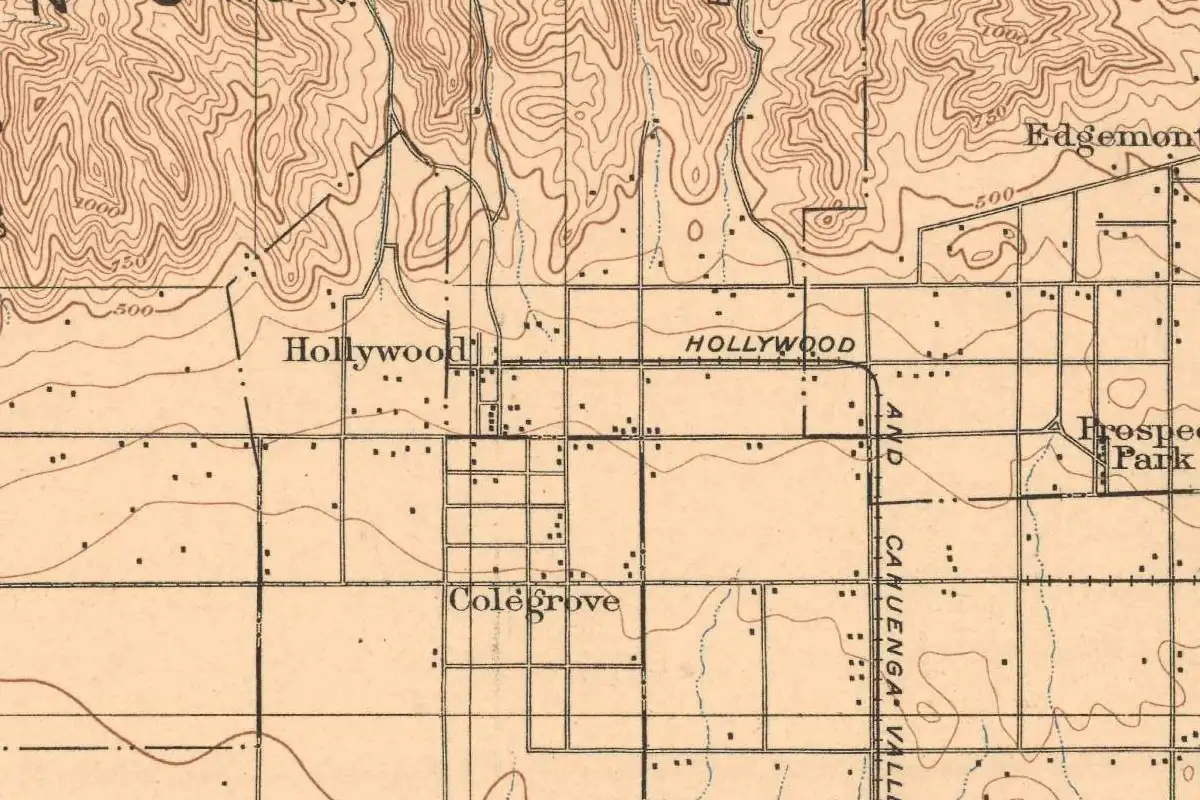
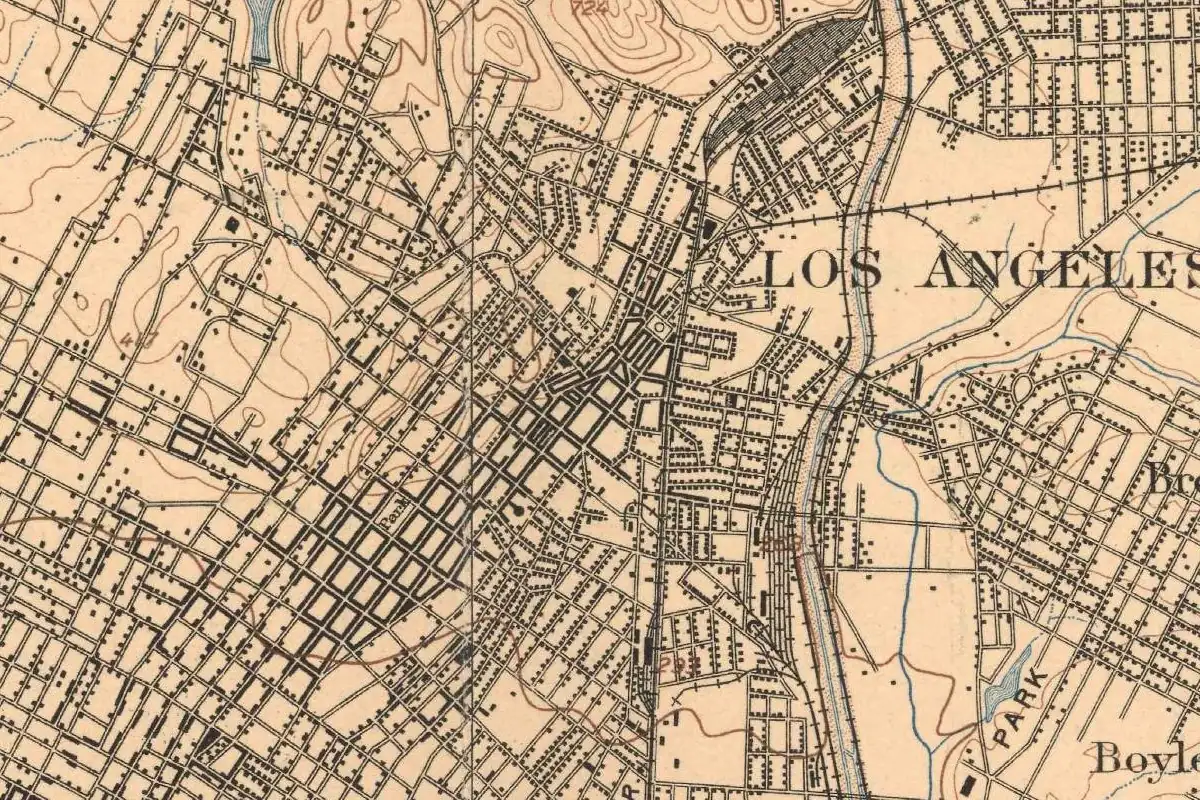
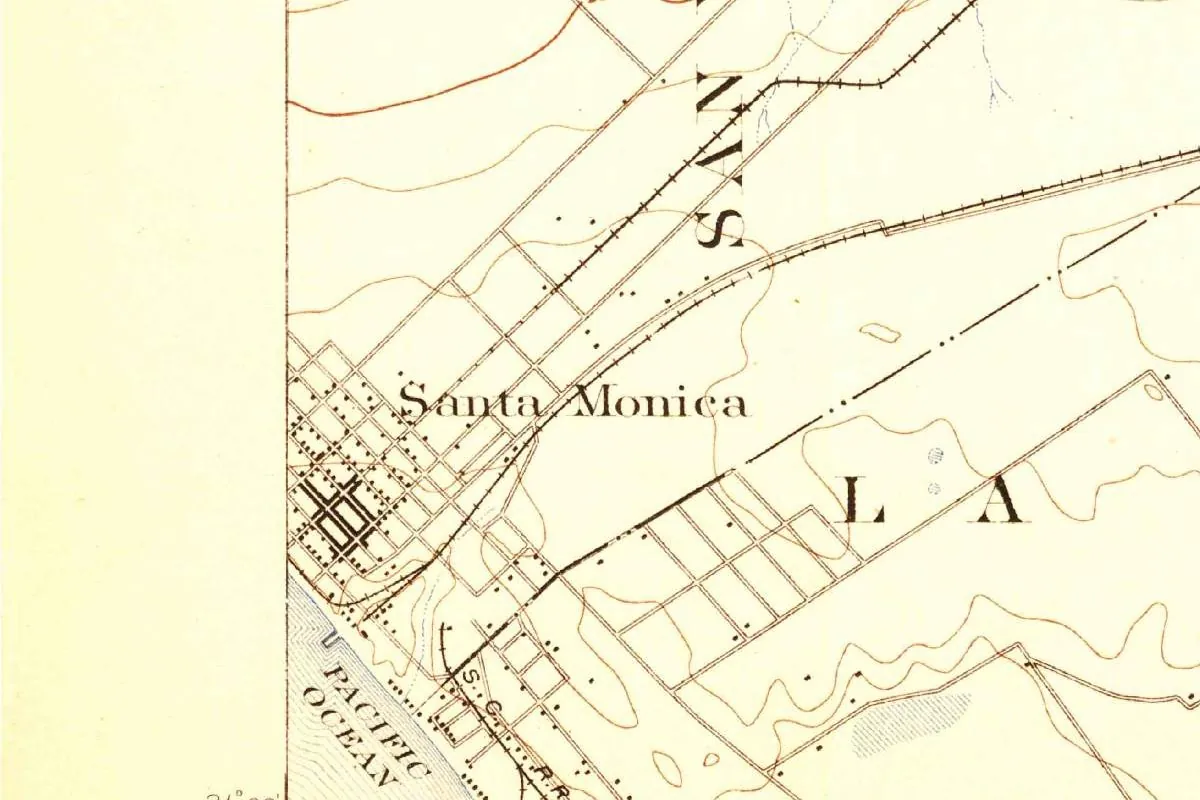
- U.S. Geological Survey, Santa Monica sheet (1:62,500), 1896. The 1896 edition of the Santa Monica sheet, from a survey made in 1893, seven years after the 1886 incorporation vote.
Spot something wrong, or know more? Tell us here. You can also email us or use our contact page. Corrections are noted here with their date, never made silently.